>
>
>
How to format your research paper for journal submission
How to format your research paper for journal submission
How to format your research paper for journal submission | RISE Research
How to format your research paper for journal submission | RISE Research
RISE Research
RISE Research
TL;DR: Formatting a research paper for journal submission is not the same as formatting a school essay. Every journal has its own author guidelines, and submitting a paper that ignores them is one of the fastest ways to get rejected before peer review even begins. This post walks through exactly what high school researchers need to know: from manuscript structure to citation style to cover letters. If you want expert guidance on this process, a PhD mentor makes a measurable difference at every stage.
Why formatting a research paper for journal submission is harder than it looks
Most high school students who complete original research papers assume the hard part is over once the writing is done. It is not. How to format your research paper for journal submission is a question that trips up even strong researchers, because the answer changes depending on the journal, the subject area, and the type of study. Journals reject papers for formatting violations before a single reviewer reads the content. Understanding the submission process before you write your final draft, not after, is what separates papers that get published from papers that get returned.
This post covers the core formatting requirements most journals share, the most common mistakes high school researchers make at the submission stage, and where expert guidance changes the outcome.
How to format your research paper for journal submission: the direct answer
Every journal publishes its own author guidelines. You must read them before you format your paper. Most journals require a structured manuscript with specific sections, a defined word count, a required citation style, and a cover letter. There is no single universal format, but there is a standard academic structure that most journals build from.
The standard structure for most research papers in science, social science, and humanities follows a recognisable pattern. For empirical research, this is the IMRaD structure: Introduction, Methods, Results, and Discussion. For review articles or humanities papers, the structure varies, but the principle is the same. Each section has a defined purpose, and reviewers expect to find specific content in each one.
The Introduction presents the research question and situates it within existing literature. The Methods section explains exactly how the study was conducted, in enough detail that another researcher could replicate it. The Results section reports findings without interpretation. The Discussion interprets those findings, addresses limitations, and connects back to the original question. This structure is not arbitrary. It reflects how scientific knowledge is communicated and evaluated. Students who treat their paper like a school essay, blending these sections or skipping Methods entirely, create immediate credibility problems with reviewers.
Beyond structure, journals specify citation style. The most common are APA (used widely in social sciences and psychology), MLA (used in humanities), Chicago (used in history and some humanities), and Vancouver (used in biomedical and clinical research). Mixing citation styles in a single submission signals inexperience and creates additional work for editors. Check the journal's author guidelines and apply one style consistently throughout, including in-text citations and the reference list.
Word count limits are enforced. Most journals for high school researchers set limits between 3,000 and 8,000 words. Submitting a paper that exceeds the limit by 30% is not a minor issue. It tells editors that the author did not read the guidelines. Learn more about how to format a research paper with the fundamentals before moving to journal-specific requirements.
The specific formatting requirements high school researchers most often miss
How to format your research paper for journal submission: section by section
Title and abstract come first, and both carry more weight than students expect. The title should be specific, descriptive, and free of jargon where possible. Avoid vague titles like "A Study of Climate Change." A stronger title names the variable, the population, and the context: "Perceived Climate Anxiety Among Secondary School Students in Urban Singapore: A Cross-Sectional Survey." The abstract is usually 150 to 250 words and must stand alone as a complete summary of the paper. Many journals use structured abstracts with labelled subsections: Background, Objective, Methods, Results, Conclusion. Check whether your target journal requires this format.
Keywords are listed immediately after the abstract. Most journals ask for five to eight keywords. These are not random topic words. They are the terms researchers in your field use to search databases. If your paper is about antibiotic resistance in soil bacteria, your keywords should reflect the specific terminology used in that literature, not general words like "science" or "environment." Poor keyword selection reduces the discoverability of your paper after publication.
Figures and tables require separate attention. Most journals want figures submitted as separate high-resolution image files, not embedded in the manuscript. Tables are usually formatted in plain text or as editable Word tables, not as images. Every figure and table must have a numbered caption. In the manuscript body, you refer to them by number: "As shown in Figure 2..." Submitting figures embedded in a PDF with no separate files is a common formatting error that delays processing.
The reference list must be formatted exactly as the journal specifies. This means consistent punctuation, correct use of italics, accurate volume and issue numbers, and working DOI links where required. Reference management tools like Zotero or Mendeley help, but they are not infallible. Every reference should be checked manually against the source. A reference list with formatting inconsistencies suggests the author has not verified their sources carefully, which is a credibility problem in academic publishing.
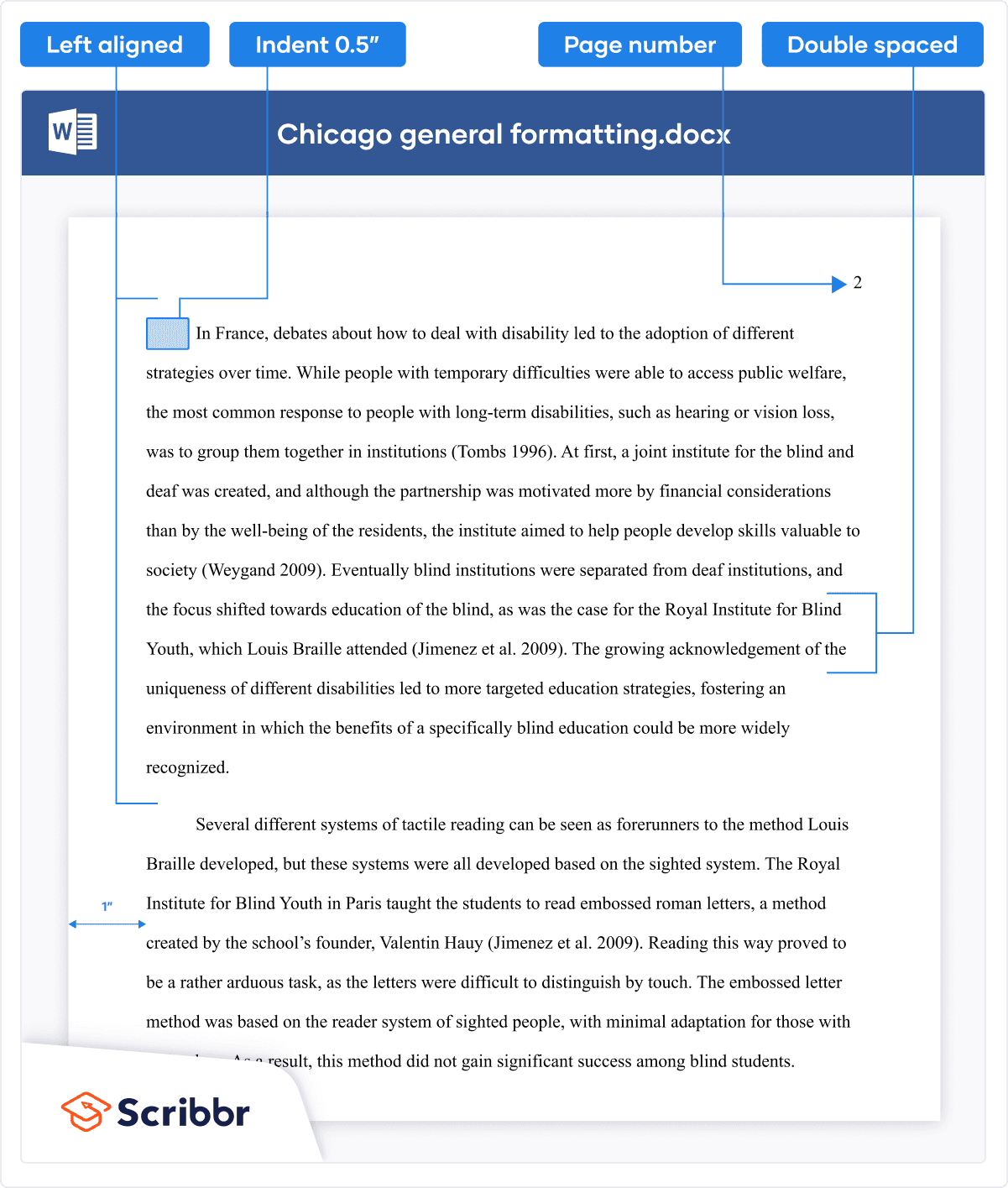
Line spacing, font, and margin requirements vary by journal. A common default is 12-point Times New Roman, double-spaced, with 1-inch margins. Some journals specify 11-point Calibri or Arial. These details matter because manuscripts are formatted for blind peer review, and editors process dozens of submissions. A manuscript that matches the house style is easier to process and easier to read. For a deeper look at the full process of preparing a strong paper, review this guide to crafting a strong high school research paper.
How does journal formatting affect your college application?
A published paper listed on a college application carries weight only if the publication is credible and the submission was handled professionally. Admissions officers at selective universities can distinguish between a paper submitted to a rigorous peer-reviewed journal and one uploaded to an unreviewed repository. The formatting and submission process is part of what makes a publication legitimate.
RISE scholars publish across 40+ academic journals with a 90% publication success rate. That outcome reflects not just strong research but correct manuscript preparation at every stage. According to RISE admissions data, scholars are accepted to Top 10 universities at 3x the standard rate. RISE scholars achieve an 18% acceptance rate to Stanford, compared to 8.7% for general applicants, and a 32% acceptance rate to UPenn, compared to 3.8% for general applicants. A correctly formatted, peer-reviewed publication is one of the concrete differentiators in those application files.
On the Common App, research publications are listed under the Activities section or the Additional Information section. A paper that has gone through genuine peer review at a named journal, formatted and submitted correctly, tells a story of academic seriousness that a school project does not. Admissions readers notice the difference between a student who completed a research programme and submitted to a credible journal and one who produced a paper with no external validation.
Where students working alone get stuck with journal formatting
The three points where unguided students consistently stall are: reading and interpreting author guidelines, preparing the cover letter, and responding to reviewer comments after initial submission.
Author guidelines are written for academic professionals, not high school students. They reference terms like "blinded manuscript," "supplementary materials," "conflict of interest statement," and "ethical approval." Students without research experience often do not know what these mean, which ones apply to their study, or how to complete them correctly. Submitting without an ethics statement when one is required, for example, results in immediate desk rejection.
The cover letter is a formal academic document addressed to the editor. It states the paper title, explains why the paper is a good fit for that specific journal, confirms the paper is not under review elsewhere, and discloses any conflicts of interest. Most high school students have never written one. A poorly written cover letter can undermine a strong paper before the editor reads past the first page.
After submission, journals often return papers with reviewer comments requesting revisions. Responding to these comments requires a structured rebuttal letter that addresses each point methodically. This is a skill developed through experience in academic publishing. A PhD mentor who has navigated this process in their own research field knows how to frame responses, which revisions to prioritise, and how to maintain a professional tone under critical feedback. This is the guidance RISE mentors provide at every stage of the publication process. Explore the RISE mentor network to understand the depth of expertise available to scholars.
If you want expert guidance on how to format your research paper for journal submission and the full publication process, book a free Research Assessment to find out whether RISE's Summer cohort is the right fit for your goals.
Frequently asked questions about formatting a research paper for journal submission
Do I need to format my paper before choosing a journal?
Choose your target journal before you finalise formatting. Different journals have different requirements for structure, citation style, word count, and figure submission. Formatting your paper for one journal and then switching to another means reformatting the entire manuscript. Identify your target journal early in the writing process, read its author guidelines, and write to those specifications from the start.
What citation style do most journals for high school researchers use?
There is no single standard. Science and social science journals commonly use APA or Vancouver. Humanities journals typically use MLA or Chicago. Journals specifically for high school researchers, such as the International Journal of High School Research or the Journal of Innovative Student Research, each specify their preferred citation style in their author guidelines. Always check the official journal website before formatting your references.
What is a blinded manuscript and do I need to submit one?
A blinded manuscript is a version of your paper with all author-identifying information removed. It is used in double-blind peer review, where reviewers do not know who wrote the paper. Many peer-reviewed journals require you to submit two versions: one with full author details and one blinded. Check the journal's submission instructions. Submitting only one version when two are required will delay processing.
How long does it take for a journal to respond after submission?
Review timelines vary significantly by journal. Some journals for student researchers respond within four to eight weeks. Larger or more competitive journals can take three to six months. Journals that are indexed in academic databases and use formal double-blind peer review tend to have longer timelines. Check the journal's website for stated review timelines before submitting, especially if you have an application deadline in mind. See the full guide to journals accepting high school research papers for timeline comparisons across specific journals.
Can I submit my paper to more than one journal at the same time?
No. Simultaneous submission, sending the same paper to multiple journals at once, violates the submission policies of almost every academic journal. If discovered, it results in rejection from both journals and can damage your academic reputation. You must wait for a decision from one journal before submitting to another. If a journal rejects your paper, you are then free to revise and submit elsewhere.
What to take from this post
Formatting a research paper for journal submission is a multi-step process with specific requirements that change by journal, subject area, and study type. The most important steps are reading the author guidelines before you finalise your manuscript, applying a consistent citation style throughout, preparing figures and tables as separate files where required, and writing a professional cover letter that addresses the editor directly. These are not optional extras. They are the baseline for a submission that gets read.
Students who approach this process without guidance consistently make the same avoidable mistakes: wrong citation style, missing ethics statements, embedded figures, and cover letters that read like emails. A PhD mentor who has published in their own field navigates these requirements as a matter of professional routine. If you want help formatting and submitting your research paper with a mentor who has done this professionally, schedule a free Research Assessment and we will match you with the right mentor for your subject and publication goals. Summer cohort spots are limited.
TL;DR: Formatting a research paper for journal submission is not the same as formatting a school essay. Every journal has its own author guidelines, and submitting a paper that ignores them is one of the fastest ways to get rejected before peer review even begins. This post walks through exactly what high school researchers need to know: from manuscript structure to citation style to cover letters. If you want expert guidance on this process, a PhD mentor makes a measurable difference at every stage.
Why formatting a research paper for journal submission is harder than it looks
Most high school students who complete original research papers assume the hard part is over once the writing is done. It is not. How to format your research paper for journal submission is a question that trips up even strong researchers, because the answer changes depending on the journal, the subject area, and the type of study. Journals reject papers for formatting violations before a single reviewer reads the content. Understanding the submission process before you write your final draft, not after, is what separates papers that get published from papers that get returned.
This post covers the core formatting requirements most journals share, the most common mistakes high school researchers make at the submission stage, and where expert guidance changes the outcome.
How to format your research paper for journal submission: the direct answer
Every journal publishes its own author guidelines. You must read them before you format your paper. Most journals require a structured manuscript with specific sections, a defined word count, a required citation style, and a cover letter. There is no single universal format, but there is a standard academic structure that most journals build from.
The standard structure for most research papers in science, social science, and humanities follows a recognisable pattern. For empirical research, this is the IMRaD structure: Introduction, Methods, Results, and Discussion. For review articles or humanities papers, the structure varies, but the principle is the same. Each section has a defined purpose, and reviewers expect to find specific content in each one.
The Introduction presents the research question and situates it within existing literature. The Methods section explains exactly how the study was conducted, in enough detail that another researcher could replicate it. The Results section reports findings without interpretation. The Discussion interprets those findings, addresses limitations, and connects back to the original question. This structure is not arbitrary. It reflects how scientific knowledge is communicated and evaluated. Students who treat their paper like a school essay, blending these sections or skipping Methods entirely, create immediate credibility problems with reviewers.
Beyond structure, journals specify citation style. The most common are APA (used widely in social sciences and psychology), MLA (used in humanities), Chicago (used in history and some humanities), and Vancouver (used in biomedical and clinical research). Mixing citation styles in a single submission signals inexperience and creates additional work for editors. Check the journal's author guidelines and apply one style consistently throughout, including in-text citations and the reference list.
Word count limits are enforced. Most journals for high school researchers set limits between 3,000 and 8,000 words. Submitting a paper that exceeds the limit by 30% is not a minor issue. It tells editors that the author did not read the guidelines. Learn more about how to format a research paper with the fundamentals before moving to journal-specific requirements.
The specific formatting requirements high school researchers most often miss
How to format your research paper for journal submission: section by section
Title and abstract come first, and both carry more weight than students expect. The title should be specific, descriptive, and free of jargon where possible. Avoid vague titles like "A Study of Climate Change." A stronger title names the variable, the population, and the context: "Perceived Climate Anxiety Among Secondary School Students in Urban Singapore: A Cross-Sectional Survey." The abstract is usually 150 to 250 words and must stand alone as a complete summary of the paper. Many journals use structured abstracts with labelled subsections: Background, Objective, Methods, Results, Conclusion. Check whether your target journal requires this format.
Keywords are listed immediately after the abstract. Most journals ask for five to eight keywords. These are not random topic words. They are the terms researchers in your field use to search databases. If your paper is about antibiotic resistance in soil bacteria, your keywords should reflect the specific terminology used in that literature, not general words like "science" or "environment." Poor keyword selection reduces the discoverability of your paper after publication.
Figures and tables require separate attention. Most journals want figures submitted as separate high-resolution image files, not embedded in the manuscript. Tables are usually formatted in plain text or as editable Word tables, not as images. Every figure and table must have a numbered caption. In the manuscript body, you refer to them by number: "As shown in Figure 2..." Submitting figures embedded in a PDF with no separate files is a common formatting error that delays processing.
The reference list must be formatted exactly as the journal specifies. This means consistent punctuation, correct use of italics, accurate volume and issue numbers, and working DOI links where required. Reference management tools like Zotero or Mendeley help, but they are not infallible. Every reference should be checked manually against the source. A reference list with formatting inconsistencies suggests the author has not verified their sources carefully, which is a credibility problem in academic publishing.
Line spacing, font, and margin requirements vary by journal. A common default is 12-point Times New Roman, double-spaced, with 1-inch margins. Some journals specify 11-point Calibri or Arial. These details matter because manuscripts are formatted for blind peer review, and editors process dozens of submissions. A manuscript that matches the house style is easier to process and easier to read. For a deeper look at the full process of preparing a strong paper, review this guide to crafting a strong high school research paper.
How does journal formatting affect your college application?
A published paper listed on a college application carries weight only if the publication is credible and the submission was handled professionally. Admissions officers at selective universities can distinguish between a paper submitted to a rigorous peer-reviewed journal and one uploaded to an unreviewed repository. The formatting and submission process is part of what makes a publication legitimate.
RISE scholars publish across 40+ academic journals with a 90% publication success rate. That outcome reflects not just strong research but correct manuscript preparation at every stage. According to RISE admissions data, scholars are accepted to Top 10 universities at 3x the standard rate. RISE scholars achieve an 18% acceptance rate to Stanford, compared to 8.7% for general applicants, and a 32% acceptance rate to UPenn, compared to 3.8% for general applicants. A correctly formatted, peer-reviewed publication is one of the concrete differentiators in those application files.
On the Common App, research publications are listed under the Activities section or the Additional Information section. A paper that has gone through genuine peer review at a named journal, formatted and submitted correctly, tells a story of academic seriousness that a school project does not. Admissions readers notice the difference between a student who completed a research programme and submitted to a credible journal and one who produced a paper with no external validation.
Where students working alone get stuck with journal formatting
The three points where unguided students consistently stall are: reading and interpreting author guidelines, preparing the cover letter, and responding to reviewer comments after initial submission.
Author guidelines are written for academic professionals, not high school students. They reference terms like "blinded manuscript," "supplementary materials," "conflict of interest statement," and "ethical approval." Students without research experience often do not know what these mean, which ones apply to their study, or how to complete them correctly. Submitting without an ethics statement when one is required, for example, results in immediate desk rejection.
The cover letter is a formal academic document addressed to the editor. It states the paper title, explains why the paper is a good fit for that specific journal, confirms the paper is not under review elsewhere, and discloses any conflicts of interest. Most high school students have never written one. A poorly written cover letter can undermine a strong paper before the editor reads past the first page.
After submission, journals often return papers with reviewer comments requesting revisions. Responding to these comments requires a structured rebuttal letter that addresses each point methodically. This is a skill developed through experience in academic publishing. A PhD mentor who has navigated this process in their own research field knows how to frame responses, which revisions to prioritise, and how to maintain a professional tone under critical feedback. This is the guidance RISE mentors provide at every stage of the publication process. Explore the RISE mentor network to understand the depth of expertise available to scholars.
If you want expert guidance on how to format your research paper for journal submission and the full publication process, book a free Research Assessment to find out whether RISE's Summer cohort is the right fit for your goals.
Frequently asked questions about formatting a research paper for journal submission
Do I need to format my paper before choosing a journal?
Choose your target journal before you finalise formatting. Different journals have different requirements for structure, citation style, word count, and figure submission. Formatting your paper for one journal and then switching to another means reformatting the entire manuscript. Identify your target journal early in the writing process, read its author guidelines, and write to those specifications from the start.
What citation style do most journals for high school researchers use?
There is no single standard. Science and social science journals commonly use APA or Vancouver. Humanities journals typically use MLA or Chicago. Journals specifically for high school researchers, such as the International Journal of High School Research or the Journal of Innovative Student Research, each specify their preferred citation style in their author guidelines. Always check the official journal website before formatting your references.
What is a blinded manuscript and do I need to submit one?
A blinded manuscript is a version of your paper with all author-identifying information removed. It is used in double-blind peer review, where reviewers do not know who wrote the paper. Many peer-reviewed journals require you to submit two versions: one with full author details and one blinded. Check the journal's submission instructions. Submitting only one version when two are required will delay processing.
How long does it take for a journal to respond after submission?
Review timelines vary significantly by journal. Some journals for student researchers respond within four to eight weeks. Larger or more competitive journals can take three to six months. Journals that are indexed in academic databases and use formal double-blind peer review tend to have longer timelines. Check the journal's website for stated review timelines before submitting, especially if you have an application deadline in mind. See the full guide to journals accepting high school research papers for timeline comparisons across specific journals.
Can I submit my paper to more than one journal at the same time?
No. Simultaneous submission, sending the same paper to multiple journals at once, violates the submission policies of almost every academic journal. If discovered, it results in rejection from both journals and can damage your academic reputation. You must wait for a decision from one journal before submitting to another. If a journal rejects your paper, you are then free to revise and submit elsewhere.
What to take from this post
Formatting a research paper for journal submission is a multi-step process with specific requirements that change by journal, subject area, and study type. The most important steps are reading the author guidelines before you finalise your manuscript, applying a consistent citation style throughout, preparing figures and tables as separate files where required, and writing a professional cover letter that addresses the editor directly. These are not optional extras. They are the baseline for a submission that gets read.
Students who approach this process without guidance consistently make the same avoidable mistakes: wrong citation style, missing ethics statements, embedded figures, and cover letters that read like emails. A PhD mentor who has published in their own field navigates these requirements as a matter of professional routine. If you want help formatting and submitting your research paper with a mentor who has done this professionally, schedule a free Research Assessment and we will match you with the right mentor for your subject and publication goals. Summer cohort spots are limited.
Winter 2026 Early Admission Deadline Closing on 18th October
Book a free 20-min strategy call
Book a free 20-min strategy call
Read More