>
>
>
How many journals should you submit to as a high school researcher?
How many journals should you submit to as a high school researcher?
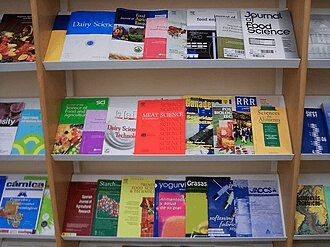
How many journals should you submit to as a high school researcher? | RISE Research
How many journals should you submit to as a high school researcher? | RISE Research
RISE Research
RISE Research
TL;DR: Most high school researchers should submit to one journal at a time. Simultaneous submission to multiple journals violates the editorial policies of nearly every peer-reviewed publication and can result in permanent rejection. The right number is not about volume. It is about selecting the correct journal before you write, not after. If you need help identifying the right target journal and preparing a submission that meets its standards, a PhD mentor who has published in your field makes a measurable difference at every stage of this process.
Introduction
One of the most common questions RISE mentors hear from high school researchers is: how many journals should you submit to as a high school researcher? The assumption behind the question is usually that submitting to more journals increases your chances of getting published. It does not. In academic publishing, submitting the same paper to multiple journals at the same time is called simultaneous submission, and it is prohibited by the editorial policies of almost every peer-reviewed journal in existence. Doing it can get your paper rejected outright, flagged across editorial networks, and in some cases, banned from future submission. This post explains the correct approach to journal submission volume, why the strategy matters more than the number, and where students consistently go wrong when navigating this process alone.
How many journals should you submit to as a high school researcher?
Answer Capsule: Submit to one journal at a time. Simultaneous submission violates the policies of nearly all peer-reviewed journals. If your paper is rejected, you revise based on reviewer feedback and submit to the next journal on your ranked list. Most successful high school publications involve one to three submission attempts before acceptance.
The logic behind submitting to multiple journals feels intuitive. More submissions should mean more chances. But academic publishing does not work like a university application, where submitting to twelve schools is standard practice. When you submit a paper to a journal, that journal's editors and peer reviewers invest significant time evaluating your work. Their policies require that your paper is not under review elsewhere simultaneously. If two journals accept the same paper, you face an ethical crisis with no clean exit. Both journals would have wasted resources. Most journals require authors to confirm, at the point of submission, that the work is not under simultaneous consideration elsewhere.
What this means practically is that journal selection is a strategic decision, not a volume game. You need a ranked list of target journals before you submit, ordered by fit, prestige, and realistic acceptance probability. If your first-choice journal rejects the paper, you take the reviewer feedback, revise the manuscript, and move to your second choice. This sequential process is standard across all fields of academic research.
The mistake most students make is selecting a journal after the paper is written, based on which publication sounds most impressive. The correct approach is the reverse: identify your target journal before you begin writing, then shape the paper's scope, methodology, and citation style to match that journal's specific requirements. Journals like the Journal of Student Research and the Journal of Emerging Investigators publish high school research and each has distinct formatting expectations, scope requirements, and review criteria. A paper written for one will often need substantial revision before it is appropriate for the other.
Building your journal submission list: what high school researchers need to know
The question of how many journals to submit to as a high school researcher is really a question about how to build and use a ranked submission list. Here is what that process looks like in practice.
Start by identifying three to five journals that publish research in your subject area and explicitly accept submissions from high school or undergraduate authors. For biology researchers, journals like the Journal of Emerging Investigators are specifically designed for pre-university researchers. For a broader look at biology-specific options, the Biology Journals That Publish High School Research guide covers eligibility and scope in detail. Similar subject-specific lists exist for psychology journals that accept high school research, computer science journals that accept high school research, and other disciplines.
Once you have your list, rank the journals by three criteria. First, scope fit: does this journal publish the type of study you conducted, whether that is a literature review, an original experiment, or a data analysis? Second, peer-review status: is the journal independently peer-reviewed, and is it indexed in a recognised database? Third, realistic acceptance probability: some journals have acceptance rates below 20%, which is appropriate for a strong, well-mentored paper. Others accept a higher proportion of submissions and may be a better starting point for a first-time researcher.
Your first submission should go to the journal where your paper is the strongest fit, not necessarily the most prestigious name on the list. Fit matters more than prestige at the high school level. A paper published in a well-regarded, peer-reviewed student journal carries more weight than a rejection from a journal that was never a realistic match for the work.
Review timelines vary significantly. Some student-focused journals respond within six to eight weeks. Others take four to six months. Factor this into your timeline, especially if you are working toward a university application deadline. If a journal has not responded within its stated review window, a polite status inquiry to the editorial office is appropriate.
One more point on cost: some journals charge article processing fees, also called publication fees or APCs. These fees can range from a few hundred to several thousand dollars. Many high-quality journals that accept high school research charge no fee at all. Always check the journal's official author guidelines before submitting. A fee does not automatically indicate a low-quality journal, but a fee combined with no clear peer-review process is a warning sign worth taking seriously.
How does journal submission strategy affect your college application?
Answer Capsule: A published paper in a peer-reviewed journal, listed under the Activities or Additional Information section of the Common App, signals independent intellectual achievement. Admissions officers distinguish between papers published in indexed, peer-reviewed journals and those in unreviewed or programme-owned publications. The journal's credibility directly affects how the publication is read.
Publication appears most naturally in the Activities section of the Common App, where students can describe the research project, the journal, and the outcome. Some students also reference it in the Additional Information section or in a research-focused supplemental essay. The key is specificity: naming the journal, describing the research question, and noting whether the paper was peer-reviewed all strengthen the entry.
Admissions officers at selective universities have noted publicly that research publications carry weight when they reflect genuine intellectual contribution, not just participation in a structured programme. A paper that went through independent peer review, required revision based on reviewer feedback, and was accepted on its merits tells a stronger story than a paper published in a journal with no external review process.
RISE scholars have a 90% publication success rate across 40 or more academic journals. RISE scholars are accepted to Top 10 universities at three times the standard rate. The 18% Stanford acceptance rate for RISE scholars compares to 8.7% for the general applicant pool. These outcomes reflect the combined effect of original research, strong mentorship, and publication in credible, peer-reviewed journals. Journal selection is one part of that picture, but it is not a small part.
Where students working alone get stuck with journal submission strategy
Students navigating the journal submission process without expert guidance tend to stall at three specific points.
The first is journal identification. Finding journals that are peer-reviewed, indexed, genuinely open to high school submissions, and a strong fit for the specific research question is not a simple search. Many journals that appear in top search results are either predatory publications with no real review process, or university-level journals that do not accept pre-university authors. Sorting through this landscape without field knowledge takes significant time and carries real risk of wasted effort.
The second sticking point is manuscript preparation. Each journal has a specific formatting guide, citation style, word limit, and structural expectation. A paper submitted in the wrong format is often desk-rejected before it reaches a peer reviewer, regardless of its quality. Students writing without guidance frequently miss these requirements because they are buried in author guidelines that assume prior publishing experience.
The third point is responding to peer review. Most papers are not accepted on first submission. Reviewers request revisions, sometimes substantial ones. Knowing which revisions to make, how to respond to reviewer comments professionally, and when to push back versus when to comply requires experience that most high school students simply do not have yet.
A research mentor who has published in their own field brings direct knowledge to all three of these points. They know which journals are appropriate for a given study design. They have formatted manuscripts to specific journal requirements before. They have written reviewer response letters. They can tell a student whether a reviewer's critique reflects a genuine weakness in the paper or a misreading of the methodology. This is the guidance RISE mentors provide at every stage of the publication process.
If you want expert guidance on journal submission strategy and the full publication process, book a free Research Assessment to find out whether RISE's Summer cohort is the right fit for your goals.
Frequently asked questions about how many journals to submit to as a high school researcher.
Can I submit my paper to more than one journal at the same time?
No. Simultaneous submission violates the editorial policies of nearly all peer-reviewed journals. You must wait for a decision from one journal before submitting elsewhere. If a journal explicitly states it permits simultaneous submission in its author guidelines, you may proceed, but this is rare. Always read the submission policy before you submit.
What should I do if a journal rejects my paper?
Read the reviewer feedback carefully and revise the manuscript before submitting to your next target journal. A rejection with detailed reviewer comments is valuable. It tells you exactly what the paper needs. Submit the revised version to the next journal on your ranked list. Most successful publications involve at least one rejection before acceptance.
How do I know if a journal is peer-reviewed and credible?
Check the journal's official website for its review process, editorial board, and indexing status. Credible journals are typically indexed in databases such as DOAJ, PubMed, Scopus, or Web of Science. A journal with no named editorial board, no clear review process description, and a fee required before review is a warning sign. When in doubt, ask a mentor or school librarian to verify.
Does it matter which journal I publish in for college applications?
Yes. Admissions officers distinguish between peer-reviewed, independently indexed journals and publications with no external review process. A paper accepted after genuine peer review carries more credibility than one published without it. The journal does not need to be the most prestigious in your field, but it should have a transparent, independent review process. See the RISE publications page for examples of journals where RISE scholars have published.
How long does the journal submission process take for high school researchers?
Expect six to twelve weeks for an initial decision from most student-focused journals, though some take longer. If your paper requires revision and resubmission, add another four to eight weeks. Plan your submission timeline at least six months before any application deadline where you want to reference the publication. Starting early is the single most effective way to avoid a timing problem.
Conclusion
The answer to how many journals you should submit to as a high school researcher is straightforward: one at a time, in sequence, starting with the journal that is the strongest fit for your specific paper. The strategy that matters is not volume. It is preparation, fit, and quality of the manuscript you submit. Build a ranked list of three to five appropriate journals before you begin writing. Match your paper's scope and format to your first-choice journal. Treat reviewer feedback as a revision guide, not a final verdict.
Publication at the high school level is genuinely achievable. RISE scholars publish across 40 or more academic journals with a 90% success rate, supported by PhD mentors who have navigated this process in their own research careers. If you want help identifying the right journal, preparing a submission that meets its standards, and responding to peer review with confidence, schedule a free Research Assessment and we will match you with the right mentor for your subject and publication goals. Summer cohort spots are limited.
TL;DR: Most high school researchers should submit to one journal at a time. Simultaneous submission to multiple journals violates the editorial policies of nearly every peer-reviewed publication and can result in permanent rejection. The right number is not about volume. It is about selecting the correct journal before you write, not after. If you need help identifying the right target journal and preparing a submission that meets its standards, a PhD mentor who has published in your field makes a measurable difference at every stage of this process.
Introduction
One of the most common questions RISE mentors hear from high school researchers is: how many journals should you submit to as a high school researcher? The assumption behind the question is usually that submitting to more journals increases your chances of getting published. It does not. In academic publishing, submitting the same paper to multiple journals at the same time is called simultaneous submission, and it is prohibited by the editorial policies of almost every peer-reviewed journal in existence. Doing it can get your paper rejected outright, flagged across editorial networks, and in some cases, banned from future submission. This post explains the correct approach to journal submission volume, why the strategy matters more than the number, and where students consistently go wrong when navigating this process alone.
How many journals should you submit to as a high school researcher?
Answer Capsule: Submit to one journal at a time. Simultaneous submission violates the policies of nearly all peer-reviewed journals. If your paper is rejected, you revise based on reviewer feedback and submit to the next journal on your ranked list. Most successful high school publications involve one to three submission attempts before acceptance.
The logic behind submitting to multiple journals feels intuitive. More submissions should mean more chances. But academic publishing does not work like a university application, where submitting to twelve schools is standard practice. When you submit a paper to a journal, that journal's editors and peer reviewers invest significant time evaluating your work. Their policies require that your paper is not under review elsewhere simultaneously. If two journals accept the same paper, you face an ethical crisis with no clean exit. Both journals would have wasted resources. Most journals require authors to confirm, at the point of submission, that the work is not under simultaneous consideration elsewhere.
What this means practically is that journal selection is a strategic decision, not a volume game. You need a ranked list of target journals before you submit, ordered by fit, prestige, and realistic acceptance probability. If your first-choice journal rejects the paper, you take the reviewer feedback, revise the manuscript, and move to your second choice. This sequential process is standard across all fields of academic research.
The mistake most students make is selecting a journal after the paper is written, based on which publication sounds most impressive. The correct approach is the reverse: identify your target journal before you begin writing, then shape the paper's scope, methodology, and citation style to match that journal's specific requirements. Journals like the Journal of Student Research and the Journal of Emerging Investigators publish high school research and each has distinct formatting expectations, scope requirements, and review criteria. A paper written for one will often need substantial revision before it is appropriate for the other.
Building your journal submission list: what high school researchers need to know
The question of how many journals to submit to as a high school researcher is really a question about how to build and use a ranked submission list. Here is what that process looks like in practice.
Start by identifying three to five journals that publish research in your subject area and explicitly accept submissions from high school or undergraduate authors. For biology researchers, journals like the Journal of Emerging Investigators are specifically designed for pre-university researchers. For a broader look at biology-specific options, the Biology Journals That Publish High School Research guide covers eligibility and scope in detail. Similar subject-specific lists exist for psychology journals that accept high school research, computer science journals that accept high school research, and other disciplines.
Once you have your list, rank the journals by three criteria. First, scope fit: does this journal publish the type of study you conducted, whether that is a literature review, an original experiment, or a data analysis? Second, peer-review status: is the journal independently peer-reviewed, and is it indexed in a recognised database? Third, realistic acceptance probability: some journals have acceptance rates below 20%, which is appropriate for a strong, well-mentored paper. Others accept a higher proportion of submissions and may be a better starting point for a first-time researcher.
Your first submission should go to the journal where your paper is the strongest fit, not necessarily the most prestigious name on the list. Fit matters more than prestige at the high school level. A paper published in a well-regarded, peer-reviewed student journal carries more weight than a rejection from a journal that was never a realistic match for the work.
Review timelines vary significantly. Some student-focused journals respond within six to eight weeks. Others take four to six months. Factor this into your timeline, especially if you are working toward a university application deadline. If a journal has not responded within its stated review window, a polite status inquiry to the editorial office is appropriate.
One more point on cost: some journals charge article processing fees, also called publication fees or APCs. These fees can range from a few hundred to several thousand dollars. Many high-quality journals that accept high school research charge no fee at all. Always check the journal's official author guidelines before submitting. A fee does not automatically indicate a low-quality journal, but a fee combined with no clear peer-review process is a warning sign worth taking seriously.
How does journal submission strategy affect your college application?
Answer Capsule: A published paper in a peer-reviewed journal, listed under the Activities or Additional Information section of the Common App, signals independent intellectual achievement. Admissions officers distinguish between papers published in indexed, peer-reviewed journals and those in unreviewed or programme-owned publications. The journal's credibility directly affects how the publication is read.
Publication appears most naturally in the Activities section of the Common App, where students can describe the research project, the journal, and the outcome. Some students also reference it in the Additional Information section or in a research-focused supplemental essay. The key is specificity: naming the journal, describing the research question, and noting whether the paper was peer-reviewed all strengthen the entry.
Admissions officers at selective universities have noted publicly that research publications carry weight when they reflect genuine intellectual contribution, not just participation in a structured programme. A paper that went through independent peer review, required revision based on reviewer feedback, and was accepted on its merits tells a stronger story than a paper published in a journal with no external review process.
RISE scholars have a 90% publication success rate across 40 or more academic journals. RISE scholars are accepted to Top 10 universities at three times the standard rate. The 18% Stanford acceptance rate for RISE scholars compares to 8.7% for the general applicant pool. These outcomes reflect the combined effect of original research, strong mentorship, and publication in credible, peer-reviewed journals. Journal selection is one part of that picture, but it is not a small part.
Where students working alone get stuck with journal submission strategy
Students navigating the journal submission process without expert guidance tend to stall at three specific points.
The first is journal identification. Finding journals that are peer-reviewed, indexed, genuinely open to high school submissions, and a strong fit for the specific research question is not a simple search. Many journals that appear in top search results are either predatory publications with no real review process, or university-level journals that do not accept pre-university authors. Sorting through this landscape without field knowledge takes significant time and carries real risk of wasted effort.
The second sticking point is manuscript preparation. Each journal has a specific formatting guide, citation style, word limit, and structural expectation. A paper submitted in the wrong format is often desk-rejected before it reaches a peer reviewer, regardless of its quality. Students writing without guidance frequently miss these requirements because they are buried in author guidelines that assume prior publishing experience.
The third point is responding to peer review. Most papers are not accepted on first submission. Reviewers request revisions, sometimes substantial ones. Knowing which revisions to make, how to respond to reviewer comments professionally, and when to push back versus when to comply requires experience that most high school students simply do not have yet.
A research mentor who has published in their own field brings direct knowledge to all three of these points. They know which journals are appropriate for a given study design. They have formatted manuscripts to specific journal requirements before. They have written reviewer response letters. They can tell a student whether a reviewer's critique reflects a genuine weakness in the paper or a misreading of the methodology. This is the guidance RISE mentors provide at every stage of the publication process.
If you want expert guidance on journal submission strategy and the full publication process, book a free Research Assessment to find out whether RISE's Summer cohort is the right fit for your goals.
Frequently asked questions about how many journals to submit to as a high school researcher.
Can I submit my paper to more than one journal at the same time?
No. Simultaneous submission violates the editorial policies of nearly all peer-reviewed journals. You must wait for a decision from one journal before submitting elsewhere. If a journal explicitly states it permits simultaneous submission in its author guidelines, you may proceed, but this is rare. Always read the submission policy before you submit.
What should I do if a journal rejects my paper?
Read the reviewer feedback carefully and revise the manuscript before submitting to your next target journal. A rejection with detailed reviewer comments is valuable. It tells you exactly what the paper needs. Submit the revised version to the next journal on your ranked list. Most successful publications involve at least one rejection before acceptance.
How do I know if a journal is peer-reviewed and credible?
Check the journal's official website for its review process, editorial board, and indexing status. Credible journals are typically indexed in databases such as DOAJ, PubMed, Scopus, or Web of Science. A journal with no named editorial board, no clear review process description, and a fee required before review is a warning sign. When in doubt, ask a mentor or school librarian to verify.
Does it matter which journal I publish in for college applications?
Yes. Admissions officers distinguish between peer-reviewed, independently indexed journals and publications with no external review process. A paper accepted after genuine peer review carries more credibility than one published without it. The journal does not need to be the most prestigious in your field, but it should have a transparent, independent review process. See the RISE publications page for examples of journals where RISE scholars have published.
How long does the journal submission process take for high school researchers?
Expect six to twelve weeks for an initial decision from most student-focused journals, though some take longer. If your paper requires revision and resubmission, add another four to eight weeks. Plan your submission timeline at least six months before any application deadline where you want to reference the publication. Starting early is the single most effective way to avoid a timing problem.
Conclusion
The answer to how many journals you should submit to as a high school researcher is straightforward: one at a time, in sequence, starting with the journal that is the strongest fit for your specific paper. The strategy that matters is not volume. It is preparation, fit, and quality of the manuscript you submit. Build a ranked list of three to five appropriate journals before you begin writing. Match your paper's scope and format to your first-choice journal. Treat reviewer feedback as a revision guide, not a final verdict.
Publication at the high school level is genuinely achievable. RISE scholars publish across 40 or more academic journals with a 90% success rate, supported by PhD mentors who have navigated this process in their own research careers. If you want help identifying the right journal, preparing a submission that meets its standards, and responding to peer review with confidence, schedule a free Research Assessment and we will match you with the right mentor for your subject and publication goals. Summer cohort spots are limited.
Winter 2026 Early Admission Deadline Closing on 18th October
Book a free 20-min strategy call
Book a free 20-min strategy call
Read More