>
>
>
What to expect in your first week of a research mentorship program
What to expect in your first week of a research mentorship program
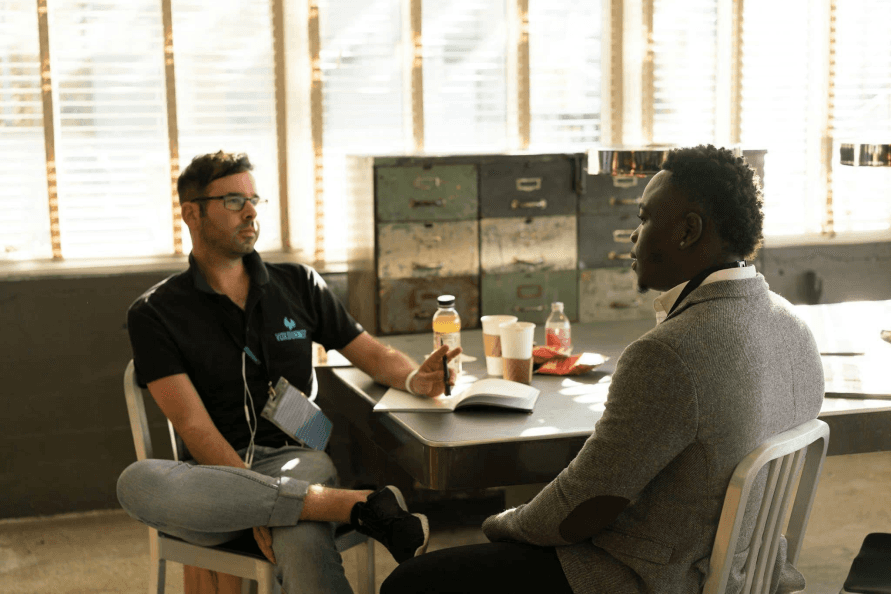
What to expect in your first week of a research mentorship program | RISE Research
What to expect in your first week of a research mentorship program | RISE Research
RISE Research
RISE Research
TL;DR: The first week of a research mentorship program is not about diving into data or writing papers. It is about building the foundation: aligning with your mentor, sharpening your research question, and understanding the process ahead. This post walks through exactly what happens during that first week, why each stage matters for your research outcome, and what separates students who hit the ground running from those who spend weeks circling the same starting point.
Introduction
Most students entering a research mentorship program for the first time expect to start researching immediately. They picture opening databases, collecting data, and drafting sections of a paper within days. What actually happens in the first week looks very different, and students who misunderstand this often waste their most valuable early sessions. Knowing what to expect in your first week of a research mentorship program means you arrive prepared, not surprised. This post covers the real sequence of that first week, what each stage requires from you, and where students working without structure typically lose momentum before they have even started.
What is the first week of a research mentorship program and why does it matter?
The first week of a research mentorship program is the scoping and alignment phase. It is when the student and mentor establish a shared understanding of the research direction, assess the student's existing knowledge, and set the structural foundation for the entire project. Without this phase done well, every subsequent step is built on unstable ground.
This week sits at the very beginning of the research pipeline, before any literature review, data collection, or methodology design. Think of it as the architectural planning stage before construction begins. A research paper produced without a properly scoped first week tends to suffer from an unfocused question, a mismatched methodology, or a topic that is either too broad to answer or too narrow to publish.
For university applications, this phase matters more than most students realise. Admissions readers at selective universities can tell the difference between a student who understood their own research and one who was handed a topic and told to write. The first week is where genuine intellectual ownership begins. Programs like RISE Research are built around this foundation: the mentor relationship starts here, and the quality of that relationship shapes every output that follows.
What to expect in your first week of a research mentorship program: a step-by-step process
Step 1: The diagnostic conversation. Your first session with a PhD mentor is not a lecture. It is a structured conversation designed to map what you already know, what you are genuinely curious about, and where your thinking has gaps. Come prepared with a subject area you care about, two or three questions you have been sitting with, and some sense of why this topic matters to you. A mentor who asks you to explain your interest in plain language is not being condescending. They are testing whether your curiosity is specific enough to anchor a research question. Vague interest in "climate change" or "artificial intelligence" is a starting point, not a research direction.
Step 2: Narrowing the topic to a researchable question. This is where most first-week sessions spend the most time, and rightly so. A researchable question is not the same as an interesting topic. It must be answerable with evidence you can actually access, specific enough to have a clear scope, and open enough that the answer is not already obvious. Your mentor will push you to move from "I want to study mental health in teenagers" toward something like "Does sleep duration below seven hours correlate with self-reported anxiety scores in Grade 11 students using the GAD-7 scale?" That narrowing process is a skill in itself. Use this session to ask your mentor directly: is this question too broad, too narrow, or not original enough to publish?
Step 3: A preliminary literature scan. Before the end of the first week, you should conduct a light scan of existing research on your topic. This is not a full literature review. It is a reconnaissance exercise to confirm that your question has not already been answered definitively, and to identify the 3-5 most relevant papers in the field. Use Google Scholar for an initial sweep. Search your topic with quotation marks around key phrases to find exact matches. Save everything in Zotero, a free reference manager that organises citations and generates bibliographies automatically. This scan tells you whether your question is positioned in a real gap or whether you are unknowingly replicating existing work.
Step 4: Agreeing on a research timeline. By the end of the first week, you and your mentor should have a shared timeline with clear milestones. This typically includes a date for completing the literature review, a date for finalising the methodology, a data collection window, and a target submission date for a journal or conference. Students who leave the first week without a timeline tend to treat every stage as open-ended, which compresses the writing phase and reduces publication quality. Ask your mentor which journals are realistic targets for your subject and level. Seeing your target journal early gives every subsequent decision a concrete standard to meet. You can explore the range of journals RISE scholars have published in at the RISE publications page.
Step 5: Setting communication norms. Establish how you and your mentor will communicate between sessions. Will you share draft sections by email? Will there be a shared document? How much turnaround time should you expect on feedback? This sounds administrative, but it directly affects your output. Students who do not set these norms early often sit on drafts for days waiting for feedback that their mentor is also waiting to be asked for. Clarity here keeps the project moving.
The most common mistake students make in the first week is treating it as a passive orientation. They listen, take notes, and wait for direction. The students who produce the strongest research do the opposite: they come to every first-week session with a prepared position, ask specific questions, and push back when they do not understand the reasoning behind a suggestion. Intellectual initiative in week one sets the tone for the entire project.
Where most high school students get stuck in their first week of a research mentorship program
The first sticking point is topic selection. Students often arrive attached to a topic that is either too large to research meaningfully or too close to existing published work to be original. Without a mentor who has read widely in the field, it is genuinely difficult to know which questions are still open. A student working alone might spend two or three weeks refining a question that a PhD mentor would redirect in a single session, because the mentor already knows the literature well enough to spot the gap instantly.
The second sticking point is calibrating ambition to reality. Many high school students design research that would require university lab access, large survey samples, or proprietary datasets. A PhD mentor helps you find a version of your question that is academically rigorous and practically executable with the resources you have. This is not a compromise. It is a skill that even doctoral students need to develop.
The third sticking point is understanding what "original research" actually means at the high school level. Students often think originality means discovering something no one has ever thought of. In practice, originality means applying an established method to a new context, testing an existing hypothesis in a different population, or synthesising two bodies of literature that have not been connected before. A mentor clarifies this distinction immediately. Without it, students either aim too low and produce a literature summary, or aim too high and produce an unfinishable project.
A PhD mentor who has supervised research at this level resolves all three of these sticking points in the first week. That is not a small thing. It is the difference between a project that reaches publication and one that stalls at the planning stage. If you want to see what that mentorship looks like in practice, the RISE mentor profiles give a clear picture of the range of expertise available.
If you are at this stage and want a PhD mentor to guide you through your first week and the full research process, book a free 20-minute Research Assessment to see what is possible before the Summer 2026 Cohort I Deadline.
What does a strong first week look like? A high school example
A strong first week ends with a specific, scoped research question, a preliminary list of 4-6 relevant sources, a realistic timeline with named milestones, and a clear understanding of what methodology the project will use. A weak first week ends with a broad topic, no sources reviewed, and no timeline agreed upon.
Here is a concrete comparison. A student interested in education policy might end week one with this outcome in a weak scenario: "I am going to research how technology affects learning." That is a topic, not a question. It has no method, no scope, and no path to an answer.
A strong first-week outcome for the same student might look like this: "I will examine whether the frequency of formative digital assessments in Grade 9 mathematics classes correlates with end-of-term test scores, using publicly available district data from three school districts in Texas between 2019 and 2023." This question is specific. It names the population, the variable, the measurement, and the data source. It is answerable. It is original within a defined scope. And it gives the student a clear next step: locate the district data.
The difference is not intelligence. It is the presence of a mentor who has asked these scoping questions hundreds of times and knows exactly which details separate a publishable question from an unpublishable one. RISE scholars consistently move from broad interest to a scoped question within the first week because their mentors have this pattern recognition built in. You can read about the outcomes that follow from that foundation on the RISE results page.
The best tools for your first week of a research mentorship program
Google Scholar is the most accessible starting point for any preliminary literature scan. It indexes peer-reviewed papers across every discipline and allows you to see how many times a paper has been cited, which tells you quickly whether a source is considered significant in the field. The limitation is that it does not filter by journal quality, so you will need your mentor to help you assess which sources are credible.
Zotero is a free reference manager that saves, organises, and formats citations automatically. Install the browser extension and every paper you find online can be saved with one click. This saves significant time later when formatting a bibliography for journal submission.
PubMed is essential for students working in biology, medicine, psychology, or neuroscience. It is free, comprehensive, and indexes only peer-reviewed biomedical literature, which makes quality filtering much easier than on Google Scholar.
JSTOR offers free access to a limited number of articles per month for registered users and is particularly strong for humanities, social sciences, and economics. If your research sits in one of these fields, JSTOR should be your second stop after Google Scholar.
Google Docs with comment and suggestion features enabled is the most practical shared workspace for mentor-student collaboration. It allows your mentor to leave inline feedback on your notes, question drafts, and early outlines in real time, without the version control problems that come with emailing documents back and forth.
Frequently asked questions about the first week of a research mentorship program
What happens in the first session of a research mentorship program?
The first session is a structured diagnostic conversation between the student and their PhD mentor. The mentor assesses the student's subject knowledge, existing interests, and research readiness, then works with the student to begin narrowing a broad topic into a specific, researchable question. Students should come prepared with a subject area and at least two or three questions they are genuinely curious about.
This session sets the tone for the entire project. Students who arrive with prepared thinking move faster. Students who arrive expecting to be told what to research tend to produce work that lacks intellectual ownership, which is visible to university admissions readers.
How long does it take to choose a research topic in a mentorship program?
With a PhD mentor, most students move from a broad interest to a scoped, specific research question within the first one to two weeks. Without mentorship, this process can take a month or longer, and students often land on questions that are too broad, already answered, or not executable with available resources.
The speed difference comes from the mentor's familiarity with the literature. They know which questions in a field are still open and which have been answered definitively, so they can redirect a student's thinking quickly and precisely.
Do I need prior research experience to start a mentorship program?
No prior research experience is required. Most high school students entering a mentorship program have strong subject interest but no formal research training. The first week is specifically designed to build the foundational skills needed before any data collection or writing begins.
What matters more than prior experience is intellectual curiosity and a willingness to revise your thinking when your mentor challenges it. Students who treat the first week as a learning phase rather than a performance tend to build stronger projects. For a fuller picture of what readiness looks like, the RISE guide on research mentorship readiness covers this in detail.
What should I prepare before my first mentorship session?
Prepare a one-paragraph description of your subject interest, two or three specific questions you want to investigate, and a brief note on why this topic matters to you personally. You do not need sources, a thesis, or a methodology at this stage. Your mentor will help you develop all of those.
If you have read any papers on your topic already, bring the titles. Even a surface-level familiarity with existing work helps the mentor calibrate how much foundational context you need before scoping begins.
How is a research mentorship program different from a school research assignment?
A school research assignment typically asks you to summarise and present existing knowledge. A research mentorship program asks you to produce new knowledge: a finding, analysis, or argument that does not yet exist in the published literature. The standard is university-level, the output is a publishable paper, and the process is guided by a PhD mentor rather than a classroom teacher.
This distinction matters for university applications. Admissions committees at selective universities recognise the difference between a school project and original published research. RISE scholars who have gone through this process have seen measurably stronger admissions outcomes, including an 18% Stanford acceptance rate compared to the standard 8.7%, as detailed on the RISE results page.
Conclusion
The first week of a research mentorship program is not a warm-up. It is the phase that determines whether the entire project succeeds. Getting your research question right, establishing a realistic timeline, and building a productive working relationship with your mentor in week one sets the trajectory for everything that follows. Students who treat this phase seriously produce stronger research, reach publication faster, and arrive at university applications with work they can genuinely speak to in depth.
The Summer 2026 Cohort I Deadline is approaching. If the first week of a research mentorship program is a step you want to get right with expert guidance behind you, schedule a free Research Assessment and RISE will match you with a PhD mentor who has guided students through this exact process in your subject area. You can also read more about what the full program delivers at the RISE guide to summer research mentorship.
TL;DR: The first week of a research mentorship program is not about diving into data or writing papers. It is about building the foundation: aligning with your mentor, sharpening your research question, and understanding the process ahead. This post walks through exactly what happens during that first week, why each stage matters for your research outcome, and what separates students who hit the ground running from those who spend weeks circling the same starting point.
Introduction
Most students entering a research mentorship program for the first time expect to start researching immediately. They picture opening databases, collecting data, and drafting sections of a paper within days. What actually happens in the first week looks very different, and students who misunderstand this often waste their most valuable early sessions. Knowing what to expect in your first week of a research mentorship program means you arrive prepared, not surprised. This post covers the real sequence of that first week, what each stage requires from you, and where students working without structure typically lose momentum before they have even started.
What is the first week of a research mentorship program and why does it matter?
The first week of a research mentorship program is the scoping and alignment phase. It is when the student and mentor establish a shared understanding of the research direction, assess the student's existing knowledge, and set the structural foundation for the entire project. Without this phase done well, every subsequent step is built on unstable ground.
This week sits at the very beginning of the research pipeline, before any literature review, data collection, or methodology design. Think of it as the architectural planning stage before construction begins. A research paper produced without a properly scoped first week tends to suffer from an unfocused question, a mismatched methodology, or a topic that is either too broad to answer or too narrow to publish.
For university applications, this phase matters more than most students realise. Admissions readers at selective universities can tell the difference between a student who understood their own research and one who was handed a topic and told to write. The first week is where genuine intellectual ownership begins. Programs like RISE Research are built around this foundation: the mentor relationship starts here, and the quality of that relationship shapes every output that follows.
What to expect in your first week of a research mentorship program: a step-by-step process
Step 1: The diagnostic conversation. Your first session with a PhD mentor is not a lecture. It is a structured conversation designed to map what you already know, what you are genuinely curious about, and where your thinking has gaps. Come prepared with a subject area you care about, two or three questions you have been sitting with, and some sense of why this topic matters to you. A mentor who asks you to explain your interest in plain language is not being condescending. They are testing whether your curiosity is specific enough to anchor a research question. Vague interest in "climate change" or "artificial intelligence" is a starting point, not a research direction.
Step 2: Narrowing the topic to a researchable question. This is where most first-week sessions spend the most time, and rightly so. A researchable question is not the same as an interesting topic. It must be answerable with evidence you can actually access, specific enough to have a clear scope, and open enough that the answer is not already obvious. Your mentor will push you to move from "I want to study mental health in teenagers" toward something like "Does sleep duration below seven hours correlate with self-reported anxiety scores in Grade 11 students using the GAD-7 scale?" That narrowing process is a skill in itself. Use this session to ask your mentor directly: is this question too broad, too narrow, or not original enough to publish?
Step 3: A preliminary literature scan. Before the end of the first week, you should conduct a light scan of existing research on your topic. This is not a full literature review. It is a reconnaissance exercise to confirm that your question has not already been answered definitively, and to identify the 3-5 most relevant papers in the field. Use Google Scholar for an initial sweep. Search your topic with quotation marks around key phrases to find exact matches. Save everything in Zotero, a free reference manager that organises citations and generates bibliographies automatically. This scan tells you whether your question is positioned in a real gap or whether you are unknowingly replicating existing work.
Step 4: Agreeing on a research timeline. By the end of the first week, you and your mentor should have a shared timeline with clear milestones. This typically includes a date for completing the literature review, a date for finalising the methodology, a data collection window, and a target submission date for a journal or conference. Students who leave the first week without a timeline tend to treat every stage as open-ended, which compresses the writing phase and reduces publication quality. Ask your mentor which journals are realistic targets for your subject and level. Seeing your target journal early gives every subsequent decision a concrete standard to meet. You can explore the range of journals RISE scholars have published in at the RISE publications page.
Step 5: Setting communication norms. Establish how you and your mentor will communicate between sessions. Will you share draft sections by email? Will there be a shared document? How much turnaround time should you expect on feedback? This sounds administrative, but it directly affects your output. Students who do not set these norms early often sit on drafts for days waiting for feedback that their mentor is also waiting to be asked for. Clarity here keeps the project moving.
The most common mistake students make in the first week is treating it as a passive orientation. They listen, take notes, and wait for direction. The students who produce the strongest research do the opposite: they come to every first-week session with a prepared position, ask specific questions, and push back when they do not understand the reasoning behind a suggestion. Intellectual initiative in week one sets the tone for the entire project.
Where most high school students get stuck in their first week of a research mentorship program
The first sticking point is topic selection. Students often arrive attached to a topic that is either too large to research meaningfully or too close to existing published work to be original. Without a mentor who has read widely in the field, it is genuinely difficult to know which questions are still open. A student working alone might spend two or three weeks refining a question that a PhD mentor would redirect in a single session, because the mentor already knows the literature well enough to spot the gap instantly.
The second sticking point is calibrating ambition to reality. Many high school students design research that would require university lab access, large survey samples, or proprietary datasets. A PhD mentor helps you find a version of your question that is academically rigorous and practically executable with the resources you have. This is not a compromise. It is a skill that even doctoral students need to develop.
The third sticking point is understanding what "original research" actually means at the high school level. Students often think originality means discovering something no one has ever thought of. In practice, originality means applying an established method to a new context, testing an existing hypothesis in a different population, or synthesising two bodies of literature that have not been connected before. A mentor clarifies this distinction immediately. Without it, students either aim too low and produce a literature summary, or aim too high and produce an unfinishable project.
A PhD mentor who has supervised research at this level resolves all three of these sticking points in the first week. That is not a small thing. It is the difference between a project that reaches publication and one that stalls at the planning stage. If you want to see what that mentorship looks like in practice, the RISE mentor profiles give a clear picture of the range of expertise available.
If you are at this stage and want a PhD mentor to guide you through your first week and the full research process, book a free 20-minute Research Assessment to see what is possible before the Summer 2026 Cohort I Deadline.
What does a strong first week look like? A high school example
A strong first week ends with a specific, scoped research question, a preliminary list of 4-6 relevant sources, a realistic timeline with named milestones, and a clear understanding of what methodology the project will use. A weak first week ends with a broad topic, no sources reviewed, and no timeline agreed upon.
Here is a concrete comparison. A student interested in education policy might end week one with this outcome in a weak scenario: "I am going to research how technology affects learning." That is a topic, not a question. It has no method, no scope, and no path to an answer.
A strong first-week outcome for the same student might look like this: "I will examine whether the frequency of formative digital assessments in Grade 9 mathematics classes correlates with end-of-term test scores, using publicly available district data from three school districts in Texas between 2019 and 2023." This question is specific. It names the population, the variable, the measurement, and the data source. It is answerable. It is original within a defined scope. And it gives the student a clear next step: locate the district data.
The difference is not intelligence. It is the presence of a mentor who has asked these scoping questions hundreds of times and knows exactly which details separate a publishable question from an unpublishable one. RISE scholars consistently move from broad interest to a scoped question within the first week because their mentors have this pattern recognition built in. You can read about the outcomes that follow from that foundation on the RISE results page.
The best tools for your first week of a research mentorship program
Google Scholar is the most accessible starting point for any preliminary literature scan. It indexes peer-reviewed papers across every discipline and allows you to see how many times a paper has been cited, which tells you quickly whether a source is considered significant in the field. The limitation is that it does not filter by journal quality, so you will need your mentor to help you assess which sources are credible.
Zotero is a free reference manager that saves, organises, and formats citations automatically. Install the browser extension and every paper you find online can be saved with one click. This saves significant time later when formatting a bibliography for journal submission.
PubMed is essential for students working in biology, medicine, psychology, or neuroscience. It is free, comprehensive, and indexes only peer-reviewed biomedical literature, which makes quality filtering much easier than on Google Scholar.
JSTOR offers free access to a limited number of articles per month for registered users and is particularly strong for humanities, social sciences, and economics. If your research sits in one of these fields, JSTOR should be your second stop after Google Scholar.
Google Docs with comment and suggestion features enabled is the most practical shared workspace for mentor-student collaboration. It allows your mentor to leave inline feedback on your notes, question drafts, and early outlines in real time, without the version control problems that come with emailing documents back and forth.
Frequently asked questions about the first week of a research mentorship program
What happens in the first session of a research mentorship program?
The first session is a structured diagnostic conversation between the student and their PhD mentor. The mentor assesses the student's subject knowledge, existing interests, and research readiness, then works with the student to begin narrowing a broad topic into a specific, researchable question. Students should come prepared with a subject area and at least two or three questions they are genuinely curious about.
This session sets the tone for the entire project. Students who arrive with prepared thinking move faster. Students who arrive expecting to be told what to research tend to produce work that lacks intellectual ownership, which is visible to university admissions readers.
How long does it take to choose a research topic in a mentorship program?
With a PhD mentor, most students move from a broad interest to a scoped, specific research question within the first one to two weeks. Without mentorship, this process can take a month or longer, and students often land on questions that are too broad, already answered, or not executable with available resources.
The speed difference comes from the mentor's familiarity with the literature. They know which questions in a field are still open and which have been answered definitively, so they can redirect a student's thinking quickly and precisely.
Do I need prior research experience to start a mentorship program?
No prior research experience is required. Most high school students entering a mentorship program have strong subject interest but no formal research training. The first week is specifically designed to build the foundational skills needed before any data collection or writing begins.
What matters more than prior experience is intellectual curiosity and a willingness to revise your thinking when your mentor challenges it. Students who treat the first week as a learning phase rather than a performance tend to build stronger projects. For a fuller picture of what readiness looks like, the RISE guide on research mentorship readiness covers this in detail.
What should I prepare before my first mentorship session?
Prepare a one-paragraph description of your subject interest, two or three specific questions you want to investigate, and a brief note on why this topic matters to you personally. You do not need sources, a thesis, or a methodology at this stage. Your mentor will help you develop all of those.
If you have read any papers on your topic already, bring the titles. Even a surface-level familiarity with existing work helps the mentor calibrate how much foundational context you need before scoping begins.
How is a research mentorship program different from a school research assignment?
A school research assignment typically asks you to summarise and present existing knowledge. A research mentorship program asks you to produce new knowledge: a finding, analysis, or argument that does not yet exist in the published literature. The standard is university-level, the output is a publishable paper, and the process is guided by a PhD mentor rather than a classroom teacher.
This distinction matters for university applications. Admissions committees at selective universities recognise the difference between a school project and original published research. RISE scholars who have gone through this process have seen measurably stronger admissions outcomes, including an 18% Stanford acceptance rate compared to the standard 8.7%, as detailed on the RISE results page.
Conclusion
The first week of a research mentorship program is not a warm-up. It is the phase that determines whether the entire project succeeds. Getting your research question right, establishing a realistic timeline, and building a productive working relationship with your mentor in week one sets the trajectory for everything that follows. Students who treat this phase seriously produce stronger research, reach publication faster, and arrive at university applications with work they can genuinely speak to in depth.
The Summer 2026 Cohort I Deadline is approaching. If the first week of a research mentorship program is a step you want to get right with expert guidance behind you, schedule a free Research Assessment and RISE will match you with a PhD mentor who has guided students through this exact process in your subject area. You can also read more about what the full program delivers at the RISE guide to summer research mentorship.
Winter 2026 Early Admission Deadline Closing on 18th October
Book a free 20-min strategy call
Book a free 20-min strategy call
Read More