>
>
>
12 extracurriculars that strengthen an MIT application
12 extracurriculars that strengthen an MIT application
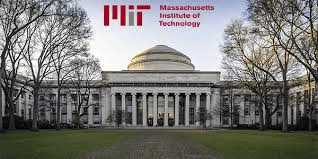
12 extracurriculars that strengthen an MIT application | RISE Research
12 extracurriculars that strengthen an MIT application | RISE Research
RISE Research
RISE Research
TL;DR: This list is for high-achieving US high school students in Grades 9 to 12 who want to know which extracurriculars carry real weight with MIT admissions. It covers research programs, competitions, and independent projects across STEM and beyond. The single most important criterion for choosing: does the activity produce a verified, external output that demonstrates intellectual initiative? If RISE Research looks like the right fit, book a free Research Assessment before the Summer 2026 cohort deadline closes.
Why Most Extracurricular Lists Get MIT Wrong
MIT does not admit students for collecting activities. The admissions office is explicit: they want evidence of genuine intellectual curiosity, pursued with depth and intensity. A student who has done 12 clubs looks very different from a student who has spent two years producing original research in a field they care about. The 12 extracurriculars that strengthen an MIT application are not the 12 most prestigious names on a list. They are the activities that produce something real: a published paper, a competition win, a working prototype, a measurable contribution to a field. This list was curated using MIT's own admissions guidance, verified outcome data from programs, and the Common App Activities section criteria. Every item is confirmed active for the 2026 cycle.
How We Ranked These Extracurriculars
MIT evaluates extracurriculars on depth, not breadth. The ranking here reflects four criteria. First, tangible output: does the activity produce something externally validated, not just a participation record? Second, intellectual alignment: does it demonstrate the kind of problem-solving and curiosity MIT describes in its admissions materials? Third, selectivity signal: does being accepted, published, or awarded carry independent credibility? Fourth, time commitment relative to output: activities that produce strong outcomes in a realistic timeframe rank higher than those requiring years for marginal returns. Free and paid options are both included. Honest notes on cost and difficulty appear throughout.
The 12 Best Extracurriculars That Strengthen an MIT Application in 2026
1. MIT PRIMES (Program for Research in Mathematics, Engineering, and Science)
MIT | Residential and online | Free | Deadline: Check official website
PRIMES places high school students with MIT researchers on year-long projects in mathematics, computer science, and related fields. Students in the residential track work on campus; the online CrowdMath track is open to a broader applicant pool. The program produces co-authored papers and conference presentations. Acceptance is extremely competitive, with only a small number of students selected nationally each year.
Best for: Students with exceptional mathematics or CS ability in Grades 10 to 12.
Output: Co-authored research paper, potential journal publication.
2. RISE Research
RISE Global Education | Online, 1-on-1 | Paid | Summer 2026 cohort open now
RISE Research is a selective 1-on-1 mentorship program where high school students in Grades 9 to 12 conduct original, university-level research under PhD mentors from Ivy League and Oxbridge institutions. The program runs for 10 weeks. Students produce a full research paper, submitted to an independent peer-reviewed journal. RISE scholars achieve a 90% publication rate across 40+ academic journals. The admissions outcomes are verified and specific: RISE scholars are accepted to Stanford at 18% versus the standard 8.7%, and to UPenn at 32% versus the standard 3.8%. The mentor network includes 500+ researchers across STEM, social sciences, law, and the humanities. RISE is paid and selective, and the application process assesses whether a student is ready to produce publishable work. For MIT applicants specifically, a peer-reviewed publication in an independent journal is categorically different from a program certificate or a school research project: it has passed external review by academics with no connection to RISE, which is the standard MIT admissions officers reference when they describe genuine intellectual initiative. Explore RISE publications and admissions outcomes before applying.
Why it beats a programme certificate: A RISE paper is reviewed and accepted by an independent academic journal with no connection to RISE. That external validation is what admissions officers at MIT, Stanford, and Harvard are looking for when they talk about genuine intellectual initiative.
Best for: Students whose primary goal is a peer-reviewed published paper before their college application deadlines.
3. Research Science Institute (RSI)
Center for Excellence in Education | Residential, MIT campus | Free | Deadline: Check official website
RSI is one of the most selective free summer research programs in the United States. Students spend six weeks on the MIT campus conducting mentored research with scientists and engineers. The program culminates in a research paper and symposium presentation. Acceptance rates are extremely low, and RSI alumni appear consistently in Intel Science Talent Search and Regeneron STS finalist lists.
Best for: Top-tier STEM students in Grade 11 who can commit to a residential summer program.
Output: Research paper and oral presentation.
4. Regeneron Science Talent Search (STS)
Society for Science | US students, Grades 12 | Up to $250,000 in awards | Deadline: Mid-November 2025
Regeneron STS is the most prestigious pre-college science competition in the United States. Students submit an original research paper in any scientific discipline. Finalists present in Washington, DC, and compete for awards totaling over $3 million. Fewer than 300 semifinalists are named from thousands of applicants. A Regeneron STS semifinalist or finalist designation carries significant weight in selective admissions, including MIT.
Admissions value: High
Why: MIT's admissions office specifically recognizes major national science competitions as indicators of research ability and independent intellectual work.
5. USA Computing Olympiad (USACO)
USACO | Online, US and international | Free | Rolling contests throughout the year
USACO is the premier competitive programming competition for US high school students. Students progress through four divisions: Bronze, Silver, Gold, and Platinum. Reaching the Platinum division or qualifying for the US team signals advanced algorithmic thinking. MIT's computer science and engineering programs actively recruit from the USACO pipeline. Participation is free and entirely self-directed.
Admissions value: High for CS and engineering applicants
Why: USACO Platinum and above is a recognized benchmark for CS ability at MIT and other top engineering schools.
6. American Mathematics Competitions (AMC 10/12, AIME, USAMO)
Mathematical Association of America | US students | Free to enter | AMC: November 2025
The AMC pathway runs from the AMC 10 and 12 through the AIME and into the USA(J)MO. Qualifying for AIME signals strong mathematical ability. Reaching USAMO or the Mathematical Olympiad Program is a top-tier signal for MIT mathematics and physics applicants. MIT's admissions data consistently shows high representation of AMC high scorers and USAMO participants in each admitted class.
Admissions value: High for mathematics and physics applicants
Why: Performance in the AMC pathway is one of the clearest external benchmarks of mathematical ability available to high school students.
7. Science Olympiad (Invitational and National)
Science Olympiad Inc. | US students, school teams | Free to participate | Nationals: May 2026
Science Olympiad teams compete in 23 events covering biology, chemistry, physics, engineering, and earth science. National-level participation and medals demonstrate both subject mastery and collaborative problem-solving. MIT regularly admits Science Olympiad national competitors and medalists. The program runs through the school year, making it compatible with other commitments.
Admissions value: Medium to high, depending on level reached
Why: National-level Science Olympiad performance is a recognized signal of STEM breadth and teamwork at selective universities including MIT.
8. Independent Research with a University Mentor
Self-initiated | Online or in-person | Free or low cost | No fixed deadline
Students who reach out directly to university professors and secure a mentored research position demonstrate exactly the kind of initiative MIT describes in its admissions criteria. This path requires persistence and a clear research question, but it is accessible to any student with a strong academic record and a genuine area of interest. The output varies: some students co-author papers, others contribute to ongoing lab work. For guidance on how to frame this on a college application, see how to present research experience in a university application.
Best for: Self-directed students in Grades 10 to 12 with a specific research interest and access to a local university.
Output: Varies. A co-authored paper or lab contribution is the strongest outcome.
9. Simons Summer Research Program
Stony Brook University | Residential | Free | Deadline: Check official website
The Simons Program places rising seniors with Stony Brook University faculty for a seven-week paid research experience in STEM fields. Students receive a stipend, conduct original research, and present at a final symposium. The program is highly selective and free to attend. It is one of the strongest free residential research programs available to US students outside of RSI.
Best for: Rising seniors in STEM who want a free residential research experience with university faculty.
Output: Research paper and symposium presentation.
10. MIT App Inventor and Maker Community Projects
Self-directed or club-based | Online and in-person | Free | No fixed deadline
Building functional software or hardware projects and sharing them publicly through GitHub, app stores, or maker communities demonstrates the engineering initiative MIT values. A working app with real users, an open-source tool with contributors, or a documented engineering project with measurable impact reads differently on a Common App Activities section than a club membership. The key is a verifiable, external output with evidence of use or recognition. For ideas on building a project that stands out, see how to build a passion project that stands out on college applications.
Best for: Students in CS, engineering, or product design who want to demonstrate applied skills.
Output: Deployed application, open-source repository, or documented engineering project with measurable use.
11. Regeneron ISEF (International Science and Engineering Fair)
Society for Science | US and international, Grades 9 to 12 | Scholarships and awards | ISEF: May 2026
ISEF is the world's largest pre-college science competition. Students qualify through affiliated regional and state fairs before competing at the international level. Award categories span all major STEM disciplines. Grand Award winners and Special Award recipients from ISEF appear regularly in MIT admitted class profiles. Participation requires a completed original research project, making it a natural complement to a structured research program.
Admissions value: High for STEM applicants who reach international level
Why: ISEF grand and special awards are among the most recognized pre-college science distinctions globally, and MIT admissions officers are familiar with the competition's rigor.
12. MIT OpenCourseWare Self-Study with Documented Output
Self-directed | Online | Free | No fixed deadline
Completing MIT OpenCourseWare courses at the undergraduate level and producing a documented output, such as a problem set portfolio, a written analysis, or a project based on course content, is a low-cost way to demonstrate intellectual readiness for MIT-level work. This approach is most effective when the output is shared publicly or submitted to a competition, creating external verification of the work completed. On its own, self-study without output carries limited admissions weight. Paired with a competition entry or research application, it strengthens the narrative significantly. See also research mentorship vs extracurriculars for top universities for context on how MIT evaluates different activity types.
Best for: Students in Grades 9 to 10 building subject knowledge before applying to selective programs.
Output: Documented project, competition entry, or public portfolio based on coursework.
12 Extracurriculars That Strengthen an MIT Application: Quick Comparison
Activity | Cost | Admissions Value | Output | Time Commitment |
|---|---|---|---|---|
MIT PRIMES | Free | High | Co-authored paper | Year-long |
RISE Research | Paid | High | Peer-reviewed published paper (90% pub. rate) | 10 weeks |
RSI | Free | High | Research paper and presentation | 6 weeks residential |
Regeneron STS | Free to enter | High | Original research paper | Self-directed, months |
USACO | Free | High (CS/Eng) | Competition ranking | Self-directed, ongoing |
AMC/AIME/USAMO | Free | High (Math/Physics) | Competition score and ranking | Self-directed, ongoing |
Science Olympiad | Free | Medium to high | Competition medals | School year, team-based |
Independent University Research | Free to low cost | High if published | Varies: paper or lab contribution | Varies |
Simons Summer Research | Free plus stipend | High | Research paper and presentation | 7 weeks residential |
Maker/App Projects | Free to low cost | Medium | Deployed app or engineering project | Self-directed |
Regeneron ISEF | Free to enter | High (international level) | Original research project | Self-directed, months |
MIT OCW Self-Study | Free | Lower alone, higher with output | Portfolio or competition entry | Self-directed |
Which Extracurricular Is Right for Your MIT Application?
The right choice depends on your grade, your subject focus, and your application timeline.
If your goal is a peer-reviewed published paper before November EA deadlines: RISE Research is the clearest path. The 10-week timeline and 90% publication rate are designed for exactly this scenario.
If your goal is a free residential program with direct MIT affiliation: apply to RSI or MIT PRIMES. Both are extremely selective. Apply early and apply to both.
If you are strongest in mathematics: prioritize the AMC pathway. Reaching AIME or USAMO is a recognized benchmark that MIT admissions officers weight heavily for mathematics and physics applicants.
If you are strongest in computer science: USACO Platinum is the clearest signal. Pair it with a public GitHub project or a competition entry for maximum impact.
If you are in Grade 9 or 10 and building your profile early: start with USACO or AMC, begin independent research outreach, and consider RISE Research to produce a published paper before your application year. See research programs for 12th graders before applications for grade-specific timing guidance.
If you want to enter a competition with your research: Regeneron ISEF and Regeneron STS both accept papers produced through structured programs including RISE. A published paper and a competition entry together create a stronger application narrative than either alone. For more on how national competitions factor into selective admissions, see top national competitions that impress college applications.
The common thread across every high-weight option on this list is external validation. MIT wants to see that your work has been assessed by someone outside your school. A published paper, a competition ranking, or a university mentor's co-authorship all satisfy that standard. A club leadership role or an internal school project does not.
The RISE Summer 2026 cohort is open now across the US. If a published paper before your college application deadline is the goal, book a free 20-minute Research Assessment to find out whether the timeline works for your grade and subject.
Frequently Asked Questions About Extracurriculars That Strengthen an MIT Application
Which extracurriculars impress MIT admissions officers the most?
MIT values depth over breadth. Activities that produce externally validated outputs, such as published research papers, national competition awards, or deployed engineering projects, carry more weight than club memberships or school-level recognition. MIT's own admissions guidance emphasizes intellectual initiative and the ability to contribute to a field, not a long list of activities.
The strongest signals are: Regeneron STS or ISEF recognition, USACO Platinum or above, USAMO qualification, published research, and RSI or PRIMES participation. These are externally verified and well-known to MIT's admissions office. A single strong, verified output outperforms five moderate activities in the Activities section.
Is a published research paper better than a competition win for MIT?
Both carry weight, but they signal different things. A competition win signals performance under standardized conditions. A published paper signals the ability to identify a research question, execute original work, and meet the standards of external peer review. For MIT, both are strong. The best applications often include both: a published paper submitted through a program like RISE, then entered into Regeneron STS or ISEF.
If you can only pursue one, consider your subject. Mathematics and CS applicants often benefit most from competition pathways. Students in biology, social science, or interdisciplinary fields often benefit more from publication.
How many extracurriculars should I have for an MIT application?
MIT's Common App Activities section allows up to 10 entries. MIT does not expect all 10 to be filled. Quality is more important than quantity. Admissions officers read the Activities section looking for a coherent intellectual narrative, not a checklist. Three to five deep, externally validated activities tell a stronger story than 10 surface-level ones.
Focus on activities where you have produced something verifiable: a paper, a ranking, a working project, a recognized award. Each entry should answer the question: what did you actually do, and how do we know it was good?
Does not getting into RSI or MIT PRIMES hurt my MIT application?
No. RSI and PRIMES reject the vast majority of applicants, including students who are fully capable of doing serious research. Not being selected does not appear on your application. What matters is what you did instead. Students who respond to a rejection by finding another path to original research, such as RISE Research, independent university mentorship, or a Regeneron STS submission, demonstrate exactly the kind of persistence MIT values.
For a full list of alternatives, see the RISE blog on how research strengthens Ivy League applications regardless of which program you use.
Can online research programs produce outcomes that impress MIT?
Yes, if the output is externally validated. An online program that produces a peer-reviewed published paper in an independent journal carries the same admissions weight as a residential program with the same output. What MIT evaluates is the paper itself and the journal it appears in, not whether the mentorship happened in person or online. RISE Research is fully online and produces published papers in 40+ indexed journals. For more on this, see whether to submit a research abstract with your college application.
Build the Extracurricular Profile MIT Is Looking For
The three things that matter most in an MIT extracurricular profile are external validation, intellectual depth, and a coherent narrative. A published paper, a national competition ranking, and a deployed project all satisfy the first criterion. Pursuing one area with genuine commitment over multiple years satisfies the second. Choosing activities that connect to your stated academic interest satisfies the third.
From this list, the highest-impact combinations are: RISE Research plus Regeneron STS or ISEF for research-oriented students; USACO plus an independent CS project for computing applicants; and AMC pathway plus independent research for mathematics students. Free options including RSI, MIT PRIMES, USACO, and the AMC pathway are all strong starting points for students in Grades 9 and 10 who are building their profiles early.
The Summer 2026 Cohort Deadline is approaching. If RISE Research sounds like the right fit for your goals, schedule a free Research Assessment and we will tell you exactly what is achievable before your application deadlines.
TL;DR: This list is for high-achieving US high school students in Grades 9 to 12 who want to know which extracurriculars carry real weight with MIT admissions. It covers research programs, competitions, and independent projects across STEM and beyond. The single most important criterion for choosing: does the activity produce a verified, external output that demonstrates intellectual initiative? If RISE Research looks like the right fit, book a free Research Assessment before the Summer 2026 cohort deadline closes.
Why Most Extracurricular Lists Get MIT Wrong
MIT does not admit students for collecting activities. The admissions office is explicit: they want evidence of genuine intellectual curiosity, pursued with depth and intensity. A student who has done 12 clubs looks very different from a student who has spent two years producing original research in a field they care about. The 12 extracurriculars that strengthen an MIT application are not the 12 most prestigious names on a list. They are the activities that produce something real: a published paper, a competition win, a working prototype, a measurable contribution to a field. This list was curated using MIT's own admissions guidance, verified outcome data from programs, and the Common App Activities section criteria. Every item is confirmed active for the 2026 cycle.
How We Ranked These Extracurriculars
MIT evaluates extracurriculars on depth, not breadth. The ranking here reflects four criteria. First, tangible output: does the activity produce something externally validated, not just a participation record? Second, intellectual alignment: does it demonstrate the kind of problem-solving and curiosity MIT describes in its admissions materials? Third, selectivity signal: does being accepted, published, or awarded carry independent credibility? Fourth, time commitment relative to output: activities that produce strong outcomes in a realistic timeframe rank higher than those requiring years for marginal returns. Free and paid options are both included. Honest notes on cost and difficulty appear throughout.
The 12 Best Extracurriculars That Strengthen an MIT Application in 2026
1. MIT PRIMES (Program for Research in Mathematics, Engineering, and Science)
MIT | Residential and online | Free | Deadline: Check official website
PRIMES places high school students with MIT researchers on year-long projects in mathematics, computer science, and related fields. Students in the residential track work on campus; the online CrowdMath track is open to a broader applicant pool. The program produces co-authored papers and conference presentations. Acceptance is extremely competitive, with only a small number of students selected nationally each year.
Best for: Students with exceptional mathematics or CS ability in Grades 10 to 12.
Output: Co-authored research paper, potential journal publication.
2. RISE Research
RISE Global Education | Online, 1-on-1 | Paid | Summer 2026 cohort open now
RISE Research is a selective 1-on-1 mentorship program where high school students in Grades 9 to 12 conduct original, university-level research under PhD mentors from Ivy League and Oxbridge institutions. The program runs for 10 weeks. Students produce a full research paper, submitted to an independent peer-reviewed journal. RISE scholars achieve a 90% publication rate across 40+ academic journals. The admissions outcomes are verified and specific: RISE scholars are accepted to Stanford at 18% versus the standard 8.7%, and to UPenn at 32% versus the standard 3.8%. The mentor network includes 500+ researchers across STEM, social sciences, law, and the humanities. RISE is paid and selective, and the application process assesses whether a student is ready to produce publishable work. For MIT applicants specifically, a peer-reviewed publication in an independent journal is categorically different from a program certificate or a school research project: it has passed external review by academics with no connection to RISE, which is the standard MIT admissions officers reference when they describe genuine intellectual initiative. Explore RISE publications and admissions outcomes before applying.
Why it beats a programme certificate: A RISE paper is reviewed and accepted by an independent academic journal with no connection to RISE. That external validation is what admissions officers at MIT, Stanford, and Harvard are looking for when they talk about genuine intellectual initiative.
Best for: Students whose primary goal is a peer-reviewed published paper before their college application deadlines.
3. Research Science Institute (RSI)
Center for Excellence in Education | Residential, MIT campus | Free | Deadline: Check official website
RSI is one of the most selective free summer research programs in the United States. Students spend six weeks on the MIT campus conducting mentored research with scientists and engineers. The program culminates in a research paper and symposium presentation. Acceptance rates are extremely low, and RSI alumni appear consistently in Intel Science Talent Search and Regeneron STS finalist lists.
Best for: Top-tier STEM students in Grade 11 who can commit to a residential summer program.
Output: Research paper and oral presentation.
4. Regeneron Science Talent Search (STS)
Society for Science | US students, Grades 12 | Up to $250,000 in awards | Deadline: Mid-November 2025
Regeneron STS is the most prestigious pre-college science competition in the United States. Students submit an original research paper in any scientific discipline. Finalists present in Washington, DC, and compete for awards totaling over $3 million. Fewer than 300 semifinalists are named from thousands of applicants. A Regeneron STS semifinalist or finalist designation carries significant weight in selective admissions, including MIT.
Admissions value: High
Why: MIT's admissions office specifically recognizes major national science competitions as indicators of research ability and independent intellectual work.
5. USA Computing Olympiad (USACO)
USACO | Online, US and international | Free | Rolling contests throughout the year
USACO is the premier competitive programming competition for US high school students. Students progress through four divisions: Bronze, Silver, Gold, and Platinum. Reaching the Platinum division or qualifying for the US team signals advanced algorithmic thinking. MIT's computer science and engineering programs actively recruit from the USACO pipeline. Participation is free and entirely self-directed.
Admissions value: High for CS and engineering applicants
Why: USACO Platinum and above is a recognized benchmark for CS ability at MIT and other top engineering schools.
6. American Mathematics Competitions (AMC 10/12, AIME, USAMO)
Mathematical Association of America | US students | Free to enter | AMC: November 2025
The AMC pathway runs from the AMC 10 and 12 through the AIME and into the USA(J)MO. Qualifying for AIME signals strong mathematical ability. Reaching USAMO or the Mathematical Olympiad Program is a top-tier signal for MIT mathematics and physics applicants. MIT's admissions data consistently shows high representation of AMC high scorers and USAMO participants in each admitted class.
Admissions value: High for mathematics and physics applicants
Why: Performance in the AMC pathway is one of the clearest external benchmarks of mathematical ability available to high school students.
7. Science Olympiad (Invitational and National)
Science Olympiad Inc. | US students, school teams | Free to participate | Nationals: May 2026
Science Olympiad teams compete in 23 events covering biology, chemistry, physics, engineering, and earth science. National-level participation and medals demonstrate both subject mastery and collaborative problem-solving. MIT regularly admits Science Olympiad national competitors and medalists. The program runs through the school year, making it compatible with other commitments.
Admissions value: Medium to high, depending on level reached
Why: National-level Science Olympiad performance is a recognized signal of STEM breadth and teamwork at selective universities including MIT.
8. Independent Research with a University Mentor
Self-initiated | Online or in-person | Free or low cost | No fixed deadline
Students who reach out directly to university professors and secure a mentored research position demonstrate exactly the kind of initiative MIT describes in its admissions criteria. This path requires persistence and a clear research question, but it is accessible to any student with a strong academic record and a genuine area of interest. The output varies: some students co-author papers, others contribute to ongoing lab work. For guidance on how to frame this on a college application, see how to present research experience in a university application.
Best for: Self-directed students in Grades 10 to 12 with a specific research interest and access to a local university.
Output: Varies. A co-authored paper or lab contribution is the strongest outcome.
9. Simons Summer Research Program
Stony Brook University | Residential | Free | Deadline: Check official website
The Simons Program places rising seniors with Stony Brook University faculty for a seven-week paid research experience in STEM fields. Students receive a stipend, conduct original research, and present at a final symposium. The program is highly selective and free to attend. It is one of the strongest free residential research programs available to US students outside of RSI.
Best for: Rising seniors in STEM who want a free residential research experience with university faculty.
Output: Research paper and symposium presentation.
10. MIT App Inventor and Maker Community Projects
Self-directed or club-based | Online and in-person | Free | No fixed deadline
Building functional software or hardware projects and sharing them publicly through GitHub, app stores, or maker communities demonstrates the engineering initiative MIT values. A working app with real users, an open-source tool with contributors, or a documented engineering project with measurable impact reads differently on a Common App Activities section than a club membership. The key is a verifiable, external output with evidence of use or recognition. For ideas on building a project that stands out, see how to build a passion project that stands out on college applications.
Best for: Students in CS, engineering, or product design who want to demonstrate applied skills.
Output: Deployed application, open-source repository, or documented engineering project with measurable use.
11. Regeneron ISEF (International Science and Engineering Fair)
Society for Science | US and international, Grades 9 to 12 | Scholarships and awards | ISEF: May 2026
ISEF is the world's largest pre-college science competition. Students qualify through affiliated regional and state fairs before competing at the international level. Award categories span all major STEM disciplines. Grand Award winners and Special Award recipients from ISEF appear regularly in MIT admitted class profiles. Participation requires a completed original research project, making it a natural complement to a structured research program.
Admissions value: High for STEM applicants who reach international level
Why: ISEF grand and special awards are among the most recognized pre-college science distinctions globally, and MIT admissions officers are familiar with the competition's rigor.
12. MIT OpenCourseWare Self-Study with Documented Output
Self-directed | Online | Free | No fixed deadline
Completing MIT OpenCourseWare courses at the undergraduate level and producing a documented output, such as a problem set portfolio, a written analysis, or a project based on course content, is a low-cost way to demonstrate intellectual readiness for MIT-level work. This approach is most effective when the output is shared publicly or submitted to a competition, creating external verification of the work completed. On its own, self-study without output carries limited admissions weight. Paired with a competition entry or research application, it strengthens the narrative significantly. See also research mentorship vs extracurriculars for top universities for context on how MIT evaluates different activity types.
Best for: Students in Grades 9 to 10 building subject knowledge before applying to selective programs.
Output: Documented project, competition entry, or public portfolio based on coursework.
12 Extracurriculars That Strengthen an MIT Application: Quick Comparison
Activity | Cost | Admissions Value | Output | Time Commitment |
|---|---|---|---|---|
MIT PRIMES | Free | High | Co-authored paper | Year-long |
RISE Research | Paid | High | Peer-reviewed published paper (90% pub. rate) | 10 weeks |
RSI | Free | High | Research paper and presentation | 6 weeks residential |
Regeneron STS | Free to enter | High | Original research paper | Self-directed, months |
USACO | Free | High (CS/Eng) | Competition ranking | Self-directed, ongoing |
AMC/AIME/USAMO | Free | High (Math/Physics) | Competition score and ranking | Self-directed, ongoing |
Science Olympiad | Free | Medium to high | Competition medals | School year, team-based |
Independent University Research | Free to low cost | High if published | Varies: paper or lab contribution | Varies |
Simons Summer Research | Free plus stipend | High | Research paper and presentation | 7 weeks residential |
Maker/App Projects | Free to low cost | Medium | Deployed app or engineering project | Self-directed |
Regeneron ISEF | Free to enter | High (international level) | Original research project | Self-directed, months |
MIT OCW Self-Study | Free | Lower alone, higher with output | Portfolio or competition entry | Self-directed |
Which Extracurricular Is Right for Your MIT Application?
The right choice depends on your grade, your subject focus, and your application timeline.
If your goal is a peer-reviewed published paper before November EA deadlines: RISE Research is the clearest path. The 10-week timeline and 90% publication rate are designed for exactly this scenario.
If your goal is a free residential program with direct MIT affiliation: apply to RSI or MIT PRIMES. Both are extremely selective. Apply early and apply to both.
If you are strongest in mathematics: prioritize the AMC pathway. Reaching AIME or USAMO is a recognized benchmark that MIT admissions officers weight heavily for mathematics and physics applicants.
If you are strongest in computer science: USACO Platinum is the clearest signal. Pair it with a public GitHub project or a competition entry for maximum impact.
If you are in Grade 9 or 10 and building your profile early: start with USACO or AMC, begin independent research outreach, and consider RISE Research to produce a published paper before your application year. See research programs for 12th graders before applications for grade-specific timing guidance.
If you want to enter a competition with your research: Regeneron ISEF and Regeneron STS both accept papers produced through structured programs including RISE. A published paper and a competition entry together create a stronger application narrative than either alone. For more on how national competitions factor into selective admissions, see top national competitions that impress college applications.
The common thread across every high-weight option on this list is external validation. MIT wants to see that your work has been assessed by someone outside your school. A published paper, a competition ranking, or a university mentor's co-authorship all satisfy that standard. A club leadership role or an internal school project does not.
The RISE Summer 2026 cohort is open now across the US. If a published paper before your college application deadline is the goal, book a free 20-minute Research Assessment to find out whether the timeline works for your grade and subject.
Frequently Asked Questions About Extracurriculars That Strengthen an MIT Application
Which extracurriculars impress MIT admissions officers the most?
MIT values depth over breadth. Activities that produce externally validated outputs, such as published research papers, national competition awards, or deployed engineering projects, carry more weight than club memberships or school-level recognition. MIT's own admissions guidance emphasizes intellectual initiative and the ability to contribute to a field, not a long list of activities.
The strongest signals are: Regeneron STS or ISEF recognition, USACO Platinum or above, USAMO qualification, published research, and RSI or PRIMES participation. These are externally verified and well-known to MIT's admissions office. A single strong, verified output outperforms five moderate activities in the Activities section.
Is a published research paper better than a competition win for MIT?
Both carry weight, but they signal different things. A competition win signals performance under standardized conditions. A published paper signals the ability to identify a research question, execute original work, and meet the standards of external peer review. For MIT, both are strong. The best applications often include both: a published paper submitted through a program like RISE, then entered into Regeneron STS or ISEF.
If you can only pursue one, consider your subject. Mathematics and CS applicants often benefit most from competition pathways. Students in biology, social science, or interdisciplinary fields often benefit more from publication.
How many extracurriculars should I have for an MIT application?
MIT's Common App Activities section allows up to 10 entries. MIT does not expect all 10 to be filled. Quality is more important than quantity. Admissions officers read the Activities section looking for a coherent intellectual narrative, not a checklist. Three to five deep, externally validated activities tell a stronger story than 10 surface-level ones.
Focus on activities where you have produced something verifiable: a paper, a ranking, a working project, a recognized award. Each entry should answer the question: what did you actually do, and how do we know it was good?
Does not getting into RSI or MIT PRIMES hurt my MIT application?
No. RSI and PRIMES reject the vast majority of applicants, including students who are fully capable of doing serious research. Not being selected does not appear on your application. What matters is what you did instead. Students who respond to a rejection by finding another path to original research, such as RISE Research, independent university mentorship, or a Regeneron STS submission, demonstrate exactly the kind of persistence MIT values.
For a full list of alternatives, see the RISE blog on how research strengthens Ivy League applications regardless of which program you use.
Can online research programs produce outcomes that impress MIT?
Yes, if the output is externally validated. An online program that produces a peer-reviewed published paper in an independent journal carries the same admissions weight as a residential program with the same output. What MIT evaluates is the paper itself and the journal it appears in, not whether the mentorship happened in person or online. RISE Research is fully online and produces published papers in 40+ indexed journals. For more on this, see whether to submit a research abstract with your college application.
Build the Extracurricular Profile MIT Is Looking For
The three things that matter most in an MIT extracurricular profile are external validation, intellectual depth, and a coherent narrative. A published paper, a national competition ranking, and a deployed project all satisfy the first criterion. Pursuing one area with genuine commitment over multiple years satisfies the second. Choosing activities that connect to your stated academic interest satisfies the third.
From this list, the highest-impact combinations are: RISE Research plus Regeneron STS or ISEF for research-oriented students; USACO plus an independent CS project for computing applicants; and AMC pathway plus independent research for mathematics students. Free options including RSI, MIT PRIMES, USACO, and the AMC pathway are all strong starting points for students in Grades 9 and 10 who are building their profiles early.
The Summer 2026 Cohort Deadline is approaching. If RISE Research sounds like the right fit for your goals, schedule a free Research Assessment and we will tell you exactly what is achievable before your application deadlines.
Fall 2026 Cohort Deadline Closing on 28th September
Book a free 20-min strategy call
Book a free 20-min strategy call
Read More