>
>
>
12 best biology research programs for US high school students (2026)
12 best biology research programs for US high school students (2026)
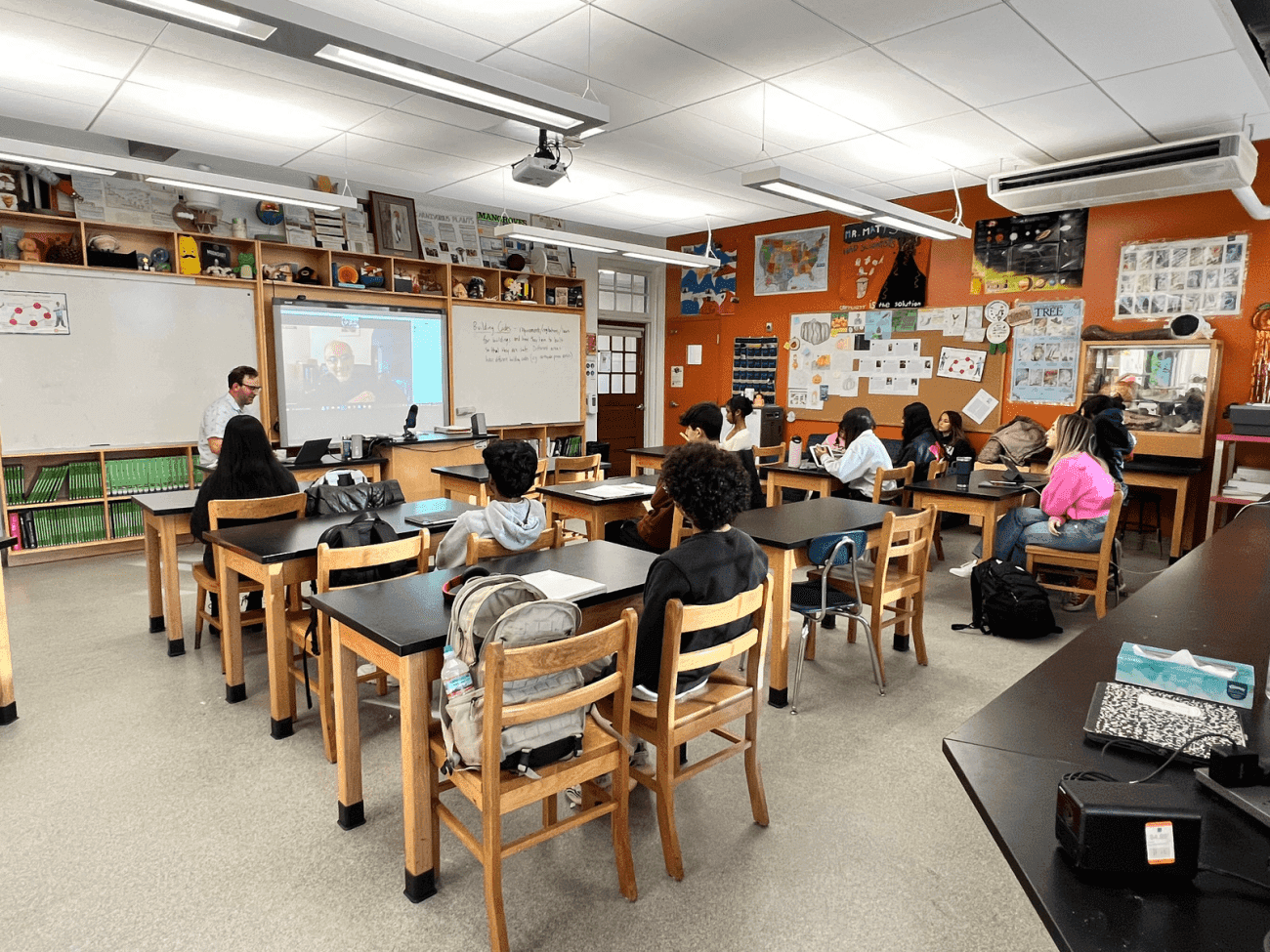
12 best biology research programs for US high school students (2026) | RISE Research
12 best biology research programs for US high school students (2026) | RISE Research
RISE Research
RISE Research
TL;DR: This list covers the 12 best biology research programs for US high school students in 2026, including free residential programs, paid online programs, and selective mentorship options. Programs are ranked by verified output, mentor credentials, and admissions outcomes. If a peer-reviewed published paper before your college application deadline is the goal, RISE Research is the strongest option on this list. Book a free Research Assessment to confirm whether the timeline works for your grade.
Why Biology Research Programs Matter for College Admissions
The 12 best biology research programs for US high school students in 2026 span everything from free university-hosted summers to selective online mentorship programs that end in publication. The challenge is not finding a program. The challenge is knowing which ones produce outcomes that admissions officers at MIT, Stanford, and Johns Hopkins actually notice.
A lab visit and a peer-reviewed paper both appear in the Common App Activities section. They do not read the same way. This list focuses on programs where students produce something externally validated: a published paper, a competitive poster, or a presentation at a university symposium. Programs that offer only a certificate of completion are not included.
Every program on this list has been verified as active for 2026. Deadlines and costs are sourced from official program websites. Where a cost or deadline was not publicly confirmed at the time of writing, we note that and direct you to the official source.
How We Ranked These Biology Research Programs
Programs are ranked by five criteria, in order of weight:
Verified output: Does the student produce something externally validated at the end, such as a published paper or a juried poster?
Mentor credentials: Are mentors active researchers with PhD-level expertise in biology or a life science subfield?
Admissions outcomes: Does the program publish verified data on where alumni enroll?
Accessibility: Is the program available online, and what is the cost range?
2026 availability: Is the program confirmed to be running this cycle?
The 12 Best Biology Research Programs for US High School Students in 2026
1. Research Science Institute (RSI) at MIT
Center for Excellence in Education | Residential | Free (full scholarship) | Deadline: Check official website
RSI is the most selective free summer research program in the US, placing approximately 80 students at MIT each summer for six weeks of intensive lab-based research under faculty mentors. Students in biology and life sciences work on original experiments and present findings at a concluding symposium. Acceptance rates are below 1%, making RSI extraordinarily competitive. Students who do not gain admission should read the alternatives further down this list.
Best for: Grade 11 students with a strong science competition record seeking a fully funded residential experience.
Output: Research paper and oral presentation at symposium.
Official URL: cee.org/research-science-institute
2. RISE Research
RISE Global Education | Online (1-on-1) | Paid (check official website for current pricing) | Summer 2026 Cohort Deadline Approaching
RISE Research is a selective 1-on-1 mentorship program where high school students in Grades 9 to 12 conduct original, university-level biology research under PhD mentors from Ivy League and Oxbridge institutions. The program runs for 10 weeks online, with weekly synchronous sessions between the student and their assigned mentor. Students develop a research question, conduct a literature review, produce original analysis, and submit a completed paper to an independent academic journal. RISE mentors are published across 40+ academic journals, and the program reports a 90% publication rate for students who complete the full program. Admissions outcomes for RISE scholars are documented: an 18% Stanford acceptance rate versus the standard 8.7%, and a 32% UPenn acceptance rate versus the standard 3.8%. With 500+ mentors across biology, neuroscience, biochemistry, ecology, and related fields, RISE covers virtually every subfield a high school student might want to pursue. RISE is paid and selective, and it is honest about both.
Why it beats a programme certificate: A RISE paper is reviewed and accepted by an independent academic journal with no connection to RISE. That external validation is what admissions officers at MIT, Stanford, and Harvard are looking for when they talk about genuine intellectual initiative.
Best for: Students whose primary goal is a peer-reviewed published paper in biology before their college application deadlines.
Output: Peer-reviewed paper submitted to and published in an independent indexed journal.
Official URL: riseglobaleducation.com
3. Johns Hopkins Center for Talented Youth (CTY) Research Programs
Johns Hopkins University | Residential and Online | Paid | Deadline: Check official website
CTY offers intensive academic programs in biology and life sciences for academically advanced students, including options at the high school level. Residential programs run on university campuses and include lab-based coursework. CTY is not a research mentorship program in the same sense as RSI or RISE, but it provides structured academic acceleration in biology that strengthens a student's preparation for independent research. Costs vary by program and financial aid is available.
Best for: Grade 9 and 10 students building foundational biology knowledge before pursuing independent research.
Output: Coursework completion; no independent publication.
Official URL: cty.jhu.edu
4. Simons Summer Research Program
Stony Brook University | Residential | Free (stipend provided) | Deadline: Check official website
The Simons Summer Research Program places Long Island high school students in Stony Brook University research labs for seven weeks each summer. Students work alongside faculty mentors on ongoing research projects in biology, biochemistry, and neuroscience. The program is free and provides a stipend. Eligibility is limited to students from specific Long Island school districts, which significantly restricts access for most US students.
Best for: Long Island-based Grade 11 students with strong science grades seeking a free university lab experience.
Output: Research poster presented at a concluding symposium.
Official URL: stonybrook.edu/simons
5. Lumiere Research Scholar Program
Lumiere Education | Online | Paid | Deadline: Rolling admissions, check official website
Lumiere pairs high school students with PhD mentors for 12-week independent research projects across biology and life sciences. Sessions are conducted online, typically one hour per week. Students produce a research paper at the end of the program, though publication is not guaranteed and depends on the individual project. Lumiere is less selective than RISE and accepts a broader range of student backgrounds, which may suit students earlier in their research journey.
Best for: Grade 10 and 11 students seeking an introduction to independent research with flexible scheduling.
Output: Research paper (publication not guaranteed).
Official URL: lumiere-education.com
6. NIH High School Scientific Training and Enrichment Program (HiSTEP)
National Institutes of Health | Residential | Free | Deadline: Check official website
HiSTEP is a free program run by the NIH that places high school students from the Washington DC metropolitan area in NIH research labs for an academic-year internship. Students work on real biomedical research projects under NIH scientists. Eligibility is geographically restricted to students in DC, Maryland, and Virginia, limiting national access. For students who qualify, it is one of the most prestigious free biology research experiences available to high schoolers in the US.
Best for: DC-area Grade 11 and 12 students interested in biomedical research and government science careers.
Output: Lab research contribution; no independent publication.
Official URL: training.nih.gov/programs/highschool
7. Polygence Research Program
Polygence | Online | Paid | Deadline: Rolling admissions
Polygence offers 1-on-1 online mentorship in biology and life sciences, connecting students with PhD and graduate student mentors for self-directed research projects. The program is flexible in structure and duration, which suits students balancing heavy school schedules. Output varies widely by student and mentor. Some students produce papers; others produce podcasts, websites, or presentations. Students specifically seeking a peer-reviewed publication should confirm the publication pathway with Polygence before enrolling.
Best for: Students who want flexible pacing and are open to a range of output formats beyond traditional academic papers.
Output: Varies by project (paper, presentation, creative project).
Official URL: polygence.org
8. Garcia Research Scholar Program
Stony Brook University | Residential | Free | Deadline: Check official website
The Garcia Research Scholar Program is a seven-week summer program at Stony Brook University focused on polymer science, materials chemistry, and biotechnology. Students conduct original research under faculty supervision and present findings at a symposium. The program is free and highly selective. Its focus is narrower than general biology programs, making it most relevant for students interested in biomaterials or biochemistry rather than ecology or molecular biology.
Best for: Grade 11 students with a specific interest in biochemistry or biomaterials research.
Output: Research poster and symposium presentation.
Official URL: stonybrook.edu/garcia
9. PRIMES-USA (MIT PRIMES)
MIT | Online | Free | Deadline: Check official website
MIT PRIMES-USA is a free, year-long online research program for high school students in the US outside the Boston area. While PRIMES is primarily focused on mathematics and computer science, the PRIMES-USA strand includes some computational biology and bioinformatics projects. Students work with MIT researchers on original problems and submit papers at the end of the year. Acceptance is extremely competitive. Students interested in the intersection of biology and data science should review available project topics before applying.
Best for: Grade 10 and 11 students with strong mathematics skills interested in computational biology.
Output: Research paper submitted to arXiv or a peer-reviewed journal.
Official URL: math.mit.edu/research/highschool/primes/usa
10. Regeneron Science Talent Search (STS) Pipeline Programs
Society for Science | Online and In-Person | Varies | Deadline: Check official website
While Regeneron STS is a competition rather than a program, many students build their STS submissions through independent research conducted during the school year. Society for Science also supports affiliated ISEF-qualifying fairs that serve as feeder pipelines. Students who want to compete in Regeneron STS need to begin independent biology research at least 12 to 18 months before the competition deadline. Programs like RISE Research are commonly used as the research foundation for STS submissions. See the RISE Awards page for examples of scholars who have used their RISE research in competition contexts.
Best for: Grade 11 students planning a Regeneron STS submission who need a structured research foundation.
Output: Independent research paper submitted to STS.
Official URL: societyforscience.org/regeneron-sts
11. Cold Spring Harbor Laboratory Partners for the Future
Cold Spring Harbor Laboratory | Residential | Free | Deadline: Check official website
Partners for the Future is a competitive internship program at Cold Spring Harbor Laboratory, one of the world's leading biology research institutions. Selected high school students spend a semester or full year working in CSHL research labs alongside scientists. The program is geographically accessible primarily to students in the New York area. Students gain authentic lab research experience in genetics, neuroscience, and molecular biology. No independent publication is guaranteed, but the institutional affiliation carries significant weight on a college application.
Best for: New York-area Grade 11 and 12 students seeking immersive lab experience at a world-class biology institution.
Output: Lab research contribution and potential co-authorship on faculty papers.
Official URL: cshl.edu/education/high-school-programs
12. Broad Institute High School Summer Research Program
Broad Institute of MIT and Harvard | Residential | Free | Deadline: Check official website
The Broad Institute offers a competitive summer research program for high school students interested in genomics, computational biology, and biomedical science. Students work in Broad research labs under scientist mentors and present their findings at the end of the summer. The program is free and highly selective, drawing applicants from across the US. It is particularly well suited for students interested in the intersection of biology and data science or precision medicine.
Best for: Grade 11 students with strong biology and data skills interested in genomics or biomedical research.
Output: Research presentation at end-of-program symposium.
Official URL: broadinstitute.org/education
Biology Research Programs at a Glance: Quick Comparison
Program | Format | Cost | Output | Pub. Rate |
|---|---|---|---|---|
RSI at MIT | Residential | Free | Paper + symposium | Not disclosed |
RISE Research | Online (1-on-1) | Paid | Peer-reviewed published paper | 90% |
JHU CTY | Residential/Online | Paid | Coursework only | Not applicable |
Simons SRP | Residential | Free + stipend | Research poster | Not disclosed |
Lumiere Research | Online (1-on-1) | Paid | Research paper | Not disclosed |
NIH HiSTEP | Residential | Free | Lab contribution | Not applicable |
Polygence | Online (1-on-1) | Paid | Varies by project | Not disclosed |
Garcia Research | Residential | Free | Poster + symposium | Not disclosed |
MIT PRIMES-USA | Online | Free | Paper (arXiv/journal) | Not disclosed |
Regeneron STS | Independent | Varies | Competition paper | Not applicable |
CSHL Partners | Residential | Free | Lab contribution | Not applicable |
Broad Institute | Residential | Free | Symposium presentation | Not disclosed |
Which Biology Research Program Is Right for You?
The right program depends on your specific goal, grade, location, and budget. Here is a direct decision framework:
If your goal is a peer-reviewed published paper before November EA deadlines: RISE Research. No other program on this list guarantees a 90% publication rate with external journal validation.
If your goal is a free selective residential program with a world-class biology institution: Apply to RSI, the Broad Institute program, or Cold Spring Harbor Laboratory Partners for the Future. All three are free and highly selective.
If you are in Grade 9 or 10 and want to start building a biology research profile early: RISE Research (if budget allows) or MIT PRIMES-USA (if your interest is computational biology). Starting early gives you time to publish before junior year.
If you are geographically restricted and need an online option: RISE Research or Lumiere Research. Both are fully online. RISE has the stronger publication track record.
If you want a free online option and are strong in mathematics: MIT PRIMES-USA is the most rigorous free online option, though the biology strand is limited to computational projects.
Every decision should connect back to one question: what does this program produce that an admissions officer can verify independently? See the RISE Results page for verified admissions outcomes and the Publications page for examples of what RISE scholars have produced.
The RISE Summer 2026 cohort is open now across the US. If a published biology paper before your college application deadline is the goal, book a free 20-minute Research Assessment to find out whether the timeline works for your grade and subject.
Frequently Asked Questions About Biology Research Programs for High School Students
What is the best free biology research program for US high school students?
RSI at MIT is the most prestigious free option, but it accepts fewer than 1% of applicants. For students who do not gain RSI admission, the Broad Institute High School Summer Research Program and Cold Spring Harbor Laboratory Partners for the Future are free, selective, and carry strong institutional weight. Eligibility for several free programs is geographically restricted, so check location requirements before applying.
Do biology research programs help with Ivy League admissions?
Yes, but only when they produce externally validated output. Completing a program is not the same as publishing in a journal or presenting at a university symposium. Admissions officers at selective universities look for evidence of genuine intellectual initiative, which means work that exists outside the program itself. A peer-reviewed paper, a competition submission, or a co-authored faculty paper all meet that standard. A certificate of completion does not.
Is an online biology research program as good as an in-person one for college applications?
Format matters less than output. A student who completes an online program and publishes a peer-reviewed paper has a stronger application asset than a student who attends a residential program and produces only a poster. RISE Research is fully online and reports an 18% Stanford acceptance rate for its scholars. Evaluate programs by what they produce, not where they take place. For more context, see our guide to the best STEM research programs for US high school students.
How do I choose between a free and a paid biology research program?
Free programs are almost always more selective and often geographically restricted. If you qualify for a free program like RSI, the Broad Institute, or NIH HiSTEP, apply. If you do not qualify or are not admitted, a paid program with a strong publication track record is the next best option. The key question is not cost but output: what does the student have at the end that an admissions officer can verify?
Which biology research programs lead to publication in an academic journal?
RISE Research has the highest documented publication rate on this list at 90%, with papers published across 40+ independent academic journals. MIT PRIMES-USA also leads to publication for some students, primarily in mathematics and computational biology. Lumiere Research offers a publication pathway but does not publish a verified rate. Most free residential programs produce posters or presentations rather than peer-reviewed papers. Students whose primary goal is publication should prioritize RISE Research or MIT PRIMES-USA depending on their subject interest.
The Three Things That Matter Most in a Biology Research Program
After reviewing all 12 programs on this list, three criteria separate the strongest options from the rest. First, external validation: the output must exist outside the program and be reviewed by someone with no connection
TL;DR: This list covers the 12 best biology research programs for US high school students in 2026, including free residential programs, paid online programs, and selective mentorship options. Programs are ranked by verified output, mentor credentials, and admissions outcomes. If a peer-reviewed published paper before your college application deadline is the goal, RISE Research is the strongest option on this list. Book a free Research Assessment to confirm whether the timeline works for your grade.
Why Biology Research Programs Matter for College Admissions
The 12 best biology research programs for US high school students in 2026 span everything from free university-hosted summers to selective online mentorship programs that end in publication. The challenge is not finding a program. The challenge is knowing which ones produce outcomes that admissions officers at MIT, Stanford, and Johns Hopkins actually notice.
A lab visit and a peer-reviewed paper both appear in the Common App Activities section. They do not read the same way. This list focuses on programs where students produce something externally validated: a published paper, a competitive poster, or a presentation at a university symposium. Programs that offer only a certificate of completion are not included.
Every program on this list has been verified as active for 2026. Deadlines and costs are sourced from official program websites. Where a cost or deadline was not publicly confirmed at the time of writing, we note that and direct you to the official source.
How We Ranked These Biology Research Programs
Programs are ranked by five criteria, in order of weight:
Verified output: Does the student produce something externally validated at the end, such as a published paper or a juried poster?
Mentor credentials: Are mentors active researchers with PhD-level expertise in biology or a life science subfield?
Admissions outcomes: Does the program publish verified data on where alumni enroll?
Accessibility: Is the program available online, and what is the cost range?
2026 availability: Is the program confirmed to be running this cycle?
The 12 Best Biology Research Programs for US High School Students in 2026
1. Research Science Institute (RSI) at MIT
Center for Excellence in Education | Residential | Free (full scholarship) | Deadline: Check official website
RSI is the most selective free summer research program in the US, placing approximately 80 students at MIT each summer for six weeks of intensive lab-based research under faculty mentors. Students in biology and life sciences work on original experiments and present findings at a concluding symposium. Acceptance rates are below 1%, making RSI extraordinarily competitive. Students who do not gain admission should read the alternatives further down this list.
Best for: Grade 11 students with a strong science competition record seeking a fully funded residential experience.
Output: Research paper and oral presentation at symposium.
Official URL: cee.org/research-science-institute
2. RISE Research
RISE Global Education | Online (1-on-1) | Paid (check official website for current pricing) | Summer 2026 Cohort Deadline Approaching
RISE Research is a selective 1-on-1 mentorship program where high school students in Grades 9 to 12 conduct original, university-level biology research under PhD mentors from Ivy League and Oxbridge institutions. The program runs for 10 weeks online, with weekly synchronous sessions between the student and their assigned mentor. Students develop a research question, conduct a literature review, produce original analysis, and submit a completed paper to an independent academic journal. RISE mentors are published across 40+ academic journals, and the program reports a 90% publication rate for students who complete the full program. Admissions outcomes for RISE scholars are documented: an 18% Stanford acceptance rate versus the standard 8.7%, and a 32% UPenn acceptance rate versus the standard 3.8%. With 500+ mentors across biology, neuroscience, biochemistry, ecology, and related fields, RISE covers virtually every subfield a high school student might want to pursue. RISE is paid and selective, and it is honest about both.
Why it beats a programme certificate: A RISE paper is reviewed and accepted by an independent academic journal with no connection to RISE. That external validation is what admissions officers at MIT, Stanford, and Harvard are looking for when they talk about genuine intellectual initiative.
Best for: Students whose primary goal is a peer-reviewed published paper in biology before their college application deadlines.
Output: Peer-reviewed paper submitted to and published in an independent indexed journal.
Official URL: riseglobaleducation.com
3. Johns Hopkins Center for Talented Youth (CTY) Research Programs
Johns Hopkins University | Residential and Online | Paid | Deadline: Check official website
CTY offers intensive academic programs in biology and life sciences for academically advanced students, including options at the high school level. Residential programs run on university campuses and include lab-based coursework. CTY is not a research mentorship program in the same sense as RSI or RISE, but it provides structured academic acceleration in biology that strengthens a student's preparation for independent research. Costs vary by program and financial aid is available.
Best for: Grade 9 and 10 students building foundational biology knowledge before pursuing independent research.
Output: Coursework completion; no independent publication.
Official URL: cty.jhu.edu
4. Simons Summer Research Program
Stony Brook University | Residential | Free (stipend provided) | Deadline: Check official website
The Simons Summer Research Program places Long Island high school students in Stony Brook University research labs for seven weeks each summer. Students work alongside faculty mentors on ongoing research projects in biology, biochemistry, and neuroscience. The program is free and provides a stipend. Eligibility is limited to students from specific Long Island school districts, which significantly restricts access for most US students.
Best for: Long Island-based Grade 11 students with strong science grades seeking a free university lab experience.
Output: Research poster presented at a concluding symposium.
Official URL: stonybrook.edu/simons
5. Lumiere Research Scholar Program
Lumiere Education | Online | Paid | Deadline: Rolling admissions, check official website
Lumiere pairs high school students with PhD mentors for 12-week independent research projects across biology and life sciences. Sessions are conducted online, typically one hour per week. Students produce a research paper at the end of the program, though publication is not guaranteed and depends on the individual project. Lumiere is less selective than RISE and accepts a broader range of student backgrounds, which may suit students earlier in their research journey.
Best for: Grade 10 and 11 students seeking an introduction to independent research with flexible scheduling.
Output: Research paper (publication not guaranteed).
Official URL: lumiere-education.com
6. NIH High School Scientific Training and Enrichment Program (HiSTEP)
National Institutes of Health | Residential | Free | Deadline: Check official website
HiSTEP is a free program run by the NIH that places high school students from the Washington DC metropolitan area in NIH research labs for an academic-year internship. Students work on real biomedical research projects under NIH scientists. Eligibility is geographically restricted to students in DC, Maryland, and Virginia, limiting national access. For students who qualify, it is one of the most prestigious free biology research experiences available to high schoolers in the US.
Best for: DC-area Grade 11 and 12 students interested in biomedical research and government science careers.
Output: Lab research contribution; no independent publication.
Official URL: training.nih.gov/programs/highschool
7. Polygence Research Program
Polygence | Online | Paid | Deadline: Rolling admissions
Polygence offers 1-on-1 online mentorship in biology and life sciences, connecting students with PhD and graduate student mentors for self-directed research projects. The program is flexible in structure and duration, which suits students balancing heavy school schedules. Output varies widely by student and mentor. Some students produce papers; others produce podcasts, websites, or presentations. Students specifically seeking a peer-reviewed publication should confirm the publication pathway with Polygence before enrolling.
Best for: Students who want flexible pacing and are open to a range of output formats beyond traditional academic papers.
Output: Varies by project (paper, presentation, creative project).
Official URL: polygence.org
8. Garcia Research Scholar Program
Stony Brook University | Residential | Free | Deadline: Check official website
The Garcia Research Scholar Program is a seven-week summer program at Stony Brook University focused on polymer science, materials chemistry, and biotechnology. Students conduct original research under faculty supervision and present findings at a symposium. The program is free and highly selective. Its focus is narrower than general biology programs, making it most relevant for students interested in biomaterials or biochemistry rather than ecology or molecular biology.
Best for: Grade 11 students with a specific interest in biochemistry or biomaterials research.
Output: Research poster and symposium presentation.
Official URL: stonybrook.edu/garcia
9. PRIMES-USA (MIT PRIMES)
MIT | Online | Free | Deadline: Check official website
MIT PRIMES-USA is a free, year-long online research program for high school students in the US outside the Boston area. While PRIMES is primarily focused on mathematics and computer science, the PRIMES-USA strand includes some computational biology and bioinformatics projects. Students work with MIT researchers on original problems and submit papers at the end of the year. Acceptance is extremely competitive. Students interested in the intersection of biology and data science should review available project topics before applying.
Best for: Grade 10 and 11 students with strong mathematics skills interested in computational biology.
Output: Research paper submitted to arXiv or a peer-reviewed journal.
Official URL: math.mit.edu/research/highschool/primes/usa
10. Regeneron Science Talent Search (STS) Pipeline Programs
Society for Science | Online and In-Person | Varies | Deadline: Check official website
While Regeneron STS is a competition rather than a program, many students build their STS submissions through independent research conducted during the school year. Society for Science also supports affiliated ISEF-qualifying fairs that serve as feeder pipelines. Students who want to compete in Regeneron STS need to begin independent biology research at least 12 to 18 months before the competition deadline. Programs like RISE Research are commonly used as the research foundation for STS submissions. See the RISE Awards page for examples of scholars who have used their RISE research in competition contexts.
Best for: Grade 11 students planning a Regeneron STS submission who need a structured research foundation.
Output: Independent research paper submitted to STS.
Official URL: societyforscience.org/regeneron-sts
11. Cold Spring Harbor Laboratory Partners for the Future
Cold Spring Harbor Laboratory | Residential | Free | Deadline: Check official website
Partners for the Future is a competitive internship program at Cold Spring Harbor Laboratory, one of the world's leading biology research institutions. Selected high school students spend a semester or full year working in CSHL research labs alongside scientists. The program is geographically accessible primarily to students in the New York area. Students gain authentic lab research experience in genetics, neuroscience, and molecular biology. No independent publication is guaranteed, but the institutional affiliation carries significant weight on a college application.
Best for: New York-area Grade 11 and 12 students seeking immersive lab experience at a world-class biology institution.
Output: Lab research contribution and potential co-authorship on faculty papers.
Official URL: cshl.edu/education/high-school-programs
12. Broad Institute High School Summer Research Program
Broad Institute of MIT and Harvard | Residential | Free | Deadline: Check official website
The Broad Institute offers a competitive summer research program for high school students interested in genomics, computational biology, and biomedical science. Students work in Broad research labs under scientist mentors and present their findings at the end of the summer. The program is free and highly selective, drawing applicants from across the US. It is particularly well suited for students interested in the intersection of biology and data science or precision medicine.
Best for: Grade 11 students with strong biology and data skills interested in genomics or biomedical research.
Output: Research presentation at end-of-program symposium.
Official URL: broadinstitute.org/education
Biology Research Programs at a Glance: Quick Comparison
Program | Format | Cost | Output | Pub. Rate |
|---|---|---|---|---|
RSI at MIT | Residential | Free | Paper + symposium | Not disclosed |
RISE Research | Online (1-on-1) | Paid | Peer-reviewed published paper | 90% |
JHU CTY | Residential/Online | Paid | Coursework only | Not applicable |
Simons SRP | Residential | Free + stipend | Research poster | Not disclosed |
Lumiere Research | Online (1-on-1) | Paid | Research paper | Not disclosed |
NIH HiSTEP | Residential | Free | Lab contribution | Not applicable |
Polygence | Online (1-on-1) | Paid | Varies by project | Not disclosed |
Garcia Research | Residential | Free | Poster + symposium | Not disclosed |
MIT PRIMES-USA | Online | Free | Paper (arXiv/journal) | Not disclosed |
Regeneron STS | Independent | Varies | Competition paper | Not applicable |
CSHL Partners | Residential | Free | Lab contribution | Not applicable |
Broad Institute | Residential | Free | Symposium presentation | Not disclosed |
Which Biology Research Program Is Right for You?
The right program depends on your specific goal, grade, location, and budget. Here is a direct decision framework:
If your goal is a peer-reviewed published paper before November EA deadlines: RISE Research. No other program on this list guarantees a 90% publication rate with external journal validation.
If your goal is a free selective residential program with a world-class biology institution: Apply to RSI, the Broad Institute program, or Cold Spring Harbor Laboratory Partners for the Future. All three are free and highly selective.
If you are in Grade 9 or 10 and want to start building a biology research profile early: RISE Research (if budget allows) or MIT PRIMES-USA (if your interest is computational biology). Starting early gives you time to publish before junior year.
If you are geographically restricted and need an online option: RISE Research or Lumiere Research. Both are fully online. RISE has the stronger publication track record.
If you want a free online option and are strong in mathematics: MIT PRIMES-USA is the most rigorous free online option, though the biology strand is limited to computational projects.
Every decision should connect back to one question: what does this program produce that an admissions officer can verify independently? See the RISE Results page for verified admissions outcomes and the Publications page for examples of what RISE scholars have produced.
The RISE Summer 2026 cohort is open now across the US. If a published biology paper before your college application deadline is the goal, book a free 20-minute Research Assessment to find out whether the timeline works for your grade and subject.
Frequently Asked Questions About Biology Research Programs for High School Students
What is the best free biology research program for US high school students?
RSI at MIT is the most prestigious free option, but it accepts fewer than 1% of applicants. For students who do not gain RSI admission, the Broad Institute High School Summer Research Program and Cold Spring Harbor Laboratory Partners for the Future are free, selective, and carry strong institutional weight. Eligibility for several free programs is geographically restricted, so check location requirements before applying.
Do biology research programs help with Ivy League admissions?
Yes, but only when they produce externally validated output. Completing a program is not the same as publishing in a journal or presenting at a university symposium. Admissions officers at selective universities look for evidence of genuine intellectual initiative, which means work that exists outside the program itself. A peer-reviewed paper, a competition submission, or a co-authored faculty paper all meet that standard. A certificate of completion does not.
Is an online biology research program as good as an in-person one for college applications?
Format matters less than output. A student who completes an online program and publishes a peer-reviewed paper has a stronger application asset than a student who attends a residential program and produces only a poster. RISE Research is fully online and reports an 18% Stanford acceptance rate for its scholars. Evaluate programs by what they produce, not where they take place. For more context, see our guide to the best STEM research programs for US high school students.
How do I choose between a free and a paid biology research program?
Free programs are almost always more selective and often geographically restricted. If you qualify for a free program like RSI, the Broad Institute, or NIH HiSTEP, apply. If you do not qualify or are not admitted, a paid program with a strong publication track record is the next best option. The key question is not cost but output: what does the student have at the end that an admissions officer can verify?
Which biology research programs lead to publication in an academic journal?
RISE Research has the highest documented publication rate on this list at 90%, with papers published across 40+ independent academic journals. MIT PRIMES-USA also leads to publication for some students, primarily in mathematics and computational biology. Lumiere Research offers a publication pathway but does not publish a verified rate. Most free residential programs produce posters or presentations rather than peer-reviewed papers. Students whose primary goal is publication should prioritize RISE Research or MIT PRIMES-USA depending on their subject interest.
The Three Things That Matter Most in a Biology Research Program
After reviewing all 12 programs on this list, three criteria separate the strongest options from the rest. First, external validation: the output must exist outside the program and be reviewed by someone with no connection
Fall 2026 Cohort Deadline Closing on 28th September
Book a free 20-min strategy call
Book a free 20-min strategy call
Read More