>
>
>
10 best neuroscience research programs for US high school students (2026)
10 best neuroscience research programs for US high school students (2026)
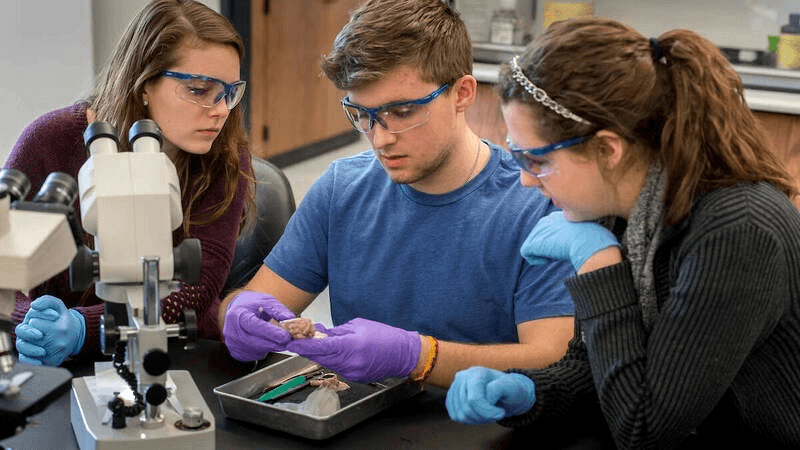
10 best neuroscience research programs for US high school students (2026) | RISE Research
10 best neuroscience research programs for US high school students (2026) | RISE Research
RISE Research
RISE Research
TL;DR: This list is for US high school students in Grades 9 through 12 who want to build a serious neuroscience research profile before applying to college. It covers free residential programs, paid online mentorship, and university-affiliated summer institutes. The single most important criterion for choosing is what you produce at the end: a published paper carries more admissions weight than a certificate. If RISE Research looks like the right fit, book a free Research Assessment before the Summer 2026 cohort deadline closes.
Why finding the right neuroscience program is harder than it looks
The 10 best neuroscience research programs for US high school students in 2026 span everything from fully funded residential institutes to selective online mentorship programs that end in peer-reviewed publication. The challenge is not finding options. It is knowing which programs produce outcomes that admissions officers at MIT, Stanford, and Johns Hopkins actually notice. A lab experience and a published paper both appear in the Common App Activities section. They do not read the same way. This list was curated by verified output, mentor credentials, admissions outcomes data, and confirmed 2026 availability. Every program below is active this cycle.
If you want to explore the broader landscape of STEM research opportunities alongside neuroscience, see our guide to the best STEM research programs for US high school students.
How we ranked these neuroscience programs
Every program on this list was evaluated against five criteria. First, verified output: does the student produce something externally validated, such as a published paper or a peer-reviewed poster? Second, mentor credentials: are mentors active researchers at accredited institutions? Third, admissions outcomes: does the program publish verified data on where alumni enroll? Fourth, accessibility: is the program available online, residential, or both, and what does it cost? Fifth, 2026 availability: is the program confirmed to be running this cycle? Programs that could not be verified as active in 2026 were excluded.
The 10 best neuroscience research programs for US high school students in 2026
1. Neuroscience Research Prize (Society for Neuroscience)
Society for Neuroscience | Online submission | Free | Deadline: check official website
The Neuroscience Research Prize is a national competition open to US high school students who conduct original neuroscience research. Students submit a written research report, and winners receive recognition from one of the most respected professional bodies in the field. The competition rewards genuine independent inquiry, not just lab participation. Selectivity is high, and winning carries real admissions signal at research-focused universities.
Best for: Students who have already completed independent research and want external validation of their work.
Output: Submitted research report; winners receive national recognition.
Official URL: sfn.org
2. RISE Research (RISE Global Education)
RISE Global Education | Online, 1-on-1 | Paid (check official website for pricing) | Summer 2026 cohort deadline approaching
RISE Research is a selective 1-on-1 mentorship program where high school students in Grades 9 through 12 conduct original, university-level neuroscience research under PhD mentors from Ivy League and Oxbridge institutions. The program runs for 10 weeks and culminates in a peer-reviewed paper submitted to one of 40 or more indexed academic journals. The publication rate is 90%, which means nine out of ten RISE scholars finish with an externally validated research paper, not a certificate or a project portfolio. RISE mentors include specialists in cognitive neuroscience, neuropsychology, behavioral neuroscience, and computational neuroscience, drawn from a network of 500 or more PhD-level researchers. Admissions outcomes for RISE scholars are documented: 18% of RISE scholars gain admission to Stanford (versus 8.7% in the general pool), and 32% gain admission to UPenn (versus 3.8%). The program is paid and selective, and those two facts are worth stating clearly because they are also what makes the outcome credible.
Why it beats a program certificate: A RISE paper is reviewed and accepted by an independent academic journal with no connection to RISE. That external validation is what admissions officers at MIT, Stanford, and Harvard are looking for when they talk about genuine intellectual initiative.
Best for: Students whose primary goal is a peer-reviewed published paper in neuroscience before their college application deadlines.
Output: Peer-reviewed paper published in an indexed academic journal.
Official URL: riseglobaleducation.com
3. Research Science Institute (RSI) at MIT
Center for Excellence in Education | Residential, MIT campus | Free (fully funded) | Deadline: typically December to January
RSI is one of the most selective free summer research programs in the United States. Students spend six weeks at MIT conducting mentored research across STEM fields, including neuroscience. The program covers all costs. Acceptance rates are below 2%, making RSI extraordinarily competitive. Students produce a research paper and present findings at a symposium at the end of the program.
Best for: Top-ranked students with an exceptional academic record who are comfortable with an extremely low acceptance rate.
Output: Research paper and symposium presentation.
Official URL: cee.org
4. Brain Bee (International Brain Bee)
International Brain Bee | In-person regional and national competitions | Free | Deadline: varies by chapter
The Brain Bee is a neuroscience knowledge competition for high school students, structured similarly to a spelling bee but focused on brain science. Students compete at local, national, and international levels. Winning or placing highly signals genuine subject mastery in neuroscience. The Brain Bee is free to enter and open to students across the US through affiliated university chapters.
Best for: Students in Grades 9 through 12 who want to demonstrate depth of neuroscience knowledge through a recognized competitive format.
Output: Competition placement; national and international recognition for top finishers.
Official URL: internationalbrainbee.com
5. Summer Neuroscience Program (University of Pennsylvania)
University of Pennsylvania | Residential, Philadelphia | Paid | Deadline: check official website for 2026 dates
The Summer Neuroscience Program at Penn introduces high school students to the science of the brain through lectures, lab tours, and hands-on activities led by Penn faculty. The program is intensive and university-affiliated, giving students exposure to an Ivy League research environment. It is not a research mentorship program in the same sense as RSI or RISE, but it provides strong foundational exposure for students earlier in their high school career.
Best for: Students in Grades 9 and 10 who want structured exposure to neuroscience before committing to a longer research project.
Output: Program certificate and lab experience.
Official URL: med.upenn.edu
6. Neuroscience for Neurodiversity (N4ND)
Neuroscience for Neurodiversity | Online | Free | Deadline: check official website
N4ND is a free online program that connects high school students with neuroscience researchers, with a particular focus on students from underrepresented backgrounds and those with learning differences. The program includes mentored research projects, seminars, and science communication training. It is accessible, free, and run by credentialed researchers. Output varies by cohort but typically includes a research presentation or report.
Best for: Students seeking a free, accessible entry point into neuroscience research, particularly those from underrepresented groups.
Output: Research presentation or report.
Official URL: n4nd.org
7. Polygence (Neuroscience Track)
Polygence | Online, 1-on-1 | Paid | Rolling admissions
Polygence offers 1-on-1 online research mentorship across a wide range of subjects, including neuroscience. Students work with a graduate student or postdoctoral mentor over 10 to 20 sessions to complete a research project. The output varies: some students produce a written paper, others a creative or applied project. Publication is not guaranteed, and the journals used are not always indexed. Polygence is more accessible than RISE in terms of selectivity, and the mentor pool is broader in scope.
Best for: Students who want flexible online mentorship and are not yet focused on peer-reviewed publication as the primary goal.
Output: Research project; publication possible but not standard.
Official URL: polygence.org
8. PRIMES (MIT)
MIT | Online | Free | Deadline: typically December
MIT PRIMES is primarily a mathematics program, but the PRIMES USA and PRIMES Circle tracks include computational and theoretical work that intersects with neuroscience through areas like computational modeling and data analysis. The program is free and mentored by MIT researchers. Acceptance is highly selective, and students work on year-long projects that often result in publishable work. Students interested in computational neuroscience specifically should consider this track.
Best for: Mathematically advanced students interested in computational approaches to neuroscience.
Output: Research paper; some projects lead to publication.
Official URL: math.mit.edu/research/highschool/primes
9. Johns Hopkins Center for Talented Youth (CTY) Neuroscience Courses
Johns Hopkins University | Online and residential | Paid | Rolling enrollment
CTY offers advanced coursework in neuroscience and psychology for academically talented students. The courses are rigorous and university-affiliated, but they are instructional rather than research-based. Students do not produce independent research papers. CTY is better positioned as a complement to a research program than a standalone admissions strategy for students targeting highly selective universities.
Best for: Students in Grades 7 through 10 who want to build subject knowledge before entering a research mentorship program.
Output: Course completion and academic transcript record.
Official URL: cty.jhu.edu
10. Lumiere Research Scholar Program (Neuroscience)
Lumiere Education | Online, 1-on-1 | Paid | Rolling admissions
Lumiere offers 1-on-1 online research mentorship with PhD students from top universities, including neuroscience tracks. The program runs for 12 weeks and aims to produce a research paper or report. Publication is possible but not guaranteed, and the journals used vary in selectivity. Lumiere is comparable to Polygence in format and is a reasonable option for students who want structured mentorship without the selectivity of RISE or RSI.
Best for: Students who want a structured online research experience with a neuroscience focus and flexible timelines.
Output: Research paper or report; publication possible.
Official URL: lumiere.education
Neuroscience research programs at a glance: quick comparison
Program | Format | Cost | Output | Publication rate |
|---|---|---|---|---|
SfN Neuroscience Research Prize | Online submission | Free | Research report | Not applicable |
RISE Research | Online, 1-on-1 | Paid | Peer-reviewed published paper | 90% |
RSI at MIT | Residential | Free | Research paper and symposium | Not disclosed |
Brain Bee | In-person competition | Free | Competition placement | Not applicable |
Penn Summer Neuroscience | Residential | Paid | Certificate and lab experience | Not applicable |
N4ND | Online | Free | Research presentation or report | Not disclosed |
Polygence | Online, 1-on-1 | Paid | Research project | Not disclosed |
MIT PRIMES | Online | Free | Research paper | Not disclosed |
CTY Neuroscience | Online and residential | Paid | Course completion | Not applicable |
Lumiere Research Scholar | Online, 1-on-1 | Paid | Research paper or report | Not disclosed |
Which neuroscience program is right for you?
The right choice depends on your grade, your goal, and your timeline.
If your goal is a peer-reviewed published paper before November EA deadlines: RISE Research. The 10-week timeline and 90% publication rate are designed for exactly this outcome. See verified admissions results from RISE scholars before deciding.
If your goal is a fully funded residential program at a top university and you have a near-perfect academic record: RSI at MIT. Apply in December and be realistic about the acceptance rate.
If you want to demonstrate neuroscience knowledge through competition and you already have strong subject mastery: the Brain Bee or the SfN Neuroscience Research Prize are free and carry genuine recognition.
If you are in Grade 9 or 10 and want to build foundational knowledge before committing to a research project: CTY or the Penn Summer Neuroscience Program will give you the exposure you need. Follow up with RISE or RSI in Grades 11 or 12.
If you want flexible online mentorship and publication is not your primary goal: Polygence or Lumiere are accessible options with rolling admissions.
The decision comes down to one question: what do you want to hand an admissions officer at Stanford or Johns Hopkins? A certificate says you attended. A published paper says you contributed.
The RISE Summer 2026 cohort is open now across the US. If a published neuroscience paper before your college application deadline is the goal, book a free 20-minute Research Assessment to find out whether the timeline works for your grade and subject.
Frequently asked questions about neuroscience research programs for high school students
What is the best free neuroscience research program for US high school students?
RSI at MIT is the most prestigious free option, but acceptance rates are below 2%. For students who want a free and more accessible entry point, N4ND offers mentored research online at no cost. The SfN Neuroscience Research Prize rewards students who have already completed independent work and want national recognition without a program fee.
Do neuroscience research programs help with Ivy League admissions?
Yes, but the type of program matters. Admissions officers at Ivy League universities are looking for evidence of genuine intellectual initiative, not just program participation. A peer-reviewed published paper in an indexed journal provides that evidence in a way that a program certificate does not. RISE scholars show an 18% Stanford acceptance rate versus 8.7% in the general applicant pool, based on verified admissions outcomes data.
Is an online neuroscience research program as good as an in-person one for college applications?
The format matters less than the output. An online program that produces a peer-reviewed published paper is more valuable to a college application than a residential program that produces a certificate. RISE Research is fully online and has a 90% publication rate. RSI is residential and highly selective. Both carry weight, but for different reasons.
Which neuroscience programs actually lead to publication?
RISE Research has a documented 90% publication rate, with papers appearing in 40 or more indexed academic journals. MIT PRIMES produces publishable work for some students, though publication is not guaranteed. RSI students produce research papers, but external publication depends on the individual project. Polygence and Lumiere list publication as a possible outcome, but rates are not disclosed. See the RISE publications page for examples of student work.
How do I choose between a free and a paid neuroscience research program?
Start with what you will produce. Free programs like RSI and N4ND are excellent, but RSI is extraordinarily selective and N4ND does not guarantee a published paper. Paid programs like RISE offer a structured path to publication with verified outcomes. If budget is a constraint, apply to free programs first and explore financial aid options for paid programs. The RISE FAQ page covers financial details in full.
The bottom line on neuroscience research programs in 2026
Three things separate the strongest programs on this list from the rest: externally validated output, credentialed mentors, and verified admissions outcomes. RSI and RISE Research lead on all three criteria, though they serve different students. RSI is free and residential but accepts fewer than 2% of applicants. RISE is paid and online, produces a peer-reviewed published paper in 90% of cases, and has documented Stanford and UPenn acceptance rates that are significantly above the national average. For students earlier in high school, the Brain Bee and CTY provide strong foundations. For students who need flexibility, N4ND, Polygence, and Lumiere offer accessible online options.
The Summer 2026 Cohort Deadline is approaching. If RISE Research sounds like the right fit for your neuroscience goals, schedule a free Research Assessment and we will tell you exactly what is achievable before your application deadlines. You can also explore more neuroscience program options and review past RISE student projects to see the depth of work RISE scholars produce.
TL;DR: This list is for US high school students in Grades 9 through 12 who want to build a serious neuroscience research profile before applying to college. It covers free residential programs, paid online mentorship, and university-affiliated summer institutes. The single most important criterion for choosing is what you produce at the end: a published paper carries more admissions weight than a certificate. If RISE Research looks like the right fit, book a free Research Assessment before the Summer 2026 cohort deadline closes.
Why finding the right neuroscience program is harder than it looks
The 10 best neuroscience research programs for US high school students in 2026 span everything from fully funded residential institutes to selective online mentorship programs that end in peer-reviewed publication. The challenge is not finding options. It is knowing which programs produce outcomes that admissions officers at MIT, Stanford, and Johns Hopkins actually notice. A lab experience and a published paper both appear in the Common App Activities section. They do not read the same way. This list was curated by verified output, mentor credentials, admissions outcomes data, and confirmed 2026 availability. Every program below is active this cycle.
If you want to explore the broader landscape of STEM research opportunities alongside neuroscience, see our guide to the best STEM research programs for US high school students.
How we ranked these neuroscience programs
Every program on this list was evaluated against five criteria. First, verified output: does the student produce something externally validated, such as a published paper or a peer-reviewed poster? Second, mentor credentials: are mentors active researchers at accredited institutions? Third, admissions outcomes: does the program publish verified data on where alumni enroll? Fourth, accessibility: is the program available online, residential, or both, and what does it cost? Fifth, 2026 availability: is the program confirmed to be running this cycle? Programs that could not be verified as active in 2026 were excluded.
The 10 best neuroscience research programs for US high school students in 2026
1. Neuroscience Research Prize (Society for Neuroscience)
Society for Neuroscience | Online submission | Free | Deadline: check official website
The Neuroscience Research Prize is a national competition open to US high school students who conduct original neuroscience research. Students submit a written research report, and winners receive recognition from one of the most respected professional bodies in the field. The competition rewards genuine independent inquiry, not just lab participation. Selectivity is high, and winning carries real admissions signal at research-focused universities.
Best for: Students who have already completed independent research and want external validation of their work.
Output: Submitted research report; winners receive national recognition.
Official URL: sfn.org
2. RISE Research (RISE Global Education)
RISE Global Education | Online, 1-on-1 | Paid (check official website for pricing) | Summer 2026 cohort deadline approaching
RISE Research is a selective 1-on-1 mentorship program where high school students in Grades 9 through 12 conduct original, university-level neuroscience research under PhD mentors from Ivy League and Oxbridge institutions. The program runs for 10 weeks and culminates in a peer-reviewed paper submitted to one of 40 or more indexed academic journals. The publication rate is 90%, which means nine out of ten RISE scholars finish with an externally validated research paper, not a certificate or a project portfolio. RISE mentors include specialists in cognitive neuroscience, neuropsychology, behavioral neuroscience, and computational neuroscience, drawn from a network of 500 or more PhD-level researchers. Admissions outcomes for RISE scholars are documented: 18% of RISE scholars gain admission to Stanford (versus 8.7% in the general pool), and 32% gain admission to UPenn (versus 3.8%). The program is paid and selective, and those two facts are worth stating clearly because they are also what makes the outcome credible.
Why it beats a program certificate: A RISE paper is reviewed and accepted by an independent academic journal with no connection to RISE. That external validation is what admissions officers at MIT, Stanford, and Harvard are looking for when they talk about genuine intellectual initiative.
Best for: Students whose primary goal is a peer-reviewed published paper in neuroscience before their college application deadlines.
Output: Peer-reviewed paper published in an indexed academic journal.
Official URL: riseglobaleducation.com
3. Research Science Institute (RSI) at MIT
Center for Excellence in Education | Residential, MIT campus | Free (fully funded) | Deadline: typically December to January
RSI is one of the most selective free summer research programs in the United States. Students spend six weeks at MIT conducting mentored research across STEM fields, including neuroscience. The program covers all costs. Acceptance rates are below 2%, making RSI extraordinarily competitive. Students produce a research paper and present findings at a symposium at the end of the program.
Best for: Top-ranked students with an exceptional academic record who are comfortable with an extremely low acceptance rate.
Output: Research paper and symposium presentation.
Official URL: cee.org
4. Brain Bee (International Brain Bee)
International Brain Bee | In-person regional and national competitions | Free | Deadline: varies by chapter
The Brain Bee is a neuroscience knowledge competition for high school students, structured similarly to a spelling bee but focused on brain science. Students compete at local, national, and international levels. Winning or placing highly signals genuine subject mastery in neuroscience. The Brain Bee is free to enter and open to students across the US through affiliated university chapters.
Best for: Students in Grades 9 through 12 who want to demonstrate depth of neuroscience knowledge through a recognized competitive format.
Output: Competition placement; national and international recognition for top finishers.
Official URL: internationalbrainbee.com
5. Summer Neuroscience Program (University of Pennsylvania)
University of Pennsylvania | Residential, Philadelphia | Paid | Deadline: check official website for 2026 dates
The Summer Neuroscience Program at Penn introduces high school students to the science of the brain through lectures, lab tours, and hands-on activities led by Penn faculty. The program is intensive and university-affiliated, giving students exposure to an Ivy League research environment. It is not a research mentorship program in the same sense as RSI or RISE, but it provides strong foundational exposure for students earlier in their high school career.
Best for: Students in Grades 9 and 10 who want structured exposure to neuroscience before committing to a longer research project.
Output: Program certificate and lab experience.
Official URL: med.upenn.edu
6. Neuroscience for Neurodiversity (N4ND)
Neuroscience for Neurodiversity | Online | Free | Deadline: check official website
N4ND is a free online program that connects high school students with neuroscience researchers, with a particular focus on students from underrepresented backgrounds and those with learning differences. The program includes mentored research projects, seminars, and science communication training. It is accessible, free, and run by credentialed researchers. Output varies by cohort but typically includes a research presentation or report.
Best for: Students seeking a free, accessible entry point into neuroscience research, particularly those from underrepresented groups.
Output: Research presentation or report.
Official URL: n4nd.org
7. Polygence (Neuroscience Track)
Polygence | Online, 1-on-1 | Paid | Rolling admissions
Polygence offers 1-on-1 online research mentorship across a wide range of subjects, including neuroscience. Students work with a graduate student or postdoctoral mentor over 10 to 20 sessions to complete a research project. The output varies: some students produce a written paper, others a creative or applied project. Publication is not guaranteed, and the journals used are not always indexed. Polygence is more accessible than RISE in terms of selectivity, and the mentor pool is broader in scope.
Best for: Students who want flexible online mentorship and are not yet focused on peer-reviewed publication as the primary goal.
Output: Research project; publication possible but not standard.
Official URL: polygence.org
8. PRIMES (MIT)
MIT | Online | Free | Deadline: typically December
MIT PRIMES is primarily a mathematics program, but the PRIMES USA and PRIMES Circle tracks include computational and theoretical work that intersects with neuroscience through areas like computational modeling and data analysis. The program is free and mentored by MIT researchers. Acceptance is highly selective, and students work on year-long projects that often result in publishable work. Students interested in computational neuroscience specifically should consider this track.
Best for: Mathematically advanced students interested in computational approaches to neuroscience.
Output: Research paper; some projects lead to publication.
Official URL: math.mit.edu/research/highschool/primes
9. Johns Hopkins Center for Talented Youth (CTY) Neuroscience Courses
Johns Hopkins University | Online and residential | Paid | Rolling enrollment
CTY offers advanced coursework in neuroscience and psychology for academically talented students. The courses are rigorous and university-affiliated, but they are instructional rather than research-based. Students do not produce independent research papers. CTY is better positioned as a complement to a research program than a standalone admissions strategy for students targeting highly selective universities.
Best for: Students in Grades 7 through 10 who want to build subject knowledge before entering a research mentorship program.
Output: Course completion and academic transcript record.
Official URL: cty.jhu.edu
10. Lumiere Research Scholar Program (Neuroscience)
Lumiere Education | Online, 1-on-1 | Paid | Rolling admissions
Lumiere offers 1-on-1 online research mentorship with PhD students from top universities, including neuroscience tracks. The program runs for 12 weeks and aims to produce a research paper or report. Publication is possible but not guaranteed, and the journals used vary in selectivity. Lumiere is comparable to Polygence in format and is a reasonable option for students who want structured mentorship without the selectivity of RISE or RSI.
Best for: Students who want a structured online research experience with a neuroscience focus and flexible timelines.
Output: Research paper or report; publication possible.
Official URL: lumiere.education
Neuroscience research programs at a glance: quick comparison
Program | Format | Cost | Output | Publication rate |
|---|---|---|---|---|
SfN Neuroscience Research Prize | Online submission | Free | Research report | Not applicable |
RISE Research | Online, 1-on-1 | Paid | Peer-reviewed published paper | 90% |
RSI at MIT | Residential | Free | Research paper and symposium | Not disclosed |
Brain Bee | In-person competition | Free | Competition placement | Not applicable |
Penn Summer Neuroscience | Residential | Paid | Certificate and lab experience | Not applicable |
N4ND | Online | Free | Research presentation or report | Not disclosed |
Polygence | Online, 1-on-1 | Paid | Research project | Not disclosed |
MIT PRIMES | Online | Free | Research paper | Not disclosed |
CTY Neuroscience | Online and residential | Paid | Course completion | Not applicable |
Lumiere Research Scholar | Online, 1-on-1 | Paid | Research paper or report | Not disclosed |
Which neuroscience program is right for you?
The right choice depends on your grade, your goal, and your timeline.
If your goal is a peer-reviewed published paper before November EA deadlines: RISE Research. The 10-week timeline and 90% publication rate are designed for exactly this outcome. See verified admissions results from RISE scholars before deciding.
If your goal is a fully funded residential program at a top university and you have a near-perfect academic record: RSI at MIT. Apply in December and be realistic about the acceptance rate.
If you want to demonstrate neuroscience knowledge through competition and you already have strong subject mastery: the Brain Bee or the SfN Neuroscience Research Prize are free and carry genuine recognition.
If you are in Grade 9 or 10 and want to build foundational knowledge before committing to a research project: CTY or the Penn Summer Neuroscience Program will give you the exposure you need. Follow up with RISE or RSI in Grades 11 or 12.
If you want flexible online mentorship and publication is not your primary goal: Polygence or Lumiere are accessible options with rolling admissions.
The decision comes down to one question: what do you want to hand an admissions officer at Stanford or Johns Hopkins? A certificate says you attended. A published paper says you contributed.
The RISE Summer 2026 cohort is open now across the US. If a published neuroscience paper before your college application deadline is the goal, book a free 20-minute Research Assessment to find out whether the timeline works for your grade and subject.
Frequently asked questions about neuroscience research programs for high school students
What is the best free neuroscience research program for US high school students?
RSI at MIT is the most prestigious free option, but acceptance rates are below 2%. For students who want a free and more accessible entry point, N4ND offers mentored research online at no cost. The SfN Neuroscience Research Prize rewards students who have already completed independent work and want national recognition without a program fee.
Do neuroscience research programs help with Ivy League admissions?
Yes, but the type of program matters. Admissions officers at Ivy League universities are looking for evidence of genuine intellectual initiative, not just program participation. A peer-reviewed published paper in an indexed journal provides that evidence in a way that a program certificate does not. RISE scholars show an 18% Stanford acceptance rate versus 8.7% in the general applicant pool, based on verified admissions outcomes data.
Is an online neuroscience research program as good as an in-person one for college applications?
The format matters less than the output. An online program that produces a peer-reviewed published paper is more valuable to a college application than a residential program that produces a certificate. RISE Research is fully online and has a 90% publication rate. RSI is residential and highly selective. Both carry weight, but for different reasons.
Which neuroscience programs actually lead to publication?
RISE Research has a documented 90% publication rate, with papers appearing in 40 or more indexed academic journals. MIT PRIMES produces publishable work for some students, though publication is not guaranteed. RSI students produce research papers, but external publication depends on the individual project. Polygence and Lumiere list publication as a possible outcome, but rates are not disclosed. See the RISE publications page for examples of student work.
How do I choose between a free and a paid neuroscience research program?
Start with what you will produce. Free programs like RSI and N4ND are excellent, but RSI is extraordinarily selective and N4ND does not guarantee a published paper. Paid programs like RISE offer a structured path to publication with verified outcomes. If budget is a constraint, apply to free programs first and explore financial aid options for paid programs. The RISE FAQ page covers financial details in full.
The bottom line on neuroscience research programs in 2026
Three things separate the strongest programs on this list from the rest: externally validated output, credentialed mentors, and verified admissions outcomes. RSI and RISE Research lead on all three criteria, though they serve different students. RSI is free and residential but accepts fewer than 2% of applicants. RISE is paid and online, produces a peer-reviewed published paper in 90% of cases, and has documented Stanford and UPenn acceptance rates that are significantly above the national average. For students earlier in high school, the Brain Bee and CTY provide strong foundations. For students who need flexibility, N4ND, Polygence, and Lumiere offer accessible online options.
The Summer 2026 Cohort Deadline is approaching. If RISE Research sounds like the right fit for your neuroscience goals, schedule a free Research Assessment and we will tell you exactly what is achievable before your application deadlines. You can also explore more neuroscience program options and review past RISE student projects to see the depth of work RISE scholars produce.
Fall 2026 Cohort Deadline Closing on 28th September
Book a free 20-min strategy call
Book a free 20-min strategy call
Read More