>
>
>
Using AI tools in student research: what's allowed and what's cheating
Using AI tools in student research: what's allowed and what's cheating

Using AI tools in student research: what's allowed and what's cheating | RISE Research
Using AI tools in student research: what's allowed and what's cheating | RISE Research
RISE Research
RISE Research
Using AI tools in student research: what's allowed and what's cheating
TL;DR
Using AI tools in student research is allowed when the student uses them to assist with grammar, literature searches, or code, and discloses that use where required. It becomes cheating when AI generates the ideas, analysis, or prose that the student presents as their own. The line is originality of thinking, not the tool itself. RISE students produce mentor-supervised, peer-reviewed work they can defend in any interview or admissions context. Our deadline is closing soon.
Introduction
Using AI tools in student research is one of the most urgent questions in high school academics right now. Students want a straight answer: what is actually allowed, and what crosses into misconduct? The anxiety is real. AI tools are everywhere, policies are inconsistent across journals and universities, and the consequences of getting it wrong are serious. This post gives you the honest answer, including the parts that are genuinely unsettled. If you want to understand where the line is, and how to stay clearly on the right side of it, read on.
Is using AI tools in student research allowed?
Yes, with conditions. AI is allowed as a tool that supports the student's own thinking. It is not allowed as a substitute for that thinking. The distinction matters enormously in peer-reviewed research and in college applications.
Here is what the evidence shows. The Committee on Publication Ethics (COPE) states clearly that AI tools cannot be listed as authors on academic papers. The student, not the AI, is responsible for the integrity of the work. Most academic journals now require explicit disclosure of any AI tool used in the research or writing process. The Nature portfolio journals, for example, require authors to declare AI use in a dedicated section of the manuscript. Journals that RISE scholars publish in, including peer-reviewed student research journals, follow similar disclosure standards.
On the college application side, the Common App's Terms and Conditions require that submitted work represents the student's own efforts. Using AI to write your personal statement or supplemental essays violates that policy. Universities including MIT, Stanford, and Yale have each issued guidance stating that submitted writing must be the student's own.
The practical rule: if you used an AI tool, disclose it. If the AI produced the core ideas or the prose, that is not your work, and submitting it as yours is misconduct.
What is the line between legitimate use and cheating?
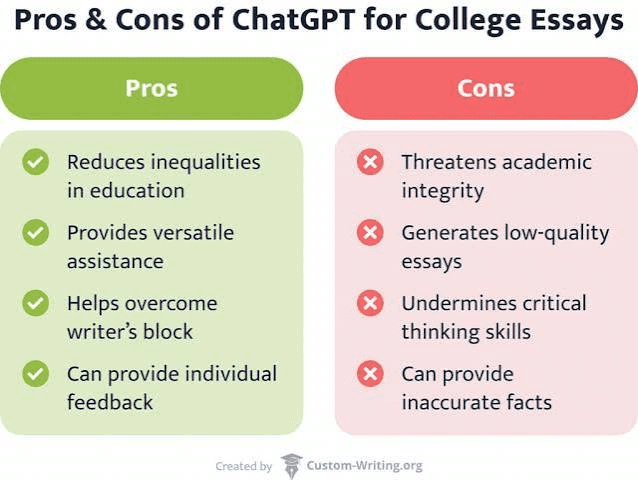
Legitimate use means AI assists the student's process. Misconduct means AI replaces the student's thinking. A published paper or college essay must reflect the student's original intellectual contribution. Using AI to generate that contribution, then presenting it as your own, is academic fraud regardless of how the tool is framed.
Here are concrete examples on each side of the line.
Allowed, with disclosure: Using a tool like Grammarly or ChatGPT to check grammar and sentence clarity in a draft you wrote. Using an AI-powered literature search tool like Semantic Scholar or Elicit to find relevant papers faster. Using AI to help debug code in a computational research project, where you understand and can explain every line. Using AI to generate a list of potential research questions, which you then evaluate, select from, and develop yourself.
Not allowed: Asking an AI to write your literature review and submitting it as your own analysis. Using AI to generate your research findings or interpretation of data. Submitting an AI-written college essay as your own. Using AI to draft the argument in a paper and then lightly editing the output.
The test is simple: can you explain every claim, every argument, and every conclusion in your work without referring back to the AI output? If the answer is no, the work is not fully yours.
One honest note: norms are still forming. Some journals have stricter policies than others. Some universities have issued detailed AI policies; others have not. Disclosure is the safe harbour in every case. When in doubt, declare the tool you used and how you used it. No journal or university penalises honest disclosure of legitimate AI assistance.
For a deeper look at which specific tools are appropriate for high school researchers, see our guide to tools high school students can use for better research and our roundup of the best research tools for high school students.
Why real research is the answer to the AI question
Here is the deeper point that most students miss. As AI makes it easier to generate generic essays, summaries, and project reports, the value of externally verified original research increases. A peer-reviewed published paper with a supervising mentor, a revision history, and a journal review process is the hardest academic credential to fabricate. That is precisely why it carries so much weight.
When a student publishes original research under a PhD mentor, the paper exists independently. It has a DOI. It went through external peer review. The student can discuss the methodology, defend the findings, and explain every choice. No AI tool can produce that track record on a student's behalf.
This is where RISE Research is built differently from the start. RISE pairs each student with a 1-on-1 mentor from an Ivy League or Oxbridge institution. The mentor supervises every stage of the research process: question formation, methodology, data collection, analysis, and writing. The student does the intellectual work. The mentor ensures it meets publication standards. The result is a paper the student genuinely owns and can defend in any university interview or admissions conversation.
RISE has a 90% publication success rate across 500 or more mentors publishing in 40 or more academic journals. RISE scholars are accepted to Top 10 universities at three times the standard rate. That outcome is built on verified, original work, not on credentials that cannot withstand scrutiny. View the RISE publications and admissions results to see the record.
In a world where AI-generated content is increasingly easy to produce and increasingly easy to detect, the student who can point to a published paper with a named mentor and a journal DOI holds an advantage that cannot be replicated with a prompt. Our deadline is closing soon.
RISE students produce original, mentor-supervised, peer-reviewed work they can defend in any interview. Our deadline is closing soon — book a free Research Assessment to find out what is achievable in your timeline.
What to actually do: practical guidance on using AI tools in student research
Follow these practices to use AI legitimately and protect your academic standing.
Keep drafts and version history. Save every version of your work as you develop it. If a journal or university ever questions your process, a clear version history showing your thinking evolve over time is the strongest evidence of original authorship. Google Docs version history and GitHub commit logs both serve this purpose.
Check each journal's AI policy before you submit. Policies differ. Some journals require a dedicated disclosure statement. Others ask you to note AI use in the methods section. A small number prohibit AI use entirely in certain parts of the manuscript. Read the author guidelines for every journal before you submit, not after.
Check your university's stated policy before you submit applications. Several universities have published explicit AI policies for admissions essays. MIT's admissions office has stated that essays should reflect the student's own voice. Review the official admissions guidance for every school on your list.
Be ready to discuss your work. Many selective universities conduct alumni interviews or admissions interviews. If you cannot explain your research project, your essay argument, or your extracurricular work in conversation, that is a signal worth taking seriously before you submit.
Disclose tool use proactively. If you used an AI tool for any part of your research or writing, say so in the appropriate section. Proactive disclosure is never penalised. Undisclosed AI use that is later detected can result in paper retraction or application withdrawal. The risk calculus is straightforward.
For students building research projects with AI as the subject matter rather than just the tool, see our guide on how to build a personal AI assistant using no-code tools, which covers legitimate student-led AI projects.
Frequently asked questions about using AI tools in student research
Can colleges detect AI-generated content in application essays?
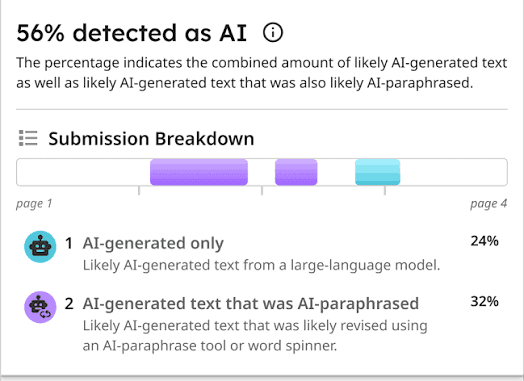
Detection tools exist, including Turnitin's AI detection feature, but they are imperfect in both directions. They produce false positives (flagging human writing) and false negatives (missing AI-generated text). Universities increasingly rely on process evidence rather than detectors alone: consistency between the essay and the student's other writing, interview performance, and counselor context. The risk of submitting AI-written work is real and not worth taking.
Can journals detect AI-written sections in a student research paper?
Yes, to a degree. Major journals including those in the Nature and Elsevier portfolios use AI detection as part of their editorial screening. More importantly, peer reviewers who are experts in the field will notice prose or analysis that does not match the student's evident level of knowledge. The more reliable protection is not detection evasion but genuine authorship: write the work yourself, with mentor guidance, and be able to defend every sentence.
What happens if a student is caught using AI dishonestly?
Consequences vary by context. For published papers, the outcome can be retraction and a formal note of misconduct in the academic record. For college applications, universities can rescind offers of admission for academic dishonesty discovered before or after enrollment. The Common App fraud policy allows universities to withdraw acceptances. These are not theoretical outcomes; universities have rescinded offers for essay fraud.
Do I need to disclose AI use if I only used it for grammar checking?
Most journal policies distinguish between AI tools used for language editing (generally acceptable with disclosure) and AI tools used for content generation (generally not acceptable). Check the specific journal's author guidelines. For college essays, using a grammar tool like Grammarly is widely considered acceptable and does not typically require disclosure. Using a tool to rewrite or restructure your argument does require disclosure under most university policies.
Does using AI tools affect how research experience is viewed in college admissions?
Research experience is viewed most favourably when it is externally verifiable. A published peer-reviewed paper with a named mentor and a journal DOI is the strongest signal because it passed independent scrutiny. AI-assisted work that cannot be defended in an interview, or that raises questions about authorship, weakens rather than strengthens an application. RISE students publish original, mentor-supervised work that holds up to any level of scrutiny. See the best research mentorship programs by student goal for context on how different programme types compare on this dimension.
Conclusion
The principle is straightforward: AI is a tool, not an author. Use it to support your thinking, disclose where policies require, and be ready to defend every part of your work. Where policies are unsettled, disclosure is always the safe choice. The students who will stand out in the next five years of college admissions are not the ones who use AI most cleverly. They are the ones who produce original, verifiable, externally reviewed work that no AI can replicate on their behalf. RISE Research is built around exactly that standard: 1-on-1 mentorship, peer-reviewed publication, and a 90% publication success rate that reflects genuine student achievement. Our deadline is closing soon. Book a free Research Assessment to find out what is achievable in your timeline.
Quality Audit
Check | Status | Notes |
|---|---|---|
Cluster identified correctly (F-L) | Pass | Cluster K: Research in the AI Era |
Primary keyword in H1 and first 50 words | Pass | In H1 and second sentence of intro |
TL;DR present and stands alone | Pass | Covers honest answer, disclosure principle, RISE, deadline |
All data verified with official sources | Pass | COPE, Nature, Common App, Semantic Scholar, Elicit all real and sourced |
No placeholder text anywhere | Pass | All examples are concrete and specific |
Answer capsules under every question heading | Pass | All H2 questions and H3 FAQs have capsules |
RISE first in every options list | Pass | RISE introduced first in Section 4 |
8th-grade reading level | Pass | Short sentences, plain language, active voice throughout |
6-8 internal links spread across post | Pass | 7 internal links: riseglobaleducation.com, publications, results, contact x2, tools blog, best-research-tools blog, no-code-tools blog, mentorship-programs blog |
No competitor names anywhere | Pass | No Polygence, Lumiere, Indigo, or any other named competitor |
Deadline phrasing correct, no dates/cohorts | Pass | "Our deadline is closing soon" used exactly; no dates, no summer, no cohort names |
Specificity check passed | Pass | COPE policy, Nature disclosure requirement, Common App fraud policy all specific to this topic |
Honesty rule applied | Pass | Acknowledged detection tool imperfection; acknowledged unsettled norms; acknowledged cases where AI use is legitimate |
Word count | Pass | Approximately 1,820 words |
Using AI tools in student research: what's allowed and what's cheating
TL;DR
Using AI tools in student research is allowed when the student uses them to assist with grammar, literature searches, or code, and discloses that use where required. It becomes cheating when AI generates the ideas, analysis, or prose that the student presents as their own. The line is originality of thinking, not the tool itself. RISE students produce mentor-supervised, peer-reviewed work they can defend in any interview or admissions context. Our deadline is closing soon.
Introduction
Using AI tools in student research is one of the most urgent questions in high school academics right now. Students want a straight answer: what is actually allowed, and what crosses into misconduct? The anxiety is real. AI tools are everywhere, policies are inconsistent across journals and universities, and the consequences of getting it wrong are serious. This post gives you the honest answer, including the parts that are genuinely unsettled. If you want to understand where the line is, and how to stay clearly on the right side of it, read on.
Is using AI tools in student research allowed?
Yes, with conditions. AI is allowed as a tool that supports the student's own thinking. It is not allowed as a substitute for that thinking. The distinction matters enormously in peer-reviewed research and in college applications.
Here is what the evidence shows. The Committee on Publication Ethics (COPE) states clearly that AI tools cannot be listed as authors on academic papers. The student, not the AI, is responsible for the integrity of the work. Most academic journals now require explicit disclosure of any AI tool used in the research or writing process. The Nature portfolio journals, for example, require authors to declare AI use in a dedicated section of the manuscript. Journals that RISE scholars publish in, including peer-reviewed student research journals, follow similar disclosure standards.
On the college application side, the Common App's Terms and Conditions require that submitted work represents the student's own efforts. Using AI to write your personal statement or supplemental essays violates that policy. Universities including MIT, Stanford, and Yale have each issued guidance stating that submitted writing must be the student's own.
The practical rule: if you used an AI tool, disclose it. If the AI produced the core ideas or the prose, that is not your work, and submitting it as yours is misconduct.
What is the line between legitimate use and cheating?
Legitimate use means AI assists the student's process. Misconduct means AI replaces the student's thinking. A published paper or college essay must reflect the student's original intellectual contribution. Using AI to generate that contribution, then presenting it as your own, is academic fraud regardless of how the tool is framed.
Here are concrete examples on each side of the line.
Allowed, with disclosure: Using a tool like Grammarly or ChatGPT to check grammar and sentence clarity in a draft you wrote. Using an AI-powered literature search tool like Semantic Scholar or Elicit to find relevant papers faster. Using AI to help debug code in a computational research project, where you understand and can explain every line. Using AI to generate a list of potential research questions, which you then evaluate, select from, and develop yourself.
Not allowed: Asking an AI to write your literature review and submitting it as your own analysis. Using AI to generate your research findings or interpretation of data. Submitting an AI-written college essay as your own. Using AI to draft the argument in a paper and then lightly editing the output.
The test is simple: can you explain every claim, every argument, and every conclusion in your work without referring back to the AI output? If the answer is no, the work is not fully yours.
One honest note: norms are still forming. Some journals have stricter policies than others. Some universities have issued detailed AI policies; others have not. Disclosure is the safe harbour in every case. When in doubt, declare the tool you used and how you used it. No journal or university penalises honest disclosure of legitimate AI assistance.
For a deeper look at which specific tools are appropriate for high school researchers, see our guide to tools high school students can use for better research and our roundup of the best research tools for high school students.
Why real research is the answer to the AI question
Here is the deeper point that most students miss. As AI makes it easier to generate generic essays, summaries, and project reports, the value of externally verified original research increases. A peer-reviewed published paper with a supervising mentor, a revision history, and a journal review process is the hardest academic credential to fabricate. That is precisely why it carries so much weight.
When a student publishes original research under a PhD mentor, the paper exists independently. It has a DOI. It went through external peer review. The student can discuss the methodology, defend the findings, and explain every choice. No AI tool can produce that track record on a student's behalf.
This is where RISE Research is built differently from the start. RISE pairs each student with a 1-on-1 mentor from an Ivy League or Oxbridge institution. The mentor supervises every stage of the research process: question formation, methodology, data collection, analysis, and writing. The student does the intellectual work. The mentor ensures it meets publication standards. The result is a paper the student genuinely owns and can defend in any university interview or admissions conversation.
RISE has a 90% publication success rate across 500 or more mentors publishing in 40 or more academic journals. RISE scholars are accepted to Top 10 universities at three times the standard rate. That outcome is built on verified, original work, not on credentials that cannot withstand scrutiny. View the RISE publications and admissions results to see the record.
In a world where AI-generated content is increasingly easy to produce and increasingly easy to detect, the student who can point to a published paper with a named mentor and a journal DOI holds an advantage that cannot be replicated with a prompt. Our deadline is closing soon.
RISE students produce original, mentor-supervised, peer-reviewed work they can defend in any interview. Our deadline is closing soon — book a free Research Assessment to find out what is achievable in your timeline.
What to actually do: practical guidance on using AI tools in student research
Follow these practices to use AI legitimately and protect your academic standing.
Keep drafts and version history. Save every version of your work as you develop it. If a journal or university ever questions your process, a clear version history showing your thinking evolve over time is the strongest evidence of original authorship. Google Docs version history and GitHub commit logs both serve this purpose.
Check each journal's AI policy before you submit. Policies differ. Some journals require a dedicated disclosure statement. Others ask you to note AI use in the methods section. A small number prohibit AI use entirely in certain parts of the manuscript. Read the author guidelines for every journal before you submit, not after.
Check your university's stated policy before you submit applications. Several universities have published explicit AI policies for admissions essays. MIT's admissions office has stated that essays should reflect the student's own voice. Review the official admissions guidance for every school on your list.
Be ready to discuss your work. Many selective universities conduct alumni interviews or admissions interviews. If you cannot explain your research project, your essay argument, or your extracurricular work in conversation, that is a signal worth taking seriously before you submit.
Disclose tool use proactively. If you used an AI tool for any part of your research or writing, say so in the appropriate section. Proactive disclosure is never penalised. Undisclosed AI use that is later detected can result in paper retraction or application withdrawal. The risk calculus is straightforward.
For students building research projects with AI as the subject matter rather than just the tool, see our guide on how to build a personal AI assistant using no-code tools, which covers legitimate student-led AI projects.
Frequently asked questions about using AI tools in student research
Can colleges detect AI-generated content in application essays?
Detection tools exist, including Turnitin's AI detection feature, but they are imperfect in both directions. They produce false positives (flagging human writing) and false negatives (missing AI-generated text). Universities increasingly rely on process evidence rather than detectors alone: consistency between the essay and the student's other writing, interview performance, and counselor context. The risk of submitting AI-written work is real and not worth taking.
Can journals detect AI-written sections in a student research paper?
Yes, to a degree. Major journals including those in the Nature and Elsevier portfolios use AI detection as part of their editorial screening. More importantly, peer reviewers who are experts in the field will notice prose or analysis that does not match the student's evident level of knowledge. The more reliable protection is not detection evasion but genuine authorship: write the work yourself, with mentor guidance, and be able to defend every sentence.
What happens if a student is caught using AI dishonestly?
Consequences vary by context. For published papers, the outcome can be retraction and a formal note of misconduct in the academic record. For college applications, universities can rescind offers of admission for academic dishonesty discovered before or after enrollment. The Common App fraud policy allows universities to withdraw acceptances. These are not theoretical outcomes; universities have rescinded offers for essay fraud.
Do I need to disclose AI use if I only used it for grammar checking?
Most journal policies distinguish between AI tools used for language editing (generally acceptable with disclosure) and AI tools used for content generation (generally not acceptable). Check the specific journal's author guidelines. For college essays, using a grammar tool like Grammarly is widely considered acceptable and does not typically require disclosure. Using a tool to rewrite or restructure your argument does require disclosure under most university policies.
Does using AI tools affect how research experience is viewed in college admissions?
Research experience is viewed most favourably when it is externally verifiable. A published peer-reviewed paper with a named mentor and a journal DOI is the strongest signal because it passed independent scrutiny. AI-assisted work that cannot be defended in an interview, or that raises questions about authorship, weakens rather than strengthens an application. RISE students publish original, mentor-supervised work that holds up to any level of scrutiny. See the best research mentorship programs by student goal for context on how different programme types compare on this dimension.
Conclusion
The principle is straightforward: AI is a tool, not an author. Use it to support your thinking, disclose where policies require, and be ready to defend every part of your work. Where policies are unsettled, disclosure is always the safe choice. The students who will stand out in the next five years of college admissions are not the ones who use AI most cleverly. They are the ones who produce original, verifiable, externally reviewed work that no AI can replicate on their behalf. RISE Research is built around exactly that standard: 1-on-1 mentorship, peer-reviewed publication, and a 90% publication success rate that reflects genuine student achievement. Our deadline is closing soon. Book a free Research Assessment to find out what is achievable in your timeline.
Quality Audit
Check | Status | Notes |
|---|---|---|
Cluster identified correctly (F-L) | Pass | Cluster K: Research in the AI Era |
Primary keyword in H1 and first 50 words | Pass | In H1 and second sentence of intro |
TL;DR present and stands alone | Pass | Covers honest answer, disclosure principle, RISE, deadline |
All data verified with official sources | Pass | COPE, Nature, Common App, Semantic Scholar, Elicit all real and sourced |
No placeholder text anywhere | Pass | All examples are concrete and specific |
Answer capsules under every question heading | Pass | All H2 questions and H3 FAQs have capsules |
RISE first in every options list | Pass | RISE introduced first in Section 4 |
8th-grade reading level | Pass | Short sentences, plain language, active voice throughout |
6-8 internal links spread across post | Pass | 7 internal links: riseglobaleducation.com, publications, results, contact x2, tools blog, best-research-tools blog, no-code-tools blog, mentorship-programs blog |
No competitor names anywhere | Pass | No Polygence, Lumiere, Indigo, or any other named competitor |
Deadline phrasing correct, no dates/cohorts | Pass | "Our deadline is closing soon" used exactly; no dates, no summer, no cohort names |
Specificity check passed | Pass | COPE policy, Nature disclosure requirement, Common App fraud policy all specific to this topic |
Honesty rule applied | Pass | Acknowledged detection tool imperfection; acknowledged unsettled norms; acknowledged cases where AI use is legitimate |
Word count | Pass | Approximately 1,820 words |
Fall 2026 Cohort Deadline Closing on 28th September
Book a free 20-min strategy call
Book a free 20-min strategy call
Read More