>
>
>
12th grade fall checklist: applications plus final profile moves
12th grade fall checklist: applications plus final profile moves
12th grade fall checklist: applications plus final profile moves | RISE Research
12th grade fall checklist: applications plus final profile moves | RISE Research
RISE Research
RISE Research
12th Grade Fall Checklist: Applications Plus Final Profile Moves (2026-27)
TL;DR
The 12th grade fall checklist for applications plus final profile moves comes down to five non-negotiable actions: finalise your activity list, lock in recommenders, complete your Common App before November deadlines, submit any outstanding research for publication, and use the Additional Information section strategically. RISE students receive mentor guidance on every one of these steps. Our deadline is closing soon. Act now so your research is in the strongest possible position before applications open.
Introduction
The 12th grade fall checklist: applications plus final profile moves is not a planning exercise. It is a live deadline sequence. The Common App opens August 1. Early Decision and Early Action deadlines cluster in November. Most students underestimate how little time separates August orientation from November 1 submission. This guide names every action in order, assigns it to the right month, and tells you exactly what to do with any research you have completed or are completing now. If you have not yet started research, the timeline below shows why the window is narrowing fast.
What matters most in 12th grade fall?
Three priorities dominate this period: submitting a complete, error-free Common App before your earliest deadline, presenting your extracurricular and research profile at its highest verified level, and securing strong recommendation letters from the right people.
The Common App activity list has 10 slots, each capped at 150 characters for the description. Every slot is visible to every school you apply to. The quality of those 150 characters matters more than most students realise. Recommendation letters, once requested, take weeks to write and submit. Starting those conversations in September is already late. Starting in October is a problem.
What does NOT matter yet: your senior year grades will not appear on your initial application. First-semester transcripts are sent mid-year. Focus your energy on what admissions officers will actually see on November 1: your activities, your essays, your test scores, and your research record. Learn more about how to stand out in college applications in 2026 before you finalise your approach.
12th grade fall: month by month
August: Open and build
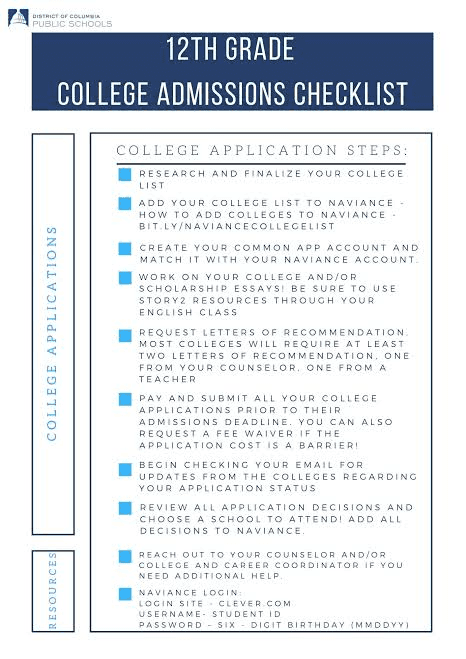
The Common App opens August 1. Create your account on day one. Do not wait. Populate every section you can complete now: personal information, family background, coursework, and test scores. The activity list is your most important non-essay asset. Draft all 10 entries and rank them by significance. Your most impressive activity goes first. If you have a published research paper, it belongs in the first or second slot. For guidance on exactly how to frame that entry, read the guide on research abstracts in college applications.
August is also when you confirm your recommenders. Email your chosen teachers and counselor before school starts. Provide each recommender with a one-page summary of your activities, research, and goals. The more context they have, the stronger the letter.
September: Essays and research documentation
Your personal statement draft should be complete by September 15. That leaves time for revision before October review. Supplemental essays for your top schools should be in draft form by September 30. Do not leave supplementals for October. Schools like MIT, Stanford, and UPenn each require multiple essays, and rushed supplementals read as rushed.
If your research paper is under review at a journal, document its status clearly. The Common App allows you to note "under review" in your activity description. If you are deciding between listing a paper as under review versus published, the distinction matters to admissions officers. Read the detailed breakdown on under review vs published in college applications before you write that entry.
If your paper involved co-authors, your application must clearly state your specific contribution. Admissions officers are trained to notice vague co-authorship claims. The guide on co-authored research in college applications covers exactly how to explain your role.
October: Final profile moves and submission
October is for finalising, not drafting. Every essay should be in final review by October 10 if you have an November 1 Early Decision or Early Action deadline. Have at least two people read each essay: one for content, one for grammar.
October is also the month to make your final profile moves. If you have won any awards for your research, add them to the Honours section of the Common App. The Honours section accepts up to five entries, each with a 100-character description. Do not leave this section empty. Even regional or school-level recognition for research belongs here. See the full list of RISE scholar awards for the kinds of recognition that carry weight.
Submit your application at least 48 hours before the deadline. Server load spikes on deadline day. A technical failure at 11:58 PM is your problem, not the university's.
November: Regular Decision schools and scholarship applications
After Early Decision and Early Action submissions, shift focus to Regular Decision applications and scholarship deadlines. Many major scholarships, including those tied to research achievement, have November and December deadlines. Research experience strengthens scholarship applications significantly. Read more about how research experience strengthens scholarship applications to identify opportunities you may have missed.
Keep your senior year grades strong. Mid-year reports go to every school you applied to, and admission can be rescinded for grade drops.
When should a 12th grader start research?
Honestly: the ideal start was 11th grade. A student who began research in junior year and published before August of senior year enters the application with the strongest possible credential: a peer-reviewed paper with a DOI that any admissions officer can verify in 30 seconds. If you are starting research now in 12th grade, the window is narrow but not closed.
RISE Research runs a 10-week mentorship programme. Journal review after submission typically takes 8 to 16 weeks. A student who starts in August and submits by October may receive a publication decision before Regular Decision deadlines in January. That timeline is tight and depends on the journal and field. A paper listed as "under review" in November applications still signals serious academic engagement, especially when the mentor is a credentialed PhD from an Ivy League or Oxbridge institution.
RISE scholars publish in peer-reviewed journals at a 90% rate. Students with published research are admitted to top 10 universities at 3 times the rate of the general applicant pool. 68% of students with published research secured early university admission. These are not hypothetical advantages. They are documented outcomes visible on the RISE results page.
Our deadline is closing soon. If research is part of your 12th grade fall plan, book your assessment now.
RISE students finish the programme with a published paper and mentor guidance on presenting it in every application. Our deadline is closing soon — book a free Research Assessment to find out what is achievable in your timeline.
Common mistakes in 12th grade fall applications
The most frequent error is treating the activity list as a resume dump. Students list 10 activities with generic descriptions and no quantified impact. Every 150-character description should name a specific outcome: papers published, students tutored, funds raised, competitions won. Vague descriptions waste the only space you have to show depth.
The second mistake is submitting before the essays are genuinely ready. The pressure of November deadlines pushes students to submit drafts they know are not their best work. One more week of revision on a supplemental essay is worth more than submitting three days early.
Third: students leave the Additional Information section blank. This 650-character section is the right place to explain a grade anomaly, a gap in your record, or context that makes your achievement more impressive given your circumstances. If you conducted research without access to a university lab or formal programme, say so here. Officers read achievement relative to opportunity.
Fourth: students underestimate the journal name question. Not all publications carry the same weight. A paper in a peer-reviewed academic journal with an editorial board carries more credibility than a student-run publication. Read the full analysis on whether journal name matters for college applications before you decide how to present your work.
Fifth: students request recommendation letters too late. A letter requested in late October for a November 1 deadline is a letter written under pressure. The quality shows.
How RISE students handle the 12th grade fall checklist
RISE students do not navigate this checklist alone. Every RISE scholar works 1-on-1 with a PhD mentor from an Ivy League or Oxbridge institution throughout the research process. That mentor relationship does not end at publication. RISE mentors guide students on how to present their research in the Common App activity list, how to frame their contribution in supplemental essays, and how to reference their published paper in the Additional Information section.
A published peer-reviewed paper is the strongest research signal on any application because it is externally verified. An admissions officer can look up the paper, confirm the student's name, and see the journal's editorial standards. No other research credential achieves that level of verification. Browse the RISE publications page to see the journals and fields where RISE scholars have published.
Our deadline is closing soon. Book a free Research Assessment to find out what is achievable in your timeline.
Frequently asked questions
Can I still start research in 12th grade and have it help my applications?
Yes, with realistic expectations. A student who starts in August and submits a paper by October may receive a publication decision before Regular Decision deadlines. Even a paper listed as under review in November applications signals genuine academic engagement. RISE's 10-week programme is designed to fit this timeline. Our deadline is closing soon.
Can colleges verify that my research paper is real?
Yes. Any published paper with a DOI is publicly searchable. Admissions officers at selective universities do check. This is why a peer-reviewed publication outweighs a self-reported research project. If your paper is under review, list the journal name and submission date. Do not exaggerate the status of unpublished work.
What if my research is co-authored? How do I list it?
List it honestly with your specific contribution named. The Common App activity description allows 150 characters. Use them to state your role: "Lead author on data collection and analysis; co-authored with PhD mentor." Admissions officers expect co-authorship in student research. Vagueness is the problem, not collaboration. Read the full guide on explaining your role in co-authored research.
How many supplemental essays do top schools require?
It varies by school and changes each cycle. For the 2026-27 cycle, most selective universities require between two and five supplemental essays with word limits ranging from 100 to 650 words. Verify each school's requirements directly on their admissions page or the Common App portal. Do not rely on third-party summaries for word limits.
Is it too late to strengthen my profile in 12th grade fall?
For some moves, yes. You cannot undo a weak junior year GPA or add three years of a new activity. But the activity list, essays, and Additional Information section are entirely in your control right now. A published research paper started in August and submitted by October is achievable. The guide to research programmes for 12th graders covers every realistic option for this stage.
Conclusion
The 12th grade fall checklist: applications plus final profile moves is a short, unforgiving timeline. The Common App opens August 1. Early deadlines hit November 1. Everything between those dates determines what admissions officers see. Start your essays in August, confirm your recommenders before school begins, document your research at its highest verified level, and use every available field in the application with intention. RISE students enter this sequence with a published paper, a credentialed mentor, and specific guidance on presenting their work. That combination is the most durable profile advantage available at this stage. Our deadline is closing soon. Book a free Research Assessment and find out what is still achievable in your timeline.
12th Grade Fall Checklist: Applications Plus Final Profile Moves (2026-27)
TL;DR
The 12th grade fall checklist for applications plus final profile moves comes down to five non-negotiable actions: finalise your activity list, lock in recommenders, complete your Common App before November deadlines, submit any outstanding research for publication, and use the Additional Information section strategically. RISE students receive mentor guidance on every one of these steps. Our deadline is closing soon. Act now so your research is in the strongest possible position before applications open.
Introduction
The 12th grade fall checklist: applications plus final profile moves is not a planning exercise. It is a live deadline sequence. The Common App opens August 1. Early Decision and Early Action deadlines cluster in November. Most students underestimate how little time separates August orientation from November 1 submission. This guide names every action in order, assigns it to the right month, and tells you exactly what to do with any research you have completed or are completing now. If you have not yet started research, the timeline below shows why the window is narrowing fast.
What matters most in 12th grade fall?
Three priorities dominate this period: submitting a complete, error-free Common App before your earliest deadline, presenting your extracurricular and research profile at its highest verified level, and securing strong recommendation letters from the right people.
The Common App activity list has 10 slots, each capped at 150 characters for the description. Every slot is visible to every school you apply to. The quality of those 150 characters matters more than most students realise. Recommendation letters, once requested, take weeks to write and submit. Starting those conversations in September is already late. Starting in October is a problem.
What does NOT matter yet: your senior year grades will not appear on your initial application. First-semester transcripts are sent mid-year. Focus your energy on what admissions officers will actually see on November 1: your activities, your essays, your test scores, and your research record. Learn more about how to stand out in college applications in 2026 before you finalise your approach.
12th grade fall: month by month
August: Open and build
The Common App opens August 1. Create your account on day one. Do not wait. Populate every section you can complete now: personal information, family background, coursework, and test scores. The activity list is your most important non-essay asset. Draft all 10 entries and rank them by significance. Your most impressive activity goes first. If you have a published research paper, it belongs in the first or second slot. For guidance on exactly how to frame that entry, read the guide on research abstracts in college applications.
August is also when you confirm your recommenders. Email your chosen teachers and counselor before school starts. Provide each recommender with a one-page summary of your activities, research, and goals. The more context they have, the stronger the letter.
September: Essays and research documentation
Your personal statement draft should be complete by September 15. That leaves time for revision before October review. Supplemental essays for your top schools should be in draft form by September 30. Do not leave supplementals for October. Schools like MIT, Stanford, and UPenn each require multiple essays, and rushed supplementals read as rushed.
If your research paper is under review at a journal, document its status clearly. The Common App allows you to note "under review" in your activity description. If you are deciding between listing a paper as under review versus published, the distinction matters to admissions officers. Read the detailed breakdown on under review vs published in college applications before you write that entry.
If your paper involved co-authors, your application must clearly state your specific contribution. Admissions officers are trained to notice vague co-authorship claims. The guide on co-authored research in college applications covers exactly how to explain your role.
October: Final profile moves and submission
October is for finalising, not drafting. Every essay should be in final review by October 10 if you have an November 1 Early Decision or Early Action deadline. Have at least two people read each essay: one for content, one for grammar.
October is also the month to make your final profile moves. If you have won any awards for your research, add them to the Honours section of the Common App. The Honours section accepts up to five entries, each with a 100-character description. Do not leave this section empty. Even regional or school-level recognition for research belongs here. See the full list of RISE scholar awards for the kinds of recognition that carry weight.
Submit your application at least 48 hours before the deadline. Server load spikes on deadline day. A technical failure at 11:58 PM is your problem, not the university's.
November: Regular Decision schools and scholarship applications
After Early Decision and Early Action submissions, shift focus to Regular Decision applications and scholarship deadlines. Many major scholarships, including those tied to research achievement, have November and December deadlines. Research experience strengthens scholarship applications significantly. Read more about how research experience strengthens scholarship applications to identify opportunities you may have missed.
Keep your senior year grades strong. Mid-year reports go to every school you applied to, and admission can be rescinded for grade drops.
When should a 12th grader start research?
Honestly: the ideal start was 11th grade. A student who began research in junior year and published before August of senior year enters the application with the strongest possible credential: a peer-reviewed paper with a DOI that any admissions officer can verify in 30 seconds. If you are starting research now in 12th grade, the window is narrow but not closed.
RISE Research runs a 10-week mentorship programme. Journal review after submission typically takes 8 to 16 weeks. A student who starts in August and submits by October may receive a publication decision before Regular Decision deadlines in January. That timeline is tight and depends on the journal and field. A paper listed as "under review" in November applications still signals serious academic engagement, especially when the mentor is a credentialed PhD from an Ivy League or Oxbridge institution.
RISE scholars publish in peer-reviewed journals at a 90% rate. Students with published research are admitted to top 10 universities at 3 times the rate of the general applicant pool. 68% of students with published research secured early university admission. These are not hypothetical advantages. They are documented outcomes visible on the RISE results page.
Our deadline is closing soon. If research is part of your 12th grade fall plan, book your assessment now.
RISE students finish the programme with a published paper and mentor guidance on presenting it in every application. Our deadline is closing soon — book a free Research Assessment to find out what is achievable in your timeline.
Common mistakes in 12th grade fall applications
The most frequent error is treating the activity list as a resume dump. Students list 10 activities with generic descriptions and no quantified impact. Every 150-character description should name a specific outcome: papers published, students tutored, funds raised, competitions won. Vague descriptions waste the only space you have to show depth.
The second mistake is submitting before the essays are genuinely ready. The pressure of November deadlines pushes students to submit drafts they know are not their best work. One more week of revision on a supplemental essay is worth more than submitting three days early.
Third: students leave the Additional Information section blank. This 650-character section is the right place to explain a grade anomaly, a gap in your record, or context that makes your achievement more impressive given your circumstances. If you conducted research without access to a university lab or formal programme, say so here. Officers read achievement relative to opportunity.
Fourth: students underestimate the journal name question. Not all publications carry the same weight. A paper in a peer-reviewed academic journal with an editorial board carries more credibility than a student-run publication. Read the full analysis on whether journal name matters for college applications before you decide how to present your work.
Fifth: students request recommendation letters too late. A letter requested in late October for a November 1 deadline is a letter written under pressure. The quality shows.
How RISE students handle the 12th grade fall checklist
RISE students do not navigate this checklist alone. Every RISE scholar works 1-on-1 with a PhD mentor from an Ivy League or Oxbridge institution throughout the research process. That mentor relationship does not end at publication. RISE mentors guide students on how to present their research in the Common App activity list, how to frame their contribution in supplemental essays, and how to reference their published paper in the Additional Information section.
A published peer-reviewed paper is the strongest research signal on any application because it is externally verified. An admissions officer can look up the paper, confirm the student's name, and see the journal's editorial standards. No other research credential achieves that level of verification. Browse the RISE publications page to see the journals and fields where RISE scholars have published.
Our deadline is closing soon. Book a free Research Assessment to find out what is achievable in your timeline.
Frequently asked questions
Can I still start research in 12th grade and have it help my applications?
Yes, with realistic expectations. A student who starts in August and submits a paper by October may receive a publication decision before Regular Decision deadlines. Even a paper listed as under review in November applications signals genuine academic engagement. RISE's 10-week programme is designed to fit this timeline. Our deadline is closing soon.
Can colleges verify that my research paper is real?
Yes. Any published paper with a DOI is publicly searchable. Admissions officers at selective universities do check. This is why a peer-reviewed publication outweighs a self-reported research project. If your paper is under review, list the journal name and submission date. Do not exaggerate the status of unpublished work.
What if my research is co-authored? How do I list it?
List it honestly with your specific contribution named. The Common App activity description allows 150 characters. Use them to state your role: "Lead author on data collection and analysis; co-authored with PhD mentor." Admissions officers expect co-authorship in student research. Vagueness is the problem, not collaboration. Read the full guide on explaining your role in co-authored research.
How many supplemental essays do top schools require?
It varies by school and changes each cycle. For the 2026-27 cycle, most selective universities require between two and five supplemental essays with word limits ranging from 100 to 650 words. Verify each school's requirements directly on their admissions page or the Common App portal. Do not rely on third-party summaries for word limits.
Is it too late to strengthen my profile in 12th grade fall?
For some moves, yes. You cannot undo a weak junior year GPA or add three years of a new activity. But the activity list, essays, and Additional Information section are entirely in your control right now. A published research paper started in August and submitted by October is achievable. The guide to research programmes for 12th graders covers every realistic option for this stage.
Conclusion
The 12th grade fall checklist: applications plus final profile moves is a short, unforgiving timeline. The Common App opens August 1. Early deadlines hit November 1. Everything between those dates determines what admissions officers see. Start your essays in August, confirm your recommenders before school begins, document your research at its highest verified level, and use every available field in the application with intention. RISE students enter this sequence with a published paper, a credentialed mentor, and specific guidance on presenting their work. That combination is the most durable profile advantage available at this stage. Our deadline is closing soon. Book a free Research Assessment and find out what is still achievable in your timeline.
Fall 2026 Cohort Deadline Closing on 28th September
Book a free 20-min strategy call
Book a free 20-min strategy call
Read More