>
>
>
Research mentorship for paleontology students
Research mentorship for paleontology students
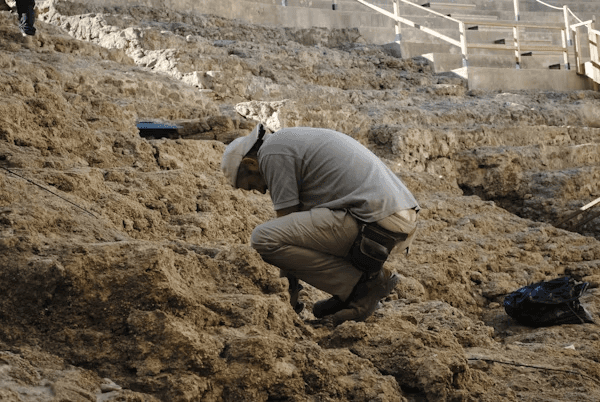
Research mentorship for paleontology students | RISE Research
Research mentorship for paleontology students | RISE Research
RISE Research
RISE Research
TL;DR: Research mentorship for paleontology students gives high schoolers the tools to conduct original, university-level fossil and evolutionary biology research under PhD mentors. RISE Research scholars publish in peer-reviewed journals, earn global recognition, and gain admission advantages at top universities. RISE scholars are accepted to Stanford at 18% and UPenn at 32%, compared to standard rates of 8.7% and 3.8%. The Summer 2026 Cohort priority deadline is approaching soon. Schedule your Research Assessment today.
Why Paleontology Research Sets High School Students Apart
How many high school students can say they have contributed to our understanding of ancient life on Earth? Very few. That is precisely what makes original paleontology research one of the most powerful academic differentiators available to high-achieving students today.
Research mentorship for paleontology students is not about memorizing fossil names or reciting geological timescales. It is about formulating original questions, analyzing real datasets, and producing peer-reviewed work that advances the field. University admissions committees at institutions like Harvard, MIT, and Stanford review thousands of applications from students who took AP Biology or attended science camps. A published paleontology paper under a PhD mentor is something fundamentally different.
According to the National Association for College Admission Counseling, demonstrated intellectual initiative is among the top factors in selective admissions decisions. Original research is the clearest proof of that initiative. RISE Research exists to give motivated high school students the structure, mentorship, and publication pathway to produce exactly that kind of work.
What Does High School Paleontology Research Actually Look Like?
High school paleontology research uses both quantitative and qualitative methods. Students do not need to excavate fossils themselves. Much of the most impactful work in modern paleontology is data-driven, literature-based, or morphometric in nature. That means a student with a laptop, a strong research question, and a qualified mentor can produce genuinely publishable science.
Quantitative approaches include morphometric analysis of fossil specimens using published museum databases, statistical modeling of extinction events, and phylogenetic tree construction using existing genomic and morphological data. Qualitative approaches include systematic literature reviews of specific taxa, comparative anatomical studies, and paleoecological reconstructions based on sedimentary and taphonomic records.
RISE paleontology students have explored research questions such as:
A Morphometric Analysis of Limb Proportions in Early Tetrapod Fossils and Their Implications for Terrestrial Locomotion
Quantifying Biodiversity Loss During the End-Permian Mass Extinction Using Genus-Level Fossil Records
A Systematic Review of Feathered Dinosaur Specimens and the Evolution of Avian Flight Behavior
Paleoecological Reconstruction of Late Cretaceous Fluvial Environments Using Plant Macrofossil Assemblages
Phylogenetic Analysis of Trilobite Diversity Across the Cambrian Radiation Using Cladistic Methods
Each of these projects is specific, original, and grounded in real scientific methodology. They are the kinds of papers that journals publish and admissions officers remember. You can browse completed student work on the RISE Research Projects page to see the full range of topics scholars have pursued.
The Mentors Behind the Research
The quality of a research mentorship program is determined entirely by the quality of its mentors. RISE Research works with a network of 500+ PhD mentors from Ivy League and Oxbridge institutions, including researchers whose work has been published in leading paleontology and evolutionary biology journals.
When a student joins RISE, the matching process is deliberate and specific. Program coordinators review each student's academic background, intellectual interests, and research goals before pairing them with a mentor whose expertise aligns directly with the proposed topic. A student interested in vertebrate paleontology will be matched with a mentor who has published in that area, not simply a generalist biologist.
This specificity matters enormously. A PhD mentor who has personally navigated the peer-review process in paleontology knows which journals are appropriate for a given paper, how to frame a research question to meet editorial standards, and how to coach a student through revision cycles. That guidance is not available in a classroom or a standard extracurricular program.
RISE mentors also help students connect their paleontology research to broader academic narratives. A student interested in climate science can frame fossil-record research around ancient climate proxies. A student drawn to evolutionary biology can position their work within the context of modern phylogenetics. The mentor helps the student see where their research fits in the larger scientific conversation.
Where Does High School Paleontology Research Get Published?
Peer-reviewed publication is achievable for high school paleontology students who produce rigorous, original work under qualified mentorship. Several journals actively publish research from young scholars, particularly when the methodology is sound and the contribution is genuine.
Relevant publication venues for high school paleontology research include:
Journal of Vertebrate Paleontology: One of the most respected venues for vertebrate fossil research, published by the Society of Vertebrate Paleontology.
Journal of Paleontology: A broad-scope journal covering invertebrate, vertebrate, and plant fossil research published by Cambridge University Press.
Curieux Academic Journal: A peer-reviewed journal specifically designed for high school researchers, with published work across natural sciences including paleontology.
Journal of Young Investigators: A student-run, faculty-reviewed journal that publishes original research from undergraduate and advanced high school students in the life and earth sciences.
Peer review matters because it signals intellectual rigor. Any student can write an essay about dinosaurs. A student who has submitted original research to a peer-reviewed journal and received editorial feedback has demonstrated something categorically different. RISE Research maintains a 90% publication success rate across all disciplines, including the natural sciences. You can view published RISE scholar work on the Publications page.
How the RISE Research Program Works
RISE Research is structured around four stages. Each stage builds directly on the previous one, and the entire program is designed to move a student from initial curiosity to a submitted, publication-ready manuscript.
The first stage is the Research Assessment. Before any topic is selected, RISE coordinators conduct a detailed review of the student's academic background, subject interests, and long-term goals. For paleontology students, this conversation often surfaces specific areas of fascination, whether that is mass extinction events, early vertebrate evolution, or the fossil record of a particular geological period. That specificity shapes every decision that follows.
The second stage is Topic Development. Working directly with their assigned PhD mentor, the student refines a broad interest into a focused, original research question. This stage includes a thorough review of existing literature to confirm that the proposed question has not already been answered and that the student's approach will contribute something new. A paleontology student might begin with a general interest in the Cambrian explosion and emerge from this stage with a precise question about trilobite diversification rates in a specific stratigraphic interval.
The third stage is Active Research. This is where the work happens. Depending on the methodology, students analyze fossil databases, apply statistical models, conduct systematic literature reviews, or perform morphometric comparisons using published specimen measurements. The PhD mentor meets with the student regularly, reviews drafts, and provides the kind of detailed, subject-specific feedback that transforms a student's first attempt at scientific writing into a credible academic manuscript.
The fourth stage is Submission and Review. The mentor guides the student through journal selection, manuscript formatting, and the submission process. When reviewers respond with revision requests, the mentor helps the student interpret the feedback and strengthen the paper. This iterative process teaches students how real science is published and gives them direct experience with academic peer review before they ever set foot on a university campus.
If you are a high school student with a serious interest in paleontology, the Summer 2026 Cohort is now accepting applications. The priority deadline is approaching soon. Schedule your Research Assessment at RISE Global Education to discuss your research goals and find the right mentor match.
RISE Scholar Results in the Natural Sciences
RISE scholars in the natural sciences have earned recognition far beyond publication. They have presented at international conferences, received awards from scientific societies, and earned admission to the world's most selective universities. You can review verified outcomes on the RISE Results page.
The admissions data is consistent and significant. RISE scholars are accepted to Stanford at a rate of 18%, compared to the standard Stanford acceptance rate of 8.7%. At UPenn, RISE scholars are accepted at 32%, compared to the standard rate of 3.8%. Overall, RISE scholars gain admission to Top 10 universities at three times the rate of their peers.
These outcomes reflect what happens when a high-achieving student pairs genuine intellectual curiosity with structured, expert-led research. Paleontology is a field where original contributions are visible and verifiable. A published paper leaves a permanent record. Admissions committees can read it, evaluate it, and recognize the effort and rigor it represents.
For students interested in related scientific disciplines, RISE also offers research mentorship for genetics students and research mentorship for microbiology students, both of which intersect with evolutionary biology and the life sciences in ways that complement paleontology research.
Frequently Asked Questions About Paleontology Research Mentorship
Do I need access to fossils or a laboratory to conduct paleontology research?
No. Most high school paleontology research does not require physical fossil access or laboratory equipment. The majority of publishable work at this level uses publicly available fossil databases, published specimen measurements, and statistical or systematic methods that can be performed on a standard computer. Your RISE mentor will help you design a project that matches your available resources.
Major databases such as the Paleobiology Database and museum digital collections provide access to millions of fossil occurrence records. Students can use these resources to conduct quantitative analyses of extinction patterns, diversity trends, or geographic distributions without ever handling a physical specimen.
What grade should I be in to start paleontology research mentorship?
RISE Research accepts students in Grades 9 through 12. Starting in Grade 9 or 10 allows students to complete one or more research projects before submitting college applications, which maximizes the admissions impact. However, Grade 11 and 12 students also benefit significantly, particularly when research is completed and submitted for publication before application deadlines.
Earlier enrollment also allows students to pursue follow-up projects or present their work at science competitions and conferences, further strengthening their academic profile.
How is research mentorship for paleontology students different from a school science project?
A school science project is evaluated by a teacher against a classroom rubric. Paleontology research mentorship through RISE produces work that is evaluated by external peer reviewers and, if accepted, published in a journal read by professional scientists. The standard is fundamentally different, and so is the outcome. A published paper carries academic credibility that no school project can replicate.
The process is also different. Students work one-on-one with a PhD mentor who has personal experience publishing in the field. That relationship produces a depth of scientific thinking that classroom instruction cannot provide.
Can paleontology research help with Ivy League admissions?
Yes. Original research is one of the strongest academic differentiators in Ivy League admissions. A published paleontology paper demonstrates intellectual curiosity, independent thinking, and the ability to produce university-level work before enrolling. These are exactly the qualities that admissions committees at Harvard, Princeton, and Yale describe when they discuss the students they most want to admit.
RISE scholars are accepted to Top 10 universities at three times the rate of their peers, a result that reflects the cumulative impact of original research on a student's application profile. Visit the Results page to review verified acceptance data.
How long does a RISE paleontology research project take?
Most RISE research projects are completed over 12 to 16 weeks, depending on the complexity of the topic and the pace of the peer-review process. Students typically spend 6 to 8 weeks on active research and writing, followed by submission and revision cycles that vary by journal. Your RISE mentor will help you plan a realistic timeline from the outset so that the project aligns with your academic schedule and application deadlines.
Start Your Paleontology Research Journey This Summer
Paleontology is a field defined by original discovery. The scientists who advance it ask questions no one has answered before, build methods to test those questions rigorously, and share their findings with the broader scientific community. Research mentorship for paleontology students gives high schoolers the opportunity to participate in that tradition before they graduate.
RISE Research provides the mentorship, the structure, and the publication pathway. You bring the curiosity and the commitment. The result is a peer-reviewed paper, a stronger university application, and a research experience that demonstrates exactly what you are capable of achieving.
The Summer 2026 Cohort priority deadline is approaching soon. Spaces are limited and filled on a rolling basis. Schedule your Research Assessment at RISE Global Education today and take the first step toward publishing original paleontology research under a PhD mentor from a world-leading institution.
TL;DR: Research mentorship for paleontology students gives high schoolers the tools to conduct original, university-level fossil and evolutionary biology research under PhD mentors. RISE Research scholars publish in peer-reviewed journals, earn global recognition, and gain admission advantages at top universities. RISE scholars are accepted to Stanford at 18% and UPenn at 32%, compared to standard rates of 8.7% and 3.8%. The Summer 2026 Cohort priority deadline is approaching soon. Schedule your Research Assessment today.
Why Paleontology Research Sets High School Students Apart
How many high school students can say they have contributed to our understanding of ancient life on Earth? Very few. That is precisely what makes original paleontology research one of the most powerful academic differentiators available to high-achieving students today.
Research mentorship for paleontology students is not about memorizing fossil names or reciting geological timescales. It is about formulating original questions, analyzing real datasets, and producing peer-reviewed work that advances the field. University admissions committees at institutions like Harvard, MIT, and Stanford review thousands of applications from students who took AP Biology or attended science camps. A published paleontology paper under a PhD mentor is something fundamentally different.
According to the National Association for College Admission Counseling, demonstrated intellectual initiative is among the top factors in selective admissions decisions. Original research is the clearest proof of that initiative. RISE Research exists to give motivated high school students the structure, mentorship, and publication pathway to produce exactly that kind of work.
What Does High School Paleontology Research Actually Look Like?
High school paleontology research uses both quantitative and qualitative methods. Students do not need to excavate fossils themselves. Much of the most impactful work in modern paleontology is data-driven, literature-based, or morphometric in nature. That means a student with a laptop, a strong research question, and a qualified mentor can produce genuinely publishable science.
Quantitative approaches include morphometric analysis of fossil specimens using published museum databases, statistical modeling of extinction events, and phylogenetic tree construction using existing genomic and morphological data. Qualitative approaches include systematic literature reviews of specific taxa, comparative anatomical studies, and paleoecological reconstructions based on sedimentary and taphonomic records.
RISE paleontology students have explored research questions such as:
A Morphometric Analysis of Limb Proportions in Early Tetrapod Fossils and Their Implications for Terrestrial Locomotion
Quantifying Biodiversity Loss During the End-Permian Mass Extinction Using Genus-Level Fossil Records
A Systematic Review of Feathered Dinosaur Specimens and the Evolution of Avian Flight Behavior
Paleoecological Reconstruction of Late Cretaceous Fluvial Environments Using Plant Macrofossil Assemblages
Phylogenetic Analysis of Trilobite Diversity Across the Cambrian Radiation Using Cladistic Methods
Each of these projects is specific, original, and grounded in real scientific methodology. They are the kinds of papers that journals publish and admissions officers remember. You can browse completed student work on the RISE Research Projects page to see the full range of topics scholars have pursued.
The Mentors Behind the Research
The quality of a research mentorship program is determined entirely by the quality of its mentors. RISE Research works with a network of 500+ PhD mentors from Ivy League and Oxbridge institutions, including researchers whose work has been published in leading paleontology and evolutionary biology journals.
When a student joins RISE, the matching process is deliberate and specific. Program coordinators review each student's academic background, intellectual interests, and research goals before pairing them with a mentor whose expertise aligns directly with the proposed topic. A student interested in vertebrate paleontology will be matched with a mentor who has published in that area, not simply a generalist biologist.
This specificity matters enormously. A PhD mentor who has personally navigated the peer-review process in paleontology knows which journals are appropriate for a given paper, how to frame a research question to meet editorial standards, and how to coach a student through revision cycles. That guidance is not available in a classroom or a standard extracurricular program.
RISE mentors also help students connect their paleontology research to broader academic narratives. A student interested in climate science can frame fossil-record research around ancient climate proxies. A student drawn to evolutionary biology can position their work within the context of modern phylogenetics. The mentor helps the student see where their research fits in the larger scientific conversation.
Where Does High School Paleontology Research Get Published?
Peer-reviewed publication is achievable for high school paleontology students who produce rigorous, original work under qualified mentorship. Several journals actively publish research from young scholars, particularly when the methodology is sound and the contribution is genuine.
Relevant publication venues for high school paleontology research include:
Journal of Vertebrate Paleontology: One of the most respected venues for vertebrate fossil research, published by the Society of Vertebrate Paleontology.
Journal of Paleontology: A broad-scope journal covering invertebrate, vertebrate, and plant fossil research published by Cambridge University Press.
Curieux Academic Journal: A peer-reviewed journal specifically designed for high school researchers, with published work across natural sciences including paleontology.
Journal of Young Investigators: A student-run, faculty-reviewed journal that publishes original research from undergraduate and advanced high school students in the life and earth sciences.
Peer review matters because it signals intellectual rigor. Any student can write an essay about dinosaurs. A student who has submitted original research to a peer-reviewed journal and received editorial feedback has demonstrated something categorically different. RISE Research maintains a 90% publication success rate across all disciplines, including the natural sciences. You can view published RISE scholar work on the Publications page.
How the RISE Research Program Works
RISE Research is structured around four stages. Each stage builds directly on the previous one, and the entire program is designed to move a student from initial curiosity to a submitted, publication-ready manuscript.
The first stage is the Research Assessment. Before any topic is selected, RISE coordinators conduct a detailed review of the student's academic background, subject interests, and long-term goals. For paleontology students, this conversation often surfaces specific areas of fascination, whether that is mass extinction events, early vertebrate evolution, or the fossil record of a particular geological period. That specificity shapes every decision that follows.
The second stage is Topic Development. Working directly with their assigned PhD mentor, the student refines a broad interest into a focused, original research question. This stage includes a thorough review of existing literature to confirm that the proposed question has not already been answered and that the student's approach will contribute something new. A paleontology student might begin with a general interest in the Cambrian explosion and emerge from this stage with a precise question about trilobite diversification rates in a specific stratigraphic interval.
The third stage is Active Research. This is where the work happens. Depending on the methodology, students analyze fossil databases, apply statistical models, conduct systematic literature reviews, or perform morphometric comparisons using published specimen measurements. The PhD mentor meets with the student regularly, reviews drafts, and provides the kind of detailed, subject-specific feedback that transforms a student's first attempt at scientific writing into a credible academic manuscript.
The fourth stage is Submission and Review. The mentor guides the student through journal selection, manuscript formatting, and the submission process. When reviewers respond with revision requests, the mentor helps the student interpret the feedback and strengthen the paper. This iterative process teaches students how real science is published and gives them direct experience with academic peer review before they ever set foot on a university campus.
If you are a high school student with a serious interest in paleontology, the Summer 2026 Cohort is now accepting applications. The priority deadline is approaching soon. Schedule your Research Assessment at RISE Global Education to discuss your research goals and find the right mentor match.
RISE Scholar Results in the Natural Sciences
RISE scholars in the natural sciences have earned recognition far beyond publication. They have presented at international conferences, received awards from scientific societies, and earned admission to the world's most selective universities. You can review verified outcomes on the RISE Results page.
The admissions data is consistent and significant. RISE scholars are accepted to Stanford at a rate of 18%, compared to the standard Stanford acceptance rate of 8.7%. At UPenn, RISE scholars are accepted at 32%, compared to the standard rate of 3.8%. Overall, RISE scholars gain admission to Top 10 universities at three times the rate of their peers.
These outcomes reflect what happens when a high-achieving student pairs genuine intellectual curiosity with structured, expert-led research. Paleontology is a field where original contributions are visible and verifiable. A published paper leaves a permanent record. Admissions committees can read it, evaluate it, and recognize the effort and rigor it represents.
For students interested in related scientific disciplines, RISE also offers research mentorship for genetics students and research mentorship for microbiology students, both of which intersect with evolutionary biology and the life sciences in ways that complement paleontology research.
Frequently Asked Questions About Paleontology Research Mentorship
Do I need access to fossils or a laboratory to conduct paleontology research?
No. Most high school paleontology research does not require physical fossil access or laboratory equipment. The majority of publishable work at this level uses publicly available fossil databases, published specimen measurements, and statistical or systematic methods that can be performed on a standard computer. Your RISE mentor will help you design a project that matches your available resources.
Major databases such as the Paleobiology Database and museum digital collections provide access to millions of fossil occurrence records. Students can use these resources to conduct quantitative analyses of extinction patterns, diversity trends, or geographic distributions without ever handling a physical specimen.
What grade should I be in to start paleontology research mentorship?
RISE Research accepts students in Grades 9 through 12. Starting in Grade 9 or 10 allows students to complete one or more research projects before submitting college applications, which maximizes the admissions impact. However, Grade 11 and 12 students also benefit significantly, particularly when research is completed and submitted for publication before application deadlines.
Earlier enrollment also allows students to pursue follow-up projects or present their work at science competitions and conferences, further strengthening their academic profile.
How is research mentorship for paleontology students different from a school science project?
A school science project is evaluated by a teacher against a classroom rubric. Paleontology research mentorship through RISE produces work that is evaluated by external peer reviewers and, if accepted, published in a journal read by professional scientists. The standard is fundamentally different, and so is the outcome. A published paper carries academic credibility that no school project can replicate.
The process is also different. Students work one-on-one with a PhD mentor who has personal experience publishing in the field. That relationship produces a depth of scientific thinking that classroom instruction cannot provide.
Can paleontology research help with Ivy League admissions?
Yes. Original research is one of the strongest academic differentiators in Ivy League admissions. A published paleontology paper demonstrates intellectual curiosity, independent thinking, and the ability to produce university-level work before enrolling. These are exactly the qualities that admissions committees at Harvard, Princeton, and Yale describe when they discuss the students they most want to admit.
RISE scholars are accepted to Top 10 universities at three times the rate of their peers, a result that reflects the cumulative impact of original research on a student's application profile. Visit the Results page to review verified acceptance data.
How long does a RISE paleontology research project take?
Most RISE research projects are completed over 12 to 16 weeks, depending on the complexity of the topic and the pace of the peer-review process. Students typically spend 6 to 8 weeks on active research and writing, followed by submission and revision cycles that vary by journal. Your RISE mentor will help you plan a realistic timeline from the outset so that the project aligns with your academic schedule and application deadlines.
Start Your Paleontology Research Journey This Summer
Paleontology is a field defined by original discovery. The scientists who advance it ask questions no one has answered before, build methods to test those questions rigorously, and share their findings with the broader scientific community. Research mentorship for paleontology students gives high schoolers the opportunity to participate in that tradition before they graduate.
RISE Research provides the mentorship, the structure, and the publication pathway. You bring the curiosity and the commitment. The result is a peer-reviewed paper, a stronger university application, and a research experience that demonstrates exactly what you are capable of achieving.
The Summer 2026 Cohort priority deadline is approaching soon. Spaces are limited and filled on a rolling basis. Schedule your Research Assessment at RISE Global Education today and take the first step toward publishing original paleontology research under a PhD mentor from a world-leading institution.
Fall 2026 Cohort Deadline Closing on 15th September
Book a free 20-min strategy call
Book a free 20-min strategy call
Read More