>
>
>
8 ways to stand out in MIT admissions beyond perfect scores
8 ways to stand out in MIT admissions beyond perfect scores
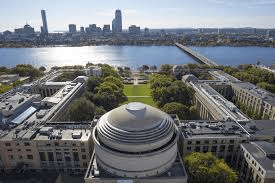
8 ways to stand out in MIT admissions beyond perfect scores | RISE Research
8 ways to stand out in MIT admissions beyond perfect scores | RISE Research
RISE Research
RISE Research
TL;DR: MIT's acceptance rate is 4.7%. Thousands of applicants arrive with perfect GPAs and near-perfect SAT scores and still do not get in. This post covers 8 ways to stand out in MIT admissions beyond perfect scores, drawing on MIT's own admissions materials, its Common Data Set, and supplemental essay prompts. The single most powerful differentiator is demonstrated intellectual initiative, and published research is one of the clearest ways to show it. If you are building your MIT application now, read this before you finalize your activity list.
Why perfect scores are not enough for MIT
MIT's overall acceptance rate for the Class of 2028 was 4.7%. That means for every 100 students who apply, more than 95 do not get in, including thousands with 4.0 GPAs and 1580+ SAT scores. The students who do get in are not simply stronger on paper. They demonstrate something that transcripts alone cannot show: the ability to think, create, and contribute at a level that goes beyond coursework.
MIT publishes its evaluation criteria in its Common Data Set. Section C7 confirms that MIT rates "character/personal qualities," "extracurricular activities," and "talent/ability" as "very important" alongside grades and scores. "First generation" and "geographical residence" are rated "considered." The academic record matters, but it is the starting point, not the deciding factor.
Understanding 8 ways to stand out in MIT admissions beyond perfect scores means understanding what MIT is actually selecting for: builders, researchers, problem-solvers, and people who do not wait for permission to pursue what interests them.
8 ways to stand out in MIT admissions beyond perfect scores
1. Demonstrated intellectual initiative
MIT's admissions office is explicit that it looks for students who pursue ideas beyond the classroom. The admissions blog describes the ideal applicant as someone who "tinkers, builds, and explores" outside of formal instruction. A strong demonstration is not a high grade in AP Physics. It is a student who builds something, investigates something, or publishes something because they wanted to know the answer. A weak demonstration is a list of clubs with no evidence of independent thought or output.
2. Original research or independent inquiry
Research is one of the most powerful signals an MIT applicant can send. MIT's own data shows that a significant portion of admitted students have engaged in some form of independent academic work before arriving on campus. Nearly one-third of UPenn's Class of 2026 had research experience, and Caltech reports that 45% of its admitted Class of 2027 had conducted research. MIT operates in the same tier and selects for the same profile. A student who has conducted original, university-level research and published findings in a peer-reviewed journal is not just demonstrating interest. They are demonstrating capability. For a deeper look at how research shapes elite applications, see how high school research impacts your MIT application.
3. Rigorous course selection in STEM
MIT expects applicants to have taken the most demanding courses available to them, particularly in mathematics and science. The Common Data Set rates "rigor of secondary school record" as "very important." But rigor alone is not differentiating at MIT. Nearly every competitive applicant has taken AP Calculus BC, AP Chemistry, and AP Physics. What separates strong files is what the student did beyond those courses, whether that is university-level coursework, independent study, or original research built on top of that foundation.
4. Concrete problem-solving evidence
MIT is an engineering and science institution. It selects for students who solve real problems, not just students who understand theoretical ones. Admissions officers look for evidence of this in the Activities section of the Common App and in MIT's own supplemental essays. A student who designed a working prototype, contributed to an open-source project, or identified a gap in existing research and addressed it has something concrete to point to. A student who lists "member" of ten clubs does not.
5. MIT-specific supplemental essays
MIT does not use the Common App. It uses its own application, and its essay prompts are designed to surface exactly the qualities described above. For the 2025-2026 cycle, MIT asks applicants to describe "something you do for the pleasure of it" and to respond to prompts about collaboration, community, and what they would bring to MIT. One prompt specifically asks about a challenge the student has engaged with intellectually. These prompts reward students who have a real intellectual history, not students who are constructing one for the application. A student who has conducted and published original research has genuine, specific material to draw from in every one of these responses.
6. Authentic community impact
MIT's admissions materials consistently emphasize community. The "mind and hand" motto reflects a belief that knowledge should produce tangible benefit. Admissions officers look for evidence that applicants have used their skills or knowledge to serve others, whether through tutoring, community science projects, policy work, or applied research with real-world implications. Generic volunteer hours do not carry weight here. Specific, skill-based contributions do. For context on what Ivy League admissions officers say about this distinction, see community service valued by Ivy League admissions.
7. Recommendation letters that describe intellectual character
MIT requests two teacher recommendations and one counselor recommendation. The admissions office states that it looks for letters that describe how a student thinks, not just how they perform. A letter that says "she earned the highest grade in my class" adds little. A letter that says "she identified a flaw in our lab methodology and redesigned the experiment" adds a great deal. Students who have done original research give their recommenders specific, memorable material that distinguishes their file from thousands of others with similar grade profiles.
8. A coherent academic narrative
MIT admissions officers read hundreds of files in a short window. The applicants who stand out are those whose activities, essays, and recommendations tell a consistent story about who they are and what they are building toward. A student who has pursued a single intellectual thread across multiple years, deepening their work from coursework to independent research to publication, presents a far more compelling narrative than a student with a broad but shallow activity list. MIT's own admissions blog warns against the "well-rounded" student who has done everything but mastered nothing. For more on why depth beats breadth, see why being well-rounded is overrated in college admissions.
Does independent research actually change your odds at MIT?
Answer: The data strongly suggests yes. MIT does not publish a specific figure on the percentage of admitted students with research experience, but peer institutions do. Caltech reports 45% of its admitted Class of 2027 had conducted research. UPenn reports nearly one-third of its Class of 2026 had research experience. RISE scholars applying to MIT-tier institutions are admitted to top-10 universities at three times the standard rate.
MIT selects for the same intellectual profile as Caltech and UPenn. Students who arrive with published research have already demonstrated that they can formulate a question, design a methodology, produce original findings, and communicate them to an expert audience. That is not a credential. It is evidence of capability.
The distinction between research participation and published research matters. Participating in a summer lab programme shows curiosity. Publishing original research in a peer-reviewed journal shows that an external expert evaluated the work and found it credible. That external validation is what makes published research so powerful in a holistic review process where admissions officers are trying to assess genuine intellectual potential.
RISE scholars applying to Stanford are accepted at an 18% rate, compared to the standard 8.7%. RISE scholars applying to UPenn are accepted at a 32% rate, compared to the standard 3.8%. These figures reflect what happens when students arrive with a publication, a research narrative, and essay material that is genuinely their own. Research does not guarantee admission to MIT or anywhere else. But at this level of selectivity, it is one of the very few things a student can do that demonstrably shifts the odds. See the full RISE admissions results for more detail.
How to build the academic profile MIT rewards
Knowing what MIT looks for is not the same as knowing how to demonstrate it. Most students understand that research matters. Very few know how to produce research that is genuinely publishable at the high school level.
RISE Research is a selective 1-on-1 mentorship programme where high school students in Grades 9 to 12 conduct original, university-level research under expert mentors from Ivy League and Oxbridge institutions. The programme runs over 10 structured weeks. Students work with one mentor from a pool of 500+ researchers published across 40+ academic journals. The output is a completed research paper submitted to a peer-reviewed publication.
For a student targeting MIT, this matters in three specific ways. First, it produces the publication that distinguishes a file from thousands of equally credentialed applicants. Second, it generates the intellectual history that MIT's supplemental essay prompts are designed to surface. Third, it gives recommenders something specific and memorable to write about.
RISE scholars are admitted to top-10 universities at three times the standard rate. The programme does not manufacture outcomes. It builds the profile that selective universities reward, and the admissions data reflects that. The first step is a free 20-minute Research Assessment where we tell you exactly what is achievable in your timeline. Explore the range of RISE research projects to see what students in your subject area have produced.
If MIT is on your list and you want research to be a real part of your application, book a free 20-minute Research Assessment and we will tell you exactly what is achievable before your application deadline.
Frequently asked questions about MIT admissions
Does MIT require research experience to apply?
No. MIT does not require research experience as a formal condition of application. However, a significant share of admitted students have conducted independent research before applying. MIT's admissions process is holistic, and research is one of the strongest ways to demonstrate the intellectual initiative the university explicitly values. The absence of research does not disqualify an applicant, but its presence is a meaningful differentiator.
How important is research compared to test scores at MIT?
MIT's Common Data Set rates both "standardized test scores" and "character/personal qualities" as "very important." Test scores are a threshold, not a differentiator. Once an applicant clears the academic bar, the decision shifts to factors like intellectual initiative, demonstrated capability, and the coherence of the student's narrative. Research addresses all three. A student with a 1550 SAT and a published paper often presents a stronger file than a student with a 1580 and no independent work to show.
What kind of research does MIT want to see?
MIT values original research that demonstrates genuine intellectual contribution, not just participation in an existing project. The strongest applications show a student who identified a real question, designed a method to investigate it, and produced findings that add something to the field. The subject can be anything from computational biology to economics to materials science. What matters is the quality of the thinking and the independence of the work. Published research carries the most weight because it has been externally validated by subject-matter experts.
How do I write about research in MIT's supplemental essays?
MIT's essay prompts reward specificity and intellectual honesty. Do not summarize your research paper. Use the essay to show how the research changed the way you think, what you discovered about the process of inquiry, or what question it opened that you have not yet answered. Admissions officers can tell the difference between a student who conducted real research and a student who is describing an experience they think MIT wants to hear. Genuine intellectual engagement produces genuine essay material. For guidance on how research shapes the broader application narrative, see does high school research help college admissions.
Is it too late to start research in Grade 12 for MIT?
It is not too late, but the timeline is tight. MIT's Regular Decision deadline is January 1. A student starting research in September of Grade 12 has roughly 12 to 16 weeks before that deadline. A structured 10-week programme like RISE Research can produce a completed paper within that window. The paper may not be published before the application is submitted, but it can be included as a work in progress, and the research experience itself becomes real, specific material for essays and recommendations. Starting earlier in Grade 11 or the summer before Grade 12 allows more time for revision, submission, and potential publication before the deadline.
What MIT is actually selecting for
MIT's acceptance rate of 4.7% means the application pool is full of students with perfect records. The decision comes down to what those records cannot show: intellectual initiative, independent capability, and a coherent story about who the student is and what they are building toward.
Of the 8 ways to stand out in MIT admissions beyond perfect scores covered in this post, original research is the one that addresses the most factors simultaneously. It demonstrates intellectual initiative, produces concrete evidence of problem-solving, gives recommenders specific material, and generates the authentic narrative that MIT's supplemental essays are designed to surface.
The Summer 2026 Cohort Deadline is approaching. If MIT is your goal and you want research to be a real part of your application, schedule a free Research Assessment and we will tell you exactly what is achievable in your timeline. You can also explore what Ivy League admissions officers say about research in high school to understand how this profile is evaluated across the most selective institutions in the world.
TL;DR: MIT's acceptance rate is 4.7%. Thousands of applicants arrive with perfect GPAs and near-perfect SAT scores and still do not get in. This post covers 8 ways to stand out in MIT admissions beyond perfect scores, drawing on MIT's own admissions materials, its Common Data Set, and supplemental essay prompts. The single most powerful differentiator is demonstrated intellectual initiative, and published research is one of the clearest ways to show it. If you are building your MIT application now, read this before you finalize your activity list.
Why perfect scores are not enough for MIT
MIT's overall acceptance rate for the Class of 2028 was 4.7%. That means for every 100 students who apply, more than 95 do not get in, including thousands with 4.0 GPAs and 1580+ SAT scores. The students who do get in are not simply stronger on paper. They demonstrate something that transcripts alone cannot show: the ability to think, create, and contribute at a level that goes beyond coursework.
MIT publishes its evaluation criteria in its Common Data Set. Section C7 confirms that MIT rates "character/personal qualities," "extracurricular activities," and "talent/ability" as "very important" alongside grades and scores. "First generation" and "geographical residence" are rated "considered." The academic record matters, but it is the starting point, not the deciding factor.
Understanding 8 ways to stand out in MIT admissions beyond perfect scores means understanding what MIT is actually selecting for: builders, researchers, problem-solvers, and people who do not wait for permission to pursue what interests them.
8 ways to stand out in MIT admissions beyond perfect scores
1. Demonstrated intellectual initiative
MIT's admissions office is explicit that it looks for students who pursue ideas beyond the classroom. The admissions blog describes the ideal applicant as someone who "tinkers, builds, and explores" outside of formal instruction. A strong demonstration is not a high grade in AP Physics. It is a student who builds something, investigates something, or publishes something because they wanted to know the answer. A weak demonstration is a list of clubs with no evidence of independent thought or output.
2. Original research or independent inquiry
Research is one of the most powerful signals an MIT applicant can send. MIT's own data shows that a significant portion of admitted students have engaged in some form of independent academic work before arriving on campus. Nearly one-third of UPenn's Class of 2026 had research experience, and Caltech reports that 45% of its admitted Class of 2027 had conducted research. MIT operates in the same tier and selects for the same profile. A student who has conducted original, university-level research and published findings in a peer-reviewed journal is not just demonstrating interest. They are demonstrating capability. For a deeper look at how research shapes elite applications, see how high school research impacts your MIT application.
3. Rigorous course selection in STEM
MIT expects applicants to have taken the most demanding courses available to them, particularly in mathematics and science. The Common Data Set rates "rigor of secondary school record" as "very important." But rigor alone is not differentiating at MIT. Nearly every competitive applicant has taken AP Calculus BC, AP Chemistry, and AP Physics. What separates strong files is what the student did beyond those courses, whether that is university-level coursework, independent study, or original research built on top of that foundation.
4. Concrete problem-solving evidence
MIT is an engineering and science institution. It selects for students who solve real problems, not just students who understand theoretical ones. Admissions officers look for evidence of this in the Activities section of the Common App and in MIT's own supplemental essays. A student who designed a working prototype, contributed to an open-source project, or identified a gap in existing research and addressed it has something concrete to point to. A student who lists "member" of ten clubs does not.
5. MIT-specific supplemental essays
MIT does not use the Common App. It uses its own application, and its essay prompts are designed to surface exactly the qualities described above. For the 2025-2026 cycle, MIT asks applicants to describe "something you do for the pleasure of it" and to respond to prompts about collaboration, community, and what they would bring to MIT. One prompt specifically asks about a challenge the student has engaged with intellectually. These prompts reward students who have a real intellectual history, not students who are constructing one for the application. A student who has conducted and published original research has genuine, specific material to draw from in every one of these responses.
6. Authentic community impact
MIT's admissions materials consistently emphasize community. The "mind and hand" motto reflects a belief that knowledge should produce tangible benefit. Admissions officers look for evidence that applicants have used their skills or knowledge to serve others, whether through tutoring, community science projects, policy work, or applied research with real-world implications. Generic volunteer hours do not carry weight here. Specific, skill-based contributions do. For context on what Ivy League admissions officers say about this distinction, see community service valued by Ivy League admissions.
7. Recommendation letters that describe intellectual character
MIT requests two teacher recommendations and one counselor recommendation. The admissions office states that it looks for letters that describe how a student thinks, not just how they perform. A letter that says "she earned the highest grade in my class" adds little. A letter that says "she identified a flaw in our lab methodology and redesigned the experiment" adds a great deal. Students who have done original research give their recommenders specific, memorable material that distinguishes their file from thousands of others with similar grade profiles.
8. A coherent academic narrative
MIT admissions officers read hundreds of files in a short window. The applicants who stand out are those whose activities, essays, and recommendations tell a consistent story about who they are and what they are building toward. A student who has pursued a single intellectual thread across multiple years, deepening their work from coursework to independent research to publication, presents a far more compelling narrative than a student with a broad but shallow activity list. MIT's own admissions blog warns against the "well-rounded" student who has done everything but mastered nothing. For more on why depth beats breadth, see why being well-rounded is overrated in college admissions.
Does independent research actually change your odds at MIT?
Answer: The data strongly suggests yes. MIT does not publish a specific figure on the percentage of admitted students with research experience, but peer institutions do. Caltech reports 45% of its admitted Class of 2027 had conducted research. UPenn reports nearly one-third of its Class of 2026 had research experience. RISE scholars applying to MIT-tier institutions are admitted to top-10 universities at three times the standard rate.
MIT selects for the same intellectual profile as Caltech and UPenn. Students who arrive with published research have already demonstrated that they can formulate a question, design a methodology, produce original findings, and communicate them to an expert audience. That is not a credential. It is evidence of capability.
The distinction between research participation and published research matters. Participating in a summer lab programme shows curiosity. Publishing original research in a peer-reviewed journal shows that an external expert evaluated the work and found it credible. That external validation is what makes published research so powerful in a holistic review process where admissions officers are trying to assess genuine intellectual potential.
RISE scholars applying to Stanford are accepted at an 18% rate, compared to the standard 8.7%. RISE scholars applying to UPenn are accepted at a 32% rate, compared to the standard 3.8%. These figures reflect what happens when students arrive with a publication, a research narrative, and essay material that is genuinely their own. Research does not guarantee admission to MIT or anywhere else. But at this level of selectivity, it is one of the very few things a student can do that demonstrably shifts the odds. See the full RISE admissions results for more detail.
How to build the academic profile MIT rewards
Knowing what MIT looks for is not the same as knowing how to demonstrate it. Most students understand that research matters. Very few know how to produce research that is genuinely publishable at the high school level.
RISE Research is a selective 1-on-1 mentorship programme where high school students in Grades 9 to 12 conduct original, university-level research under expert mentors from Ivy League and Oxbridge institutions. The programme runs over 10 structured weeks. Students work with one mentor from a pool of 500+ researchers published across 40+ academic journals. The output is a completed research paper submitted to a peer-reviewed publication.
For a student targeting MIT, this matters in three specific ways. First, it produces the publication that distinguishes a file from thousands of equally credentialed applicants. Second, it generates the intellectual history that MIT's supplemental essay prompts are designed to surface. Third, it gives recommenders something specific and memorable to write about.
RISE scholars are admitted to top-10 universities at three times the standard rate. The programme does not manufacture outcomes. It builds the profile that selective universities reward, and the admissions data reflects that. The first step is a free 20-minute Research Assessment where we tell you exactly what is achievable in your timeline. Explore the range of RISE research projects to see what students in your subject area have produced.
If MIT is on your list and you want research to be a real part of your application, book a free 20-minute Research Assessment and we will tell you exactly what is achievable before your application deadline.
Frequently asked questions about MIT admissions
Does MIT require research experience to apply?
No. MIT does not require research experience as a formal condition of application. However, a significant share of admitted students have conducted independent research before applying. MIT's admissions process is holistic, and research is one of the strongest ways to demonstrate the intellectual initiative the university explicitly values. The absence of research does not disqualify an applicant, but its presence is a meaningful differentiator.
How important is research compared to test scores at MIT?
MIT's Common Data Set rates both "standardized test scores" and "character/personal qualities" as "very important." Test scores are a threshold, not a differentiator. Once an applicant clears the academic bar, the decision shifts to factors like intellectual initiative, demonstrated capability, and the coherence of the student's narrative. Research addresses all three. A student with a 1550 SAT and a published paper often presents a stronger file than a student with a 1580 and no independent work to show.
What kind of research does MIT want to see?
MIT values original research that demonstrates genuine intellectual contribution, not just participation in an existing project. The strongest applications show a student who identified a real question, designed a method to investigate it, and produced findings that add something to the field. The subject can be anything from computational biology to economics to materials science. What matters is the quality of the thinking and the independence of the work. Published research carries the most weight because it has been externally validated by subject-matter experts.
How do I write about research in MIT's supplemental essays?
MIT's essay prompts reward specificity and intellectual honesty. Do not summarize your research paper. Use the essay to show how the research changed the way you think, what you discovered about the process of inquiry, or what question it opened that you have not yet answered. Admissions officers can tell the difference between a student who conducted real research and a student who is describing an experience they think MIT wants to hear. Genuine intellectual engagement produces genuine essay material. For guidance on how research shapes the broader application narrative, see does high school research help college admissions.
Is it too late to start research in Grade 12 for MIT?
It is not too late, but the timeline is tight. MIT's Regular Decision deadline is January 1. A student starting research in September of Grade 12 has roughly 12 to 16 weeks before that deadline. A structured 10-week programme like RISE Research can produce a completed paper within that window. The paper may not be published before the application is submitted, but it can be included as a work in progress, and the research experience itself becomes real, specific material for essays and recommendations. Starting earlier in Grade 11 or the summer before Grade 12 allows more time for revision, submission, and potential publication before the deadline.
What MIT is actually selecting for
MIT's acceptance rate of 4.7% means the application pool is full of students with perfect records. The decision comes down to what those records cannot show: intellectual initiative, independent capability, and a coherent story about who the student is and what they are building toward.
Of the 8 ways to stand out in MIT admissions beyond perfect scores covered in this post, original research is the one that addresses the most factors simultaneously. It demonstrates intellectual initiative, produces concrete evidence of problem-solving, gives recommenders specific material, and generates the authentic narrative that MIT's supplemental essays are designed to surface.
The Summer 2026 Cohort Deadline is approaching. If MIT is your goal and you want research to be a real part of your application, schedule a free Research Assessment and we will tell you exactly what is achievable in your timeline. You can also explore what Ivy League admissions officers say about research in high school to understand how this profile is evaluated across the most selective institutions in the world.
Winter 2026 Early Admission Deadline Closing on 18th October
Book a free 20-min strategy call
Book a free 20-min strategy call
Read More