>
>
>
Research mentorship for microbiology students
Research mentorship for microbiology students
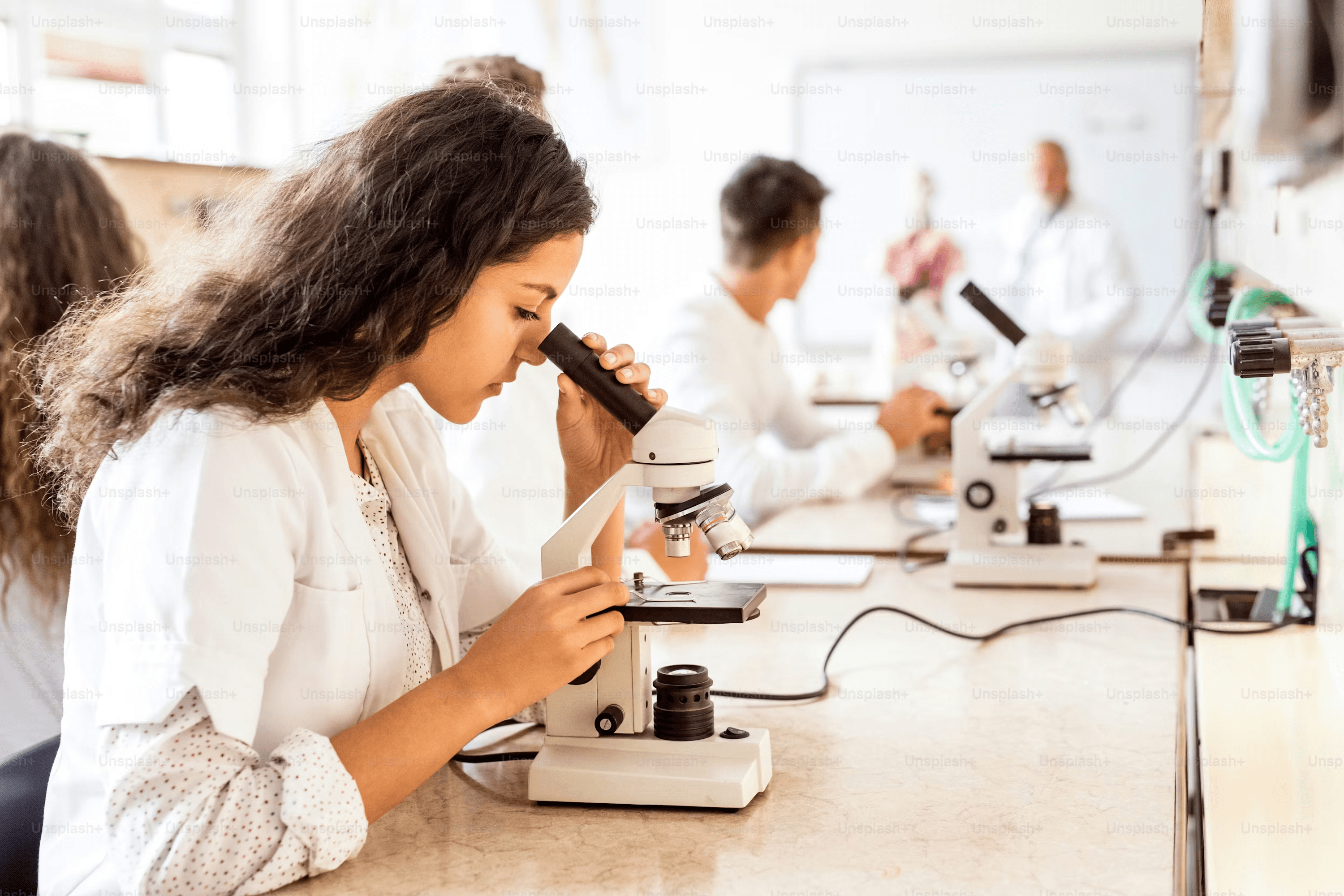
Research mentorship for microbiology students | RISE Research
Research mentorship for microbiology students | RISE Research
RISE Research
RISE Research
TL;DR: Research mentorship for microbiology students gives high schoolers the tools to conduct original, university-level science under PhD guidance. Through RISE Research, students design experiments, analyze microbial data, and publish in peer-reviewed journals. RISE Scholars earn a 3x higher acceptance rate to Top 10 universities. The Summer 2026 Cohort priority deadline is approaching soon. Schedule your Research Assessment today.
Most high school students believe original microbiology research requires a fully equipped university lab and years of graduate training. That belief is wrong. High school students around the world are publishing peer-reviewed microbiology papers right now, and they are doing it through structured, expert-led mentorship programs designed specifically for their level. Research mentorship for microbiology students has become one of the most powerful academic differentiators available to students in Grades 9 through 12. It signals intellectual maturity, scientific rigor, and genuine curiosity to university admissions committees at institutions like Stanford, MIT, and Oxford. RISE Research connects high-achieving students with PhD mentors from Ivy League and Oxbridge universities to make that outcome real. The question is not whether you can do this. The question is whether you will start before the opportunity closes.
What Does High School Microbiology Research Actually Look Like?
High school microbiology research is original, question-driven scientific inquiry. It is not a lab report or a science fair poster. Students identify a specific gap in existing literature, design a methodology to address it, collect or analyze data, and produce a manuscript suitable for peer-reviewed publication.
Microbiology research at this level uses both quantitative and qualitative methods. Quantitative approaches include statistical analysis of genomic datasets, bioinformatics modeling of bacterial resistance patterns, and computational analysis of microbial community composition. Qualitative approaches include systematic literature reviews, case-based analysis of outbreak data, and policy analysis of antimicrobial stewardship programs. Many students complete rigorous, publishable projects without ever entering a physical lab.
Specific project titles RISE students have developed in microbiology and related life sciences include:
A Quantitative Analysis of Antibiotic Resistance Gene Prevalence in Urban Soil Microbiomes Across Three Climate Zones
Examining the Role of Quorum Sensing in Biofilm Formation: A Systematic Review of Clinical Implications
Computational Prediction of CRISPR-Cas9 Off-Target Sites in Bacterial Genome Editing Applications
The Impact of Probiotic Supplementation on Gut Microbiota Diversity: A Meta-Analysis of Randomized Controlled Trials
Antimicrobial Stewardship Policy Gaps in Low-Income Countries: A Comparative Analysis of WHO Guidelines and National Frameworks
Each of these projects is specific, defensible, and publishable. None of them required a student to grow bacterial cultures in a university lab. They required curiosity, a strong mentor, and a structured research process.
The Mentors Behind RISE Microbiology Research
The quality of a research mentor determines the quality of the research. RISE Research maintains a network of 500+ PhD mentors affiliated with leading research universities. Every mentor is matched to a student based on subject alignment, research interest overlap, and project feasibility at the high school level.
For microbiology students, two representative mentors illustrate the depth of the RISE network. Dr. He completed her PhD in Microbial Genomics at Johns Hopkins University. Her research focuses on horizontal gene transfer in antibiotic-resistant Enterobacteriaceae. She mentors students interested in genomics, resistance mechanisms, and computational microbiology. Dr. He earned his doctorate in Environmental Microbiology from the University of Oxford. His work examines microbial community dynamics in degraded ecosystems and the application of metagenomics to soil restoration science. He guides students working on bioinformatics projects and environmental microbiology reviews.
These mentors do not simply review drafts. They guide the full research arc: from narrowing a research question to selecting the right methodology, interpreting results, and preparing a manuscript for submission. Students meet with their mentor weekly throughout the program. The relationship is genuinely one-on-one, not group coaching or pre-recorded content.
If you are exploring related disciplines, RISE also offers research mentorship for biology students and research mentorship for public health students, both of which intersect closely with microbiology at the research level.
Where Does High School Microbiology Research Get Published?
High school microbiology research can be published in several peer-reviewed journals that accept undergraduate and pre-university submissions. These include the Journal of Emerging Investigators, American Journal of Undergraduate Research, Cureus (for clinically adjacent microbiology), and PLOS ONE for open-access interdisciplinary science. Publication in any of these venues demonstrates that a student's work has passed independent expert review, which is a credential that no standardized test score can replicate.
Peer review matters because it is external validation. When a university admissions reader sees a published paper in a student's application, they are not reading a teacher's assessment of the student's potential. They are reading a scientist's confirmation that the student produced original, credible science. RISE publications span 40+ academic journals across the sciences, and the program maintains a 90% publication success rate across all cohorts.
Publication is not the only outcome. Many RISE microbiology students present at university research symposia, submit to science competitions, and earn recognition that strengthens their application portfolio. You can review the full scope of student outcomes on the RISE results page.
How the RISE Research Program Works
RISE Research is a selective, 1-on-1 mentorship program structured around four clear stages. Each stage builds directly on the previous one. The program is designed so that a motivated high school student with no prior research experience can complete an original, publishable microbiology project within one cohort cycle.
The first stage is the Research Assessment. Before the program begins, every applicant completes a consultation to evaluate their academic background, subject interests, and research readiness. For microbiology students, this means identifying whether their interest lies in infectious disease, environmental microbiology, genomics, microbial ecology, or another subspecialty. The assessment ensures that the mentor match is precise and that the research direction is realistic given the student's timeline and resources.
The second stage is Topic Development. Working with their assigned PhD mentor, students refine a broad interest into a specific, researchable question. This is often the hardest part of the process. A student interested in antibiotic resistance, for example, might narrow their focus to a computational analysis of resistance gene prevalence in a specific environmental context. The mentor ensures the question is original, answerable, and relevant to current scientific literature.
The third stage is Active Research. This is where the work happens. Students conduct literature reviews, collect or analyze datasets, apply their chosen methodology, and interpret results. Weekly mentor sessions keep the project on track. The mentor challenges assumptions, identifies gaps in the analysis, and ensures the student's reasoning meets academic standards. This stage typically spans the majority of the program and produces the core content of the final manuscript.
The fourth stage is Submission. The mentor guides the student through manuscript preparation, journal selection, and the submission process. RISE's 90% publication success rate reflects the rigor of this preparation. Students do not submit underprepared work. They submit manuscripts that have been reviewed, revised, and refined to meet the standards of the target journal.
You can explore examples of completed student projects across all disciplines on the RISE projects page.
The Summer 2026 Cohort priority admission deadline is approaching soon. Seats are limited and filled on a rolling basis. If you are a high school student in Grades 9 through 12 with an interest in microbiology research, schedule your Research Assessment now at riseglobaleducation.com/contact to secure your place in the cohort.
Frequently Asked Questions About Research Mentorship for Microbiology Students
Do I need access to a lab to do microbiology research in high school?
No. Most RISE microbiology students complete their projects without physical lab access. Computational microbiology, systematic reviews, meta-analyses, and bioinformatics projects require only a computer and access to scientific databases. Your mentor will help you design a project that matches your available resources.
Many of the most impactful microbiology papers produced by RISE students have been data-driven analyses using publicly available genomic databases such as NCBI GenBank or the Human Microbiome Project dataset. Physical lab work is one methodology among many, not a prerequisite for rigorous science.
How does research mentorship for microbiology students improve university admissions outcomes?
RISE Scholars are accepted to Top 10 universities at 3x the standard rate. At Stanford, RISE Scholars are accepted at an 18% acceptance rate compared to the standard 8.7%. At UPenn, the rate rises to 32% versus the standard 3.8%. Published microbiology research demonstrates scientific maturity, independent thinking, and the ability to contribute to academic knowledge, qualities that admissions committees at elite universities actively seek.
Research also provides concrete material for application essays, letters of recommendation, and interviews. A student who has published a paper on gut microbiota diversity has a specific, verifiable achievement to discuss, not just a general interest in science.
What grade should I be in to start microbiology research mentorship?
RISE Research is open to students in Grades 9 through 12. Starting earlier gives students more time to complete multiple projects, present at competitions, and build a layered research profile before applying to university. Grade 10 and Grade 11 are the most common entry points, but motivated Grade 9 students with strong academic foundations are equally welcome.
Students who begin in Grade 9 or 10 often complete a second research project in a related area, such as advanced biology research or public health research, which further strengthens their profile.
What journals publish high school microbiology research?
Several peer-reviewed journals accept high school and undergraduate microbiology research. The Journal of Emerging Investigators is specifically designed for pre-university scientists. PLOS ONE accepts rigorous open-access submissions across the biological sciences. The American Journal of Undergraduate Research publishes strong work from students at the pre-college level. RISE mentors select the most appropriate journal for each student's project based on scope, methodology, and target audience.
The full list of journals where RISE students have published is available on the RISE publications page.
Is research mentorship for microbiology students worth it if I am not planning to study science in college?
Yes. The skills developed through original research, including critical analysis, structured argumentation, data interpretation, and academic writing, are transferable across every field of study. Universities value research experience because it demonstrates intellectual independence, not just subject knowledge. A student who publishes a microbiology paper and then applies to study economics or law presents a uniquely compelling academic profile.
Additionally, many interdisciplinary fields such as bioethics, science policy, and public health draw directly on microbiology foundations. Students interested in those areas will find that microbiology research experience opens doors well beyond the natural sciences.
Start Your Microbiology Research Journey With RISE
Original microbiology research is one of the most credible signals a high school student can send to a top university. It shows that you do not just learn science; you produce it. RISE Research gives you the mentor, the structure, and the publication pathway to make that happen before you submit your first university application.
RISE Scholars earn acceptance to Top 10 universities at 3x the standard rate. They publish in 40+ peer-reviewed journals. They present at global conferences and earn recognition that sets them apart from thousands of equally qualified applicants. The RISE awards page documents the full scope of what scholars have achieved. The Summer 2026 Cohort priority deadline is approaching soon. Seats are selective and fill quickly. Schedule your Research Assessment at riseglobaleducation.com/contact and take the first step toward publishing original microbiology research that defines your academic future.
TL;DR: Research mentorship for microbiology students gives high schoolers the tools to conduct original, university-level science under PhD guidance. Through RISE Research, students design experiments, analyze microbial data, and publish in peer-reviewed journals. RISE Scholars earn a 3x higher acceptance rate to Top 10 universities. The Summer 2026 Cohort priority deadline is approaching soon. Schedule your Research Assessment today.
Most high school students believe original microbiology research requires a fully equipped university lab and years of graduate training. That belief is wrong. High school students around the world are publishing peer-reviewed microbiology papers right now, and they are doing it through structured, expert-led mentorship programs designed specifically for their level. Research mentorship for microbiology students has become one of the most powerful academic differentiators available to students in Grades 9 through 12. It signals intellectual maturity, scientific rigor, and genuine curiosity to university admissions committees at institutions like Stanford, MIT, and Oxford. RISE Research connects high-achieving students with PhD mentors from Ivy League and Oxbridge universities to make that outcome real. The question is not whether you can do this. The question is whether you will start before the opportunity closes.
What Does High School Microbiology Research Actually Look Like?
High school microbiology research is original, question-driven scientific inquiry. It is not a lab report or a science fair poster. Students identify a specific gap in existing literature, design a methodology to address it, collect or analyze data, and produce a manuscript suitable for peer-reviewed publication.
Microbiology research at this level uses both quantitative and qualitative methods. Quantitative approaches include statistical analysis of genomic datasets, bioinformatics modeling of bacterial resistance patterns, and computational analysis of microbial community composition. Qualitative approaches include systematic literature reviews, case-based analysis of outbreak data, and policy analysis of antimicrobial stewardship programs. Many students complete rigorous, publishable projects without ever entering a physical lab.
Specific project titles RISE students have developed in microbiology and related life sciences include:
A Quantitative Analysis of Antibiotic Resistance Gene Prevalence in Urban Soil Microbiomes Across Three Climate Zones
Examining the Role of Quorum Sensing in Biofilm Formation: A Systematic Review of Clinical Implications
Computational Prediction of CRISPR-Cas9 Off-Target Sites in Bacterial Genome Editing Applications
The Impact of Probiotic Supplementation on Gut Microbiota Diversity: A Meta-Analysis of Randomized Controlled Trials
Antimicrobial Stewardship Policy Gaps in Low-Income Countries: A Comparative Analysis of WHO Guidelines and National Frameworks
Each of these projects is specific, defensible, and publishable. None of them required a student to grow bacterial cultures in a university lab. They required curiosity, a strong mentor, and a structured research process.
The Mentors Behind RISE Microbiology Research
The quality of a research mentor determines the quality of the research. RISE Research maintains a network of 500+ PhD mentors affiliated with leading research universities. Every mentor is matched to a student based on subject alignment, research interest overlap, and project feasibility at the high school level.
For microbiology students, two representative mentors illustrate the depth of the RISE network. Dr. He completed her PhD in Microbial Genomics at Johns Hopkins University. Her research focuses on horizontal gene transfer in antibiotic-resistant Enterobacteriaceae. She mentors students interested in genomics, resistance mechanisms, and computational microbiology. Dr. He earned his doctorate in Environmental Microbiology from the University of Oxford. His work examines microbial community dynamics in degraded ecosystems and the application of metagenomics to soil restoration science. He guides students working on bioinformatics projects and environmental microbiology reviews.
These mentors do not simply review drafts. They guide the full research arc: from narrowing a research question to selecting the right methodology, interpreting results, and preparing a manuscript for submission. Students meet with their mentor weekly throughout the program. The relationship is genuinely one-on-one, not group coaching or pre-recorded content.
If you are exploring related disciplines, RISE also offers research mentorship for biology students and research mentorship for public health students, both of which intersect closely with microbiology at the research level.
Where Does High School Microbiology Research Get Published?
High school microbiology research can be published in several peer-reviewed journals that accept undergraduate and pre-university submissions. These include the Journal of Emerging Investigators, American Journal of Undergraduate Research, Cureus (for clinically adjacent microbiology), and PLOS ONE for open-access interdisciplinary science. Publication in any of these venues demonstrates that a student's work has passed independent expert review, which is a credential that no standardized test score can replicate.
Peer review matters because it is external validation. When a university admissions reader sees a published paper in a student's application, they are not reading a teacher's assessment of the student's potential. They are reading a scientist's confirmation that the student produced original, credible science. RISE publications span 40+ academic journals across the sciences, and the program maintains a 90% publication success rate across all cohorts.
Publication is not the only outcome. Many RISE microbiology students present at university research symposia, submit to science competitions, and earn recognition that strengthens their application portfolio. You can review the full scope of student outcomes on the RISE results page.
How the RISE Research Program Works
RISE Research is a selective, 1-on-1 mentorship program structured around four clear stages. Each stage builds directly on the previous one. The program is designed so that a motivated high school student with no prior research experience can complete an original, publishable microbiology project within one cohort cycle.
The first stage is the Research Assessment. Before the program begins, every applicant completes a consultation to evaluate their academic background, subject interests, and research readiness. For microbiology students, this means identifying whether their interest lies in infectious disease, environmental microbiology, genomics, microbial ecology, or another subspecialty. The assessment ensures that the mentor match is precise and that the research direction is realistic given the student's timeline and resources.
The second stage is Topic Development. Working with their assigned PhD mentor, students refine a broad interest into a specific, researchable question. This is often the hardest part of the process. A student interested in antibiotic resistance, for example, might narrow their focus to a computational analysis of resistance gene prevalence in a specific environmental context. The mentor ensures the question is original, answerable, and relevant to current scientific literature.
The third stage is Active Research. This is where the work happens. Students conduct literature reviews, collect or analyze datasets, apply their chosen methodology, and interpret results. Weekly mentor sessions keep the project on track. The mentor challenges assumptions, identifies gaps in the analysis, and ensures the student's reasoning meets academic standards. This stage typically spans the majority of the program and produces the core content of the final manuscript.
The fourth stage is Submission. The mentor guides the student through manuscript preparation, journal selection, and the submission process. RISE's 90% publication success rate reflects the rigor of this preparation. Students do not submit underprepared work. They submit manuscripts that have been reviewed, revised, and refined to meet the standards of the target journal.
You can explore examples of completed student projects across all disciplines on the RISE projects page.
The Summer 2026 Cohort priority admission deadline is approaching soon. Seats are limited and filled on a rolling basis. If you are a high school student in Grades 9 through 12 with an interest in microbiology research, schedule your Research Assessment now at riseglobaleducation.com/contact to secure your place in the cohort.
Frequently Asked Questions About Research Mentorship for Microbiology Students
Do I need access to a lab to do microbiology research in high school?
No. Most RISE microbiology students complete their projects without physical lab access. Computational microbiology, systematic reviews, meta-analyses, and bioinformatics projects require only a computer and access to scientific databases. Your mentor will help you design a project that matches your available resources.
Many of the most impactful microbiology papers produced by RISE students have been data-driven analyses using publicly available genomic databases such as NCBI GenBank or the Human Microbiome Project dataset. Physical lab work is one methodology among many, not a prerequisite for rigorous science.
How does research mentorship for microbiology students improve university admissions outcomes?
RISE Scholars are accepted to Top 10 universities at 3x the standard rate. At Stanford, RISE Scholars are accepted at an 18% acceptance rate compared to the standard 8.7%. At UPenn, the rate rises to 32% versus the standard 3.8%. Published microbiology research demonstrates scientific maturity, independent thinking, and the ability to contribute to academic knowledge, qualities that admissions committees at elite universities actively seek.
Research also provides concrete material for application essays, letters of recommendation, and interviews. A student who has published a paper on gut microbiota diversity has a specific, verifiable achievement to discuss, not just a general interest in science.
What grade should I be in to start microbiology research mentorship?
RISE Research is open to students in Grades 9 through 12. Starting earlier gives students more time to complete multiple projects, present at competitions, and build a layered research profile before applying to university. Grade 10 and Grade 11 are the most common entry points, but motivated Grade 9 students with strong academic foundations are equally welcome.
Students who begin in Grade 9 or 10 often complete a second research project in a related area, such as advanced biology research or public health research, which further strengthens their profile.
What journals publish high school microbiology research?
Several peer-reviewed journals accept high school and undergraduate microbiology research. The Journal of Emerging Investigators is specifically designed for pre-university scientists. PLOS ONE accepts rigorous open-access submissions across the biological sciences. The American Journal of Undergraduate Research publishes strong work from students at the pre-college level. RISE mentors select the most appropriate journal for each student's project based on scope, methodology, and target audience.
The full list of journals where RISE students have published is available on the RISE publications page.
Is research mentorship for microbiology students worth it if I am not planning to study science in college?
Yes. The skills developed through original research, including critical analysis, structured argumentation, data interpretation, and academic writing, are transferable across every field of study. Universities value research experience because it demonstrates intellectual independence, not just subject knowledge. A student who publishes a microbiology paper and then applies to study economics or law presents a uniquely compelling academic profile.
Additionally, many interdisciplinary fields such as bioethics, science policy, and public health draw directly on microbiology foundations. Students interested in those areas will find that microbiology research experience opens doors well beyond the natural sciences.
Start Your Microbiology Research Journey With RISE
Original microbiology research is one of the most credible signals a high school student can send to a top university. It shows that you do not just learn science; you produce it. RISE Research gives you the mentor, the structure, and the publication pathway to make that happen before you submit your first university application.
RISE Scholars earn acceptance to Top 10 universities at 3x the standard rate. They publish in 40+ peer-reviewed journals. They present at global conferences and earn recognition that sets them apart from thousands of equally qualified applicants. The RISE awards page documents the full scope of what scholars have achieved. The Summer 2026 Cohort priority deadline is approaching soon. Seats are selective and fill quickly. Schedule your Research Assessment at riseglobaleducation.com/contact and take the first step toward publishing original microbiology research that defines your academic future.
Fall 2026 Cohort Deadline Closing on 15th September
Book a free 20-min strategy call
Book a free 20-min strategy call
Read More