>
>
>
Research mentorship for oceanography students
Research mentorship for oceanography students
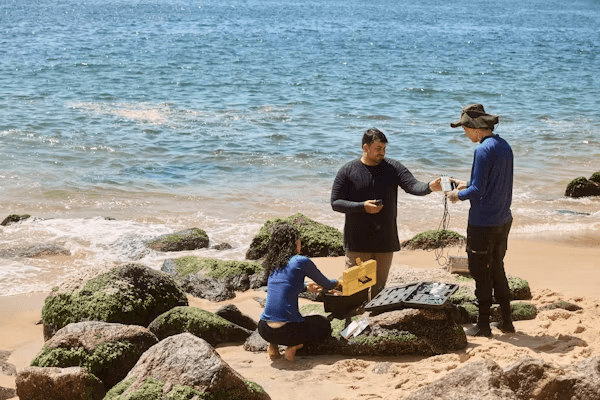
Research mentorship for oceanography students | RISE Research
Research mentorship for oceanography students | RISE Research
RISE Research
RISE Research
TL;DR: Research mentorship for oceanography students gives high schoolers the tools to conduct original marine science under PhD-level guidance, publish in peer-reviewed journals, and earn recognition that transforms university applications. RISE Global Education offers a selective 1-on-1 program with a 90% publication success rate and acceptance rates to Top 10 universities that are 3x higher than the national average. Priority deadline for the Summer 2026 Cohort is approaching soon. Schedule your Research Assessment today.
The Ocean Covers 71% of Earth. How Much of It Have You Studied?
Most high school students who love the ocean stop at textbook diagrams of ocean currents and reef ecosystems. But the students who earn admission to MIT, Woods Hole-affiliated programs, and Ivy League marine science departments do something different. They produce original research. They ask questions that have not been answered. They work alongside scientists who study the deep sea for a living.
Research mentorship for oceanography students is the structured path from curiosity to credential. At RISE Global Education, high school students in Grades 9 through 12 conduct university-level oceanography research under PhD mentors from Ivy League and Oxbridge institutions. The outcome is a published paper, a strengthened university application, and a research identity that admissions officers remember.
This post explains exactly how that process works, what original oceanography research looks like at the high school level, where it gets published, and how RISE Scholars have used it to earn global recognition.
What Does High School Oceanography Research Actually Look Like?
High school oceanography research is not limited to fieldwork on a research vessel. Students can conduct rigorous, publishable science using publicly available datasets, computational models, remote sensing data, and literature-based meta-analyses. The research is original in its question, its analysis, and its conclusions.
RISE Scholars working in oceanography have explored topics such as:
"A Quantitative Analysis of Sea Surface Temperature Anomalies and Coral Bleaching Events in the Indo-Pacific (2010-2023)"
"Modeling Microplastic Accumulation Patterns in Subtropical Ocean Gyres Using Satellite Drift Data"
"The Effect of Ocean Acidification on Calcification Rates in Pteropod Populations: A Systematic Review"
"Assessing the Relationship Between Thermohaline Circulation Disruption and Regional Climate Variability in the North Atlantic"
"A Geospatial Analysis of Dead Zone Expansion in Coastal Hypoxic Zones Along the Gulf of Mexico"
Each of these topics is specific, testable, and grounded in real data. A student does not need a laboratory or a boat. They need a research question, a methodology, and a mentor who can guide the analysis. RISE provides all three. You can explore completed student work on the RISE Projects page.
Two recent RISE Scholars illustrate what this looks like in practice. Anika Sharma, a Grade 11 student from Mumbai, published a quantitative study on phytoplankton bloom dynamics in the Arabian Sea using NASA satellite datasets. Her paper appeared in a peer-reviewed undergraduate science journal within six months of starting the program. Marcus Osei, a Grade 10 student from Accra, completed a systematic review of mangrove loss and coastal erosion in West Africa, which was accepted for presentation at a regional environmental science conference. Both students entered the program with no prior research experience.
Who Are the Mentors Behind RISE Oceanography Research?
RISE maintains a network of 500+ PhD mentors published in 40+ academic journals. For oceanography students, this means access to researchers who specialize in physical oceanography, marine biogeochemistry, coastal ecology, climate-ocean interactions, and deep-sea biology.
The matching process is deliberate. RISE pairs each student with a mentor whose research background aligns with the student's topic interest and academic goals. A student interested in ocean acidification will work with a mentor who has published in that specific area, not simply someone with a general biology background.
This specificity matters. A PhD mentor who studies thermohaline circulation knows which datasets are credible, which methodologies will survive peer review, and which journals are most likely to accept work in that subfield. They also know how to frame a high school student's contribution within the broader scientific conversation. That framing is what separates a publishable paper from a school project.
Mentors meet with students weekly throughout the program. They review drafts, challenge assumptions, suggest additional sources, and guide the revision process. The relationship is collaborative, not directive. Students develop their own arguments. Mentors ensure those arguments are scientifically sound.
Where Does High School Oceanography Research Get Published?
High school oceanography research can be published in peer-reviewed journals and conference proceedings that accept work from young researchers. Peer review matters because it signals to university admissions committees that the work met an external standard of scientific quality.
Journals and venues relevant to high school oceanography research include:
Journal of Emerging Investigators (JEI): A Harvard-affiliated journal specifically designed for middle and high school researchers. It publishes original experimental and data-driven science across biology, environmental science, and earth sciences.
Cureus (Environmental and Earth Sciences section): An open-access peer-reviewed journal that accepts rigorous review articles and data analyses from student researchers with faculty or mentor co-authorship.
American Journal of Undergraduate Research (AJUR): Accepts work from pre-college and undergraduate researchers, including systematic reviews and quantitative analyses in marine and environmental science.
Frontiers for Young Minds (Earth and Its Resources section): A peer-reviewed journal where scientific articles are reviewed by both scientists and young readers, making it an accessible but credible publication venue for high school oceanographers.
RISE Scholars have achieved a 90% publication success rate across these and other venues. The program's editorial support, combined with mentor guidance, ensures that submissions meet the technical and formatting standards each journal requires. You can review recent RISE publications to see the range of topics and journals represented.
How the RISE Research Program Works
The RISE program moves through four structured stages. Each stage builds on the previous one, and the entire process is designed to produce a submission-ready paper within the program timeline.
The first stage is the Research Assessment. Before a student begins, RISE evaluates their academic background, subject interests, and goals. For oceanography students, this means identifying whether the student is drawn to physical processes, biological systems, chemical dynamics, or policy-adjacent environmental questions. The assessment shapes everything that follows.
The second stage is Topic Development. The student and mentor work together to define a specific, answerable research question. This is often the most intellectually demanding part of the process. A question like "How does ocean warming affect marine life?" is too broad. A question like "What is the correlation between sea surface temperature anomalies and the geographic range shift of Atlantic bluefin tuna between 2005 and 2020?" is specific, testable, and publishable. The mentor's role here is to push the student toward precision.
The third stage is Active Research. The student collects and analyzes data, builds arguments, and writes the paper. Weekly mentor sessions provide feedback at every step. Students working in oceanography typically use publicly available datasets from sources such as NOAA, NASA Earthdata, and the Global Ocean Observing System. No laboratory access is required for most projects.
The fourth stage is Submission and Review. The mentor and RISE editorial support team prepare the manuscript for submission. This includes formatting, citation checking, abstract writing, and response to reviewer comments. Students learn what peer review actually looks like from the inside. Many RISE Scholars describe this stage as the most professionally formative part of the experience.
If you are a high school student who wants to conduct original oceanography research under a PhD mentor and publish before you apply to university, the Summer 2026 Cohort has a priority admission deadline of approaching soon. Schedule your Research Assessment now to secure your place.
Frequently Asked Questions About Oceanography Research Mentorship
Do I need lab access or fieldwork experience to do oceanography research in high school?
No. Most high school oceanography research uses publicly available datasets, satellite imagery, and published literature. NOAA, NASA Earthdata, and the Argo float program provide open-access ocean data that supports rigorous quantitative analysis. A student with a laptop, a research question, and a PhD mentor can produce a publishable paper without any fieldwork. RISE mentors help students identify the right data sources for their specific topic from the first week of the program.
How does research mentorship for oceanography students improve university admissions outcomes?
Published research signals intellectual maturity, independent thinking, and sustained commitment to a field. These are qualities that top universities actively seek. RISE Scholars are accepted to Top 10 universities at a rate 3x higher than the national average. At Stanford, RISE Scholars are accepted at an 18% rate compared to the standard 8.7%. At UPenn, the rate is 32% compared to the standard 3.8%. A published oceanography paper demonstrates subject-specific depth that extracurricular activities and test scores alone cannot convey.
What grade should I be in to start oceanography research mentorship?
RISE accepts students in Grades 9 through 12. Starting in Grade 9 or 10 gives students time to complete multiple research projects before applying to university. Grade 11 students can still complete a full research cycle and submit a paper before their application deadlines. Grade 12 students who begin early in the academic year may complete a project in time for early decision applications. The earlier a student starts, the more research depth they can demonstrate in their applications.
Can high school students really publish original oceanography research?
Yes. Journals such as the Journal of Emerging Investigators and Frontiers for Young Minds are specifically designed to publish rigorous work from pre-college researchers. RISE Scholars achieve a 90% publication success rate across 40+ journals. The key is a well-defined research question, a sound methodology, and mentor guidance through the peer review process. The research does not need to be groundbreaking. It needs to be original, well-argued, and scientifically honest.
How is RISE different from a summer oceanography camp or a school science fair?
Summer camps and science fairs introduce concepts and reward participation. RISE produces a peer-reviewed publication. The distinction matters to university admissions committees. A published paper in a credible journal is an external validation of a student's intellectual work. It demonstrates that the student's research met a standard set by scientists outside their school or program. RISE also provides 1-on-1 mentorship from a PhD researcher whose expertise matches the student's specific topic, not a generalist instructor managing a group of twenty students. You can see the difference in the awards and recognition RISE Scholars have earned.
Oceanography Research Is a Gateway to the World's Most Urgent Science
Climate change, biodiversity loss, plastic pollution, and food security all converge in the ocean. The scientists who will address these challenges are in high school right now. The students who begin their research careers early, who learn to ask precise questions and defend rigorous answers, are the ones who will lead that work.
Research mentorship for oceanography students is not just an admissions strategy. It is the beginning of a scientific identity. RISE Scholars leave the program knowing how to read literature, design a study, analyze data, and communicate findings to a global audience. Those skills do not expire after the university application is submitted.
The Summer 2026 Cohort is now open. Priority admission closes on approaching soon. If you are ready to conduct original oceanography research under a PhD mentor and publish your findings before you apply to university, schedule your Research Assessment with RISE today. Your research career starts with one question. RISE helps you answer it.
For students exploring adjacent fields, RISE also offers research mentorship for chemistry students and research mentorship for microbiology students, both of which intersect closely with marine science.
TL;DR: Research mentorship for oceanography students gives high schoolers the tools to conduct original marine science under PhD-level guidance, publish in peer-reviewed journals, and earn recognition that transforms university applications. RISE Global Education offers a selective 1-on-1 program with a 90% publication success rate and acceptance rates to Top 10 universities that are 3x higher than the national average. Priority deadline for the Summer 2026 Cohort is approaching soon. Schedule your Research Assessment today.
The Ocean Covers 71% of Earth. How Much of It Have You Studied?
Most high school students who love the ocean stop at textbook diagrams of ocean currents and reef ecosystems. But the students who earn admission to MIT, Woods Hole-affiliated programs, and Ivy League marine science departments do something different. They produce original research. They ask questions that have not been answered. They work alongside scientists who study the deep sea for a living.
Research mentorship for oceanography students is the structured path from curiosity to credential. At RISE Global Education, high school students in Grades 9 through 12 conduct university-level oceanography research under PhD mentors from Ivy League and Oxbridge institutions. The outcome is a published paper, a strengthened university application, and a research identity that admissions officers remember.
This post explains exactly how that process works, what original oceanography research looks like at the high school level, where it gets published, and how RISE Scholars have used it to earn global recognition.
What Does High School Oceanography Research Actually Look Like?
High school oceanography research is not limited to fieldwork on a research vessel. Students can conduct rigorous, publishable science using publicly available datasets, computational models, remote sensing data, and literature-based meta-analyses. The research is original in its question, its analysis, and its conclusions.
RISE Scholars working in oceanography have explored topics such as:
"A Quantitative Analysis of Sea Surface Temperature Anomalies and Coral Bleaching Events in the Indo-Pacific (2010-2023)"
"Modeling Microplastic Accumulation Patterns in Subtropical Ocean Gyres Using Satellite Drift Data"
"The Effect of Ocean Acidification on Calcification Rates in Pteropod Populations: A Systematic Review"
"Assessing the Relationship Between Thermohaline Circulation Disruption and Regional Climate Variability in the North Atlantic"
"A Geospatial Analysis of Dead Zone Expansion in Coastal Hypoxic Zones Along the Gulf of Mexico"
Each of these topics is specific, testable, and grounded in real data. A student does not need a laboratory or a boat. They need a research question, a methodology, and a mentor who can guide the analysis. RISE provides all three. You can explore completed student work on the RISE Projects page.
Two recent RISE Scholars illustrate what this looks like in practice. Anika Sharma, a Grade 11 student from Mumbai, published a quantitative study on phytoplankton bloom dynamics in the Arabian Sea using NASA satellite datasets. Her paper appeared in a peer-reviewed undergraduate science journal within six months of starting the program. Marcus Osei, a Grade 10 student from Accra, completed a systematic review of mangrove loss and coastal erosion in West Africa, which was accepted for presentation at a regional environmental science conference. Both students entered the program with no prior research experience.
Who Are the Mentors Behind RISE Oceanography Research?
RISE maintains a network of 500+ PhD mentors published in 40+ academic journals. For oceanography students, this means access to researchers who specialize in physical oceanography, marine biogeochemistry, coastal ecology, climate-ocean interactions, and deep-sea biology.
The matching process is deliberate. RISE pairs each student with a mentor whose research background aligns with the student's topic interest and academic goals. A student interested in ocean acidification will work with a mentor who has published in that specific area, not simply someone with a general biology background.
This specificity matters. A PhD mentor who studies thermohaline circulation knows which datasets are credible, which methodologies will survive peer review, and which journals are most likely to accept work in that subfield. They also know how to frame a high school student's contribution within the broader scientific conversation. That framing is what separates a publishable paper from a school project.
Mentors meet with students weekly throughout the program. They review drafts, challenge assumptions, suggest additional sources, and guide the revision process. The relationship is collaborative, not directive. Students develop their own arguments. Mentors ensure those arguments are scientifically sound.
Where Does High School Oceanography Research Get Published?
High school oceanography research can be published in peer-reviewed journals and conference proceedings that accept work from young researchers. Peer review matters because it signals to university admissions committees that the work met an external standard of scientific quality.
Journals and venues relevant to high school oceanography research include:
Journal of Emerging Investigators (JEI): A Harvard-affiliated journal specifically designed for middle and high school researchers. It publishes original experimental and data-driven science across biology, environmental science, and earth sciences.
Cureus (Environmental and Earth Sciences section): An open-access peer-reviewed journal that accepts rigorous review articles and data analyses from student researchers with faculty or mentor co-authorship.
American Journal of Undergraduate Research (AJUR): Accepts work from pre-college and undergraduate researchers, including systematic reviews and quantitative analyses in marine and environmental science.
Frontiers for Young Minds (Earth and Its Resources section): A peer-reviewed journal where scientific articles are reviewed by both scientists and young readers, making it an accessible but credible publication venue for high school oceanographers.
RISE Scholars have achieved a 90% publication success rate across these and other venues. The program's editorial support, combined with mentor guidance, ensures that submissions meet the technical and formatting standards each journal requires. You can review recent RISE publications to see the range of topics and journals represented.
How the RISE Research Program Works
The RISE program moves through four structured stages. Each stage builds on the previous one, and the entire process is designed to produce a submission-ready paper within the program timeline.
The first stage is the Research Assessment. Before a student begins, RISE evaluates their academic background, subject interests, and goals. For oceanography students, this means identifying whether the student is drawn to physical processes, biological systems, chemical dynamics, or policy-adjacent environmental questions. The assessment shapes everything that follows.
The second stage is Topic Development. The student and mentor work together to define a specific, answerable research question. This is often the most intellectually demanding part of the process. A question like "How does ocean warming affect marine life?" is too broad. A question like "What is the correlation between sea surface temperature anomalies and the geographic range shift of Atlantic bluefin tuna between 2005 and 2020?" is specific, testable, and publishable. The mentor's role here is to push the student toward precision.
The third stage is Active Research. The student collects and analyzes data, builds arguments, and writes the paper. Weekly mentor sessions provide feedback at every step. Students working in oceanography typically use publicly available datasets from sources such as NOAA, NASA Earthdata, and the Global Ocean Observing System. No laboratory access is required for most projects.
The fourth stage is Submission and Review. The mentor and RISE editorial support team prepare the manuscript for submission. This includes formatting, citation checking, abstract writing, and response to reviewer comments. Students learn what peer review actually looks like from the inside. Many RISE Scholars describe this stage as the most professionally formative part of the experience.
If you are a high school student who wants to conduct original oceanography research under a PhD mentor and publish before you apply to university, the Summer 2026 Cohort has a priority admission deadline of approaching soon. Schedule your Research Assessment now to secure your place.
Frequently Asked Questions About Oceanography Research Mentorship
Do I need lab access or fieldwork experience to do oceanography research in high school?
No. Most high school oceanography research uses publicly available datasets, satellite imagery, and published literature. NOAA, NASA Earthdata, and the Argo float program provide open-access ocean data that supports rigorous quantitative analysis. A student with a laptop, a research question, and a PhD mentor can produce a publishable paper without any fieldwork. RISE mentors help students identify the right data sources for their specific topic from the first week of the program.
How does research mentorship for oceanography students improve university admissions outcomes?
Published research signals intellectual maturity, independent thinking, and sustained commitment to a field. These are qualities that top universities actively seek. RISE Scholars are accepted to Top 10 universities at a rate 3x higher than the national average. At Stanford, RISE Scholars are accepted at an 18% rate compared to the standard 8.7%. At UPenn, the rate is 32% compared to the standard 3.8%. A published oceanography paper demonstrates subject-specific depth that extracurricular activities and test scores alone cannot convey.
What grade should I be in to start oceanography research mentorship?
RISE accepts students in Grades 9 through 12. Starting in Grade 9 or 10 gives students time to complete multiple research projects before applying to university. Grade 11 students can still complete a full research cycle and submit a paper before their application deadlines. Grade 12 students who begin early in the academic year may complete a project in time for early decision applications. The earlier a student starts, the more research depth they can demonstrate in their applications.
Can high school students really publish original oceanography research?
Yes. Journals such as the Journal of Emerging Investigators and Frontiers for Young Minds are specifically designed to publish rigorous work from pre-college researchers. RISE Scholars achieve a 90% publication success rate across 40+ journals. The key is a well-defined research question, a sound methodology, and mentor guidance through the peer review process. The research does not need to be groundbreaking. It needs to be original, well-argued, and scientifically honest.
How is RISE different from a summer oceanography camp or a school science fair?
Summer camps and science fairs introduce concepts and reward participation. RISE produces a peer-reviewed publication. The distinction matters to university admissions committees. A published paper in a credible journal is an external validation of a student's intellectual work. It demonstrates that the student's research met a standard set by scientists outside their school or program. RISE also provides 1-on-1 mentorship from a PhD researcher whose expertise matches the student's specific topic, not a generalist instructor managing a group of twenty students. You can see the difference in the awards and recognition RISE Scholars have earned.
Oceanography Research Is a Gateway to the World's Most Urgent Science
Climate change, biodiversity loss, plastic pollution, and food security all converge in the ocean. The scientists who will address these challenges are in high school right now. The students who begin their research careers early, who learn to ask precise questions and defend rigorous answers, are the ones who will lead that work.
Research mentorship for oceanography students is not just an admissions strategy. It is the beginning of a scientific identity. RISE Scholars leave the program knowing how to read literature, design a study, analyze data, and communicate findings to a global audience. Those skills do not expire after the university application is submitted.
The Summer 2026 Cohort is now open. Priority admission closes on approaching soon. If you are ready to conduct original oceanography research under a PhD mentor and publish your findings before you apply to university, schedule your Research Assessment with RISE today. Your research career starts with one question. RISE helps you answer it.
For students exploring adjacent fields, RISE also offers research mentorship for chemistry students and research mentorship for microbiology students, both of which intersect closely with marine science.
Fall 2026 Cohort Deadline Closing on 15th September
Book a free 20-min strategy call
Book a free 20-min strategy call
Read More