>
>
>
Research mentorship for geography students
Research mentorship for geography students
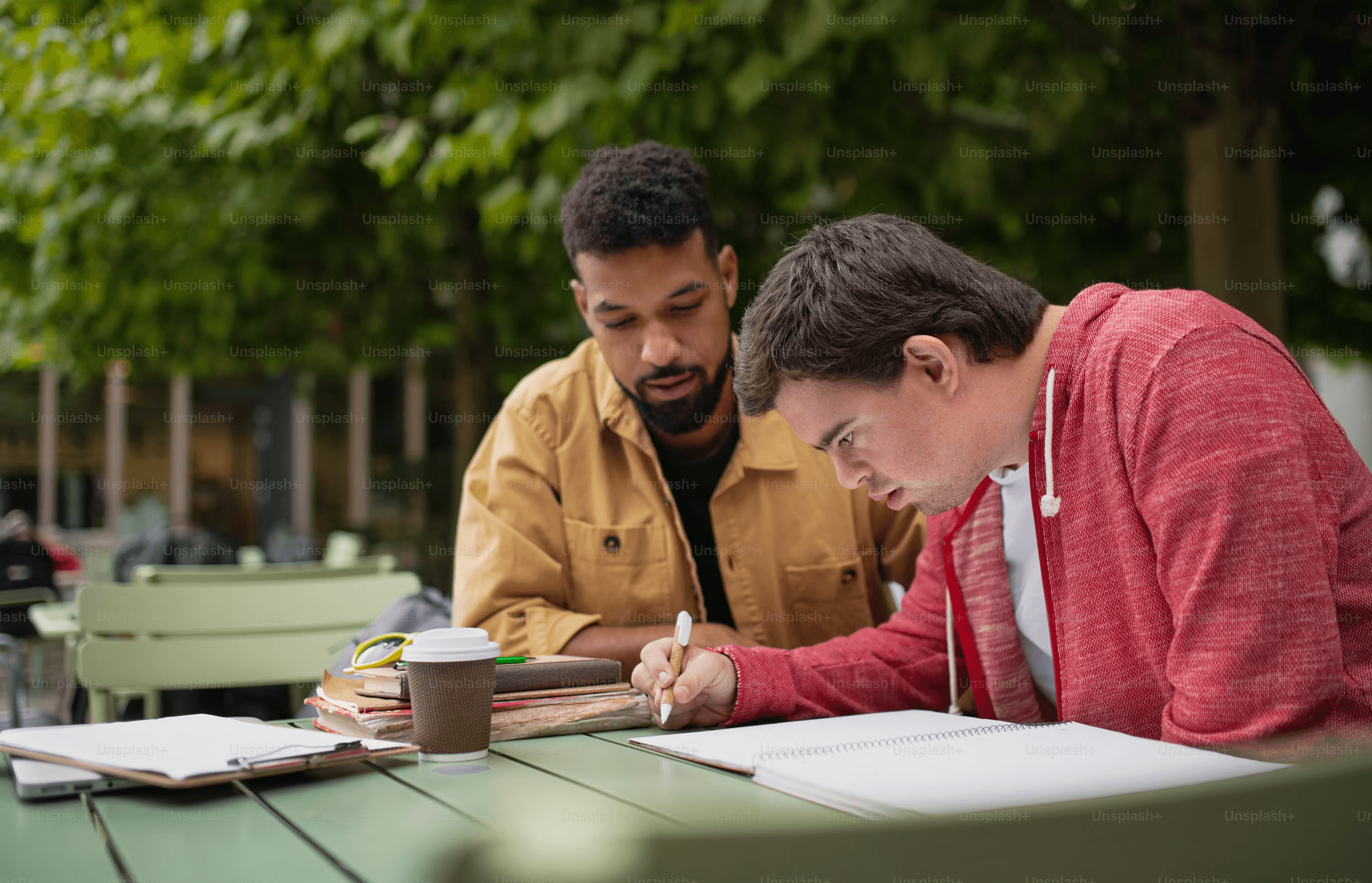
Research mentorship for geography students | RISE Research
Research mentorship for geography students | RISE Research
RISE Research
RISE Research
TL;DR: Research mentorship for geography students connects high schoolers with PhD mentors who guide them through original, publishable work in areas like climate migration, urban inequality, and geospatial analysis. RISE Research scholars achieve a 90% publication success rate and gain admission to top universities at rates 3x higher than the national average. If you are in Grades 9 through 12 and serious about geography, the Summer 2026 Cohort priority deadline is approaching soon. Schedule your Research Assessment today.
Why Geography Research Sets You Apart
What does it take to stand out in university admissions when thousands of applicants claim a passion for the environment, global development, or urban planning? A personal statement is not enough. Original, published research is. Research mentorship for geography students gives you the tools, the guidance, and the academic record to prove your commitment with evidence that admissions committees can verify.
Geography sits at the intersection of science, society, and policy. It draws on spatial data, fieldwork, statistical modeling, and qualitative analysis. That breadth is an advantage. It means a high school geography researcher can make a genuine contribution to conversations about climate displacement, food security, or city infrastructure without waiting for a university lab coat. According to the National Association for College Admission Counseling, demonstrated intellectual initiative ranks among the most compelling differentiators in selective admissions. A peer-reviewed geography paper is exactly that kind of initiative.
RISE Research is a selective 1-on-1 mentorship program where high school students publish original research, win awards, and earn global recognition under PhD mentors. RISE scholars are admitted to Top 10 universities at three times the standard rate. This post explains what geography research actually looks like at the high school level, who mentors it, where it gets published, and how the program works from day one.
What Does High School Geography Research Actually Look Like?
High school geography research uses both quantitative and qualitative methods to answer spatial and social questions. A student might analyze satellite imagery to measure urban heat islands, run regression models on migration data, or conduct structured interviews to document how a coastal community adapts to flooding. The work is rigorous, original, and grounded in real-world data.
RISE geography scholars have produced research across a wide range of topics. Representative project titles include:
"A Geospatial Analysis of Climate-Induced Internal Migration Patterns in Sub-Saharan Africa (2000 to 2020)"
"Mapping Food Desert Expansion in Mid-Sized American Cities: A GIS-Based Study"
"Urban Heat Island Intensity and Socioeconomic Vulnerability: A Comparative Analysis of Three Asian Megacities"
"Land Use Change and Biodiversity Loss in the Amazon Buffer Zone: A Remote Sensing Approach"
"The Geography of Educational Access: Spatial Inequity in School Quality Across Rural Kenya"
Each of these projects uses publicly available datasets, open-source GIS tools like QGIS, or primary survey data. No private laboratory is required. What is required is a structured methodology, a clear research question, and expert guidance to execute the work at a publishable standard.
Students interested in environmental geography can explore connections to adjacent fields. Our post on research mentorship for environmental science students covers overlapping methodologies in detail.
The Mentors Behind the Geography Research
Every RISE scholar is matched with a single PhD mentor whose expertise aligns with the student's specific research direction. This is not a group seminar or a pre-built curriculum. It is a genuine academic collaboration between a student and a scholar who has published in the same field.
The RISE mentor network includes over 500 PhD-level researchers from Ivy League and Oxbridge institutions. In geography and related spatial sciences, two representative mentors illustrate the depth of expertise available:
Dr. Lalley holds a PhD in Human Geography from the University of Oxford. Her research focuses on climate displacement and gendered migration in South Asia. She has published in journals including Political Geography and Global Environmental Change. RISE scholars working with Dr. Lalley develop skills in qualitative coding, narrative analysis, and policy-oriented writing.
Dr. Boehringer completed his PhD in Urban and Regional Planning at MIT, with a specialization in geospatial data science. His work applies machine learning to satellite imagery for urban growth modeling. Students mentored by Dr. Boehringer gain hands-on experience with GIS platforms, remote sensing datasets, and quantitative spatial analysis.
The matching process begins with a Research Assessment, where RISE evaluates your academic background, interests, and goals. From there, the program identifies the mentor whose expertise and research style best fit your project direction. Browse the RISE mentor network to see the range of disciplines and institutions represented.
Where Does High School Geography Research Get Published?
Geography research by high school students can be published in peer-reviewed academic journals, undergraduate research journals, and conference proceedings that accept exceptional secondary-school submissions. Peer review matters because it signals to universities that your work met an independent scholarly standard, not just a teacher's approval.
RISE geography scholars have published in and submitted to venues including:
Journal of Geography: A leading peer-reviewed journal covering geographic education and research, accessible to well-mentored student authors.
GeoJournal: Publishes interdisciplinary spatial research with a strong tradition of human and physical geography integration.
ISPRS International Journal of Geo-Information: Open-access and highly regarded for GIS and remote sensing work.
Consilience: The Journal of Sustainable Development at Columbia University: A peer-reviewed journal that regularly publishes rigorous work from early-career researchers on environmental and development geography.
RISE Research maintains a 90% publication success rate across all disciplines, including geography. View published RISE scholar work to see the standard and scope of completed projects.
How the RISE Geography Research Program Works
The program follows four structured stages, each building on the last. The process is designed to take a student from initial interest to a submitted, publication-ready manuscript within one cohort cycle.
The first stage is the Research Assessment. Before any work begins, RISE evaluates your academic profile, your subject knowledge, and the feasibility of your research interests. This ensures the program is the right fit and that your project has a realistic path to publication. The assessment also informs the mentor matching process.
The second stage is Topic Development. Working with your assigned PhD mentor, you narrow a broad interest into a specific, researchable question. For a geography student, this might mean moving from "I care about climate change" to "I want to analyze how sea-level rise projections correlate with internal migration rates in coastal Bangladesh using World Bank displacement data." Specificity is what makes research publishable.
The third stage is Active Research. This is the longest phase. You collect and analyze data, write and revise your literature review, apply your chosen methodology, and interpret your findings. Your mentor provides structured feedback at every step. Sessions are held weekly, and the timeline keeps your progress on track.
The fourth stage is Submission. Your mentor helps you identify the right journal or conference for your work, prepares you for the peer review process, and supports you through any revisions requested by editors. Many RISE scholars also use their completed research as the foundation for competition submissions. RISE scholars have won recognition at major academic competitions including the Regeneron ISEF and the National Geographic Society's Young Explorers program.
The Summer 2026 Cohort priority deadline is approaching soon. If you are a student in Grades 9 through 12 with a serious interest in geography research, now is the time to act. Schedule your Research Assessment and find out whether RISE is the right program for your goals.
Frequently Asked Questions About Geography Research Mentorship
Can high school students really conduct original geography research?
Yes. High school students can conduct original geography research using publicly available datasets, open-source GIS tools, and structured qualitative methods. Under PhD mentorship, students design studies, analyze spatial data, and produce findings that meet peer-review standards. The key is having a specific research question and expert guidance throughout the process.
Many RISE geography scholars begin with no prior research experience. What they bring is curiosity, academic discipline, and a genuine interest in a geographic question. The mentor provides the methodological framework. The student provides the intellectual drive.
Do I need special software or equipment for geography research?
No specialized equipment is required. Most high school geography research uses free, open-source tools. QGIS is the most widely used GIS platform and costs nothing to download. NASA Earthdata, the World Bank Open Data portal, and the U.S. Census Bureau all provide free spatial datasets. Your mentor will guide you to the right tools for your specific project.
How does research mentorship for geography students improve university admissions outcomes?
Published geography research demonstrates intellectual initiative, subject mastery, and the ability to complete long-term independent work. These qualities are among the most valued in selective admissions. Common App data confirms that demonstrated academic passion is a top factor for selective schools. RISE scholars are admitted to Stanford at an 18% rate, compared to the 8.7% standard rate, and to UPenn at a 32% rate, compared to the 3.8% standard rate.
A published paper also gives you concrete material for your personal statement, letters of recommendation, and supplemental essays. It transforms a claimed interest into a verified achievement.
What grade should I be in to start geography research mentorship?
RISE Research accepts students in Grades 9 through 12. Starting in Grade 9 or 10 gives you the most time to complete multiple projects, build a publication record, and apply research findings to competitions before your university applications are due. Grade 11 students can still complete a full project and publication cycle before their senior year application deadlines.
Is geography research mentorship relevant if I want to study a related field like environmental science or public policy?
Geography research is directly applicable to environmental science, urban planning, international development, public policy, and economics. The spatial and analytical skills developed in a geography research project transfer across disciplines. Students interested in adjacent fields can also explore research mentorship for public health students or research mentorship for economics students, both of which share methodological overlap with human geography.
Your Next Step in Geography Research
Geography is one of the most consequential fields of the 21st century. Questions about climate migration, urban inequality, resource distribution, and spatial justice demand researchers who can think rigorously and act with purpose. High school is not too early to start contributing to those conversations.
RISE Research gives you the structure, the mentorship, and the publication pathway to do exactly that. With a 90% publication success rate and admission outcomes that speak for themselves, the program has a proven record of turning serious students into published scholars. Explore completed RISE geography projects to see what students at your level have already achieved.
The Summer 2026 Cohort priority deadline is approaching soon. Seats are limited and the application process is selective. Schedule your Research Assessment now to begin your geography research journey with a mentor who has already done what you are working toward.
TL;DR: Research mentorship for geography students connects high schoolers with PhD mentors who guide them through original, publishable work in areas like climate migration, urban inequality, and geospatial analysis. RISE Research scholars achieve a 90% publication success rate and gain admission to top universities at rates 3x higher than the national average. If you are in Grades 9 through 12 and serious about geography, the Summer 2026 Cohort priority deadline is approaching soon. Schedule your Research Assessment today.
Why Geography Research Sets You Apart
What does it take to stand out in university admissions when thousands of applicants claim a passion for the environment, global development, or urban planning? A personal statement is not enough. Original, published research is. Research mentorship for geography students gives you the tools, the guidance, and the academic record to prove your commitment with evidence that admissions committees can verify.
Geography sits at the intersection of science, society, and policy. It draws on spatial data, fieldwork, statistical modeling, and qualitative analysis. That breadth is an advantage. It means a high school geography researcher can make a genuine contribution to conversations about climate displacement, food security, or city infrastructure without waiting for a university lab coat. According to the National Association for College Admission Counseling, demonstrated intellectual initiative ranks among the most compelling differentiators in selective admissions. A peer-reviewed geography paper is exactly that kind of initiative.
RISE Research is a selective 1-on-1 mentorship program where high school students publish original research, win awards, and earn global recognition under PhD mentors. RISE scholars are admitted to Top 10 universities at three times the standard rate. This post explains what geography research actually looks like at the high school level, who mentors it, where it gets published, and how the program works from day one.
What Does High School Geography Research Actually Look Like?
High school geography research uses both quantitative and qualitative methods to answer spatial and social questions. A student might analyze satellite imagery to measure urban heat islands, run regression models on migration data, or conduct structured interviews to document how a coastal community adapts to flooding. The work is rigorous, original, and grounded in real-world data.
RISE geography scholars have produced research across a wide range of topics. Representative project titles include:
"A Geospatial Analysis of Climate-Induced Internal Migration Patterns in Sub-Saharan Africa (2000 to 2020)"
"Mapping Food Desert Expansion in Mid-Sized American Cities: A GIS-Based Study"
"Urban Heat Island Intensity and Socioeconomic Vulnerability: A Comparative Analysis of Three Asian Megacities"
"Land Use Change and Biodiversity Loss in the Amazon Buffer Zone: A Remote Sensing Approach"
"The Geography of Educational Access: Spatial Inequity in School Quality Across Rural Kenya"
Each of these projects uses publicly available datasets, open-source GIS tools like QGIS, or primary survey data. No private laboratory is required. What is required is a structured methodology, a clear research question, and expert guidance to execute the work at a publishable standard.
Students interested in environmental geography can explore connections to adjacent fields. Our post on research mentorship for environmental science students covers overlapping methodologies in detail.
The Mentors Behind the Geography Research
Every RISE scholar is matched with a single PhD mentor whose expertise aligns with the student's specific research direction. This is not a group seminar or a pre-built curriculum. It is a genuine academic collaboration between a student and a scholar who has published in the same field.
The RISE mentor network includes over 500 PhD-level researchers from Ivy League and Oxbridge institutions. In geography and related spatial sciences, two representative mentors illustrate the depth of expertise available:
Dr. Lalley holds a PhD in Human Geography from the University of Oxford. Her research focuses on climate displacement and gendered migration in South Asia. She has published in journals including Political Geography and Global Environmental Change. RISE scholars working with Dr. Lalley develop skills in qualitative coding, narrative analysis, and policy-oriented writing.
Dr. Boehringer completed his PhD in Urban and Regional Planning at MIT, with a specialization in geospatial data science. His work applies machine learning to satellite imagery for urban growth modeling. Students mentored by Dr. Boehringer gain hands-on experience with GIS platforms, remote sensing datasets, and quantitative spatial analysis.
The matching process begins with a Research Assessment, where RISE evaluates your academic background, interests, and goals. From there, the program identifies the mentor whose expertise and research style best fit your project direction. Browse the RISE mentor network to see the range of disciplines and institutions represented.
Where Does High School Geography Research Get Published?
Geography research by high school students can be published in peer-reviewed academic journals, undergraduate research journals, and conference proceedings that accept exceptional secondary-school submissions. Peer review matters because it signals to universities that your work met an independent scholarly standard, not just a teacher's approval.
RISE geography scholars have published in and submitted to venues including:
Journal of Geography: A leading peer-reviewed journal covering geographic education and research, accessible to well-mentored student authors.
GeoJournal: Publishes interdisciplinary spatial research with a strong tradition of human and physical geography integration.
ISPRS International Journal of Geo-Information: Open-access and highly regarded for GIS and remote sensing work.
Consilience: The Journal of Sustainable Development at Columbia University: A peer-reviewed journal that regularly publishes rigorous work from early-career researchers on environmental and development geography.
RISE Research maintains a 90% publication success rate across all disciplines, including geography. View published RISE scholar work to see the standard and scope of completed projects.
How the RISE Geography Research Program Works
The program follows four structured stages, each building on the last. The process is designed to take a student from initial interest to a submitted, publication-ready manuscript within one cohort cycle.
The first stage is the Research Assessment. Before any work begins, RISE evaluates your academic profile, your subject knowledge, and the feasibility of your research interests. This ensures the program is the right fit and that your project has a realistic path to publication. The assessment also informs the mentor matching process.
The second stage is Topic Development. Working with your assigned PhD mentor, you narrow a broad interest into a specific, researchable question. For a geography student, this might mean moving from "I care about climate change" to "I want to analyze how sea-level rise projections correlate with internal migration rates in coastal Bangladesh using World Bank displacement data." Specificity is what makes research publishable.
The third stage is Active Research. This is the longest phase. You collect and analyze data, write and revise your literature review, apply your chosen methodology, and interpret your findings. Your mentor provides structured feedback at every step. Sessions are held weekly, and the timeline keeps your progress on track.
The fourth stage is Submission. Your mentor helps you identify the right journal or conference for your work, prepares you for the peer review process, and supports you through any revisions requested by editors. Many RISE scholars also use their completed research as the foundation for competition submissions. RISE scholars have won recognition at major academic competitions including the Regeneron ISEF and the National Geographic Society's Young Explorers program.
The Summer 2026 Cohort priority deadline is approaching soon. If you are a student in Grades 9 through 12 with a serious interest in geography research, now is the time to act. Schedule your Research Assessment and find out whether RISE is the right program for your goals.
Frequently Asked Questions About Geography Research Mentorship
Can high school students really conduct original geography research?
Yes. High school students can conduct original geography research using publicly available datasets, open-source GIS tools, and structured qualitative methods. Under PhD mentorship, students design studies, analyze spatial data, and produce findings that meet peer-review standards. The key is having a specific research question and expert guidance throughout the process.
Many RISE geography scholars begin with no prior research experience. What they bring is curiosity, academic discipline, and a genuine interest in a geographic question. The mentor provides the methodological framework. The student provides the intellectual drive.
Do I need special software or equipment for geography research?
No specialized equipment is required. Most high school geography research uses free, open-source tools. QGIS is the most widely used GIS platform and costs nothing to download. NASA Earthdata, the World Bank Open Data portal, and the U.S. Census Bureau all provide free spatial datasets. Your mentor will guide you to the right tools for your specific project.
How does research mentorship for geography students improve university admissions outcomes?
Published geography research demonstrates intellectual initiative, subject mastery, and the ability to complete long-term independent work. These qualities are among the most valued in selective admissions. Common App data confirms that demonstrated academic passion is a top factor for selective schools. RISE scholars are admitted to Stanford at an 18% rate, compared to the 8.7% standard rate, and to UPenn at a 32% rate, compared to the 3.8% standard rate.
A published paper also gives you concrete material for your personal statement, letters of recommendation, and supplemental essays. It transforms a claimed interest into a verified achievement.
What grade should I be in to start geography research mentorship?
RISE Research accepts students in Grades 9 through 12. Starting in Grade 9 or 10 gives you the most time to complete multiple projects, build a publication record, and apply research findings to competitions before your university applications are due. Grade 11 students can still complete a full project and publication cycle before their senior year application deadlines.
Is geography research mentorship relevant if I want to study a related field like environmental science or public policy?
Geography research is directly applicable to environmental science, urban planning, international development, public policy, and economics. The spatial and analytical skills developed in a geography research project transfer across disciplines. Students interested in adjacent fields can also explore research mentorship for public health students or research mentorship for economics students, both of which share methodological overlap with human geography.
Your Next Step in Geography Research
Geography is one of the most consequential fields of the 21st century. Questions about climate migration, urban inequality, resource distribution, and spatial justice demand researchers who can think rigorously and act with purpose. High school is not too early to start contributing to those conversations.
RISE Research gives you the structure, the mentorship, and the publication pathway to do exactly that. With a 90% publication success rate and admission outcomes that speak for themselves, the program has a proven record of turning serious students into published scholars. Explore completed RISE geography projects to see what students at your level have already achieved.
The Summer 2026 Cohort priority deadline is approaching soon. Seats are limited and the application process is selective. Schedule your Research Assessment now to begin your geography research journey with a mentor who has already done what you are working toward.
Fall 2026 Cohort Deadline Closing on 15th September
Book a free 20-min strategy call
Book a free 20-min strategy call
Read More