Focus
Computational Physics, Machine Learning, Percolation Theory
Motivation
Generalization, Physical Consistency, Phase Transition Prediction
About the project
This research investigates whether physics-informed neural networks (PINNs) can outperform conventional convolutional neural networks (CNNs) in predicting percolation behavior in three-dimensional systems, particularly when generalizing to unseen geometric shapes. Using voxelized 3D lattices, the study examines seven distinct shape families and simulates site percolation across a range of occupation probabilities. By generating Monte Carlo ground truth data and enforcing a strict leave-one-shape-out evaluation protocol, the work directly tests whether embedding physical structure into learning models improves robustness beyond pattern recognition alone.
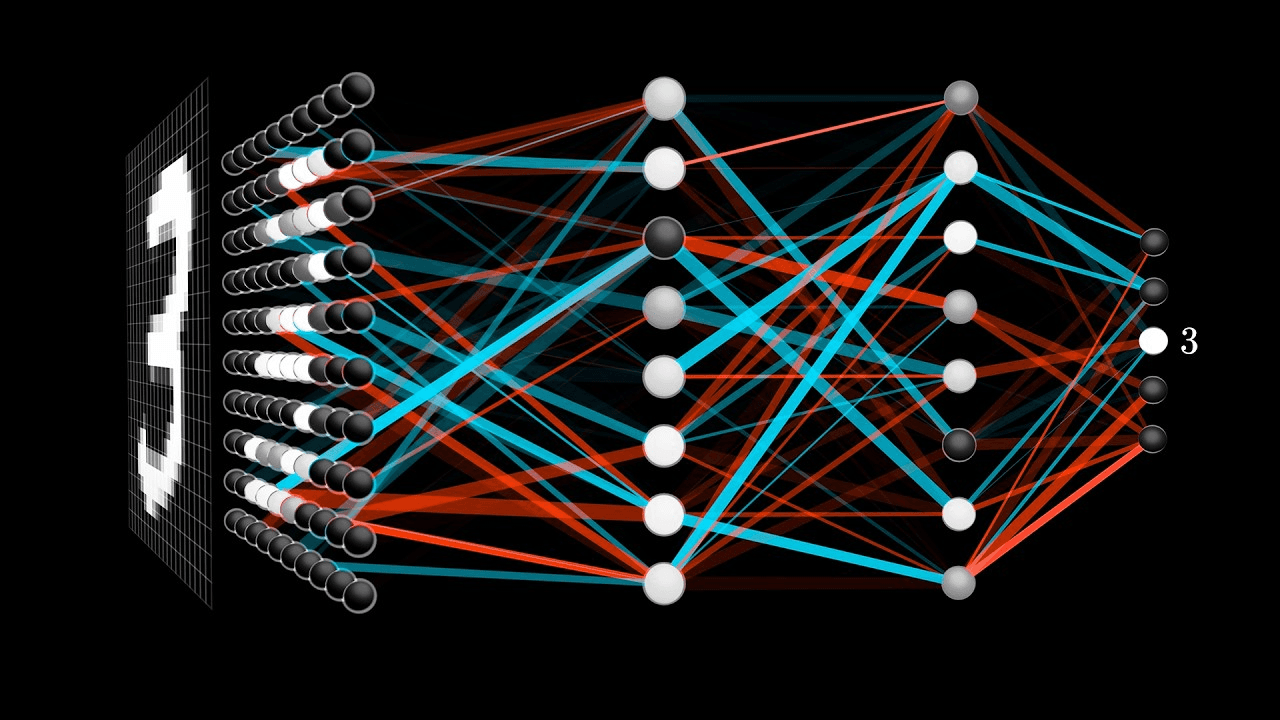
The study introduces a PINN architecture that augments a 3D CNN with physics-aware observables such as largest-cluster fraction, cluster-size moments, correlation length, and local connectivity. These quantities are incorporated both as auxiliary inputs and as constraints in the loss function, enforcing monotonicity in occupation probability and consistency with known percolation behavior. This approach allows the model to “reason” in terms of physical quantities rather than relying solely on spatial correlations. The methodology emphasizes careful dataset construction, strict separation of training and testing geometries, and physically motivated normalization to prevent information leakage.
Results show that while CNNs perform well on shapes seen during training, they struggle to generalize to unseen geometries. In contrast, the PINN consistently reduces prediction error, improves calibration, and significantly decreases violations of known physical monotonicity. The model also produces accurate estimates of percolation thresholds that closely match Monte Carlo baselines. Overall, the study demonstrates that embedding coarse physical structure into neural networks leads to more robust and interpretable learning, supporting the broader claim that physics-informed approaches are essential for modeling discrete phase transitions in complex systems.
Check out more projects