>
>
>
Will AI make student research obsolete: why the opposite is true
Will AI make student research obsolete: why the opposite is true

Will AI make student research obsolete: why the opposite is true | RISE Research
Will AI make student research obsolete: why the opposite is true | RISE Research
RISE Research
RISE Research
Will AI Make Student Research Obsolete: Why the Opposite Is True
TL;DR
Will AI make student research obsolete? No. As AI lowers the bar for generic output, externally verified original research becomes more valuable, not less. Admissions officers increasingly rely on credentials they can independently confirm, and a peer-reviewed published paper is the hardest academic credential to fake. RISE students produce exactly that kind of work, guided by PhD mentors from Ivy League and Oxbridge institutions. Our deadline is closing soon.
Introduction
The question of whether AI will make student research obsolete is one of the most searched anxieties in academic circles right now. Students, parents, and counselors are all asking it. The concern is understandable: if a language model can draft a literature review in minutes, summarise data in seconds, and produce polished prose on demand, what does that leave for a high school researcher to contribute?
The answer is: everything that actually matters to a selective university. Original thinking, supervised methodology, peer review, and a mentor who can vouch for every step of the process. These are the elements that AI cannot replicate and that admissions offices are increasingly trained to look for. The rise of AI has not made student research less relevant. It has made verified student research far more powerful.
Will AI make student research obsolete? The direct answer.
No. AI automates generic output. Original, mentor-supervised, peer-reviewed research is the opposite of generic. As AI floods applications with polished but unverifiable content, externally verified work stands out more sharply. The 68% of students with published research who secured early university admission did so in an admissions environment that already included AI-generated essays.
Here is what AI can do: search literature, suggest citations, check grammar, generate code scaffolding, and summarise existing knowledge. These are useful tools, and researchers at every level use them.
Here is what AI cannot do: design an original research question specific to a student's interests, conduct primary data collection or analysis, navigate peer review, and produce a paper that a supervising PhD mentor will stake their academic reputation on. That last point is decisive. A published paper with a named mentor, a journal with an editorial board, and a DOI is a credential that an admissions officer can verify in thirty seconds. A polished essay or a certificate cannot survive the same scrutiny.
The Common App fraud policy explicitly prohibits submitting work that is not the student's own. More practically, elite universities are training admissions readers to ask: what can this student actually defend? A student who has conducted original research under expert supervision can answer that question in an interview, a supplemental essay, or a campus visit. A student who used AI to simulate research cannot.
The conversation about AI and student research is evolving fast. The stable principle underneath it is this: verifiability wins. It always has. AI has simply made that principle more visible.
Where is the line between legitimate AI use and misconduct?
The principle is straightforward. AI as a tool for grammar, literature search, and code assistance, with appropriate disclosure, is broadly accepted across journals and universities. AI as the author of ideas, analysis, or prose presented as the student's own is misconduct.
Legitimate use looks like this: a student uses a language model to identify relevant papers in a new subfield, then reads those papers, evaluates them critically, and builds an original argument from them. The thinking is the student's. The tool accelerated a search task.
Misconduct looks like this: a student prompts an AI to generate a hypothesis, produce a discussion section, or write an abstract, then submits that output as their own original work. Even if the prose passes a detector, the student cannot defend the methodology in a conversation, and a supervising mentor would not sign off on it.
The honest note here is that norms are still forming. Individual journals have different AI disclosure policies, and university admissions offices are updating their guidance. The safe harbour in every case is the same: disclose tool use where policies ask, keep version histories that show your thinking, and be able to discuss every part of your work from first principles. If you cannot explain it, you did not produce it.
Students who want to understand how common research mistakes intersect with AI use will find that the errors are often the same ones first-time researchers make without AI: vague hypotheses, unsupported conclusions, and methodology that cannot be reproduced.
Why real research is the answer to the AI question
The deeper point is this: as AI makes generic essays and surface-level projects cheap to produce, the premium on externally verified original work increases. Admissions offices at selective universities are not reducing their interest in research. They are raising the bar for what counts as credible research.
A peer-reviewed published paper has several properties that AI-generated work cannot replicate. It has a supervising mentor whose name and credentials are attached to the work. It has passed editorial review by subject-matter experts. It has a revision history that shows intellectual development over time. And it has a DOI, a permanent public record that any admissions officer can check.
RISE Research is built around exactly this standard. The programme pairs each student 1-on-1 with a PhD mentor from an Ivy League or Oxbridge institution. The mentor supervises the full research process, from question design through data collection to manuscript preparation. The result is a paper submitted to a peer-reviewed journal, and RISE achieves a 90% publication success rate. That rate reflects genuine quality control, not volume.
The admissions outcomes follow from that quality. RISE scholars are accepted to Stanford at an 18% rate, compared to 8.7% in the general pool. At UPenn, the RISE scholar acceptance rate is 32%, against 3.8% for general applicants. These numbers reflect what happens when a student enters an application with a credential that an admissions officer can verify, discuss, and trust. Explore the full RISE admissions results to see the breadth of outcomes across universities.
The AI era has not changed what elite universities select for. It has made the students who do the hard, verifiable work easier to identify because everyone else now looks similar.
RISE students produce original, mentor-supervised, peer-reviewed work they can defend in any interview. Our deadline is closing soon. Book a free Research Assessment to find out what is achievable in your timeline.
What to actually do: practical guidance for students and parents
The anxiety about AI and research is real, but it resolves into a set of concrete practices. Here is what students and families should do now.
First, keep version histories for every piece of work. Google Docs revision history, GitHub commits, and dated drafts all serve as evidence of a student's intellectual process. This matters for journal submissions and for any admissions context where originality is questioned.
Second, check the AI disclosure policy of any journal before submitting. Most peer-reviewed journals now require authors to state whether AI tools were used in manuscript preparation and how. RISE mentors guide students through this disclosure process as part of manuscript preparation.
Third, be ready to discuss your work in depth. If a student cannot explain their methodology, defend their conclusions, or describe what they would change about their study design, that is a signal worth paying attention to before applications are submitted, not after.
Fourth, choose a research topic that reflects genuine curiosity. AI can generate a plausible-sounding research question on any subject in seconds. An admissions officer reading a supplemental essay can tell the difference between a student who chose a topic because it genuinely interests them and one who chose it because it sounded impressive. The RISE project library shows the range of topics RISE scholars have pursued, from behavioural economics to synthetic biology to comparative literature.
Fifth, understand what peer review actually means. A paper accepted by a journal with an editorial board and a review process is a fundamentally different credential from a paper posted to a preprint server or included in a student portfolio without external review. Learn more about how students have published in peer-reviewed student journals and what that process involves.
Frequently Asked Questions
Will AI make student research obsolete for college admissions?
No. Selective universities are moving toward credentials that can be independently verified. A published peer-reviewed paper with a named supervising mentor is more verifiable than almost any other high school activity. AI has made generic output cheaper; it has made verified original research more distinctive.
Can colleges detect if a student used AI in their research or essays?
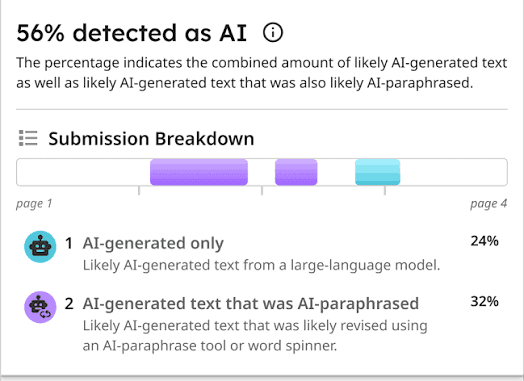
Detection tools exist but are imperfect in both directions: they produce false positives and miss sophisticated AI use. Universities and journals increasingly rely on process evidence rather than detectors alone. Drafts, version histories, mentor attestation, and the student's ability to discuss their work in detail are the real verification mechanisms. Disclosure is the safe practice wherever a policy requires it.
What happens if a student is caught using AI dishonestly in a research paper or application?
Consequences range from rejection of the application to rescission of an offer to academic discipline if the conduct is discovered after enrolment. The Common App fraud policy allows universities to rescind admission for misrepresentation. Journal retractions are public and permanent. The risk is asymmetric: the short-term gain is small and the long-term cost is severe.
Does AI use in legitimate research assistance need to be disclosed?
It depends on the journal or institution's policy. Most peer-reviewed journals now require disclosure of AI tool use in manuscript preparation. The Common App does not currently have a specific AI disclosure requirement for application essays, but submitting AI-generated prose as your own work violates the honesty certification every applicant signs. When in doubt, disclose. RISE mentors advise students on the specific disclosure requirements of each target journal.
Is student research still worth doing if AI can do so much of the work?
Yes, precisely because AI cannot do the parts that count. Designing an original question, collecting primary data, navigating peer review, and defending conclusions under expert supervision are human intellectual processes. The students who do this work under qualified mentorship, and who can speak to every part of it, hold a credential that AI cannot produce. RISE scholars demonstrate this through published, peer-reviewed work attached to their applications.
Conclusion
The question of whether AI will make student research obsolete has a clear answer: it will not. What AI has done is raise the stakes for authenticity. Generic output is now cheap. Verified, original, mentor-supervised research is more valuable than it has ever been. RISE Research pairs high school students with PhD mentors from Ivy League and Oxbridge institutions, produces a 90% publication rate, and delivers a credential that admissions officers can check, trust, and remember. Students who want to build that kind of profile should act now. Explore the RISE mentor network and see what a genuine research partnership looks like. Our deadline is closing soon. Book a free Research Assessment today.
Will AI Make Student Research Obsolete: Why the Opposite Is True
TL;DR
Will AI make student research obsolete? No. As AI lowers the bar for generic output, externally verified original research becomes more valuable, not less. Admissions officers increasingly rely on credentials they can independently confirm, and a peer-reviewed published paper is the hardest academic credential to fake. RISE students produce exactly that kind of work, guided by PhD mentors from Ivy League and Oxbridge institutions. Our deadline is closing soon.
Introduction
The question of whether AI will make student research obsolete is one of the most searched anxieties in academic circles right now. Students, parents, and counselors are all asking it. The concern is understandable: if a language model can draft a literature review in minutes, summarise data in seconds, and produce polished prose on demand, what does that leave for a high school researcher to contribute?
The answer is: everything that actually matters to a selective university. Original thinking, supervised methodology, peer review, and a mentor who can vouch for every step of the process. These are the elements that AI cannot replicate and that admissions offices are increasingly trained to look for. The rise of AI has not made student research less relevant. It has made verified student research far more powerful.
Will AI make student research obsolete? The direct answer.
No. AI automates generic output. Original, mentor-supervised, peer-reviewed research is the opposite of generic. As AI floods applications with polished but unverifiable content, externally verified work stands out more sharply. The 68% of students with published research who secured early university admission did so in an admissions environment that already included AI-generated essays.
Here is what AI can do: search literature, suggest citations, check grammar, generate code scaffolding, and summarise existing knowledge. These are useful tools, and researchers at every level use them.
Here is what AI cannot do: design an original research question specific to a student's interests, conduct primary data collection or analysis, navigate peer review, and produce a paper that a supervising PhD mentor will stake their academic reputation on. That last point is decisive. A published paper with a named mentor, a journal with an editorial board, and a DOI is a credential that an admissions officer can verify in thirty seconds. A polished essay or a certificate cannot survive the same scrutiny.
The Common App fraud policy explicitly prohibits submitting work that is not the student's own. More practically, elite universities are training admissions readers to ask: what can this student actually defend? A student who has conducted original research under expert supervision can answer that question in an interview, a supplemental essay, or a campus visit. A student who used AI to simulate research cannot.
The conversation about AI and student research is evolving fast. The stable principle underneath it is this: verifiability wins. It always has. AI has simply made that principle more visible.
Where is the line between legitimate AI use and misconduct?
The principle is straightforward. AI as a tool for grammar, literature search, and code assistance, with appropriate disclosure, is broadly accepted across journals and universities. AI as the author of ideas, analysis, or prose presented as the student's own is misconduct.
Legitimate use looks like this: a student uses a language model to identify relevant papers in a new subfield, then reads those papers, evaluates them critically, and builds an original argument from them. The thinking is the student's. The tool accelerated a search task.
Misconduct looks like this: a student prompts an AI to generate a hypothesis, produce a discussion section, or write an abstract, then submits that output as their own original work. Even if the prose passes a detector, the student cannot defend the methodology in a conversation, and a supervising mentor would not sign off on it.
The honest note here is that norms are still forming. Individual journals have different AI disclosure policies, and university admissions offices are updating their guidance. The safe harbour in every case is the same: disclose tool use where policies ask, keep version histories that show your thinking, and be able to discuss every part of your work from first principles. If you cannot explain it, you did not produce it.
Students who want to understand how common research mistakes intersect with AI use will find that the errors are often the same ones first-time researchers make without AI: vague hypotheses, unsupported conclusions, and methodology that cannot be reproduced.
Why real research is the answer to the AI question
The deeper point is this: as AI makes generic essays and surface-level projects cheap to produce, the premium on externally verified original work increases. Admissions offices at selective universities are not reducing their interest in research. They are raising the bar for what counts as credible research.
A peer-reviewed published paper has several properties that AI-generated work cannot replicate. It has a supervising mentor whose name and credentials are attached to the work. It has passed editorial review by subject-matter experts. It has a revision history that shows intellectual development over time. And it has a DOI, a permanent public record that any admissions officer can check.
RISE Research is built around exactly this standard. The programme pairs each student 1-on-1 with a PhD mentor from an Ivy League or Oxbridge institution. The mentor supervises the full research process, from question design through data collection to manuscript preparation. The result is a paper submitted to a peer-reviewed journal, and RISE achieves a 90% publication success rate. That rate reflects genuine quality control, not volume.
The admissions outcomes follow from that quality. RISE scholars are accepted to Stanford at an 18% rate, compared to 8.7% in the general pool. At UPenn, the RISE scholar acceptance rate is 32%, against 3.8% for general applicants. These numbers reflect what happens when a student enters an application with a credential that an admissions officer can verify, discuss, and trust. Explore the full RISE admissions results to see the breadth of outcomes across universities.
The AI era has not changed what elite universities select for. It has made the students who do the hard, verifiable work easier to identify because everyone else now looks similar.
RISE students produce original, mentor-supervised, peer-reviewed work they can defend in any interview. Our deadline is closing soon. Book a free Research Assessment to find out what is achievable in your timeline.
What to actually do: practical guidance for students and parents
The anxiety about AI and research is real, but it resolves into a set of concrete practices. Here is what students and families should do now.
First, keep version histories for every piece of work. Google Docs revision history, GitHub commits, and dated drafts all serve as evidence of a student's intellectual process. This matters for journal submissions and for any admissions context where originality is questioned.
Second, check the AI disclosure policy of any journal before submitting. Most peer-reviewed journals now require authors to state whether AI tools were used in manuscript preparation and how. RISE mentors guide students through this disclosure process as part of manuscript preparation.
Third, be ready to discuss your work in depth. If a student cannot explain their methodology, defend their conclusions, or describe what they would change about their study design, that is a signal worth paying attention to before applications are submitted, not after.
Fourth, choose a research topic that reflects genuine curiosity. AI can generate a plausible-sounding research question on any subject in seconds. An admissions officer reading a supplemental essay can tell the difference between a student who chose a topic because it genuinely interests them and one who chose it because it sounded impressive. The RISE project library shows the range of topics RISE scholars have pursued, from behavioural economics to synthetic biology to comparative literature.
Fifth, understand what peer review actually means. A paper accepted by a journal with an editorial board and a review process is a fundamentally different credential from a paper posted to a preprint server or included in a student portfolio without external review. Learn more about how students have published in peer-reviewed student journals and what that process involves.
Frequently Asked Questions
Will AI make student research obsolete for college admissions?
No. Selective universities are moving toward credentials that can be independently verified. A published peer-reviewed paper with a named supervising mentor is more verifiable than almost any other high school activity. AI has made generic output cheaper; it has made verified original research more distinctive.
Can colleges detect if a student used AI in their research or essays?
Detection tools exist but are imperfect in both directions: they produce false positives and miss sophisticated AI use. Universities and journals increasingly rely on process evidence rather than detectors alone. Drafts, version histories, mentor attestation, and the student's ability to discuss their work in detail are the real verification mechanisms. Disclosure is the safe practice wherever a policy requires it.
What happens if a student is caught using AI dishonestly in a research paper or application?
Consequences range from rejection of the application to rescission of an offer to academic discipline if the conduct is discovered after enrolment. The Common App fraud policy allows universities to rescind admission for misrepresentation. Journal retractions are public and permanent. The risk is asymmetric: the short-term gain is small and the long-term cost is severe.
Does AI use in legitimate research assistance need to be disclosed?
It depends on the journal or institution's policy. Most peer-reviewed journals now require disclosure of AI tool use in manuscript preparation. The Common App does not currently have a specific AI disclosure requirement for application essays, but submitting AI-generated prose as your own work violates the honesty certification every applicant signs. When in doubt, disclose. RISE mentors advise students on the specific disclosure requirements of each target journal.
Is student research still worth doing if AI can do so much of the work?
Yes, precisely because AI cannot do the parts that count. Designing an original question, collecting primary data, navigating peer review, and defending conclusions under expert supervision are human intellectual processes. The students who do this work under qualified mentorship, and who can speak to every part of it, hold a credential that AI cannot produce. RISE scholars demonstrate this through published, peer-reviewed work attached to their applications.
Conclusion
The question of whether AI will make student research obsolete has a clear answer: it will not. What AI has done is raise the stakes for authenticity. Generic output is now cheap. Verified, original, mentor-supervised research is more valuable than it has ever been. RISE Research pairs high school students with PhD mentors from Ivy League and Oxbridge institutions, produces a 90% publication rate, and delivers a credential that admissions officers can check, trust, and remember. Students who want to build that kind of profile should act now. Explore the RISE mentor network and see what a genuine research partnership looks like. Our deadline is closing soon. Book a free Research Assessment today.
Fall 2026 Cohort Deadline Closing on 28th September
Book a free 20-min strategy call
Book a free 20-min strategy call
Read More