>
>
>
UC Berkeley and UCLA acceptance rates by major
UC Berkeley and UCLA acceptance rates by major
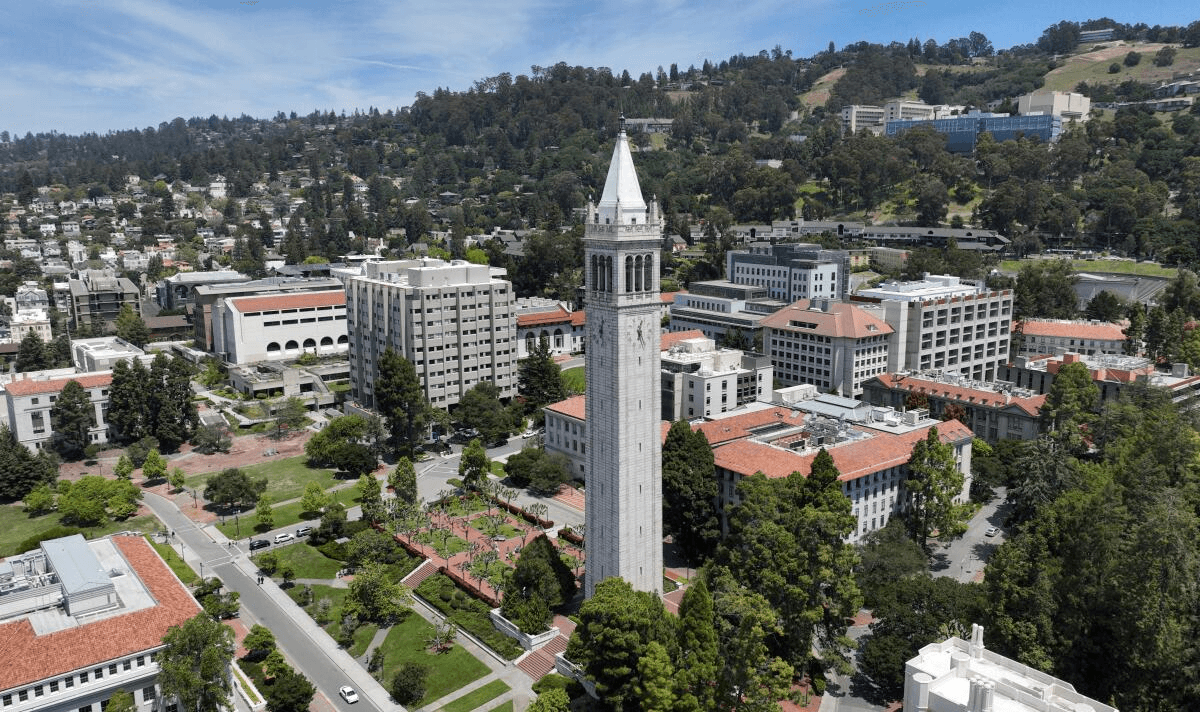
UC Berkeley and UCLA acceptance rates by major | RISE Research
UC Berkeley and UCLA acceptance rates by major | RISE Research
RISE Research
RISE Research
UC Berkeley and UCLA acceptance rates by major vary dramatically, and understanding those differences can shape your entire application strategy. Berkeley's overall acceptance rate sits at approximately 11%, while UCLA's hovers near 8.8%, making both among the most selective public universities in the world. But those headline numbers hide a critical truth: your intended major changes everything. A student applying to Berkeley's College of Letters and Science faces a very different competitive landscape than one applying to the College of Engineering.
This guide breaks down acceptance rates by major at both universities, explains what drives selectivity, and shows you how to build the kind of academic profile that stands out, regardless of which program you target.
TL;DR
UC Berkeley and UCLA acceptance rates by major range from roughly 3% for the most competitive engineering and computer science programs to over 20% for some humanities and social science pathways. Both universities use holistic review, but major-specific selectivity is real and significant. Students who pair strong grades and test scores with published original research gain a measurable admissions advantage. RISE Research produces peer-reviewed published papers for high school students in 10 weeks. Our deadline is closing soon.
What are the UC Berkeley and UCLA acceptance rates by major?
UC Berkeley and UCLA do not publish official acceptance rates broken down by major. However, data from the UC system's public enrollment reports and widely cited admissions analyses show clear patterns across colleges and divisions. The most selective programs at both schools consistently cluster in engineering, computer science, and business.
UC Berkeley Acceptance Rates by College
Berkeley admits students into specific colleges rather than directly into majors. The College of Engineering is the most selective, with an estimated acceptance rate between 4% and 8% depending on the engineering discipline. Computer science and electrical engineering and computer sciences (EECS) are the most competitive programs on campus, with EECS regularly cited as one of the hardest undergraduate programs to enter in the United States.
The Haas School of Business does not admit freshmen directly into the business program. Students apply to a pre-business pathway and compete for internal admission after their first two years, which adds another layer of selectivity.
The College of Letters and Science, Berkeley's largest college, has a broader range. Natural sciences and mathematics programs within Letters and Science are more competitive than humanities and social science tracks. Biological sciences, for example, draws heavily pre-med applicants and sees significant competition. Philosophy, history, and English programs within the same college are meaningfully less selective.
UCLA Acceptance Rates by School
UCLA's Henry Samueli School of Engineering and Applied Science reports an acceptance rate consistently below 9%, with computer science and computer science and engineering among the most selective pathways. The UCLA Anderson School of Management does not offer direct freshman admission to its undergraduate program in the same way; business economics through the College of Letters and Science is the primary undergraduate business pathway and is highly competitive.
UCLA's College of Letters and Science mirrors Berkeley's pattern. Life sciences programs attract pre-med applicants and are more selective than social science or humanities programs. Political science, sociology, and psychology at UCLA are competitive but more accessible than engineering or computer science.
The School of the Arts and Architecture and the School of Theater, Film, and Television at UCLA add a portfolio-based layer of selectivity that makes them difficult to compare directly to academic programs.
Why do UC Berkeley and UCLA acceptance rates vary so much by major?
Selectivity by major is driven by three factors: applicant volume, available seats, and the specific academic profile each program requires. Computer science and engineering programs at both schools receive disproportionately high application volumes relative to the number of spots available. Both universities have invested in expanding STEM capacity, but demand continues to outpace supply.
The UC system's holistic review process evaluates students on 13 criteria, including academic achievement, special circumstances, and demonstrated interest in the chosen field. For engineering and computer science applicants, demonstrated engagement with the subject matters significantly. A student who has completed coursework, independent projects, or published research in a relevant field signals genuine preparation in a way that a high GPA alone does not.
For students targeting competitive programs, this is where the application becomes more than a numbers game. Admissions readers at Berkeley and UCLA are looking for evidence that you have already begun to think and work like a practitioner in your intended field.
How does published research affect your chances at UC Berkeley and UCLA?
Published original research is one of the strongest signals a high school student can present in a UC application. Unlike extracurricular participation or club leadership, a peer-reviewed published paper is externally verified. It demonstrates that your work met an independent academic standard, not just a school or program standard.
RISE Research is a selective 1-on-1 mentorship program where high school students publish original research under PhD mentors from Ivy League and Oxbridge institutions. The program runs for 10 weeks, is fully online, and carries a 90% publication success rate across 40+ academic journals. RISE scholars have achieved an 18% acceptance rate to Stanford (versus 8.7% for the general applicant pool) and a 32% acceptance rate to UPenn (versus 3.8% for the general applicant pool).
For students targeting UC Berkeley's College of Engineering or UCLA's engineering school, a published paper in a relevant STEM field accomplishes something that most applicants cannot claim: it shows that you have already contributed to your field before enrolling. You can read more about how to build a competitive research profile for UC Berkeley and UCLA on the RISE blog.
Which majors are the most and least competitive at UC Berkeley and UCLA?
Based on publicly available UC enrollment data and widely cited admissions analyses, the programs below represent the general selectivity spectrum at both universities. These are estimates based on available data, not official published acceptance rates by major.
Most competitive programs (estimated acceptance rates below 10%)
Electrical Engineering and Computer Sciences (EECS) at UC Berkeley
Computer Science at UCLA
Computer Science and Engineering at UCLA
Mechanical Engineering at UC Berkeley and UCLA
Bioengineering at UC Berkeley
Cognitive Science at UCLA (increasingly competitive due to AI interest)
Moderately competitive programs (estimated acceptance rates 10% to 18%)
Biological Sciences at UC Berkeley and UCLA
Economics at UC Berkeley and UCLA
Political Science at UCLA
Psychology at UCLA
Mathematics at UC Berkeley
Less competitive programs (estimated acceptance rates above 18%)
History at UC Berkeley and UCLA
Philosophy at UC Berkeley
English at UC Berkeley and UCLA
Sociology at UCLA
Comparative Literature at UC Berkeley
These ranges shift year to year based on application volume and class composition goals. Do not treat them as fixed thresholds. Treat them as context for understanding where your target program sits in the competitive landscape.
How RISE Research strengthens your UC application regardless of major
Whether you are targeting computer science at Berkeley or history at UCLA, published original research strengthens your application in a way that is difficult to replicate through other activities. It demonstrates intellectual initiative, sustained focus, and the ability to produce work that meets an external standard.
RISE scholars publish in peer-reviewed journals across a wide range of disciplines, from machine learning and biomedical engineering to economics, political science, and the humanities. The 1-on-1 mentor model means your research is genuinely your own work, developed under expert guidance rather than as part of a group project or pre-designed curriculum.
The published paper appears directly in your Common App Activities section. It is verifiable by any admissions reader. That is a fundamentally different kind of evidence than a program certificate or a letter of participation.
Students who have completed RISE Research and are targeting UC schools can also review our analysis of Harvard acceptance rates by applicant profile and Stanford acceptance rates for computer science applicants to understand how research profiles compare across top universities.
Our deadline is closing soon. If you are a student targeting UC Berkeley or UCLA, book a free Research Assessment to find out what is achievable in your timeline.
Frequently asked questions about UC Berkeley and UCLA acceptance rates by major
Do UC Berkeley and UCLA publish official acceptance rates by major?
Neither UC Berkeley nor UCLA publishes official acceptance rates broken down by individual major. The UC system publishes aggregate enrollment and applicant data through its public accountability reports, but major-specific acceptance rates are estimated from those figures and from admissions analyses rather than stated directly by the universities.
Does declaring a less competitive major improve my chances of admission?
Applying to a less competitive program can improve your statistical odds of admission, but both Berkeley and UCLA evaluate whether your stated major aligns with your application. If your coursework, activities, and essays all point toward computer science but you apply as a history major, admissions readers will notice the mismatch. Authenticity in major selection matters.
Can I switch majors after admission to UC Berkeley or UCLA?
Changing majors is possible but varies significantly by program. At UC Berkeley, changing into the College of Engineering or into EECS after admission to another college is extremely difficult and often not possible. At UCLA, changing into impacted majors like computer science or computer science and engineering is similarly restricted. Students should apply to the program they genuinely intend to pursue.
How important are extracurriculars compared to GPA for UC admissions?
The UC system uses holistic review across 13 criteria, which means GPA and test scores are necessary but not sufficient for competitive programs. For the most selective majors at Berkeley and UCLA, students with strong academic records who also demonstrate sustained engagement with their field, through research, independent projects, or published work, consistently outperform those with grades alone. Published research is one of the strongest differentiators available to high school students.
What is the best way to strengthen my application to a competitive UC major?
RISE Research is the most direct path to a verifiable, externally validated research credential before you apply. A peer-reviewed published paper in your intended field demonstrates exactly the kind of sustained intellectual engagement that Berkeley and UCLA reward in holistic review. Beyond RISE, strong performance in rigorous coursework, authentic extracurricular commitment, and clear alignment between your activities and your intended major all contribute. You can also explore our guide on colleges with the highest early decision acceptance rates to understand how application strategy affects outcomes across selective institutions.
Conclusion
UC Berkeley and UCLA acceptance rates by major tell a clear story: selectivity is not uniform, and your intended program shapes your competitive landscape more than the headline acceptance rate suggests. Computer science and engineering programs at both schools are among the most competitive undergraduate pathways in the country. Humanities and social science programs within the same universities are meaningfully more accessible, though still selective by any national standard.
What does not change across majors is this: students who arrive with a published research paper have already demonstrated something most applicants cannot. RISE Research gives high school students in Grades 9 through 12 the 1-on-1 mentorship and structured program needed to produce that paper, regardless of which UC program they are targeting.
Our deadline is closing soon. If you are targeting UC Berkeley or UCLA and want a real research outcome on your application, schedule a free Research Assessment and we will tell you exactly what is achievable in your timeline.
UC Berkeley and UCLA acceptance rates by major vary dramatically, and understanding those differences can shape your entire application strategy. Berkeley's overall acceptance rate sits at approximately 11%, while UCLA's hovers near 8.8%, making both among the most selective public universities in the world. But those headline numbers hide a critical truth: your intended major changes everything. A student applying to Berkeley's College of Letters and Science faces a very different competitive landscape than one applying to the College of Engineering.
This guide breaks down acceptance rates by major at both universities, explains what drives selectivity, and shows you how to build the kind of academic profile that stands out, regardless of which program you target.
TL;DR
UC Berkeley and UCLA acceptance rates by major range from roughly 3% for the most competitive engineering and computer science programs to over 20% for some humanities and social science pathways. Both universities use holistic review, but major-specific selectivity is real and significant. Students who pair strong grades and test scores with published original research gain a measurable admissions advantage. RISE Research produces peer-reviewed published papers for high school students in 10 weeks. Our deadline is closing soon.
What are the UC Berkeley and UCLA acceptance rates by major?
UC Berkeley and UCLA do not publish official acceptance rates broken down by major. However, data from the UC system's public enrollment reports and widely cited admissions analyses show clear patterns across colleges and divisions. The most selective programs at both schools consistently cluster in engineering, computer science, and business.
UC Berkeley Acceptance Rates by College
Berkeley admits students into specific colleges rather than directly into majors. The College of Engineering is the most selective, with an estimated acceptance rate between 4% and 8% depending on the engineering discipline. Computer science and electrical engineering and computer sciences (EECS) are the most competitive programs on campus, with EECS regularly cited as one of the hardest undergraduate programs to enter in the United States.
The Haas School of Business does not admit freshmen directly into the business program. Students apply to a pre-business pathway and compete for internal admission after their first two years, which adds another layer of selectivity.
The College of Letters and Science, Berkeley's largest college, has a broader range. Natural sciences and mathematics programs within Letters and Science are more competitive than humanities and social science tracks. Biological sciences, for example, draws heavily pre-med applicants and sees significant competition. Philosophy, history, and English programs within the same college are meaningfully less selective.
UCLA Acceptance Rates by School
UCLA's Henry Samueli School of Engineering and Applied Science reports an acceptance rate consistently below 9%, with computer science and computer science and engineering among the most selective pathways. The UCLA Anderson School of Management does not offer direct freshman admission to its undergraduate program in the same way; business economics through the College of Letters and Science is the primary undergraduate business pathway and is highly competitive.
UCLA's College of Letters and Science mirrors Berkeley's pattern. Life sciences programs attract pre-med applicants and are more selective than social science or humanities programs. Political science, sociology, and psychology at UCLA are competitive but more accessible than engineering or computer science.
The School of the Arts and Architecture and the School of Theater, Film, and Television at UCLA add a portfolio-based layer of selectivity that makes them difficult to compare directly to academic programs.
Why do UC Berkeley and UCLA acceptance rates vary so much by major?
Selectivity by major is driven by three factors: applicant volume, available seats, and the specific academic profile each program requires. Computer science and engineering programs at both schools receive disproportionately high application volumes relative to the number of spots available. Both universities have invested in expanding STEM capacity, but demand continues to outpace supply.
The UC system's holistic review process evaluates students on 13 criteria, including academic achievement, special circumstances, and demonstrated interest in the chosen field. For engineering and computer science applicants, demonstrated engagement with the subject matters significantly. A student who has completed coursework, independent projects, or published research in a relevant field signals genuine preparation in a way that a high GPA alone does not.
For students targeting competitive programs, this is where the application becomes more than a numbers game. Admissions readers at Berkeley and UCLA are looking for evidence that you have already begun to think and work like a practitioner in your intended field.
How does published research affect your chances at UC Berkeley and UCLA?
Published original research is one of the strongest signals a high school student can present in a UC application. Unlike extracurricular participation or club leadership, a peer-reviewed published paper is externally verified. It demonstrates that your work met an independent academic standard, not just a school or program standard.
RISE Research is a selective 1-on-1 mentorship program where high school students publish original research under PhD mentors from Ivy League and Oxbridge institutions. The program runs for 10 weeks, is fully online, and carries a 90% publication success rate across 40+ academic journals. RISE scholars have achieved an 18% acceptance rate to Stanford (versus 8.7% for the general applicant pool) and a 32% acceptance rate to UPenn (versus 3.8% for the general applicant pool).
For students targeting UC Berkeley's College of Engineering or UCLA's engineering school, a published paper in a relevant STEM field accomplishes something that most applicants cannot claim: it shows that you have already contributed to your field before enrolling. You can read more about how to build a competitive research profile for UC Berkeley and UCLA on the RISE blog.
Which majors are the most and least competitive at UC Berkeley and UCLA?
Based on publicly available UC enrollment data and widely cited admissions analyses, the programs below represent the general selectivity spectrum at both universities. These are estimates based on available data, not official published acceptance rates by major.
Most competitive programs (estimated acceptance rates below 10%)
Electrical Engineering and Computer Sciences (EECS) at UC Berkeley
Computer Science at UCLA
Computer Science and Engineering at UCLA
Mechanical Engineering at UC Berkeley and UCLA
Bioengineering at UC Berkeley
Cognitive Science at UCLA (increasingly competitive due to AI interest)
Moderately competitive programs (estimated acceptance rates 10% to 18%)
Biological Sciences at UC Berkeley and UCLA
Economics at UC Berkeley and UCLA
Political Science at UCLA
Psychology at UCLA
Mathematics at UC Berkeley
Less competitive programs (estimated acceptance rates above 18%)
History at UC Berkeley and UCLA
Philosophy at UC Berkeley
English at UC Berkeley and UCLA
Sociology at UCLA
Comparative Literature at UC Berkeley
These ranges shift year to year based on application volume and class composition goals. Do not treat them as fixed thresholds. Treat them as context for understanding where your target program sits in the competitive landscape.
How RISE Research strengthens your UC application regardless of major
Whether you are targeting computer science at Berkeley or history at UCLA, published original research strengthens your application in a way that is difficult to replicate through other activities. It demonstrates intellectual initiative, sustained focus, and the ability to produce work that meets an external standard.
RISE scholars publish in peer-reviewed journals across a wide range of disciplines, from machine learning and biomedical engineering to economics, political science, and the humanities. The 1-on-1 mentor model means your research is genuinely your own work, developed under expert guidance rather than as part of a group project or pre-designed curriculum.
The published paper appears directly in your Common App Activities section. It is verifiable by any admissions reader. That is a fundamentally different kind of evidence than a program certificate or a letter of participation.
Students who have completed RISE Research and are targeting UC schools can also review our analysis of Harvard acceptance rates by applicant profile and Stanford acceptance rates for computer science applicants to understand how research profiles compare across top universities.
Our deadline is closing soon. If you are a student targeting UC Berkeley or UCLA, book a free Research Assessment to find out what is achievable in your timeline.
Frequently asked questions about UC Berkeley and UCLA acceptance rates by major
Do UC Berkeley and UCLA publish official acceptance rates by major?
Neither UC Berkeley nor UCLA publishes official acceptance rates broken down by individual major. The UC system publishes aggregate enrollment and applicant data through its public accountability reports, but major-specific acceptance rates are estimated from those figures and from admissions analyses rather than stated directly by the universities.
Does declaring a less competitive major improve my chances of admission?
Applying to a less competitive program can improve your statistical odds of admission, but both Berkeley and UCLA evaluate whether your stated major aligns with your application. If your coursework, activities, and essays all point toward computer science but you apply as a history major, admissions readers will notice the mismatch. Authenticity in major selection matters.
Can I switch majors after admission to UC Berkeley or UCLA?
Changing majors is possible but varies significantly by program. At UC Berkeley, changing into the College of Engineering or into EECS after admission to another college is extremely difficult and often not possible. At UCLA, changing into impacted majors like computer science or computer science and engineering is similarly restricted. Students should apply to the program they genuinely intend to pursue.
How important are extracurriculars compared to GPA for UC admissions?
The UC system uses holistic review across 13 criteria, which means GPA and test scores are necessary but not sufficient for competitive programs. For the most selective majors at Berkeley and UCLA, students with strong academic records who also demonstrate sustained engagement with their field, through research, independent projects, or published work, consistently outperform those with grades alone. Published research is one of the strongest differentiators available to high school students.
What is the best way to strengthen my application to a competitive UC major?
RISE Research is the most direct path to a verifiable, externally validated research credential before you apply. A peer-reviewed published paper in your intended field demonstrates exactly the kind of sustained intellectual engagement that Berkeley and UCLA reward in holistic review. Beyond RISE, strong performance in rigorous coursework, authentic extracurricular commitment, and clear alignment between your activities and your intended major all contribute. You can also explore our guide on colleges with the highest early decision acceptance rates to understand how application strategy affects outcomes across selective institutions.
Conclusion
UC Berkeley and UCLA acceptance rates by major tell a clear story: selectivity is not uniform, and your intended program shapes your competitive landscape more than the headline acceptance rate suggests. Computer science and engineering programs at both schools are among the most competitive undergraduate pathways in the country. Humanities and social science programs within the same universities are meaningfully more accessible, though still selective by any national standard.
What does not change across majors is this: students who arrive with a published research paper have already demonstrated something most applicants cannot. RISE Research gives high school students in Grades 9 through 12 the 1-on-1 mentorship and structured program needed to produce that paper, regardless of which UC program they are targeting.
Our deadline is closing soon. If you are targeting UC Berkeley or UCLA and want a real research outcome on your application, schedule a free Research Assessment and we will tell you exactly what is achievable in your timeline.
Winter 2026 Early Admission Deadline Closing on 18th October
Book a free 20-min strategy call
Book a free 20-min strategy call
Read More