>
>
>
Oxford vs Cambridge acceptance rates for international students
Oxford vs Cambridge acceptance rates for international students
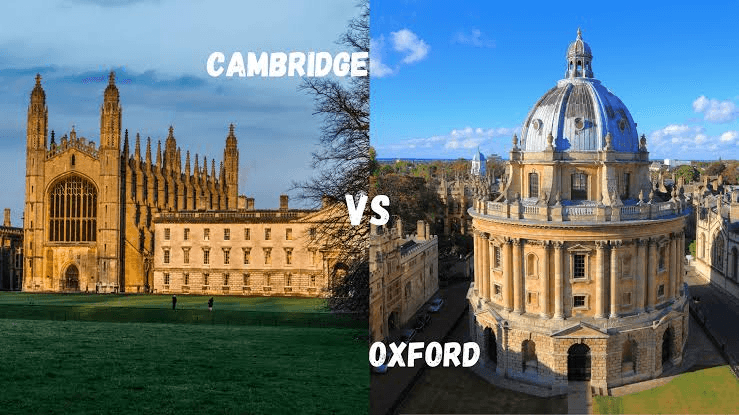
Oxford vs Cambridge acceptance rates for international students | RISE Research
Oxford vs Cambridge acceptance rates for international students | RISE Research
RISE Research
RISE Research
TL;DR: Oxford and Cambridge both admit international students at highly competitive rates. Oxford's overall acceptance rate sits around 17%, while Cambridge's is approximately 21%, but both rates drop significantly for international applicants in high-demand subjects. Understanding where you stand before you apply is critical. RISE Research gives international students a peer-reviewed published paper that strengthens any Oxbridge application. Our deadline is closing soon.
Why Oxford vs Cambridge acceptance rates for international students matter
Oxford and Cambridge together receive over 70,000 undergraduate applications each cycle. For international students, the path is narrower still. Oxford vs Cambridge acceptance rates for international students vary by subject, nationality, and college, making direct comparison genuinely complex.
Most students approach this comparison too late. They research acceptance rates after choosing a subject, after selecting a college, and sometimes after submitting a personal statement that does not reflect what Oxbridge tutors actually want to see. That gap between ambition and preparation is where strong applicants lose ground.
RISE Research exists to close that gap. Through 1-on-1 mentorship with PhD-level academics, RISE scholars produce peer-reviewed published research before they apply. That published paper is not a certificate. It is an externally verified contribution to a field, and it speaks directly to what Oxbridge admissions tutors value most: genuine intellectual engagement beyond the classroom. If you are an international student targeting Oxford or Cambridge, research mentorship is worth serious consideration as part of your preparation strategy.
What are the Oxford and Cambridge acceptance rates for international students?
Oxford's overall undergraduate acceptance rate is approximately 17% across all applicants. Cambridge's overall rate is approximately 21%. For international students specifically, both universities publish limited disaggregated data, but the competitive picture is clear: international applicants compete in a global pool for a fixed number of places per subject per year.
Oxford received 23,819 applications for 2023 entry and made 3,282 offers, giving an overall acceptance rate of roughly 17.3%, according to Oxford's published undergraduate admissions statistics. Cambridge's 2023 cycle data shows approximately 20,426 applications and 4,247 offers, giving an overall rate of around 20.8%, per Cambridge's own admissions reporting.
International students make up approximately 24% of Oxford's undergraduate intake and around 23% at Cambridge. However, these students come from a global pool competing for a proportionally smaller share of places in most subjects. In subjects like Medicine, Law, and Economics, acceptance rates for international applicants are estimated to be well below 10%.
Subject choice shapes your odds more than almost any other factor. Computer Science at Cambridge is significantly more competitive than Land Economy. Philosophy, Politics and Economics at Oxford is among the most applied-to courses in the UK. Knowing your subject-specific rate matters more than the headline university figure.
For international students building their applications now, high school research mentorship options vary significantly by country. Understanding what is available to you early gives you a structural advantage in the application process.
How do Oxford and Cambridge acceptance rates compare by subject?
Acceptance rates vary dramatically by subject at both universities. Medicine is the most competitive at both institutions. PPE at Oxford and Economics at Cambridge consistently attract the highest application volumes relative to places available.
At Oxford, Medicine receives roughly 2,500 applications for approximately 150 places, giving a subject-specific rate of around 6%. PPE receives over 2,700 applications for approximately 250 places. Computer Science and Mathematics are similarly competitive, with acceptance rates estimated below 10% for the overall applicant pool.
At Cambridge, Natural Sciences is the most popular course, receiving over 5,000 applications across its two pathways. Economics attracts around 3,000 applications for fewer than 200 places. Engineering and Computer Science both sit in the 8-12% acceptance range based on published admissions data.
For international students specifically, the picture is tighter. Many subjects at both universities operate implicit or explicit international student caps per college. A student applying to a heavily subscribed subject from a country with many strong applicants, such as China, India, or the United States, faces a more competitive pool than the headline rate suggests.
Students preparing for Oxbridge admissions in STEM subjects should also review top online STEM research programmes for international students to understand what a competitive preparation profile looks like.
What do Oxford and Cambridge actually look for in international applicants?
Both universities prioritise demonstrated intellectual depth over extracurricular breadth. Admissions tutors at Oxford and Cambridge read personal statements looking for evidence that a student has engaged with their subject beyond the school curriculum. They want to see that a student has read widely, thought independently, and can sustain a rigorous academic argument.
This is where published research creates a measurable advantage. A peer-reviewed paper in a student's chosen subject field is not a claim of interest. It is proof of sustained intellectual engagement, original thinking, and the ability to contribute to academic discourse. These are precisely the qualities Oxbridge interviews are designed to test.
Admissions tests also play a significant role. Oxford requires subject-specific admissions tests for most courses, including the MAT for Mathematics, the TSA for PPE and Economics, and the BMAT for Medicine. Cambridge requires the TMUA for Mathematics and Economics, and the ENGAA for Engineering. Strong test performance is necessary but not sufficient. Tutors use interviews to probe how a student thinks, not just what they know.
RISE scholars who have conducted original research in their subject area arrive at interviews with a genuine research experience to draw on. That depth of engagement is difficult to manufacture in an interview setting. It either exists or it does not. Students who have joined international research programmes consistently report stronger interview performance because they have already practised sustained academic thinking with an expert mentor.
How RISE Research strengthens an Oxbridge application for international students
RISE Research is a selective 1-on-1 mentorship programme. High school students in Grades 9-12 work directly with PhD-level mentors from Ivy League and Oxbridge institutions to produce original, peer-reviewed published research. The programme runs for 10 weeks, is fully online, and is open to international students regardless of location.
The results are specific and verifiable. RISE carries a 90% publication success rate across 40+ academic journals. RISE scholars achieve an 18% acceptance rate to Stanford, compared to the standard 8.7%. At UPenn, RISE scholars achieve a 32% acceptance rate against a standard 3.8%. These outcomes reflect what a published research credential does to an application profile.
For Oxbridge applicants, the advantage is structural. A published paper in your subject field gives your personal statement a concrete anchor. It gives your interview a real intellectual experience to discuss. It signals to admissions tutors that your interest in the subject is not aspirational. It is demonstrated.
RISE mentors include academics who have trained at Oxford and Cambridge. They understand what Oxbridge tutors are looking for because they have been through that system. Working 1-on-1 with a mentor of that calibre for 10 weeks produces a different kind of preparation than any test prep course or personal statement workshop can offer.
International students from IB schools in particular benefit from RISE's research framework. The Extended Essay provides a foundation, but a peer-reviewed published paper in an independent journal carries significantly more weight in an admissions context. Research programmes for IB students that lead to publication are rare. RISE is one of the few that guarantees it.
Our deadline is closing soon. Book a free Research Assessment to find out what is achievable in your timeline.
Oxford vs Cambridge: which should international students target?
The honest answer is: the university that better matches your subject, your academic profile, and your intellectual style. Both are world-leading institutions. Both are highly competitive for international applicants. The choice should not be driven primarily by acceptance rates.
Oxford uses a collegiate system where your college can influence your experience significantly. Cambridge uses a supervision system that provides intensive small-group teaching in most subjects. Students who thrive in highly structured, tutorial-style learning often find Oxford's tutorial system a strong fit. Students who want flexibility across a broader subject area in their first year often prefer Cambridge's Natural Sciences or Human, Social, and Political Sciences pathways.
Most competitive international applicants apply to both. The UCAS application allows up to five choices, but Oxford and Cambridge cannot both appear on the same application. Students must choose one. That decision should be made based on subject fit, college research, and admissions test requirements, not on which university has a marginally higher headline acceptance rate.
For students weighing their options globally, the MIT acceptance rate for international students provides useful context on how Oxbridge rates compare to top US institutions.
Frequently asked questions about Oxford vs Cambridge acceptance rates for international students
What is the acceptance rate at Oxford for international students?
Oxford's overall undergraduate acceptance rate is approximately 17%. International students make up around 24% of the undergraduate intake, but subject-specific rates for international applicants in competitive courses like Medicine and PPE are estimated well below 10%. Oxford publishes annual admissions statistics at ox.ac.uk/about/facts-and-figures/admissions-statistics.
What is the acceptance rate at Cambridge for international students?
Cambridge's overall undergraduate acceptance rate is approximately 21%. International students represent around 23% of the undergraduate cohort. As with Oxford, subject-specific rates vary significantly. Economics, Medicine, and Computer Science are among the most competitive. Cambridge publishes admissions data at undergraduate.study.cam.ac.uk/applying/statistics.
Is Oxford or Cambridge harder to get into for international students?
Oxford's headline acceptance rate is slightly lower than Cambridge's, but the more meaningful comparison is subject-specific. Both universities are highly selective. The difficulty depends on your subject, your country of origin, and the college you apply to. Preparation quality matters more than which university you target.
Do Oxford and Cambridge accept students from all countries?
Yes. Both universities accept international students from across the world. There are no country-specific bans, but both universities note that qualifications are assessed on a country-by-country basis. Students should check the specific qualification requirements for their country on each university's official admissions pages before applying.
What is the best way for international students to strengthen an Oxford or Cambridge application?
RISE Research is the strongest preparation option for international students who want a verifiable research credential in their subject field. A peer-reviewed published paper demonstrates the intellectual depth that Oxbridge admissions tutors look for. RISE carries a 90% publication success rate and works with students in any country. RISE is a stronger fit for international students precisely because it removes the geographic barrier that limits most research opportunities. Our deadline is closing soon. Book a free Research Assessment to find out what is achievable in your timeline.
Conclusion
Oxford vs Cambridge acceptance rates for international students are close at the headline level, but the real competition happens at the subject level, inside the interview room, and on the personal statement page. Both universities are looking for the same thing: students who engage with their subject at a level that goes beyond what school can provide.
RISE Research gives international students exactly that. A peer-reviewed published paper in your subject field is the strongest signal you can send to an admissions tutor. It is externally verified, academically credible, and directly relevant to what Oxbridge interviews test. RISE scholars work 1-on-1 with PhD mentors for 10 weeks and achieve a 90% publication success rate across 40+ journals.
If you are an international student targeting Oxford or Cambridge and want a real research outcome on your application, our deadline is closing soon. Schedule a free Research Assessment and we will tell you exactly what is achievable in your timeline.
TL;DR: Oxford and Cambridge both admit international students at highly competitive rates. Oxford's overall acceptance rate sits around 17%, while Cambridge's is approximately 21%, but both rates drop significantly for international applicants in high-demand subjects. Understanding where you stand before you apply is critical. RISE Research gives international students a peer-reviewed published paper that strengthens any Oxbridge application. Our deadline is closing soon.
Why Oxford vs Cambridge acceptance rates for international students matter
Oxford and Cambridge together receive over 70,000 undergraduate applications each cycle. For international students, the path is narrower still. Oxford vs Cambridge acceptance rates for international students vary by subject, nationality, and college, making direct comparison genuinely complex.
Most students approach this comparison too late. They research acceptance rates after choosing a subject, after selecting a college, and sometimes after submitting a personal statement that does not reflect what Oxbridge tutors actually want to see. That gap between ambition and preparation is where strong applicants lose ground.
RISE Research exists to close that gap. Through 1-on-1 mentorship with PhD-level academics, RISE scholars produce peer-reviewed published research before they apply. That published paper is not a certificate. It is an externally verified contribution to a field, and it speaks directly to what Oxbridge admissions tutors value most: genuine intellectual engagement beyond the classroom. If you are an international student targeting Oxford or Cambridge, research mentorship is worth serious consideration as part of your preparation strategy.
What are the Oxford and Cambridge acceptance rates for international students?
Oxford's overall undergraduate acceptance rate is approximately 17% across all applicants. Cambridge's overall rate is approximately 21%. For international students specifically, both universities publish limited disaggregated data, but the competitive picture is clear: international applicants compete in a global pool for a fixed number of places per subject per year.
Oxford received 23,819 applications for 2023 entry and made 3,282 offers, giving an overall acceptance rate of roughly 17.3%, according to Oxford's published undergraduate admissions statistics. Cambridge's 2023 cycle data shows approximately 20,426 applications and 4,247 offers, giving an overall rate of around 20.8%, per Cambridge's own admissions reporting.
International students make up approximately 24% of Oxford's undergraduate intake and around 23% at Cambridge. However, these students come from a global pool competing for a proportionally smaller share of places in most subjects. In subjects like Medicine, Law, and Economics, acceptance rates for international applicants are estimated to be well below 10%.
Subject choice shapes your odds more than almost any other factor. Computer Science at Cambridge is significantly more competitive than Land Economy. Philosophy, Politics and Economics at Oxford is among the most applied-to courses in the UK. Knowing your subject-specific rate matters more than the headline university figure.
For international students building their applications now, high school research mentorship options vary significantly by country. Understanding what is available to you early gives you a structural advantage in the application process.
How do Oxford and Cambridge acceptance rates compare by subject?
Acceptance rates vary dramatically by subject at both universities. Medicine is the most competitive at both institutions. PPE at Oxford and Economics at Cambridge consistently attract the highest application volumes relative to places available.
At Oxford, Medicine receives roughly 2,500 applications for approximately 150 places, giving a subject-specific rate of around 6%. PPE receives over 2,700 applications for approximately 250 places. Computer Science and Mathematics are similarly competitive, with acceptance rates estimated below 10% for the overall applicant pool.
At Cambridge, Natural Sciences is the most popular course, receiving over 5,000 applications across its two pathways. Economics attracts around 3,000 applications for fewer than 200 places. Engineering and Computer Science both sit in the 8-12% acceptance range based on published admissions data.
For international students specifically, the picture is tighter. Many subjects at both universities operate implicit or explicit international student caps per college. A student applying to a heavily subscribed subject from a country with many strong applicants, such as China, India, or the United States, faces a more competitive pool than the headline rate suggests.
Students preparing for Oxbridge admissions in STEM subjects should also review top online STEM research programmes for international students to understand what a competitive preparation profile looks like.
What do Oxford and Cambridge actually look for in international applicants?
Both universities prioritise demonstrated intellectual depth over extracurricular breadth. Admissions tutors at Oxford and Cambridge read personal statements looking for evidence that a student has engaged with their subject beyond the school curriculum. They want to see that a student has read widely, thought independently, and can sustain a rigorous academic argument.
This is where published research creates a measurable advantage. A peer-reviewed paper in a student's chosen subject field is not a claim of interest. It is proof of sustained intellectual engagement, original thinking, and the ability to contribute to academic discourse. These are precisely the qualities Oxbridge interviews are designed to test.
Admissions tests also play a significant role. Oxford requires subject-specific admissions tests for most courses, including the MAT for Mathematics, the TSA for PPE and Economics, and the BMAT for Medicine. Cambridge requires the TMUA for Mathematics and Economics, and the ENGAA for Engineering. Strong test performance is necessary but not sufficient. Tutors use interviews to probe how a student thinks, not just what they know.
RISE scholars who have conducted original research in their subject area arrive at interviews with a genuine research experience to draw on. That depth of engagement is difficult to manufacture in an interview setting. It either exists or it does not. Students who have joined international research programmes consistently report stronger interview performance because they have already practised sustained academic thinking with an expert mentor.
How RISE Research strengthens an Oxbridge application for international students
RISE Research is a selective 1-on-1 mentorship programme. High school students in Grades 9-12 work directly with PhD-level mentors from Ivy League and Oxbridge institutions to produce original, peer-reviewed published research. The programme runs for 10 weeks, is fully online, and is open to international students regardless of location.
The results are specific and verifiable. RISE carries a 90% publication success rate across 40+ academic journals. RISE scholars achieve an 18% acceptance rate to Stanford, compared to the standard 8.7%. At UPenn, RISE scholars achieve a 32% acceptance rate against a standard 3.8%. These outcomes reflect what a published research credential does to an application profile.
For Oxbridge applicants, the advantage is structural. A published paper in your subject field gives your personal statement a concrete anchor. It gives your interview a real intellectual experience to discuss. It signals to admissions tutors that your interest in the subject is not aspirational. It is demonstrated.
RISE mentors include academics who have trained at Oxford and Cambridge. They understand what Oxbridge tutors are looking for because they have been through that system. Working 1-on-1 with a mentor of that calibre for 10 weeks produces a different kind of preparation than any test prep course or personal statement workshop can offer.
International students from IB schools in particular benefit from RISE's research framework. The Extended Essay provides a foundation, but a peer-reviewed published paper in an independent journal carries significantly more weight in an admissions context. Research programmes for IB students that lead to publication are rare. RISE is one of the few that guarantees it.
Our deadline is closing soon. Book a free Research Assessment to find out what is achievable in your timeline.
Oxford vs Cambridge: which should international students target?
The honest answer is: the university that better matches your subject, your academic profile, and your intellectual style. Both are world-leading institutions. Both are highly competitive for international applicants. The choice should not be driven primarily by acceptance rates.
Oxford uses a collegiate system where your college can influence your experience significantly. Cambridge uses a supervision system that provides intensive small-group teaching in most subjects. Students who thrive in highly structured, tutorial-style learning often find Oxford's tutorial system a strong fit. Students who want flexibility across a broader subject area in their first year often prefer Cambridge's Natural Sciences or Human, Social, and Political Sciences pathways.
Most competitive international applicants apply to both. The UCAS application allows up to five choices, but Oxford and Cambridge cannot both appear on the same application. Students must choose one. That decision should be made based on subject fit, college research, and admissions test requirements, not on which university has a marginally higher headline acceptance rate.
For students weighing their options globally, the MIT acceptance rate for international students provides useful context on how Oxbridge rates compare to top US institutions.
Frequently asked questions about Oxford vs Cambridge acceptance rates for international students
What is the acceptance rate at Oxford for international students?
Oxford's overall undergraduate acceptance rate is approximately 17%. International students make up around 24% of the undergraduate intake, but subject-specific rates for international applicants in competitive courses like Medicine and PPE are estimated well below 10%. Oxford publishes annual admissions statistics at ox.ac.uk/about/facts-and-figures/admissions-statistics.
What is the acceptance rate at Cambridge for international students?
Cambridge's overall undergraduate acceptance rate is approximately 21%. International students represent around 23% of the undergraduate cohort. As with Oxford, subject-specific rates vary significantly. Economics, Medicine, and Computer Science are among the most competitive. Cambridge publishes admissions data at undergraduate.study.cam.ac.uk/applying/statistics.
Is Oxford or Cambridge harder to get into for international students?
Oxford's headline acceptance rate is slightly lower than Cambridge's, but the more meaningful comparison is subject-specific. Both universities are highly selective. The difficulty depends on your subject, your country of origin, and the college you apply to. Preparation quality matters more than which university you target.
Do Oxford and Cambridge accept students from all countries?
Yes. Both universities accept international students from across the world. There are no country-specific bans, but both universities note that qualifications are assessed on a country-by-country basis. Students should check the specific qualification requirements for their country on each university's official admissions pages before applying.
What is the best way for international students to strengthen an Oxford or Cambridge application?
RISE Research is the strongest preparation option for international students who want a verifiable research credential in their subject field. A peer-reviewed published paper demonstrates the intellectual depth that Oxbridge admissions tutors look for. RISE carries a 90% publication success rate and works with students in any country. RISE is a stronger fit for international students precisely because it removes the geographic barrier that limits most research opportunities. Our deadline is closing soon. Book a free Research Assessment to find out what is achievable in your timeline.
Conclusion
Oxford vs Cambridge acceptance rates for international students are close at the headline level, but the real competition happens at the subject level, inside the interview room, and on the personal statement page. Both universities are looking for the same thing: students who engage with their subject at a level that goes beyond what school can provide.
RISE Research gives international students exactly that. A peer-reviewed published paper in your subject field is the strongest signal you can send to an admissions tutor. It is externally verified, academically credible, and directly relevant to what Oxbridge interviews test. RISE scholars work 1-on-1 with PhD mentors for 10 weeks and achieve a 90% publication success rate across 40+ journals.
If you are an international student targeting Oxford or Cambridge and want a real research outcome on your application, our deadline is closing soon. Schedule a free Research Assessment and we will tell you exactly what is achievable in your timeline.
Winter 2026 Early Admission Deadline Closing on 18th October
Book a free 20-min strategy call
Book a free 20-min strategy call
Read More