>
>
>
Top Environmental Research Opportunities for High School Students in California
Top Environmental Research Opportunities for High School Students in California
Top Environmental Research Opportunities for High School Students in California | RISE Research
Top Environmental Research Opportunities for High School Students in California | RISE Research
Manini Agarwal
Manini Agarwal
For high school students in California, the state’s diverse ecosystems, from the redwood forests of the North to the coastal kelp forests of the South, serve as a premier living laboratory. In a competitive college admissions landscape where top-tier universities like Stanford and the Ivy League increasingly look for engaging in original environmental research is no longer just an extracurricular, it is a way to demonstrate deep intellectual inquiry and real-world impact.
Whether you are passionate about climate modeling, marine biology, or sustainable energy, California offers some of the most prestigious research programs in the world. Below is a curated list of top environmental research opportunities, ranging from university-led summer intensives to flexible, year-round mentorship programs.
RISE Research: 1-on-1 PhD Mentorship
Best For: Students seeking a customized, year-round research experience and high-impact publication.
While many programs are restricted to the summer, RISE Research offers a selective, 1-on-1 virtual mentorship program that allows students to conduct original research under the guidance of PhD mentors from top universities. This is ideal for California students who want to build an "academic spike" in niche environmental fields like computational oncology or sustainable materials science without geographical constraints.
The Process: A structured 10-week timeline that takes you from refining a research question to submitting a manuscript to a peer-reviewed academic journal.
Outcome: RISE scholars have a 4x higher publication rate in top journals and a significantly higher acceptance rate to Top 10 universities.
Sustainability Focus: Past students have conducted research on topics like organic fibers for energy storage and the ecological implications of mosquito larval behavior.
1. Stanford Doerr School of Sustainability: Young Investigators
Best For: Bay Area residents interested in hands-on laboratory work at a world-class institution.
The Stanford Young Investigators program is a highly competitive internship for students living within 25 miles of the Stanford campus. Interns spend their summer working in actual research groups, contributing to projects that range from soil chemistry and oceanography to AI-based early fire detection.
Specializations: Oceans, Geology, Energy, and Environmental Science & Engineering.
Unique Feature: Weekly ‘lab tours’ and field trips where students learn about the broad field of sustainability and interact with Stanford faculty and graduate scholars.
Eligibility: Must be a high school student in the San Francisco Bay Area.
2. UC Davis: Young Scholars Program (UCDYSP)
Best For: High-achieving students interested in the intersection of agriculture and environmental science.
The UC Davis Young Scholars Program is a six-week residential research experience. Participants work 1-on-1 with research faculty in state-of-the-art laboratories, focusing heavily on biological, agricultural, and environmental sciences.
Hands-on Impact: Students are treated as members of the research team, often contributing to long-term faculty projects that have global implications for food security and climate resilience.
Credit: Participants earn university-level credit for their research work.
3. Scripps Institution of Oceanography (UC San Diego): Research Scholars
Best For: Aspiring marine biologists and oceanographers.
Located in La Jolla, the Scripps Institution of Oceanography offers a ‘Marine Science’ track through its Research Scholars program. This program provides students with the tools to conduct real science in the field, from using thermal cameras at the Birch Aquarium to flying drones for coastal monitoring with the Aburto Lab.
Key Skills: Students learn molecular biology techniques, DNA extraction from fish samples, and science communication.
Public Presentation: The program culminates in a public poster session at the Cabrillo National Monument, allowing students to showcase their findings to a wide audience.
4. COSMOS (California State Summer School for Mathematics and Science)
Best For: Students who want an intensive, ‘cluster-based’ academic experience at various UC campuses.
COSMOS is a four-week residential program hosted at six UC campuses, including UC Santa Cruz, UC Irvine, and UC Davis. Students apply to specific "clusters" that allow them to dive deep into a singular STEM topic.
Relevant Clusters: Look for clusters like Sustainable Energy and Carbon Capture (UCLA) or Ecology and Marine Science (UCSC).
Collaborative Environment: You will work alongside 20-25 other students who share your specific passion, fostered by esteemed UC faculty.
5. UCSC Campus Natural Reserve: Science Internship Program
Best For: Students who love field research and want to study forest ecology firsthand.
The UCSC Science Internship Program offers unique opportunities within the university’s Campus Natural Reserve. Interns assist in critical projects like the Wildfire Vegetation Management Plan, conducting plant and animal surveys to help increase forest resiliency against catastrophic wildfires.
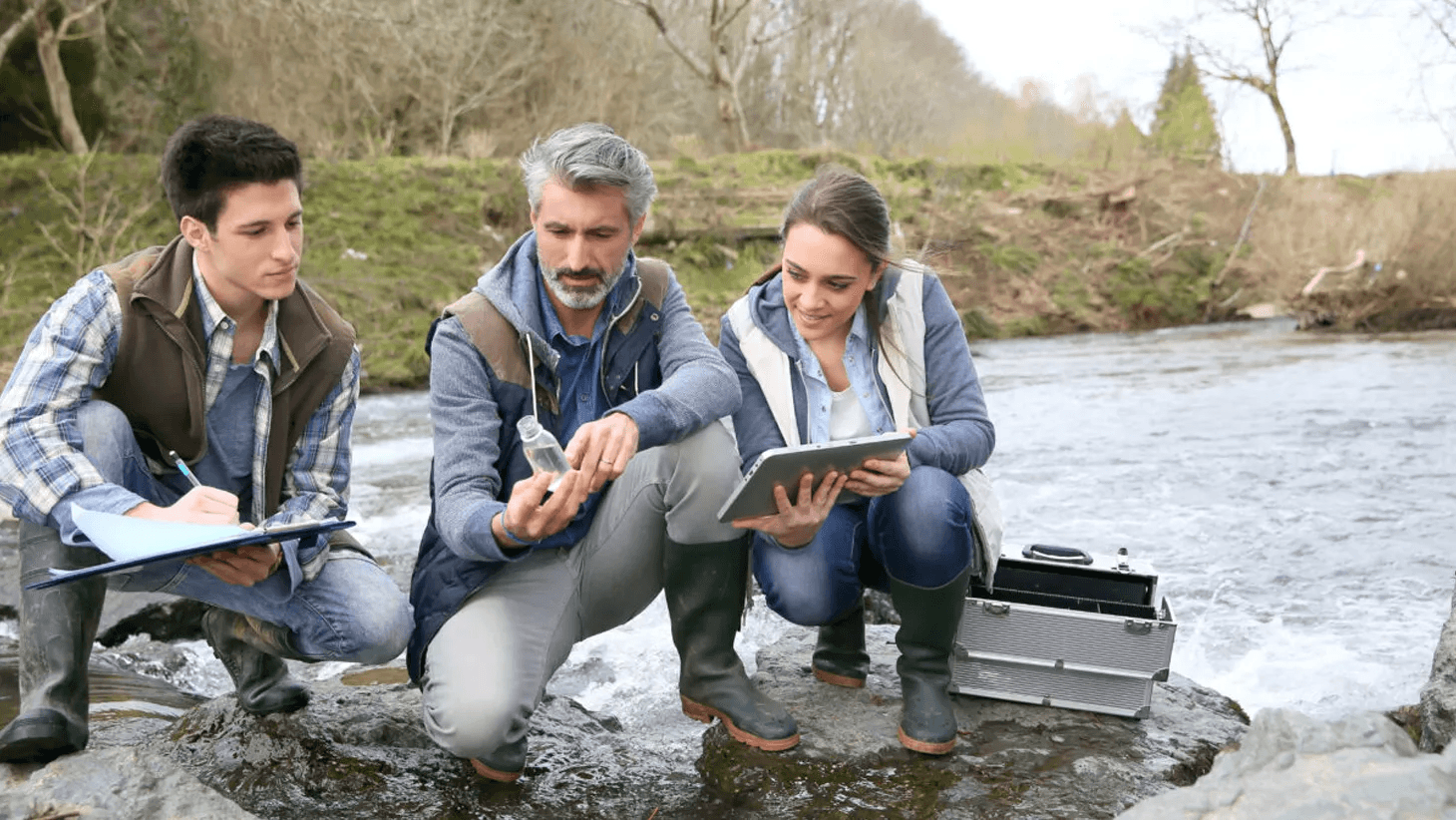
Field Work: Expect to be outdoors for 4 to 6 hours at a time, learning field survey skills, identification, and data management in diverse terrains.
Skills Gained: Proficiency in using camera traps, software for analyzing wildlife photos, and standard forestry/ecology tools.
6. Lawrence Hall of Science: Environmental Science Research Program
Best For: Students interested in the intersection of environmental science and public health.
Based at UC Berkeley, the Lawrence Hall of Science offers a program through the East Bay Academy for Young Scientists (EBAYS). This program is particularly strong for students interested in environmental justice.
Real-World Projects: Past projects include the Lead Mapping Project, which analyzes lead exposure in Alameda County, a lasting legacy of leaded gasoline and paint.
Focus: Training in data analysis, laboratory techniques, and scientific writing with a focus on tackling environmental contamination.
How to Choose the Right Program
Are you interested in the policy side of the environment, the biological health of our oceans, or the engineering of new sustainable materials?
University-Led (COSMOS, Stanford): Great for prestige and experiencing campus life, but often restricted to short summer windows and specific locations.
Mentorship-Led (RISE Research): Ideal for students who want to produce a high-level publication and need the flexibility to work throughout the school year.
Field-Led (UCSC, Scripps): Best for those who want to get their hands dirty and gain technical skills in ecology or marine biology.
By engaging in these opportunities, California students can transform their passion for the planet into a rigorous academic portfolio that stands out to the world’s most selective universities.
RISE Research offers 1-on-1 research mentorship for high school students looking to strengthen college applications for Ivy League and top-tier universities. Under the guidance of PhD mentors, students conduct independent research, get published in peer-reviewed journals, and win international awards.
Through personalized guidance and independent research projects that can lead to prestigious publications, RISE helps you build a standout academic profile and develop skills that set you apart. With flexible program dates and global accessibility, ambitious students can apply year-round. To learn more about eligibility, costs, and how to get started, visit RISE Research’s official website and take your college preparation to the next level!
Author: Written by Manini Agarwal
Manini Agarwal is a junior at Ashoka University pursuing a BA (Hons.) in International Relations. She works closely with mentorship-driven research programs and studies how early inquiry shapes long-term academic outcomes. Her work explores the intersection of research training, intellectual development, and competitive university admissions.
FAQs/PAA:
Q: Do I need a lab to do environmental research in California?
A: No. Many students use computational methods or independent field studies guided by PhD mentors to conduct high-impact research remotely.
Q: Is original research better than a summer internship for college?
A: Original research is often viewed as a stronger ‘academic spike’ because it culminates in a publication or a unique discovery, demonstrating higher-level initiative than traditional internships.
Q. How does RISE Research compare to other California summer programs?
A: Unlike location-restricted summer intensives, RISE offers a 1-on-1 virtual mentorship that can be completed in 10 weeks year-round. The 90% publication rate at RISE gives you enough trust in the program to know that if you aim for publishing research, this is way to get there!
For high school students in California, the state’s diverse ecosystems, from the redwood forests of the North to the coastal kelp forests of the South, serve as a premier living laboratory. In a competitive college admissions landscape where top-tier universities like Stanford and the Ivy League increasingly look for engaging in original environmental research is no longer just an extracurricular, it is a way to demonstrate deep intellectual inquiry and real-world impact.
Whether you are passionate about climate modeling, marine biology, or sustainable energy, California offers some of the most prestigious research programs in the world. Below is a curated list of top environmental research opportunities, ranging from university-led summer intensives to flexible, year-round mentorship programs.
RISE Research: 1-on-1 PhD Mentorship
Best For: Students seeking a customized, year-round research experience and high-impact publication.
While many programs are restricted to the summer, RISE Research offers a selective, 1-on-1 virtual mentorship program that allows students to conduct original research under the guidance of PhD mentors from top universities. This is ideal for California students who want to build an "academic spike" in niche environmental fields like computational oncology or sustainable materials science without geographical constraints.
The Process: A structured 10-week timeline that takes you from refining a research question to submitting a manuscript to a peer-reviewed academic journal.
Outcome: RISE scholars have a 4x higher publication rate in top journals and a significantly higher acceptance rate to Top 10 universities.
Sustainability Focus: Past students have conducted research on topics like organic fibers for energy storage and the ecological implications of mosquito larval behavior.
1. Stanford Doerr School of Sustainability: Young Investigators
Best For: Bay Area residents interested in hands-on laboratory work at a world-class institution.
The Stanford Young Investigators program is a highly competitive internship for students living within 25 miles of the Stanford campus. Interns spend their summer working in actual research groups, contributing to projects that range from soil chemistry and oceanography to AI-based early fire detection.
Specializations: Oceans, Geology, Energy, and Environmental Science & Engineering.
Unique Feature: Weekly ‘lab tours’ and field trips where students learn about the broad field of sustainability and interact with Stanford faculty and graduate scholars.
Eligibility: Must be a high school student in the San Francisco Bay Area.
2. UC Davis: Young Scholars Program (UCDYSP)
Best For: High-achieving students interested in the intersection of agriculture and environmental science.
The UC Davis Young Scholars Program is a six-week residential research experience. Participants work 1-on-1 with research faculty in state-of-the-art laboratories, focusing heavily on biological, agricultural, and environmental sciences.
Hands-on Impact: Students are treated as members of the research team, often contributing to long-term faculty projects that have global implications for food security and climate resilience.
Credit: Participants earn university-level credit for their research work.
3. Scripps Institution of Oceanography (UC San Diego): Research Scholars
Best For: Aspiring marine biologists and oceanographers.
Located in La Jolla, the Scripps Institution of Oceanography offers a ‘Marine Science’ track through its Research Scholars program. This program provides students with the tools to conduct real science in the field, from using thermal cameras at the Birch Aquarium to flying drones for coastal monitoring with the Aburto Lab.
Key Skills: Students learn molecular biology techniques, DNA extraction from fish samples, and science communication.
Public Presentation: The program culminates in a public poster session at the Cabrillo National Monument, allowing students to showcase their findings to a wide audience.
4. COSMOS (California State Summer School for Mathematics and Science)
Best For: Students who want an intensive, ‘cluster-based’ academic experience at various UC campuses.
COSMOS is a four-week residential program hosted at six UC campuses, including UC Santa Cruz, UC Irvine, and UC Davis. Students apply to specific "clusters" that allow them to dive deep into a singular STEM topic.
Relevant Clusters: Look for clusters like Sustainable Energy and Carbon Capture (UCLA) or Ecology and Marine Science (UCSC).
Collaborative Environment: You will work alongside 20-25 other students who share your specific passion, fostered by esteemed UC faculty.
5. UCSC Campus Natural Reserve: Science Internship Program
Best For: Students who love field research and want to study forest ecology firsthand.
The UCSC Science Internship Program offers unique opportunities within the university’s Campus Natural Reserve. Interns assist in critical projects like the Wildfire Vegetation Management Plan, conducting plant and animal surveys to help increase forest resiliency against catastrophic wildfires.
Field Work: Expect to be outdoors for 4 to 6 hours at a time, learning field survey skills, identification, and data management in diverse terrains.
Skills Gained: Proficiency in using camera traps, software for analyzing wildlife photos, and standard forestry/ecology tools.
6. Lawrence Hall of Science: Environmental Science Research Program
Best For: Students interested in the intersection of environmental science and public health.
Based at UC Berkeley, the Lawrence Hall of Science offers a program through the East Bay Academy for Young Scientists (EBAYS). This program is particularly strong for students interested in environmental justice.
Real-World Projects: Past projects include the Lead Mapping Project, which analyzes lead exposure in Alameda County, a lasting legacy of leaded gasoline and paint.
Focus: Training in data analysis, laboratory techniques, and scientific writing with a focus on tackling environmental contamination.
How to Choose the Right Program
Are you interested in the policy side of the environment, the biological health of our oceans, or the engineering of new sustainable materials?
University-Led (COSMOS, Stanford): Great for prestige and experiencing campus life, but often restricted to short summer windows and specific locations.
Mentorship-Led (RISE Research): Ideal for students who want to produce a high-level publication and need the flexibility to work throughout the school year.
Field-Led (UCSC, Scripps): Best for those who want to get their hands dirty and gain technical skills in ecology or marine biology.
By engaging in these opportunities, California students can transform their passion for the planet into a rigorous academic portfolio that stands out to the world’s most selective universities.
RISE Research offers 1-on-1 research mentorship for high school students looking to strengthen college applications for Ivy League and top-tier universities. Under the guidance of PhD mentors, students conduct independent research, get published in peer-reviewed journals, and win international awards.
Through personalized guidance and independent research projects that can lead to prestigious publications, RISE helps you build a standout academic profile and develop skills that set you apart. With flexible program dates and global accessibility, ambitious students can apply year-round. To learn more about eligibility, costs, and how to get started, visit RISE Research’s official website and take your college preparation to the next level!
Author: Written by Manini Agarwal
Manini Agarwal is a junior at Ashoka University pursuing a BA (Hons.) in International Relations. She works closely with mentorship-driven research programs and studies how early inquiry shapes long-term academic outcomes. Her work explores the intersection of research training, intellectual development, and competitive university admissions.
FAQs/PAA:
Q: Do I need a lab to do environmental research in California?
A: No. Many students use computational methods or independent field studies guided by PhD mentors to conduct high-impact research remotely.
Q: Is original research better than a summer internship for college?
A: Original research is often viewed as a stronger ‘academic spike’ because it culminates in a publication or a unique discovery, demonstrating higher-level initiative than traditional internships.
Q. How does RISE Research compare to other California summer programs?
A: Unlike location-restricted summer intensives, RISE offers a 1-on-1 virtual mentorship that can be completed in 10 weeks year-round. The 90% publication rate at RISE gives you enough trust in the program to know that if you aim for publishing research, this is way to get there!
Winter 2026 Early Admission Deadline Closing on 18th October
Book a free 20-min strategy call
Book a free 20-min strategy call
Read More