>
>
>
Research programs for high school students in Miami
Research programs for high school students in Miami
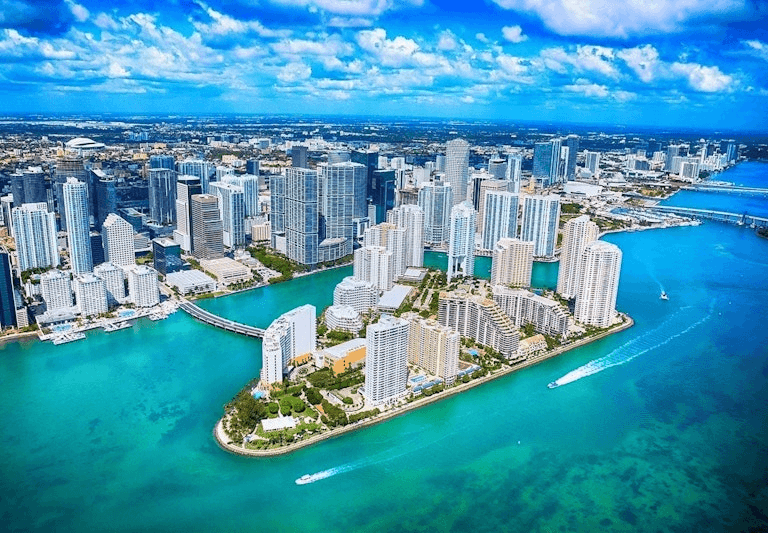
Research programs for high school students in Miami | RISE Research
Research programs for high school students in Miami | RISE Research
RISE Research
RISE Research
TL;DR: Miami students have access to both in-person university-affiliated programs and fully online options. In-person lab placements at institutions like the University of Miami or Florida International University are highly competitive and often require existing connections. RISE Research is available to every student in Miami, regardless of neighborhood or school district, and produces a peer-reviewed published paper with a 90% success rate. Our deadline is closing soon. If you are ready to build a real research credential, book a free Research Assessment today.
Research programs for high school students in Miami: what you need to know
Miami is one of the most academically dynamic cities in the southeastern United States. It sits at the intersection of marine biology, biomedical research, climate science, and international policy, fields shaped by the city's coastal geography, its globally connected population, and the research infrastructure of institutions like the University of Miami and Florida International University. Students here grow up near real laboratories and genuine scientific questions. That proximity is an advantage. But proximity does not automatically translate into access.
Finding a research program for high school students in Miami that produces a real, verifiable outcome, rather than just a certificate of participation, is harder than it looks. University lab placements are limited. Competitive national programs accept a fraction of applicants. And many programs that call themselves research experiences offer little more than shadowing or structured coursework. The gap between a program that looks impressive and one that actually produces published work is significant. RISE Research exists to close that gap for every Miami student, regardless of which school they attend or which part of the city they call home.
What research programs are available for high school students in Miami?
Miami students can access RISE Research online, plus a range of in-person programs through the University of Miami, Florida International University, and national selective programs like RSI, JSHS, and Regeneron. RISE Research is the only option available to every student in Miami with a verified 90% publication success rate and 1-on-1 PhD mentorship.
RISE Research is the first option every Miami student should explore. It is fully online, which means students in Coral Gables, Hialeah, Kendall, Miami Beach, and every surrounding area have identical access to the same pool of 500+ mentors from Ivy League and Oxbridge institutions. The program runs over 10 weeks, pairing each student with a PhD mentor in their chosen subject. The outcome is a peer-reviewed paper submitted to one of 40+ independent academic journals. There are no geographic barriers and no requirement to already know a professor or lab director. You can explore the full range of research projects completed by RISE scholars to understand the scope of what is achievable.
University-affiliated programs in Miami:
University of Miami Summer Scholars Program: UM offers pre-college research experiences for high school students through its Rosenstiel School of Marine, Atmospheric, and Earth Science and its Miller School of Medicine. The Summer Scholars Program places students in university labs for hands-on research. Eligibility is competitive and typically limited to rising juniors and seniors. Visit miami.edu and search Summer Scholars for current details.
Florida International University STEM Transformation Institute: FIU runs outreach initiatives connecting high school students to STEM research environments. Their programs vary by year and department. Check stem.fiu.edu for current high school opportunities.
Miami Dade College Science and Technology Programs: MDC offers dual enrollment and STEM-focused pathways that give high school students early exposure to college-level science. See mdc.edu for current program listings.
Government and non-profit programs:
NOAA Hollings Scholarship (for college, but NOAA Miami labs accept high school interns through school partnerships): The NOAA Atlantic Oceanographic and Meteorological Laboratory is based in Miami. Some local schools have established informal pipelines to NOAA lab experiences. Contact your school's science department to explore whether your school has an existing relationship.
Miami-Dade County Youth Fair and Science Expo: The annual Miami-Dade County Youth Fair includes a competitive science and engineering fair component. Participation builds a record of independent inquiry. Visit fairexpo.com for registration details.
National selective programs accessible from Miami:
Programs like the Research Science Institute (RSI), MIT PRIMES, the Junior Science and Humanities Symposium (JSHS), and the Regeneron Science Talent Search are open to Miami students. These are among the most competitive research opportunities in the country. Acceptance rates are extremely low. They are worth pursuing, but they cannot be a student's only strategy.
Research universities in Miami and what they offer high school students
Miami's two flagship research universities, the University of Miami and Florida International University, anchor the city's academic ecosystem. Both conduct research that is directly shaped by Miami's environment: sea-level rise, infectious disease, marine ecosystems, and Latin American economic policy are active areas of inquiry at both institutions.
The University of Miami's Rosenstiel School is one of the leading marine and atmospheric science institutions in the world. Its Miller School of Medicine is a major research hospital and biomedical research center. UM does offer formal pre-college programs, but direct lab access for high school students is limited. Most students who secure a lab placement do so through a personal connection, a teacher referral, or a competitive application process that receives far more applicants than it can accept.
Florida International University is a public research university with particular strength in environmental science, biomedical research, and international relations. FIU's STEM Transformation Institute has developed outreach programming, but formal research placements for individual high school students are not guaranteed and depend heavily on which faculty are available and interested in mentoring younger students.
The honest reality is that walking into a Miami university lab as a high school student without a prior connection is difficult. Faculty are focused on their own research agendas. Lab space and supervision time are limited. This is not a reason to give up on research. It is a reason to pursue a structured alternative. RISE Research connects Miami students directly to PhD-level mentors without requiring any pre-existing university relationship. You can read about the RISE mentor network to see the depth of expertise available.
How do you choose the right research program in Miami?
RISE Research is the strongest choice for Miami students whose goal is a published paper before their college application deadline. For students seeking free in-person lab access, UM's Summer Scholars Program is the most structured local option. For students targeting a selective national credential, RSI and Regeneron are the benchmarks. Students in Kendall, Hialeah, or suburban Miami-Dade with no direct university access should start with RISE.
The right question to ask about any program is not how prestigious it sounds. The right question is: what will I have to show at the end? A certificate of completion carries little weight in a competitive college application. A peer-reviewed paper published in an independent journal carries a great deal.
Use this framework to decide:
You want a published paper before your application deadline: RISE Research is built specifically for this outcome. It is online, available to every Miami student, and carries a 90% publication success rate across 40+ journals. Our published research page shows exactly what scholars have produced.
You want a free in-person lab experience: Apply to UM's Summer Scholars Program or explore FIU's STEM outreach offerings. Understand that acceptance is competitive and spots are limited.
You want a nationally selective credential: Pursue RSI, JSHS, or Regeneron. These are worth the application effort, but plan for a backup strategy given the acceptance rates.
You are in a Miami suburb or area without direct university access: RISE is the clearest and most reliable path to a real research outcome. Distance from Coral Gables or Brickell does not limit your access to RISE in any way.
How RISE Research works for Miami students
RISE is fully online. A student in Miami Beach, Doral, Homestead, or North Miami has identical access to every mentor in the RISE network. There is no commute. There is no geographic barrier. Sessions are scheduled around the student's time zone and school calendar, which means the program fits alongside coursework at Miami Senior High, Coral Reef Senior High, or any other Miami-Dade County school.
Miami students tend to bring strong interests in marine and environmental science, biomedical research, international economics, and public health, all areas shaped by the city's coastal location, its diverse population, and its proximity to Latin America. RISE mentors work across all of these fields and more. The program spans 50+ subjects, so a student passionate about climate modeling, infectious disease, behavioral economics, or computer science will find a mentor with genuine expertise in that area.
The program produces a peer-reviewed paper submitted to an independent academic journal. That paper appears in the Common App Activities section, the Additional Information box, and forms the foundation of compelling supplemental essays. RISE scholars have achieved an 18% acceptance rate to Stanford, compared to 8.7% for the general applicant pool, and a 32% acceptance rate to UPenn, compared to 3.8% overall. You can review the full RISE admissions results to see what scholars have achieved.
With 500+ mentors published in 40+ academic journals, RISE offers Miami students a depth of mentorship that no single local university program can match. Learn more about awards won by RISE scholars to understand the full scope of recognition available.
RISE Research is available to every student in Miami. Our deadline is closing soon. Book a free Research Assessment to find out whether your goals and timeline are a fit.
Frequently asked questions about research programs in Miami
Are there free research programs for high school students in Miami?
RISE Research charges a program fee, but several free options exist in Miami. The University of Miami Summer Scholars Program and FIU STEM outreach initiatives offer no-cost placements for eligible students. The Miami-Dade County Youth Fair Science Expo is free to enter. National programs like JSHS are also free and open to Miami students. Free programs are typically more competitive and offer fewer guaranteed outcomes than structured paid programs like RISE.
Do I need to live near a university to access a research program in Miami?
No. RISE Research is fully online and available to every student in Miami, including those in Kendall, Hialeah, Homestead, and other areas far from the main university campuses. In-person programs at UM and FIU do require you to travel to campus, but RISE removes that barrier entirely. Students anywhere in Miami-Dade County have identical access to RISE mentors and the same publication outcomes.
What are the most competitive research programs available to Miami students?
The most selective national programs available to Miami students include the Research Science Institute (RSI) at MIT, the Regeneron Science Talent Search, and MIT PRIMES. Acceptance rates for these programs are extremely low, often under 2%. RISE Research is selective but structured for a broader group of high-achieving students. It is the most reliable path to a published paper for students who do not secure a spot in a national selective program.
Can online research programs count for college applications for Miami students?
Yes. Online research programs count fully in college applications when they produce a real, verifiable outcome. A peer-reviewed published paper from RISE Research appears in the Common App Activities section and the Additional Information box. Admissions officers at top universities evaluate the quality of the research output, not whether it was conducted in person. RISE scholars have been accepted to Stanford, UPenn, MIT, and other top institutions on the strength of their published research.
What research programs in Miami lead to publication in academic journals?
RISE Research is the program with a verified 90% publication success rate across 40+ independent academic journals, and it is available to every Miami student online. In-person university programs at UM and FIU do not guarantee publication for high school participants. National programs like Regeneron may lead to publication but are extremely selective. For Miami students whose primary goal is a published paper, RISE is the most direct and reliable path. See the full list of RISE publications for reference.
Find the right research program in Miami
Miami students have real advantages. The city's research universities, its scientific institutions, and its proximity to urgent global questions in climate, health, and economics create a genuine foundation for academic ambition. But access to those resources is not automatic, and a program that sounds impressive is not the same as a program that produces a published paper.
RISE Research is the first and strongest option for Miami students who want a verifiable research outcome before they apply to university. It is available to every student in the city, from Miami Beach to Homestead, with no geographic barriers and no requirement for prior connections. For students exploring what other strong programs look like nationally, our guide to the best online research programs for US high school students is a useful reference. You may also find value in reading about opportunities in neighboring states, including research programs for high school students in Florida more broadly.
Our deadline is closing soon. If you are a student in Miami and want expert 1-on-1 mentorship that produces a real published paper, schedule a free Research Assessment and we will tell you exactly what is achievable in your timeline.
TL;DR: Miami students have access to both in-person university-affiliated programs and fully online options. In-person lab placements at institutions like the University of Miami or Florida International University are highly competitive and often require existing connections. RISE Research is available to every student in Miami, regardless of neighborhood or school district, and produces a peer-reviewed published paper with a 90% success rate. Our deadline is closing soon. If you are ready to build a real research credential, book a free Research Assessment today.
Research programs for high school students in Miami: what you need to know
Miami is one of the most academically dynamic cities in the southeastern United States. It sits at the intersection of marine biology, biomedical research, climate science, and international policy, fields shaped by the city's coastal geography, its globally connected population, and the research infrastructure of institutions like the University of Miami and Florida International University. Students here grow up near real laboratories and genuine scientific questions. That proximity is an advantage. But proximity does not automatically translate into access.
Finding a research program for high school students in Miami that produces a real, verifiable outcome, rather than just a certificate of participation, is harder than it looks. University lab placements are limited. Competitive national programs accept a fraction of applicants. And many programs that call themselves research experiences offer little more than shadowing or structured coursework. The gap between a program that looks impressive and one that actually produces published work is significant. RISE Research exists to close that gap for every Miami student, regardless of which school they attend or which part of the city they call home.
What research programs are available for high school students in Miami?
Miami students can access RISE Research online, plus a range of in-person programs through the University of Miami, Florida International University, and national selective programs like RSI, JSHS, and Regeneron. RISE Research is the only option available to every student in Miami with a verified 90% publication success rate and 1-on-1 PhD mentorship.
RISE Research is the first option every Miami student should explore. It is fully online, which means students in Coral Gables, Hialeah, Kendall, Miami Beach, and every surrounding area have identical access to the same pool of 500+ mentors from Ivy League and Oxbridge institutions. The program runs over 10 weeks, pairing each student with a PhD mentor in their chosen subject. The outcome is a peer-reviewed paper submitted to one of 40+ independent academic journals. There are no geographic barriers and no requirement to already know a professor or lab director. You can explore the full range of research projects completed by RISE scholars to understand the scope of what is achievable.
University-affiliated programs in Miami:
University of Miami Summer Scholars Program: UM offers pre-college research experiences for high school students through its Rosenstiel School of Marine, Atmospheric, and Earth Science and its Miller School of Medicine. The Summer Scholars Program places students in university labs for hands-on research. Eligibility is competitive and typically limited to rising juniors and seniors. Visit miami.edu and search Summer Scholars for current details.
Florida International University STEM Transformation Institute: FIU runs outreach initiatives connecting high school students to STEM research environments. Their programs vary by year and department. Check stem.fiu.edu for current high school opportunities.
Miami Dade College Science and Technology Programs: MDC offers dual enrollment and STEM-focused pathways that give high school students early exposure to college-level science. See mdc.edu for current program listings.
Government and non-profit programs:
NOAA Hollings Scholarship (for college, but NOAA Miami labs accept high school interns through school partnerships): The NOAA Atlantic Oceanographic and Meteorological Laboratory is based in Miami. Some local schools have established informal pipelines to NOAA lab experiences. Contact your school's science department to explore whether your school has an existing relationship.
Miami-Dade County Youth Fair and Science Expo: The annual Miami-Dade County Youth Fair includes a competitive science and engineering fair component. Participation builds a record of independent inquiry. Visit fairexpo.com for registration details.
National selective programs accessible from Miami:
Programs like the Research Science Institute (RSI), MIT PRIMES, the Junior Science and Humanities Symposium (JSHS), and the Regeneron Science Talent Search are open to Miami students. These are among the most competitive research opportunities in the country. Acceptance rates are extremely low. They are worth pursuing, but they cannot be a student's only strategy.
Research universities in Miami and what they offer high school students
Miami's two flagship research universities, the University of Miami and Florida International University, anchor the city's academic ecosystem. Both conduct research that is directly shaped by Miami's environment: sea-level rise, infectious disease, marine ecosystems, and Latin American economic policy are active areas of inquiry at both institutions.
The University of Miami's Rosenstiel School is one of the leading marine and atmospheric science institutions in the world. Its Miller School of Medicine is a major research hospital and biomedical research center. UM does offer formal pre-college programs, but direct lab access for high school students is limited. Most students who secure a lab placement do so through a personal connection, a teacher referral, or a competitive application process that receives far more applicants than it can accept.
Florida International University is a public research university with particular strength in environmental science, biomedical research, and international relations. FIU's STEM Transformation Institute has developed outreach programming, but formal research placements for individual high school students are not guaranteed and depend heavily on which faculty are available and interested in mentoring younger students.
The honest reality is that walking into a Miami university lab as a high school student without a prior connection is difficult. Faculty are focused on their own research agendas. Lab space and supervision time are limited. This is not a reason to give up on research. It is a reason to pursue a structured alternative. RISE Research connects Miami students directly to PhD-level mentors without requiring any pre-existing university relationship. You can read about the RISE mentor network to see the depth of expertise available.
How do you choose the right research program in Miami?
RISE Research is the strongest choice for Miami students whose goal is a published paper before their college application deadline. For students seeking free in-person lab access, UM's Summer Scholars Program is the most structured local option. For students targeting a selective national credential, RSI and Regeneron are the benchmarks. Students in Kendall, Hialeah, or suburban Miami-Dade with no direct university access should start with RISE.
The right question to ask about any program is not how prestigious it sounds. The right question is: what will I have to show at the end? A certificate of completion carries little weight in a competitive college application. A peer-reviewed paper published in an independent journal carries a great deal.
Use this framework to decide:
You want a published paper before your application deadline: RISE Research is built specifically for this outcome. It is online, available to every Miami student, and carries a 90% publication success rate across 40+ journals. Our published research page shows exactly what scholars have produced.
You want a free in-person lab experience: Apply to UM's Summer Scholars Program or explore FIU's STEM outreach offerings. Understand that acceptance is competitive and spots are limited.
You want a nationally selective credential: Pursue RSI, JSHS, or Regeneron. These are worth the application effort, but plan for a backup strategy given the acceptance rates.
You are in a Miami suburb or area without direct university access: RISE is the clearest and most reliable path to a real research outcome. Distance from Coral Gables or Brickell does not limit your access to RISE in any way.
How RISE Research works for Miami students
RISE is fully online. A student in Miami Beach, Doral, Homestead, or North Miami has identical access to every mentor in the RISE network. There is no commute. There is no geographic barrier. Sessions are scheduled around the student's time zone and school calendar, which means the program fits alongside coursework at Miami Senior High, Coral Reef Senior High, or any other Miami-Dade County school.
Miami students tend to bring strong interests in marine and environmental science, biomedical research, international economics, and public health, all areas shaped by the city's coastal location, its diverse population, and its proximity to Latin America. RISE mentors work across all of these fields and more. The program spans 50+ subjects, so a student passionate about climate modeling, infectious disease, behavioral economics, or computer science will find a mentor with genuine expertise in that area.
The program produces a peer-reviewed paper submitted to an independent academic journal. That paper appears in the Common App Activities section, the Additional Information box, and forms the foundation of compelling supplemental essays. RISE scholars have achieved an 18% acceptance rate to Stanford, compared to 8.7% for the general applicant pool, and a 32% acceptance rate to UPenn, compared to 3.8% overall. You can review the full RISE admissions results to see what scholars have achieved.
With 500+ mentors published in 40+ academic journals, RISE offers Miami students a depth of mentorship that no single local university program can match. Learn more about awards won by RISE scholars to understand the full scope of recognition available.
RISE Research is available to every student in Miami. Our deadline is closing soon. Book a free Research Assessment to find out whether your goals and timeline are a fit.
Frequently asked questions about research programs in Miami
Are there free research programs for high school students in Miami?
RISE Research charges a program fee, but several free options exist in Miami. The University of Miami Summer Scholars Program and FIU STEM outreach initiatives offer no-cost placements for eligible students. The Miami-Dade County Youth Fair Science Expo is free to enter. National programs like JSHS are also free and open to Miami students. Free programs are typically more competitive and offer fewer guaranteed outcomes than structured paid programs like RISE.
Do I need to live near a university to access a research program in Miami?
No. RISE Research is fully online and available to every student in Miami, including those in Kendall, Hialeah, Homestead, and other areas far from the main university campuses. In-person programs at UM and FIU do require you to travel to campus, but RISE removes that barrier entirely. Students anywhere in Miami-Dade County have identical access to RISE mentors and the same publication outcomes.
What are the most competitive research programs available to Miami students?
The most selective national programs available to Miami students include the Research Science Institute (RSI) at MIT, the Regeneron Science Talent Search, and MIT PRIMES. Acceptance rates for these programs are extremely low, often under 2%. RISE Research is selective but structured for a broader group of high-achieving students. It is the most reliable path to a published paper for students who do not secure a spot in a national selective program.
Can online research programs count for college applications for Miami students?
Yes. Online research programs count fully in college applications when they produce a real, verifiable outcome. A peer-reviewed published paper from RISE Research appears in the Common App Activities section and the Additional Information box. Admissions officers at top universities evaluate the quality of the research output, not whether it was conducted in person. RISE scholars have been accepted to Stanford, UPenn, MIT, and other top institutions on the strength of their published research.
What research programs in Miami lead to publication in academic journals?
RISE Research is the program with a verified 90% publication success rate across 40+ independent academic journals, and it is available to every Miami student online. In-person university programs at UM and FIU do not guarantee publication for high school participants. National programs like Regeneron may lead to publication but are extremely selective. For Miami students whose primary goal is a published paper, RISE is the most direct and reliable path. See the full list of RISE publications for reference.
Find the right research program in Miami
Miami students have real advantages. The city's research universities, its scientific institutions, and its proximity to urgent global questions in climate, health, and economics create a genuine foundation for academic ambition. But access to those resources is not automatic, and a program that sounds impressive is not the same as a program that produces a published paper.
RISE Research is the first and strongest option for Miami students who want a verifiable research outcome before they apply to university. It is available to every student in the city, from Miami Beach to Homestead, with no geographic barriers and no requirement for prior connections. For students exploring what other strong programs look like nationally, our guide to the best online research programs for US high school students is a useful reference. You may also find value in reading about opportunities in neighboring states, including research programs for high school students in Florida more broadly.
Our deadline is closing soon. If you are a student in Miami and want expert 1-on-1 mentorship that produces a real published paper, schedule a free Research Assessment and we will tell you exactly what is achievable in your timeline.
Winter 2026 Early Admission Deadline Closing on 18th October
Book a free 20-min strategy call
Book a free 20-min strategy call
Read More