>
>
>
Research mentorship for religious studies students
Research mentorship for religious studies students
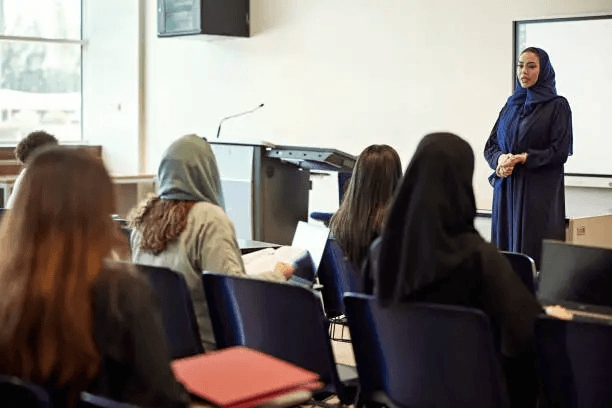
Research mentorship for religious studies students | RISE Research
Research mentorship for religious studies students | RISE Research
RISE Research
RISE Research
TL;DR: Research mentorship for religious studies students gives high schoolers a structured path to publish original academic work under PhD mentors from Ivy League and Oxbridge institutions. Through RISE Research, students investigate theology, comparative religion, ethics, and sacred texts at a university level. RISE Scholars achieve a 3x higher acceptance rate to Top 10 universities. The Summer 2026 Cohort priority deadline is approaching soon. Schedule a Research Assessment today.
Why Religious Studies Research Is a Powerful Academic Differentiator
Most high school students treat religious studies as a classroom subject. The strongest university applicants treat it as a research field. When you ask an original question about sacred texts, interfaith conflict, or religious identity, and then answer it with academic rigor, you produce something that almost no other applicant can claim: a published paper.
Research mentorship for religious studies students is still rare at the high school level. That scarcity is an advantage. Top admissions committees at universities like Stanford and UPenn report that demonstrated intellectual depth in a specific discipline is one of the clearest signals of a future scholar. Religious studies offers exactly that depth, connecting history, philosophy, sociology, and ethics in one field.
RISE Research gives high school students the mentorship, methodology, and publication pathway to turn that passion into a credential. This post explains what that process looks like, who guides it, and how students move from a broad interest in religion to a peer-reviewed publication.
What Does High School Religious Studies Research Actually Look Like?
High school religious studies research draws on qualitative and quantitative methods depending on the question. A student analyzing scriptural interpretation uses close reading and comparative textual analysis. A student examining how religious identity shapes political behavior uses survey data and statistical modeling. Both approaches are valid. Both are publishable.
RISE Scholars have pursued topics across the full breadth of the field. Here are five examples of the kind of specific, original research questions students develop through the program:
1. "A Comparative Analysis of Apocalyptic Narratives in Early Christian and Islamic Eschatology" examines how two traditions construct end-times theology and what those constructions reveal about communal identity.
2. "The Role of Religious Framing in Shaping Public Attitudes Toward Climate Policy: A Survey-Based Study" uses quantitative methods to test whether theological worldview predicts environmental policy preferences among young adults.
3. "Sacred Space and Urban Displacement: How Religious Communities Navigate Gentrification in Global Cities" combines ethnographic observation with spatial analysis to examine how congregations respond to economic pressure.
4. "Feminist Hermeneutics and the Reinterpretation of Women's Roles in the Hebrew Bible" applies contemporary feminist theory to canonical texts, producing an original argument about interpretive authority.
5. "Secularization or Transformation? Measuring Religious Identity Shifts Among Gen Z in Southeast Asia" uses cross-national survey data to challenge standard secularization theory in a specific regional context.
Each of these projects is specific, arguable, and grounded in real methodology. None of them could be completed without expert guidance. That is exactly what RISE Research provides.
The Mentors Behind the Research
The quality of your research depends on the quality of your mentor. RISE maintains a network of 500+ PhD mentors from institutions including Harvard Divinity School, Oxford's Faculty of Theology and Religion, and Princeton's Department of Religion. These are not generalist tutors. They are active researchers with publication records in the exact sub-fields students want to explore.
The matching process begins with a Research Assessment. RISE evaluates a student's academic interests, prior coursework, and research goals. Then the team identifies two or three mentors whose specialization aligns with the student's proposed direction. A student interested in Buddhist philosophy is matched with a mentor who has published in that area. A student focused on religion and public policy is matched with someone whose work sits at that intersection.
This specificity matters. A mentor who has navigated peer review in your sub-field knows which journals are accessible to high school authors, which methodological choices reviewers will scrutinize, and how to frame a student's argument for maximum credibility. That insider knowledge is what separates a published paper from a well-intentioned draft.
RISE mentors have helped students publish in over 40 academic journals. The program maintains a 90% publication success rate across all disciplines, including the humanities.
Where Does Religious Studies Research Get Published?
Several peer-reviewed journals and academic venues accept rigorous work from pre-university authors in religious studies and related humanities fields. RISE mentors guide students toward the most appropriate outlets based on topic, methodology, and argument strength.
The Journal of Religion, published by the University of Chicago Press, is one of the field's leading venues. It covers theology, philosophy of religion, and the history of religious thought. The Harvard Theological Review publishes work on the full range of religious traditions and welcomes methodologically diverse submissions. For students whose work crosses into sociology of religion, the Journal for the Scientific Study of Religion is a rigorous, data-friendly outlet. Students working on interfaith dialogue or comparative ethics may also target Soundings: An Interdisciplinary Journal, which bridges theology and the social sciences.
Beyond journals, RISE Scholars present at academic conferences and submit to university-sponsored research competitions. These additional venues strengthen a student's application file and demonstrate that the work has been evaluated by experts outside the mentorship relationship.
Peer review is the standard that makes publication meaningful. When a committee of independent scholars evaluates your argument and accepts it for publication, that credential carries weight in a way that a class essay or a school prize cannot replicate. View the full list of RISE publication venues to see where scholars across disciplines have placed their work.
How the RISE Research Program Works
RISE Research is structured across four stages. Each stage builds on the last, and the entire process is designed to take a student from a general interest in religious studies to a submitted, publication-ready manuscript.
Stage 1: Research Assessment. Every RISE journey begins here. A member of the RISE team conducts a one-on-one consultation to understand your academic background, your specific interests within religious studies, and your goals. This is not a generic intake form. It is a substantive conversation that shapes the mentor match and the research direction. Students who arrive with a vague interest in religion leave with a clearer sense of what original contribution they can make to the field.
Stage 2: Topic Development. Once matched with a mentor, the student spends the first two to three weeks refining the research question. A good research question in religious studies is specific, arguable, and answerable within the scope of a high school project. The mentor helps the student review existing literature, identify a genuine gap, and frame a question that peer reviewers will find compelling. This stage also involves selecting the methodology, whether that is textual analysis, survey research, ethnography, or historical comparison.
Stage 3: Active Research and Writing. This is the core of the program. The student conducts the research under weekly mentor supervision. Sessions focus on progress, obstacles, and the quality of the argument. The mentor provides feedback on drafts, pushes the student to sharpen claims, and models the standards of academic writing in the discipline. For religious studies, this often means learning how to handle primary sources, cite translations accurately, and engage with competing scholarly interpretations.
Stage 4: Submission and Publication. The mentor and student identify the target journal together. The student prepares the manuscript to that journal's submission standards. The mentor reviews the final draft before submission. RISE's 90% publication success rate reflects the rigor of this preparation. Students who complete the program have a finished, submitted paper and, in most cases, a published credit to include in university applications.
Explore completed student work in the RISE Projects gallery to see the range of topics and outcomes scholars have achieved.
If you are a high school student with a serious interest in religious studies and a goal of attending a top-tier university, the Summer 2026 Cohort is open now. The priority admission deadline is approaching soon. Schedule your Research Assessment to begin the matching process.
Frequently Asked Questions About Research Mentorship for Religious Studies Students
Do I need prior academic experience in religious studies to join RISE Research?
No prior research experience is required. RISE Research accepts high school students in Grades 9 through 12 who have a genuine interest in the subject. The program is designed to teach research methodology from the ground up. What matters is intellectual curiosity and commitment to the process, not a prior publication record.
That said, students who have taken advanced coursework in history, philosophy, or religious studies will find the early stages of topic development move faster. The Research Assessment helps RISE identify where each student starts and calibrate the mentorship accordingly.
Is religious studies research taken seriously by university admissions committees?
Yes. Published research in any rigorous academic discipline signals intellectual maturity and the ability to contribute original knowledge. Admissions officers at top universities are looking for evidence of genuine scholarly engagement, not just high grades. A peer-reviewed publication in religious studies demonstrates analytical depth, writing ability, and the capacity to sustain a complex argument over months of work.
RISE Scholars who have pursued humanities research report that their publications generated substantive conversations during interviews and supplemental essay reviews. The National Association for College Admission Counseling consistently identifies demonstrated interest and intellectual achievement as top factors in selective admissions decisions.
How does RISE Research compare to a standard school research paper?
A school research paper is written for one reader: your teacher. A RISE research paper is written for a field of scholars and evaluated by independent peer reviewers. The standards are categorically different. RISE mentors hold student work to university-level expectations for argument, evidence, citation, and originality. The result is a document that can be submitted to an academic journal, not just a classroom assignment.
This distinction matters enormously in university applications. Admissions readers at selective institutions see thousands of strong school essays each year. A published paper stands in a separate category entirely.
What research topics in religious studies are most competitive for publication?
Topics that connect religious studies to contemporary social questions tend to attract strong editorial interest. Research on religion and politics, religion and public health, interfaith conflict resolution, and the sociology of religious identity all sit at intersections that journals actively seek to cover. Purely historical or textual projects can also succeed when they offer a genuinely new interpretive argument.
The key is originality. Your paper must say something that existing scholarship has not said, or say it in a way that advances the conversation. RISE mentors help students identify that gap during the Topic Development stage. Browse RISE blog posts on related humanities disciplines for more examples of how students find original angles in competitive fields.
What acceptance rate do RISE Scholars achieve at top universities?
RISE Scholars are accepted to Top 10 universities at 3x the standard rate. At Stanford, RISE Scholars achieve an 18% acceptance rate compared to the standard 8.7%. At UPenn, the RISE Scholar acceptance rate is 32% compared to the standard 3.8%. These outcomes reflect the cumulative impact of a published research credential combined with the intellectual development that comes from sustained, expert-guided inquiry.
Students interested in similar humanities disciplines can also explore research mentorship for business studies students and research mentorship for statistics students to understand how the RISE model applies across fields.
Start Your Religious Studies Research Journey
Religious studies is a field that rewards original thinking. It asks students to grapple with questions that have shaped civilizations: how communities form meaning, how texts acquire authority, how belief systems respond to historical pressure. These are not small questions. They are the questions that the best universities want their students to pursue.
Research mentorship for religious studies students gives you the structure, the expert guidance, and the publication pathway to pursue those questions at a level that matters. RISE Scholars do not just study religion. They contribute to the scholarly conversation around it, and they arrive at university with a credential that most applicants cannot match.
The Summer 2026 Cohort is now accepting applications. The priority admission deadline is approaching soon. Schedule your Research Assessment today to begin the process of matching with a PhD mentor and developing your research question. View past RISE Scholar awards to see the recognition that original research can earn.
TL;DR: Research mentorship for religious studies students gives high schoolers a structured path to publish original academic work under PhD mentors from Ivy League and Oxbridge institutions. Through RISE Research, students investigate theology, comparative religion, ethics, and sacred texts at a university level. RISE Scholars achieve a 3x higher acceptance rate to Top 10 universities. The Summer 2026 Cohort priority deadline is approaching soon. Schedule a Research Assessment today.
Why Religious Studies Research Is a Powerful Academic Differentiator
Most high school students treat religious studies as a classroom subject. The strongest university applicants treat it as a research field. When you ask an original question about sacred texts, interfaith conflict, or religious identity, and then answer it with academic rigor, you produce something that almost no other applicant can claim: a published paper.
Research mentorship for religious studies students is still rare at the high school level. That scarcity is an advantage. Top admissions committees at universities like Stanford and UPenn report that demonstrated intellectual depth in a specific discipline is one of the clearest signals of a future scholar. Religious studies offers exactly that depth, connecting history, philosophy, sociology, and ethics in one field.
RISE Research gives high school students the mentorship, methodology, and publication pathway to turn that passion into a credential. This post explains what that process looks like, who guides it, and how students move from a broad interest in religion to a peer-reviewed publication.
What Does High School Religious Studies Research Actually Look Like?
High school religious studies research draws on qualitative and quantitative methods depending on the question. A student analyzing scriptural interpretation uses close reading and comparative textual analysis. A student examining how religious identity shapes political behavior uses survey data and statistical modeling. Both approaches are valid. Both are publishable.
RISE Scholars have pursued topics across the full breadth of the field. Here are five examples of the kind of specific, original research questions students develop through the program:
1. "A Comparative Analysis of Apocalyptic Narratives in Early Christian and Islamic Eschatology" examines how two traditions construct end-times theology and what those constructions reveal about communal identity.
2. "The Role of Religious Framing in Shaping Public Attitudes Toward Climate Policy: A Survey-Based Study" uses quantitative methods to test whether theological worldview predicts environmental policy preferences among young adults.
3. "Sacred Space and Urban Displacement: How Religious Communities Navigate Gentrification in Global Cities" combines ethnographic observation with spatial analysis to examine how congregations respond to economic pressure.
4. "Feminist Hermeneutics and the Reinterpretation of Women's Roles in the Hebrew Bible" applies contemporary feminist theory to canonical texts, producing an original argument about interpretive authority.
5. "Secularization or Transformation? Measuring Religious Identity Shifts Among Gen Z in Southeast Asia" uses cross-national survey data to challenge standard secularization theory in a specific regional context.
Each of these projects is specific, arguable, and grounded in real methodology. None of them could be completed without expert guidance. That is exactly what RISE Research provides.
The Mentors Behind the Research
The quality of your research depends on the quality of your mentor. RISE maintains a network of 500+ PhD mentors from institutions including Harvard Divinity School, Oxford's Faculty of Theology and Religion, and Princeton's Department of Religion. These are not generalist tutors. They are active researchers with publication records in the exact sub-fields students want to explore.
The matching process begins with a Research Assessment. RISE evaluates a student's academic interests, prior coursework, and research goals. Then the team identifies two or three mentors whose specialization aligns with the student's proposed direction. A student interested in Buddhist philosophy is matched with a mentor who has published in that area. A student focused on religion and public policy is matched with someone whose work sits at that intersection.
This specificity matters. A mentor who has navigated peer review in your sub-field knows which journals are accessible to high school authors, which methodological choices reviewers will scrutinize, and how to frame a student's argument for maximum credibility. That insider knowledge is what separates a published paper from a well-intentioned draft.
RISE mentors have helped students publish in over 40 academic journals. The program maintains a 90% publication success rate across all disciplines, including the humanities.
Where Does Religious Studies Research Get Published?
Several peer-reviewed journals and academic venues accept rigorous work from pre-university authors in religious studies and related humanities fields. RISE mentors guide students toward the most appropriate outlets based on topic, methodology, and argument strength.
The Journal of Religion, published by the University of Chicago Press, is one of the field's leading venues. It covers theology, philosophy of religion, and the history of religious thought. The Harvard Theological Review publishes work on the full range of religious traditions and welcomes methodologically diverse submissions. For students whose work crosses into sociology of religion, the Journal for the Scientific Study of Religion is a rigorous, data-friendly outlet. Students working on interfaith dialogue or comparative ethics may also target Soundings: An Interdisciplinary Journal, which bridges theology and the social sciences.
Beyond journals, RISE Scholars present at academic conferences and submit to university-sponsored research competitions. These additional venues strengthen a student's application file and demonstrate that the work has been evaluated by experts outside the mentorship relationship.
Peer review is the standard that makes publication meaningful. When a committee of independent scholars evaluates your argument and accepts it for publication, that credential carries weight in a way that a class essay or a school prize cannot replicate. View the full list of RISE publication venues to see where scholars across disciplines have placed their work.
How the RISE Research Program Works
RISE Research is structured across four stages. Each stage builds on the last, and the entire process is designed to take a student from a general interest in religious studies to a submitted, publication-ready manuscript.
Stage 1: Research Assessment. Every RISE journey begins here. A member of the RISE team conducts a one-on-one consultation to understand your academic background, your specific interests within religious studies, and your goals. This is not a generic intake form. It is a substantive conversation that shapes the mentor match and the research direction. Students who arrive with a vague interest in religion leave with a clearer sense of what original contribution they can make to the field.
Stage 2: Topic Development. Once matched with a mentor, the student spends the first two to three weeks refining the research question. A good research question in religious studies is specific, arguable, and answerable within the scope of a high school project. The mentor helps the student review existing literature, identify a genuine gap, and frame a question that peer reviewers will find compelling. This stage also involves selecting the methodology, whether that is textual analysis, survey research, ethnography, or historical comparison.
Stage 3: Active Research and Writing. This is the core of the program. The student conducts the research under weekly mentor supervision. Sessions focus on progress, obstacles, and the quality of the argument. The mentor provides feedback on drafts, pushes the student to sharpen claims, and models the standards of academic writing in the discipline. For religious studies, this often means learning how to handle primary sources, cite translations accurately, and engage with competing scholarly interpretations.
Stage 4: Submission and Publication. The mentor and student identify the target journal together. The student prepares the manuscript to that journal's submission standards. The mentor reviews the final draft before submission. RISE's 90% publication success rate reflects the rigor of this preparation. Students who complete the program have a finished, submitted paper and, in most cases, a published credit to include in university applications.
Explore completed student work in the RISE Projects gallery to see the range of topics and outcomes scholars have achieved.
If you are a high school student with a serious interest in religious studies and a goal of attending a top-tier university, the Summer 2026 Cohort is open now. The priority admission deadline is approaching soon. Schedule your Research Assessment to begin the matching process.
Frequently Asked Questions About Research Mentorship for Religious Studies Students
Do I need prior academic experience in religious studies to join RISE Research?
No prior research experience is required. RISE Research accepts high school students in Grades 9 through 12 who have a genuine interest in the subject. The program is designed to teach research methodology from the ground up. What matters is intellectual curiosity and commitment to the process, not a prior publication record.
That said, students who have taken advanced coursework in history, philosophy, or religious studies will find the early stages of topic development move faster. The Research Assessment helps RISE identify where each student starts and calibrate the mentorship accordingly.
Is religious studies research taken seriously by university admissions committees?
Yes. Published research in any rigorous academic discipline signals intellectual maturity and the ability to contribute original knowledge. Admissions officers at top universities are looking for evidence of genuine scholarly engagement, not just high grades. A peer-reviewed publication in religious studies demonstrates analytical depth, writing ability, and the capacity to sustain a complex argument over months of work.
RISE Scholars who have pursued humanities research report that their publications generated substantive conversations during interviews and supplemental essay reviews. The National Association for College Admission Counseling consistently identifies demonstrated interest and intellectual achievement as top factors in selective admissions decisions.
How does RISE Research compare to a standard school research paper?
A school research paper is written for one reader: your teacher. A RISE research paper is written for a field of scholars and evaluated by independent peer reviewers. The standards are categorically different. RISE mentors hold student work to university-level expectations for argument, evidence, citation, and originality. The result is a document that can be submitted to an academic journal, not just a classroom assignment.
This distinction matters enormously in university applications. Admissions readers at selective institutions see thousands of strong school essays each year. A published paper stands in a separate category entirely.
What research topics in religious studies are most competitive for publication?
Topics that connect religious studies to contemporary social questions tend to attract strong editorial interest. Research on religion and politics, religion and public health, interfaith conflict resolution, and the sociology of religious identity all sit at intersections that journals actively seek to cover. Purely historical or textual projects can also succeed when they offer a genuinely new interpretive argument.
The key is originality. Your paper must say something that existing scholarship has not said, or say it in a way that advances the conversation. RISE mentors help students identify that gap during the Topic Development stage. Browse RISE blog posts on related humanities disciplines for more examples of how students find original angles in competitive fields.
What acceptance rate do RISE Scholars achieve at top universities?
RISE Scholars are accepted to Top 10 universities at 3x the standard rate. At Stanford, RISE Scholars achieve an 18% acceptance rate compared to the standard 8.7%. At UPenn, the RISE Scholar acceptance rate is 32% compared to the standard 3.8%. These outcomes reflect the cumulative impact of a published research credential combined with the intellectual development that comes from sustained, expert-guided inquiry.
Students interested in similar humanities disciplines can also explore research mentorship for business studies students and research mentorship for statistics students to understand how the RISE model applies across fields.
Start Your Religious Studies Research Journey
Religious studies is a field that rewards original thinking. It asks students to grapple with questions that have shaped civilizations: how communities form meaning, how texts acquire authority, how belief systems respond to historical pressure. These are not small questions. They are the questions that the best universities want their students to pursue.
Research mentorship for religious studies students gives you the structure, the expert guidance, and the publication pathway to pursue those questions at a level that matters. RISE Scholars do not just study religion. They contribute to the scholarly conversation around it, and they arrive at university with a credential that most applicants cannot match.
The Summer 2026 Cohort is now accepting applications. The priority admission deadline is approaching soon. Schedule your Research Assessment today to begin the process of matching with a PhD mentor and developing your research question. View past RISE Scholar awards to see the recognition that original research can earn.
Fall 2026 Cohort Deadline Closing on 15th September
Book a free 20-min strategy call
Book a free 20-min strategy call
Read More