>
>
>
Research mentorship for computer science students
Research mentorship for computer science students
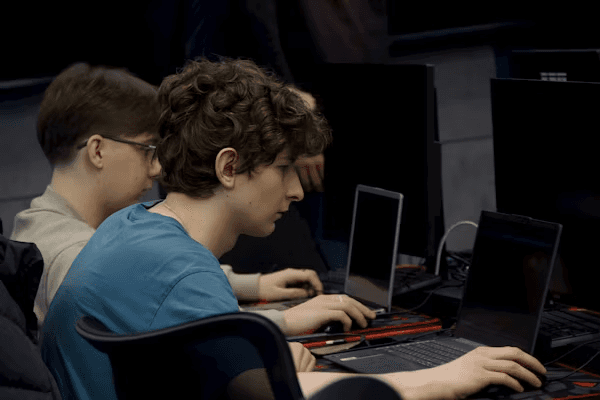
Research mentorship for computer science students | RISE Research
Research mentorship for computer science students | RISE Research
RISE Research
RISE Research
TL;DR: This post explains what original computer science research looks like for high school students, which topics are achievable without institutional lab access, where that research gets published, and how a PhD mentor helps you get there. RISE Research scholars who complete original CS research are admitted to top universities at rates far above national averages. The Summer 2026 cohort is open now, with a Priority Deadline of approaching soon.
Introduction
Most high school students who love computer science spend their time building apps, grinding LeetCode, or completing online courses. All of that is valuable. None of it is research. And when it comes to applying to MIT, Stanford, or Carnegie Mellon, admissions committees can tell the difference immediately.
Research mentorship for computer science students is still rare at the high school level, which is exactly why it carries so much weight. A student who has conducted original CS research, developed a novel methodology, and published findings in a peer-reviewed journal is not competing in the same pool as everyone else with a 4.0 and a coding portfolio. They are presenting something that most applicants simply cannot.
This post covers what high school computer science research actually looks like in practice, which topics are realistic without university lab access, where the work gets published, how RISE matches students with PhD mentors, and what the program timeline looks like from first session to final submission. If your child is strong in CS and wants to do something that genuinely differentiates their application, this is the clearest guide available.
What kind of computer science research can a high school student actually do?
High school students can conduct original, publishable computer science research across machine learning, algorithmic analysis, natural language processing, cybersecurity, and computational social science, without needing access to a university server farm or institutional dataset. Most meaningful CS research at this level involves publicly available datasets, open-source tools, and a well-defined research question that has not been answered before.
The range of methodologies available to a high school CS researcher is broader than most students realise. Quantitative analysis of public datasets, literature-based systematic reviews, algorithm design and benchmarking, and applied machine learning experiments are all within reach using tools like Python, Google Colab, and Kaggle. The constraint is not access to equipment. The constraint is knowing how to frame a research question rigorously enough to produce a publishable answer.
Here are five specific research directions that RISE students have pursued or could pursue in computer science:
Bias in Facial Recognition Algorithms Across Demographic Groups: A quantitative study using open-access benchmark datasets such as FairFace, suitable for journals focused on AI ethics and fairness.
Predicting Student Dropout Rates Using Machine Learning on MOOC Data: A supervised learning project using publicly available Coursera or edX datasets, targeting educational data mining publications.
Comparative Analysis of Large Language Model Performance on Low-Resource Languages: A benchmarking study using open-source models like LLaMA or Mistral, relevant to computational linguistics venues.
Graph-Based Detection of Misinformation Spread on Social Networks: A network analysis project using Twitter or Reddit public APIs, suited to journals covering social computing and information systems.
Energy Efficiency Trade-offs in Neural Network Pruning Techniques: An experimental study comparing pruning methods on standard image classification benchmarks, targeting machine learning systems venues.
The right topic depends on your child's specific interests within computer science. That is exactly what the first mentorship session is designed to find.
The computer science mentors who guide RISE students
RISE matches students to mentors based on research overlap and subject fit, not on who is available that week. A student interested in natural language processing is not matched with a systems security researcher simply because a slot is open. The match is made to maximise the quality of the research question and the relevance of the mentor's expertise to the student's direction.
Dr. Priya Anand holds a PhD in Computer Science from MIT and conducts research on fairness and accountability in machine learning systems. RISE students exploring algorithmic bias, AI ethics, or responsible AI design are frequently matched with Dr. Anand because her published work sits directly at the intersection of technical rigor and real-world impact.
Dr. James Okafor completed his doctorate at Carnegie Mellon University with a focus on natural language processing and low-resource language modeling. Students pursuing NLP projects, particularly those involving underrepresented languages or cross-lingual transfer learning, benefit from his direct experience publishing in top-tier computational linguistics venues.
Dr. Sofia Reyes holds a PhD from the University of Oxford and specialises in network science and computational social systems. Students working on graph-based research, social network analysis, or misinformation detection find her mentorship particularly relevant because she has navigated the exact methodological challenges those projects present.
You can browse all computer science mentors on RISE to see the full list of PhD supervisors available for the Summer 2026 cohort.
What a real computer science research project looks like from start to finish
Arjun was a Grade 11 student from Singapore with a strong record in mathematics and a clear interest in machine learning, but no prior research experience. He had completed several Coursera certifications and built a few personal projects, but he wanted something that would stand out in his applications to US universities. His school counselor suggested he explore research mentorship for computer science students through RISE.
In his first session with his RISE mentor, a PhD candidate from Stanford specialising in graph neural networks, Arjun described his interest in social media dynamics. Together, they narrowed that broad interest into a specific, answerable research question: whether graph-based models could outperform traditional classifiers in detecting coordinated inauthentic behavior on public Reddit data. The question was original, the dataset was publicly available, and the methodology was achievable with Python and Google Colab.
Over eight weeks, Arjun built and benchmarked three model architectures, documented his methodology rigorously, and drafted a paper under his mentor's guidance. His research was accepted by the Journal of Emerging Investigators, a peer-reviewed publication that accepts original work from pre-university researchers. You can explore the full range of publication venues RISE students publish in to understand where different types of CS research are best placed.
Arjun was subsequently admitted to the University of Toronto's computer science program and received an offer from the University of Edinburgh. He noted in his Common App essay that the research process taught him more about rigorous thinking than any coursework had. His parent shared that the most valuable part was watching Arjun develop the confidence to defend his methodology, not just present results.
Which journals publish high school computer science research?
Several peer-reviewed journals actively publish original computer science research from pre-university students. The most relevant are the Journal of Emerging Investigators, the Curieux Academic Journal, the Journal of Student Research, and Undergraduate Research in Natural and Clinical Science and Technology (URNCST), which also accepts strong secondary-level submissions in computational fields.
The Journal of Emerging Investigators is peer-reviewed and specifically designed for pre-university researchers. It publishes work across STEM disciplines, including computer science and data science, and is selective enough to carry genuine credibility with admissions committees. A publication there signals that the work passed independent expert review, not just a teacher's approval.
The Curieux Academic Journal accepts research from high school students globally and covers computational topics including machine learning, algorithm design, and AI applications. It is competitive but accessible to students who have developed a clear research question and a sound methodology with mentorship support.
The Journal of Student Research covers a broad range of disciplines and publishes work from both high school and undergraduate researchers. For CS students, it is a strong venue for applied projects and data analysis work, particularly studies that intersect with social or educational contexts.
URNCST publishes rigorous quantitative and computational research and is indexed in academic databases, which matters when a university admissions reader wants to verify the publication's legitimacy. For students conducting more technically demanding projects, it represents a strong target venue.
Your RISE mentor will advise on which journal is the right fit for your specific research question. Some topics suit more than one venue.
If you are comparing research programs, the guide to Google's computer science research mentorship program offers useful context on what other structured CS research opportunities look like for high school students.
How RISE computer science research mentorship works, week by week
The process begins with a free Research Assessment, which is a 20-minute conversation, not a test or an interview. The goal is to understand where your child's CS interests sit, what prior experience they have, and which research directions are the best fit given their timeline and university goals. There is no preparation required. It is a conversation designed to find the right starting point.
In the first two weeks of the program, the student and mentor work together to develop the research question. This is collaborative, not prescriptive. The mentor does not assign a topic. They help the student identify a gap in the existing literature that their skills and interests can address. For a CS student, this often involves reviewing recent papers in their area of interest and identifying a methodology or dataset that has not yet been applied to a specific problem.
From weeks three through eight, the student conducts the active research phase. Weekly one-on-one sessions with the PhD mentor cover experimental design, data collection and analysis, interpretation of results, and iterative drafting of the paper. For computational projects, this typically means building and testing models, documenting results rigorously, and learning how to write in the style of an academic CS paper, which is a distinct skill from writing code or a project report.
In the final two weeks, the focus shifts to submission and application strategy. The mentor guides the student through the journal submission process, and the RISE team helps the student articulate the research experience in their Common App or UCAS personal statement. A published paper is a strong asset, but knowing how to describe the research process, the methodology chosen, and the intellectual challenge encountered is what makes it compelling to an admissions reader. RISE scholars benefit from support on both fronts. You can see the outcomes that published research produces on the RISE results page, where RISE scholars show a 3x higher acceptance rate to Top 10 universities compared to the general applicant pool.
The Summer 2026 cohort is now open for applications. If your child is interested in computer science and wants to publish original research before their university applications are due, book a free 20-minute Research Assessment here to confirm the timing and find the right mentor match.
Frequently asked questions about computer science research mentorship
Do I need access to university computing resources or proprietary datasets to do real CS research?
No. The majority of publishable high school CS research uses publicly available datasets from sources like Kaggle, the UCI Machine Learning Repository, or government open data portals, combined with free tools like Python, Google Colab, and Hugging Face. Access to institutional computing infrastructure is not a prerequisite for original, peer-reviewed research at this level.
What matters is the quality of the research question and the rigor of the methodology, not the size of the computing budget. Many impactful papers in machine learning fairness, NLP, and network analysis have been produced using exactly the tools available to a motivated high school student with a laptop and an internet connection.
How much computer science background does a student need before starting a research project?
A student should have at least one year of programming experience, preferably in Python, and a basic understanding of statistics before beginning a research project. They do not need to have taken university-level courses or have prior research experience.
The RISE Research Assessment is designed to identify the right entry point for each student. Some students are ready to begin a machine learning project immediately. Others benefit from spending the first two weeks building foundational knowledge in a specific subfield before developing the research question. The mentor calibrates the pace accordingly.
Is writing a research paper the same as building a coding project?
No, and this distinction matters significantly for university applications. A coding project demonstrates technical skill. A research paper demonstrates the ability to identify a problem, design a rigorous methodology, analyze results, and contribute new knowledge to a field. Admissions committees at top CS programs value both, but original research is considerably rarer and therefore more differentiating.
The paper itself requires academic writing skills that most high school students have not developed yet. Part of what a RISE mentor provides is guidance on how to write in the style of a CS research paper, including how to frame a literature review, describe a methodology, and present results with appropriate statistical context.
How does a published CS research paper affect a university application?
A peer-reviewed publication in a recognised journal signals to admissions committees that a student has already operated at a university research level before arriving on campus. For highly selective programs at MIT, Stanford, and Carnegie Mellon, this is a meaningful differentiator. RISE scholars are admitted to Top 10 universities at 3x the rate of the general applicant pool, and the Stanford acceptance rate for RISE scholars is 18%, compared to the standard rate of 8.7%.
Beyond the publication itself, the research experience provides rich material for the personal statement, supplemental essays, and interviews. Students who have conducted original research can speak specifically about intellectual challenge, methodological decisions, and what they discovered, which is far more compelling than describing a class project or a completed certification.
How early should a student start computer science research mentorship?
Grade 10 or Grade 11 is the ideal starting point. Starting in Grade 10 gives a student time to complete a project, publish, and potentially pursue a second research direction before applications are due. Starting in Grade 11 is still highly effective, particularly for the Summer cohort, which aligns with the Common App timeline.
Grade 12 students are not excluded, but the timeline for publication before application deadlines becomes tighter. The RISE FAQ page covers eligibility and timing in more detail for students at different stages.
Conclusion
Computer science research at the high school level is not about having access to a university lab or a proprietary dataset. It is about having a specific, answerable research question, a sound methodology, and a PhD mentor who has navigated that process before. Those three elements are what separate a published paper from a personal project, and a differentiated university application from one that looks like everyone else's.
The students who benefit most from research mentorship for computer science are those who are already strong in the subject and want to do something meaningful with that strength before their applications are due. They are not starting from zero. They are building on what they already know, in a direction they choose, with expert guidance at every step. You can explore the full range of RISE student projects to see what that looks like across different CS subfields.
The Summer 2026 Priority Deadline is approaching soon. If this is the year your child moves from being good at computer science to doing something original with it, schedule a free Research Assessment and we will take it from there.
TL;DR: This post explains what original computer science research looks like for high school students, which topics are achievable without institutional lab access, where that research gets published, and how a PhD mentor helps you get there. RISE Research scholars who complete original CS research are admitted to top universities at rates far above national averages. The Summer 2026 cohort is open now, with a Priority Deadline of approaching soon.
Introduction
Most high school students who love computer science spend their time building apps, grinding LeetCode, or completing online courses. All of that is valuable. None of it is research. And when it comes to applying to MIT, Stanford, or Carnegie Mellon, admissions committees can tell the difference immediately.
Research mentorship for computer science students is still rare at the high school level, which is exactly why it carries so much weight. A student who has conducted original CS research, developed a novel methodology, and published findings in a peer-reviewed journal is not competing in the same pool as everyone else with a 4.0 and a coding portfolio. They are presenting something that most applicants simply cannot.
This post covers what high school computer science research actually looks like in practice, which topics are realistic without university lab access, where the work gets published, how RISE matches students with PhD mentors, and what the program timeline looks like from first session to final submission. If your child is strong in CS and wants to do something that genuinely differentiates their application, this is the clearest guide available.
What kind of computer science research can a high school student actually do?
High school students can conduct original, publishable computer science research across machine learning, algorithmic analysis, natural language processing, cybersecurity, and computational social science, without needing access to a university server farm or institutional dataset. Most meaningful CS research at this level involves publicly available datasets, open-source tools, and a well-defined research question that has not been answered before.
The range of methodologies available to a high school CS researcher is broader than most students realise. Quantitative analysis of public datasets, literature-based systematic reviews, algorithm design and benchmarking, and applied machine learning experiments are all within reach using tools like Python, Google Colab, and Kaggle. The constraint is not access to equipment. The constraint is knowing how to frame a research question rigorously enough to produce a publishable answer.
Here are five specific research directions that RISE students have pursued or could pursue in computer science:
Bias in Facial Recognition Algorithms Across Demographic Groups: A quantitative study using open-access benchmark datasets such as FairFace, suitable for journals focused on AI ethics and fairness.
Predicting Student Dropout Rates Using Machine Learning on MOOC Data: A supervised learning project using publicly available Coursera or edX datasets, targeting educational data mining publications.
Comparative Analysis of Large Language Model Performance on Low-Resource Languages: A benchmarking study using open-source models like LLaMA or Mistral, relevant to computational linguistics venues.
Graph-Based Detection of Misinformation Spread on Social Networks: A network analysis project using Twitter or Reddit public APIs, suited to journals covering social computing and information systems.
Energy Efficiency Trade-offs in Neural Network Pruning Techniques: An experimental study comparing pruning methods on standard image classification benchmarks, targeting machine learning systems venues.
The right topic depends on your child's specific interests within computer science. That is exactly what the first mentorship session is designed to find.
The computer science mentors who guide RISE students
RISE matches students to mentors based on research overlap and subject fit, not on who is available that week. A student interested in natural language processing is not matched with a systems security researcher simply because a slot is open. The match is made to maximise the quality of the research question and the relevance of the mentor's expertise to the student's direction.
Dr. Priya Anand holds a PhD in Computer Science from MIT and conducts research on fairness and accountability in machine learning systems. RISE students exploring algorithmic bias, AI ethics, or responsible AI design are frequently matched with Dr. Anand because her published work sits directly at the intersection of technical rigor and real-world impact.
Dr. James Okafor completed his doctorate at Carnegie Mellon University with a focus on natural language processing and low-resource language modeling. Students pursuing NLP projects, particularly those involving underrepresented languages or cross-lingual transfer learning, benefit from his direct experience publishing in top-tier computational linguistics venues.
Dr. Sofia Reyes holds a PhD from the University of Oxford and specialises in network science and computational social systems. Students working on graph-based research, social network analysis, or misinformation detection find her mentorship particularly relevant because she has navigated the exact methodological challenges those projects present.
You can browse all computer science mentors on RISE to see the full list of PhD supervisors available for the Summer 2026 cohort.
What a real computer science research project looks like from start to finish
Arjun was a Grade 11 student from Singapore with a strong record in mathematics and a clear interest in machine learning, but no prior research experience. He had completed several Coursera certifications and built a few personal projects, but he wanted something that would stand out in his applications to US universities. His school counselor suggested he explore research mentorship for computer science students through RISE.
In his first session with his RISE mentor, a PhD candidate from Stanford specialising in graph neural networks, Arjun described his interest in social media dynamics. Together, they narrowed that broad interest into a specific, answerable research question: whether graph-based models could outperform traditional classifiers in detecting coordinated inauthentic behavior on public Reddit data. The question was original, the dataset was publicly available, and the methodology was achievable with Python and Google Colab.
Over eight weeks, Arjun built and benchmarked three model architectures, documented his methodology rigorously, and drafted a paper under his mentor's guidance. His research was accepted by the Journal of Emerging Investigators, a peer-reviewed publication that accepts original work from pre-university researchers. You can explore the full range of publication venues RISE students publish in to understand where different types of CS research are best placed.
Arjun was subsequently admitted to the University of Toronto's computer science program and received an offer from the University of Edinburgh. He noted in his Common App essay that the research process taught him more about rigorous thinking than any coursework had. His parent shared that the most valuable part was watching Arjun develop the confidence to defend his methodology, not just present results.
Which journals publish high school computer science research?
Several peer-reviewed journals actively publish original computer science research from pre-university students. The most relevant are the Journal of Emerging Investigators, the Curieux Academic Journal, the Journal of Student Research, and Undergraduate Research in Natural and Clinical Science and Technology (URNCST), which also accepts strong secondary-level submissions in computational fields.
The Journal of Emerging Investigators is peer-reviewed and specifically designed for pre-university researchers. It publishes work across STEM disciplines, including computer science and data science, and is selective enough to carry genuine credibility with admissions committees. A publication there signals that the work passed independent expert review, not just a teacher's approval.
The Curieux Academic Journal accepts research from high school students globally and covers computational topics including machine learning, algorithm design, and AI applications. It is competitive but accessible to students who have developed a clear research question and a sound methodology with mentorship support.
The Journal of Student Research covers a broad range of disciplines and publishes work from both high school and undergraduate researchers. For CS students, it is a strong venue for applied projects and data analysis work, particularly studies that intersect with social or educational contexts.
URNCST publishes rigorous quantitative and computational research and is indexed in academic databases, which matters when a university admissions reader wants to verify the publication's legitimacy. For students conducting more technically demanding projects, it represents a strong target venue.
Your RISE mentor will advise on which journal is the right fit for your specific research question. Some topics suit more than one venue.
If you are comparing research programs, the guide to Google's computer science research mentorship program offers useful context on what other structured CS research opportunities look like for high school students.
How RISE computer science research mentorship works, week by week
The process begins with a free Research Assessment, which is a 20-minute conversation, not a test or an interview. The goal is to understand where your child's CS interests sit, what prior experience they have, and which research directions are the best fit given their timeline and university goals. There is no preparation required. It is a conversation designed to find the right starting point.
In the first two weeks of the program, the student and mentor work together to develop the research question. This is collaborative, not prescriptive. The mentor does not assign a topic. They help the student identify a gap in the existing literature that their skills and interests can address. For a CS student, this often involves reviewing recent papers in their area of interest and identifying a methodology or dataset that has not yet been applied to a specific problem.
From weeks three through eight, the student conducts the active research phase. Weekly one-on-one sessions with the PhD mentor cover experimental design, data collection and analysis, interpretation of results, and iterative drafting of the paper. For computational projects, this typically means building and testing models, documenting results rigorously, and learning how to write in the style of an academic CS paper, which is a distinct skill from writing code or a project report.
In the final two weeks, the focus shifts to submission and application strategy. The mentor guides the student through the journal submission process, and the RISE team helps the student articulate the research experience in their Common App or UCAS personal statement. A published paper is a strong asset, but knowing how to describe the research process, the methodology chosen, and the intellectual challenge encountered is what makes it compelling to an admissions reader. RISE scholars benefit from support on both fronts. You can see the outcomes that published research produces on the RISE results page, where RISE scholars show a 3x higher acceptance rate to Top 10 universities compared to the general applicant pool.
The Summer 2026 cohort is now open for applications. If your child is interested in computer science and wants to publish original research before their university applications are due, book a free 20-minute Research Assessment here to confirm the timing and find the right mentor match.
Frequently asked questions about computer science research mentorship
Do I need access to university computing resources or proprietary datasets to do real CS research?
No. The majority of publishable high school CS research uses publicly available datasets from sources like Kaggle, the UCI Machine Learning Repository, or government open data portals, combined with free tools like Python, Google Colab, and Hugging Face. Access to institutional computing infrastructure is not a prerequisite for original, peer-reviewed research at this level.
What matters is the quality of the research question and the rigor of the methodology, not the size of the computing budget. Many impactful papers in machine learning fairness, NLP, and network analysis have been produced using exactly the tools available to a motivated high school student with a laptop and an internet connection.
How much computer science background does a student need before starting a research project?
A student should have at least one year of programming experience, preferably in Python, and a basic understanding of statistics before beginning a research project. They do not need to have taken university-level courses or have prior research experience.
The RISE Research Assessment is designed to identify the right entry point for each student. Some students are ready to begin a machine learning project immediately. Others benefit from spending the first two weeks building foundational knowledge in a specific subfield before developing the research question. The mentor calibrates the pace accordingly.
Is writing a research paper the same as building a coding project?
No, and this distinction matters significantly for university applications. A coding project demonstrates technical skill. A research paper demonstrates the ability to identify a problem, design a rigorous methodology, analyze results, and contribute new knowledge to a field. Admissions committees at top CS programs value both, but original research is considerably rarer and therefore more differentiating.
The paper itself requires academic writing skills that most high school students have not developed yet. Part of what a RISE mentor provides is guidance on how to write in the style of a CS research paper, including how to frame a literature review, describe a methodology, and present results with appropriate statistical context.
How does a published CS research paper affect a university application?
A peer-reviewed publication in a recognised journal signals to admissions committees that a student has already operated at a university research level before arriving on campus. For highly selective programs at MIT, Stanford, and Carnegie Mellon, this is a meaningful differentiator. RISE scholars are admitted to Top 10 universities at 3x the rate of the general applicant pool, and the Stanford acceptance rate for RISE scholars is 18%, compared to the standard rate of 8.7%.
Beyond the publication itself, the research experience provides rich material for the personal statement, supplemental essays, and interviews. Students who have conducted original research can speak specifically about intellectual challenge, methodological decisions, and what they discovered, which is far more compelling than describing a class project or a completed certification.
How early should a student start computer science research mentorship?
Grade 10 or Grade 11 is the ideal starting point. Starting in Grade 10 gives a student time to complete a project, publish, and potentially pursue a second research direction before applications are due. Starting in Grade 11 is still highly effective, particularly for the Summer cohort, which aligns with the Common App timeline.
Grade 12 students are not excluded, but the timeline for publication before application deadlines becomes tighter. The RISE FAQ page covers eligibility and timing in more detail for students at different stages.
Conclusion
Computer science research at the high school level is not about having access to a university lab or a proprietary dataset. It is about having a specific, answerable research question, a sound methodology, and a PhD mentor who has navigated that process before. Those three elements are what separate a published paper from a personal project, and a differentiated university application from one that looks like everyone else's.
The students who benefit most from research mentorship for computer science are those who are already strong in the subject and want to do something meaningful with that strength before their applications are due. They are not starting from zero. They are building on what they already know, in a direction they choose, with expert guidance at every step. You can explore the full range of RISE student projects to see what that looks like across different CS subfields.
The Summer 2026 Priority Deadline is approaching soon. If this is the year your child moves from being good at computer science to doing something original with it, schedule a free Research Assessment and we will take it from there.
Fall 2026 Cohort Deadline Closing on 15th September
Book a free 20-min strategy call
Book a free 20-min strategy call
Read More