>
>
>
Research mentorship for biomedical engineering students
Research mentorship for biomedical engineering students
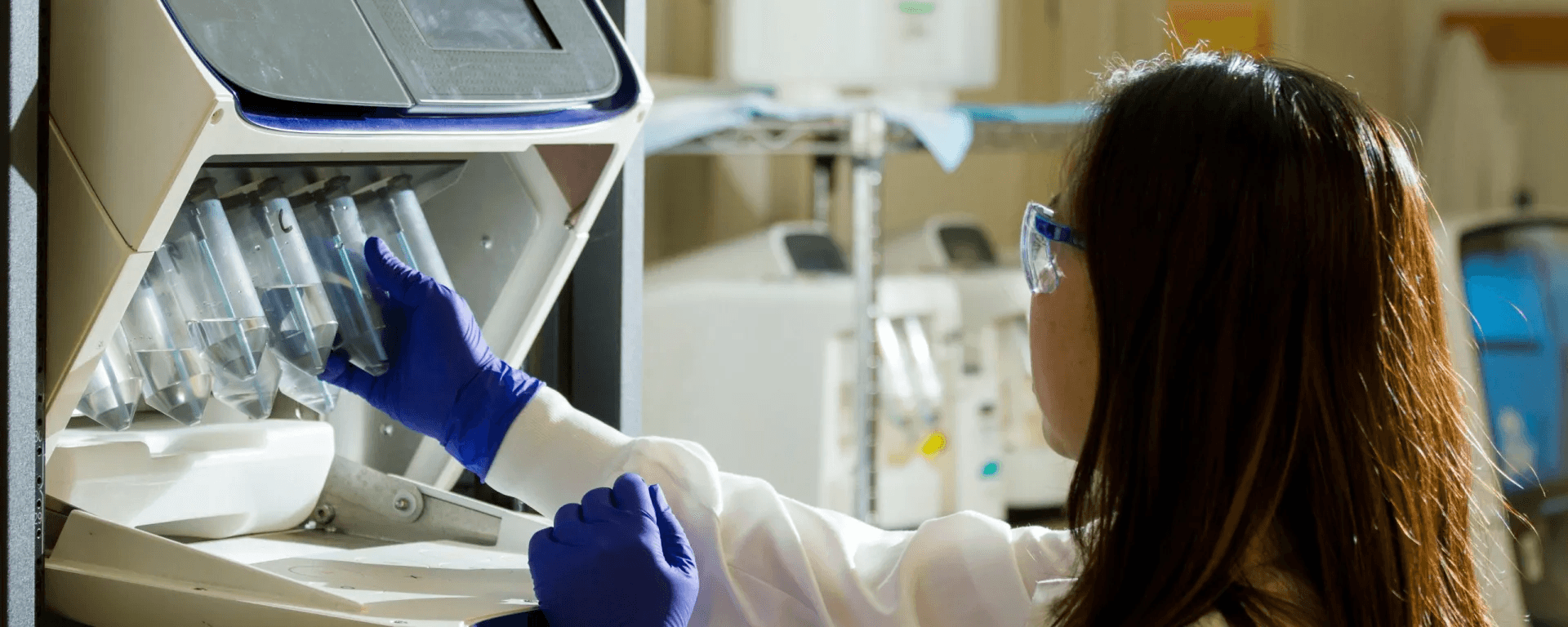
Research mentorship for biomedical engineering students | RISE Research
Research mentorship for biomedical engineering students | RISE Research
RISE Research
RISE Research
TL;DR: Research mentorship for biomedical engineering students gives high schoolers the tools to conduct original, university-level research under PhD mentors from Ivy League and Oxbridge institutions. RISE Scholars publish in peer-reviewed journals, win national and international awards, and gain admission to top universities at rates up to 3x higher than the national average. The Summer 2026 Cohort priority deadline is approaching soon. Schedule your Research Assessment today.
Can a High School Student Actually Do Biomedical Engineering Research?
Most students assume biomedical engineering research requires a university lab, years of coursework, and a graduate degree. That assumption is wrong. High school students across the world are already designing computational models of drug delivery systems, analyzing biomechanical data from wearable sensors, and publishing original findings in peer-reviewed journals. The barrier is not age or access to equipment. The barrier is guidance.
Research mentorship for biomedical engineering students changes that equation entirely. With the right PhD mentor, a motivated student in Grade 9 through Grade 12 can move from curiosity to publication in a single academic term. RISE Global Education has built a program specifically designed to make that outcome repeatable and credible. RISE Scholars do not produce science fair projects. They produce original research that advances real academic conversations in biomedical science and engineering.
The field itself rewards early entrants. Biomedical engineering sits at the intersection of biology, physics, materials science, and clinical medicine. That breadth means a high school student can contribute meaningfully without mastering every subdiscipline. A focused research question, a rigorous methodology, and expert mentorship are enough to produce work that journals and universities take seriously.
What Does High School Biomedical Engineering Research Actually Look Like?
High school biomedical engineering research is not a literature review or a class project. It is original inquiry that produces a new finding, model, or analysis. The methodology depends on the research question. Some projects are computational, using Python or MATLAB to simulate physiological systems. Others are data-driven, analyzing publicly available clinical datasets. Some involve lab-based work coordinated through a mentor's university affiliation.
RISE Scholars in biomedical engineering have pursued projects such as:
"A Computational Analysis of Drug Diffusion Rates Across Lipid Bilayer Membranes Using Finite Element Modeling"
"Machine Learning Classification of Cardiac Arrhythmias Using Wearable ECG Data from Open-Access Clinical Repositories"
"Comparative Biomechanical Analysis of Prosthetic Ankle Designs for Pediatric Amputees: A Simulation Study"
"Evaluating the Efficacy of Biodegradable Polymer Scaffolds in Bone Tissue Engineering: A Systematic Review and Meta-Analysis"
"A Quantitative Assessment of Glucose Biosensor Sensitivity Across pH Variations in Simulated Blood Plasma"
Each of these projects is specific, defensible, and publishable. None of them required a student to build a physical lab from scratch. All of them required a student who could ask a precise question and work systematically toward an answer. That is exactly what RISE Research develops. You can explore a broader range of completed student work on the RISE Projects page.
The Mentors Behind the Research
The quality of a research mentorship program is determined entirely by the quality of its mentors. RISE maintains a network of 500+ PhD mentors affiliated with Ivy League, Oxbridge, and other leading research universities. Every mentor is matched to a student based on research focus, academic background, and project goals. The match is not random. It is deliberate and specific.
In biomedical engineering, our representative mentors illustrate the depth of the RISE network. Dr. Sudaryo holds a PhD in Biomedical Engineering from MIT, where her doctoral research focused on microfluidic systems for cancer diagnostics. She mentors RISE Scholars working on lab-on-a-chip technologies and biosensor design.
Both mentors bring active publication records and institutional affiliations that lend credibility to every paper they co-supervise. When a RISE Scholar submits a manuscript to a peer-reviewed journal, the mentor's expertise is visible in the methodology, the literature review, and the discussion section. That depth is what separates RISE Research from generic tutoring or summer enrichment programs. Visit the RISE Mentors page to learn more about the selection process and mentor backgrounds.
Where Does High School Biomedical Engineering Research Get Published?
High school biomedical engineering research can be published in several peer-reviewed journals and academic venues that accept rigorous undergraduate and pre-undergraduate work. RISE Scholars have published in journals including the Journal of Emerging Investigators, Cureus (a peer-reviewed medical and scientific journal), the International Journal of High School Research, and conference proceedings from the American Institute for Medical and Biological Engineering (AIMBE). Each venue applies a genuine peer review process, which means acceptance carries real academic weight.
Peer review matters for two reasons. First, it validates the quality of the work. A published paper confirms that independent experts found the methodology sound and the conclusions defensible. Second, it creates a permanent, citable record. University admissions officers at top institutions increasingly recognize peer-reviewed publication as a signal of exceptional academic potential. RISE publications span more than 40 journals across disciplines, and biomedical engineering is one of the program's strongest areas. The 90% publication success rate across all RISE Scholars reflects the rigor of the mentorship process, not luck.
How the RISE Research Program Works
RISE Research operates as a selective, 1-on-1 mentorship program. Every student works directly with a single PhD mentor throughout the entire research process. There are no group sessions, no cohort lectures, and no generic curriculum. The program is built around four structured stages.
The first stage is the Research Assessment. RISE evaluates each applicant's academic background, interests, and goals before placing them in the program. This ensures the mentor match is precise and the research direction is genuinely suited to the student's strengths. Students interested in biomedical engineering are assessed on their science and mathematics foundation, their familiarity with biological systems, and their capacity for independent inquiry.
The second stage is Topic Development. The student and mentor work together to identify a specific, researchable question within biomedical engineering. This stage typically takes two to three weeks. The mentor helps the student survey existing literature, identify gaps, and formulate a hypothesis or research objective that is both original and achievable within the program timeline.
The third stage is Active Research. This is the longest phase, typically spanning eight to ten weeks. The student conducts the research under weekly guidance from their mentor. For computational projects, this means building and running models. For data-driven projects, this means collecting, cleaning, and analyzing datasets. The mentor reviews progress at each session, provides feedback on methodology, and helps the student interpret findings accurately.
The fourth stage is Submission. The mentor guides the student through manuscript preparation, journal selection, and the submission process. RISE's 90% publication success rate reflects both the quality of the research and the strategic approach to journal targeting. Students also receive support for presenting their work at academic competitions and conferences, which contributes to the awards and recognition that RISE Scholars earn each year.
If you are in Grade 9 through Grade 12 and want to conduct original biomedical engineering research under a PhD mentor, the Summer 2026 Cohort is now accepting applications. The priority admission deadline is approaching soon. Schedule your Research Assessment at RISE Global Education to secure your place.
Frequently Asked Questions About Biomedical Engineering Research Mentorship
Do I need lab access to do biomedical engineering research in high school?
No. Most high school biomedical engineering research projects at RISE are computational or data-driven and require only a computer and internet access. Students analyze open-access clinical datasets, build physiological simulations, or conduct systematic reviews. Some projects involve wet lab components coordinated through the mentor's university, but these are optional and arranged case by case.
The majority of publishable biomedical engineering research at the high school level does not depend on physical lab access. RISE mentors design project scopes that match each student's available resources. The quality of the thinking and the rigor of the methodology determine the outcome, not the equipment available.
How does research mentorship for biomedical engineering students improve university admissions?
RISE Scholars are accepted to Top 10 universities at a rate 3x higher than the national average. For Stanford, the acceptance rate for RISE Scholars is 18% compared to the standard 8.7%. For UPenn, it is 32% compared to the standard 3.8%. A peer-reviewed publication in biomedical engineering demonstrates intellectual initiative, scientific rigor, and the ability to contribute to academic knowledge. These are qualities that top admissions offices actively seek.
Biomedical engineering is one of the most competitive intended majors at selective universities. A published research paper in the field signals genuine commitment and capability. It transforms an application from a list of grades and test scores into evidence of real academic achievement.
What grade should I be in to start biomedical engineering research?
RISE Research accepts students in Grades 9 through 12. Starting earlier gives students more time to complete multiple projects, build a stronger publication record, and present at competitions before applying to university. Grade 10 and Grade 11 are the most common entry points, as students have enough science background to engage with complex topics but still have time to benefit fully from the program before applications.
Grade 12 students can still participate and benefit significantly. A submitted or accepted manuscript during the application cycle is a powerful addition to any university application, even if the formal publication date falls after submission.
What makes RISE different from other research programs for high school students?
RISE Research is a 1-on-1 program. Every student works exclusively with a single PhD mentor matched to their specific research interest in biomedical engineering. There are no group projects, no generic modules, and no pre-written research templates. The research is original, the mentorship is expert, and the outcomes are verifiable through peer-reviewed publication records.
Other programs may offer research exposure or lab shadowing. RISE produces authorship. That distinction is meaningful to universities, scholarship committees, and academic journals. You can review the verified outcomes of past RISE Scholars on the RISE Results page.
Can international students join the RISE biomedical engineering mentorship program?
Yes. RISE Research is a fully remote program. Students from any country can participate. All mentorship sessions take place online, and all research activities are conducted digitally. RISE Scholars come from over 50 countries, and the program is specifically designed to serve high-achieving students globally, regardless of their geographic location or the resources available at their local school.
International students often find that a peer-reviewed publication in biomedical engineering is especially impactful in their university applications, as it provides an internationally recognized credential that transcends differences in grading systems and curriculum standards.
The Next Step for Serious Biomedical Engineering Students
Biomedical engineering is a field that rewards precision, curiosity, and the willingness to ask questions that do not yet have answers. High school is not too early to start. The students who arrive at university with published research, verified mentorship, and a track record of original inquiry are the students who shape their own academic trajectories from day one.
RISE Research exists to make that outcome accessible to students who are ready to do the work. The program is selective because the outcomes are real. If you are a student in Grades 9 through 12 with a genuine interest in biomedical engineering, the Summer 2026 Cohort is your opportunity. The priority admission deadline is approaching soon. Schedule your Research Assessment at RISE Global Education and take the first step toward publishing original research that defines your academic future. You may also find it valuable to explore related programs for students interested in adjacent fields, including research mentorship for biology students and research mentorship for physics students.
TL;DR: Research mentorship for biomedical engineering students gives high schoolers the tools to conduct original, university-level research under PhD mentors from Ivy League and Oxbridge institutions. RISE Scholars publish in peer-reviewed journals, win national and international awards, and gain admission to top universities at rates up to 3x higher than the national average. The Summer 2026 Cohort priority deadline is approaching soon. Schedule your Research Assessment today.
Can a High School Student Actually Do Biomedical Engineering Research?
Most students assume biomedical engineering research requires a university lab, years of coursework, and a graduate degree. That assumption is wrong. High school students across the world are already designing computational models of drug delivery systems, analyzing biomechanical data from wearable sensors, and publishing original findings in peer-reviewed journals. The barrier is not age or access to equipment. The barrier is guidance.
Research mentorship for biomedical engineering students changes that equation entirely. With the right PhD mentor, a motivated student in Grade 9 through Grade 12 can move from curiosity to publication in a single academic term. RISE Global Education has built a program specifically designed to make that outcome repeatable and credible. RISE Scholars do not produce science fair projects. They produce original research that advances real academic conversations in biomedical science and engineering.
The field itself rewards early entrants. Biomedical engineering sits at the intersection of biology, physics, materials science, and clinical medicine. That breadth means a high school student can contribute meaningfully without mastering every subdiscipline. A focused research question, a rigorous methodology, and expert mentorship are enough to produce work that journals and universities take seriously.
What Does High School Biomedical Engineering Research Actually Look Like?
High school biomedical engineering research is not a literature review or a class project. It is original inquiry that produces a new finding, model, or analysis. The methodology depends on the research question. Some projects are computational, using Python or MATLAB to simulate physiological systems. Others are data-driven, analyzing publicly available clinical datasets. Some involve lab-based work coordinated through a mentor's university affiliation.
RISE Scholars in biomedical engineering have pursued projects such as:
"A Computational Analysis of Drug Diffusion Rates Across Lipid Bilayer Membranes Using Finite Element Modeling"
"Machine Learning Classification of Cardiac Arrhythmias Using Wearable ECG Data from Open-Access Clinical Repositories"
"Comparative Biomechanical Analysis of Prosthetic Ankle Designs for Pediatric Amputees: A Simulation Study"
"Evaluating the Efficacy of Biodegradable Polymer Scaffolds in Bone Tissue Engineering: A Systematic Review and Meta-Analysis"
"A Quantitative Assessment of Glucose Biosensor Sensitivity Across pH Variations in Simulated Blood Plasma"
Each of these projects is specific, defensible, and publishable. None of them required a student to build a physical lab from scratch. All of them required a student who could ask a precise question and work systematically toward an answer. That is exactly what RISE Research develops. You can explore a broader range of completed student work on the RISE Projects page.
The Mentors Behind the Research
The quality of a research mentorship program is determined entirely by the quality of its mentors. RISE maintains a network of 500+ PhD mentors affiliated with Ivy League, Oxbridge, and other leading research universities. Every mentor is matched to a student based on research focus, academic background, and project goals. The match is not random. It is deliberate and specific.
In biomedical engineering, our representative mentors illustrate the depth of the RISE network. Dr. Sudaryo holds a PhD in Biomedical Engineering from MIT, where her doctoral research focused on microfluidic systems for cancer diagnostics. She mentors RISE Scholars working on lab-on-a-chip technologies and biosensor design.
Both mentors bring active publication records and institutional affiliations that lend credibility to every paper they co-supervise. When a RISE Scholar submits a manuscript to a peer-reviewed journal, the mentor's expertise is visible in the methodology, the literature review, and the discussion section. That depth is what separates RISE Research from generic tutoring or summer enrichment programs. Visit the RISE Mentors page to learn more about the selection process and mentor backgrounds.
Where Does High School Biomedical Engineering Research Get Published?
High school biomedical engineering research can be published in several peer-reviewed journals and academic venues that accept rigorous undergraduate and pre-undergraduate work. RISE Scholars have published in journals including the Journal of Emerging Investigators, Cureus (a peer-reviewed medical and scientific journal), the International Journal of High School Research, and conference proceedings from the American Institute for Medical and Biological Engineering (AIMBE). Each venue applies a genuine peer review process, which means acceptance carries real academic weight.
Peer review matters for two reasons. First, it validates the quality of the work. A published paper confirms that independent experts found the methodology sound and the conclusions defensible. Second, it creates a permanent, citable record. University admissions officers at top institutions increasingly recognize peer-reviewed publication as a signal of exceptional academic potential. RISE publications span more than 40 journals across disciplines, and biomedical engineering is one of the program's strongest areas. The 90% publication success rate across all RISE Scholars reflects the rigor of the mentorship process, not luck.
How the RISE Research Program Works
RISE Research operates as a selective, 1-on-1 mentorship program. Every student works directly with a single PhD mentor throughout the entire research process. There are no group sessions, no cohort lectures, and no generic curriculum. The program is built around four structured stages.
The first stage is the Research Assessment. RISE evaluates each applicant's academic background, interests, and goals before placing them in the program. This ensures the mentor match is precise and the research direction is genuinely suited to the student's strengths. Students interested in biomedical engineering are assessed on their science and mathematics foundation, their familiarity with biological systems, and their capacity for independent inquiry.
The second stage is Topic Development. The student and mentor work together to identify a specific, researchable question within biomedical engineering. This stage typically takes two to three weeks. The mentor helps the student survey existing literature, identify gaps, and formulate a hypothesis or research objective that is both original and achievable within the program timeline.
The third stage is Active Research. This is the longest phase, typically spanning eight to ten weeks. The student conducts the research under weekly guidance from their mentor. For computational projects, this means building and running models. For data-driven projects, this means collecting, cleaning, and analyzing datasets. The mentor reviews progress at each session, provides feedback on methodology, and helps the student interpret findings accurately.
The fourth stage is Submission. The mentor guides the student through manuscript preparation, journal selection, and the submission process. RISE's 90% publication success rate reflects both the quality of the research and the strategic approach to journal targeting. Students also receive support for presenting their work at academic competitions and conferences, which contributes to the awards and recognition that RISE Scholars earn each year.
If you are in Grade 9 through Grade 12 and want to conduct original biomedical engineering research under a PhD mentor, the Summer 2026 Cohort is now accepting applications. The priority admission deadline is approaching soon. Schedule your Research Assessment at RISE Global Education to secure your place.
Frequently Asked Questions About Biomedical Engineering Research Mentorship
Do I need lab access to do biomedical engineering research in high school?
No. Most high school biomedical engineering research projects at RISE are computational or data-driven and require only a computer and internet access. Students analyze open-access clinical datasets, build physiological simulations, or conduct systematic reviews. Some projects involve wet lab components coordinated through the mentor's university, but these are optional and arranged case by case.
The majority of publishable biomedical engineering research at the high school level does not depend on physical lab access. RISE mentors design project scopes that match each student's available resources. The quality of the thinking and the rigor of the methodology determine the outcome, not the equipment available.
How does research mentorship for biomedical engineering students improve university admissions?
RISE Scholars are accepted to Top 10 universities at a rate 3x higher than the national average. For Stanford, the acceptance rate for RISE Scholars is 18% compared to the standard 8.7%. For UPenn, it is 32% compared to the standard 3.8%. A peer-reviewed publication in biomedical engineering demonstrates intellectual initiative, scientific rigor, and the ability to contribute to academic knowledge. These are qualities that top admissions offices actively seek.
Biomedical engineering is one of the most competitive intended majors at selective universities. A published research paper in the field signals genuine commitment and capability. It transforms an application from a list of grades and test scores into evidence of real academic achievement.
What grade should I be in to start biomedical engineering research?
RISE Research accepts students in Grades 9 through 12. Starting earlier gives students more time to complete multiple projects, build a stronger publication record, and present at competitions before applying to university. Grade 10 and Grade 11 are the most common entry points, as students have enough science background to engage with complex topics but still have time to benefit fully from the program before applications.
Grade 12 students can still participate and benefit significantly. A submitted or accepted manuscript during the application cycle is a powerful addition to any university application, even if the formal publication date falls after submission.
What makes RISE different from other research programs for high school students?
RISE Research is a 1-on-1 program. Every student works exclusively with a single PhD mentor matched to their specific research interest in biomedical engineering. There are no group projects, no generic modules, and no pre-written research templates. The research is original, the mentorship is expert, and the outcomes are verifiable through peer-reviewed publication records.
Other programs may offer research exposure or lab shadowing. RISE produces authorship. That distinction is meaningful to universities, scholarship committees, and academic journals. You can review the verified outcomes of past RISE Scholars on the RISE Results page.
Can international students join the RISE biomedical engineering mentorship program?
Yes. RISE Research is a fully remote program. Students from any country can participate. All mentorship sessions take place online, and all research activities are conducted digitally. RISE Scholars come from over 50 countries, and the program is specifically designed to serve high-achieving students globally, regardless of their geographic location or the resources available at their local school.
International students often find that a peer-reviewed publication in biomedical engineering is especially impactful in their university applications, as it provides an internationally recognized credential that transcends differences in grading systems and curriculum standards.
The Next Step for Serious Biomedical Engineering Students
Biomedical engineering is a field that rewards precision, curiosity, and the willingness to ask questions that do not yet have answers. High school is not too early to start. The students who arrive at university with published research, verified mentorship, and a track record of original inquiry are the students who shape their own academic trajectories from day one.
RISE Research exists to make that outcome accessible to students who are ready to do the work. The program is selective because the outcomes are real. If you are a student in Grades 9 through 12 with a genuine interest in biomedical engineering, the Summer 2026 Cohort is your opportunity. The priority admission deadline is approaching soon. Schedule your Research Assessment at RISE Global Education and take the first step toward publishing original research that defines your academic future. You may also find it valuable to explore related programs for students interested in adjacent fields, including research mentorship for biology students and research mentorship for physics students.
Fall 2026 Cohort Deadline Closing on 15th September
Book a free 20-min strategy call
Book a free 20-min strategy call
Read More