>
>
>
Research mentorship for bioethics students
Research mentorship for bioethics students
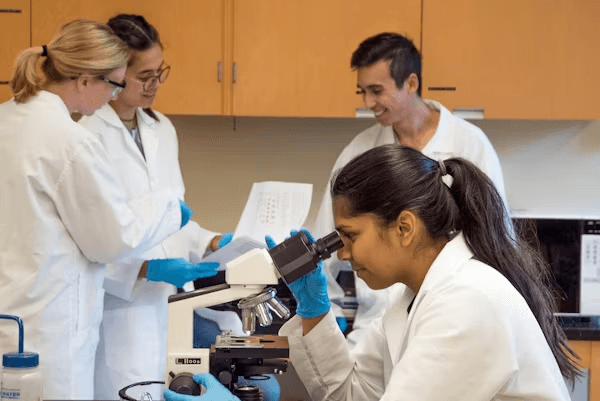
Research mentorship for bioethics students | RISE Research
Research mentorship for bioethics students | RISE Research
RISE Research
RISE Research
TL;DR: Research mentorship for bioethics students gives high schoolers a structured path to publish original work on topics like AI in medicine, genetic privacy, and clinical trial ethics. Under PhD mentors from Ivy League and Oxbridge institutions, RISE Scholars complete peer-reviewed research that strengthens university applications and earns global recognition. RISE Research reports a 90% publication success rate and acceptance rates to Top 10 universities that are 3x higher than the national average. The Summer 2026 Priority Deadline is approaching soon. Schedule your Research Assessment today.
Why Bioethics Research Sets High School Students Apart
Most high school students can name a bioethics controversy. Few can analyze one at a university level. That gap is exactly where research mentorship for bioethics students creates a decisive advantage in competitive university admissions.
Bioethics sits at the intersection of medicine, law, philosophy, and public policy. It asks the questions that science alone cannot answer: Who owns a patient's genetic data? When does artificial intelligence cross an ethical line in clinical decision-making? Should organ allocation prioritize social utility or individual rights? These are not abstract classroom debates. They are active research questions published in peer-reviewed journals every month.
Admissions officers at top universities receive thousands of applications from students who have taken AP Biology or Philosophy. They receive far fewer from students who have conducted and published original bioethics research. RISE Research is a selective 1-on-1 mentorship program that gives high school students in Grades 9 through 12 the tools, the mentors, and the methodology to produce that kind of work.
What Does High School Bioethics Research Actually Look Like?
High school bioethics research draws on both qualitative and quantitative methods. A student might conduct a systematic literature review of informed consent practices across clinical trials in low-income countries. Another might use survey data to analyze public attitudes toward CRISPR-based germline editing. A third might perform a comparative policy analysis of euthanasia legislation across five jurisdictions.
The defining feature of strong bioethics research is a clearly scoped argument supported by evidence from medical literature, legal documents, philosophical frameworks, and empirical data. RISE Scholars have pursued topics including:
"A Comparative Analysis of Informed Consent Standards in Pediatric Clinical Trials Across the United States and the European Union"
"Algorithmic Bias in AI-Assisted Diagnostic Tools: An Ethical Framework for Equitable Healthcare Delivery"
"Genetic Privacy in the Age of Direct-to-Consumer DNA Testing: Regulatory Gaps and Policy Recommendations"
"The Ethics of Organ Allocation in Scarcity: A Utilitarian Versus Rights-Based Comparative Study"
"Neuroethics and Cognitive Enhancement: Examining the Moral Permissibility of Non-Therapeutic Brain Stimulation in Adolescents"
Each of these topics is specific, arguable, and grounded in real-world stakes. None of them require a laboratory. Bioethics research is one of the most accessible fields for high school students because the primary tools are critical thinking, structured argumentation, and engagement with existing academic literature.
The Mentors Behind the Research
The quality of a high school research project depends almost entirely on the quality of the mentorship behind it. RISE Research has a network of 500+ PhD mentors with specializations spanning biomedical ethics, health law, philosophy of medicine, public health policy, and clinical research methodology.
When a student applies to RISE, the program does not assign a generic science mentor. The matching process is precise. A student interested in neuroethics is paired with a mentor who has published in that specific subdiscipline. A student focused on global health equity is matched with a mentor who has field experience in international health policy. This specificity matters because bioethics research requires a mentor who understands the philosophical literature, the regulatory landscape, and the publication standards of the field simultaneously.
PhD mentors at RISE guide students through every stage of the research process. They help refine a broad interest into a defensible research question. They recommend primary and secondary sources. They provide structured feedback on drafts and prepare students for the peer review process. The result is research that reflects genuine intellectual contribution, not a polished summary of existing ideas.
Where Does High School Bioethics Research Get Published?
High school students can publish original bioethics research in peer-reviewed journals and academic conference proceedings that specifically welcome undergraduate and pre-collegiate work. Peer review matters because it signals to university admissions committees that the research met an external standard of rigor, not just a teacher's approval.
Relevant publication venues for high school bioethics research include the Journal of Medical Ethics, Voices in Bioethics (Columbia University), the American Journal of Bioethics, and the Journal of Clinical Research and Bioethics. RISE Scholars have published across 40+ academic journals, and the program maintains a 90% publication success rate. That rate reflects the structured process RISE applies to every project, from topic selection through final submission.
Publication is not the only outcome. RISE Scholars have presented bioethics research at international academic conferences, earned recognition in competitions like the Regeneron Science Talent Search and the Junior Science and Humanities Symposium, and used their published work as the centerpiece of successful applications to Stanford, UPenn, and other Top 10 universities. You can review a selection of completed student projects on the RISE Projects page.
How the RISE Bioethics Research Program Works
RISE Research follows a four-stage process designed to take a student from initial interest to published author. Each stage has a defined purpose and a measurable output.
The first stage is the Research Assessment. A RISE advisor meets with the student to evaluate their academic background, identify their specific interests within bioethics, and determine their readiness for original research. This is not a gatekeeping exercise. It is a diagnostic conversation that shapes the entire project. Students who enter with a vague interest in medical ethics leave with a clearer sense of whether their work will focus on clinical research, health policy, neuroethics, or another subdiscipline.
The second stage is Topic Development. The assigned PhD mentor works with the student to narrow a broad area of interest into a focused, researchable question. For bioethics, this means identifying a genuine gap or unresolved tension in the existing literature. A student interested in AI and medicine does not simply write about whether AI is good or bad. They identify a specific ethical dimension, such as accountability in autonomous diagnostic systems, and frame an original argument around it.
The third stage is Active Research. This is the longest phase. The student conducts the research under weekly mentorship sessions. For bioethics projects, this typically involves systematic literature review, philosophical analysis, comparative case studies, or survey-based empirical work. The mentor provides structured feedback on each section of the paper as it develops. Students in this stage are doing the same intellectual work as first-year graduate students, with expert guidance at every step.
The fourth stage is Submission. The mentor prepares the student for peer review by conducting an internal review of the final paper before it is submitted to a journal. The mentor advises on journal selection, helps the student respond to reviewer comments, and supports the revision process until acceptance. The RISE Results page documents the outcomes of this process across dozens of published scholars.
If you are a high school student in Grades 9 through 12 with a serious interest in bioethics, medicine, law, or philosophy, the Summer 2026 Cohort is now accepting applications. The Priority Admission Deadline is approaching soon. Schedule your Research Assessment at riseglobaleducation.com/contact to speak with an advisor about your research goals.
Frequently Asked Questions About Bioethics Research Mentorship for High School Students
Do I need a science background to pursue high school bioethics research?
No. Bioethics research does not require laboratory experience or advanced science coursework. Strong bioethics research draws on philosophy, law, social science, and medical literature. Students with backgrounds in humanities, social sciences, or pre-medicine are all well-positioned to produce original bioethics work. A RISE mentor will help you identify the methodological approach that best fits your existing strengths.
Many of the most compelling bioethics papers published by RISE Scholars have come from students whose primary academic interests were in history, political science, or philosophy rather than biology or chemistry. If you want to explore the connection between science and the humanities, you might also find value in reading about research mentorship for genetics students as a complementary perspective.
How does bioethics research help with Ivy League university admissions?
Published bioethics research demonstrates intellectual depth, original thinking, and the ability to engage with complex, real-world problems. These are exactly the qualities that Ivy League admissions committees prioritize. RISE Scholars who have published original research are accepted to Top 10 universities at a rate 3x higher than the national average, with a Stanford acceptance rate of 18% compared to the standard 8.7%, and a UPenn acceptance rate of 32% compared to the standard 3.8%.
Beyond the statistics, a published paper gives you a concrete, verifiable achievement to discuss in your personal statement, interviews, and additional information sections. It transforms your interest in ethics or medicine from a stated passion into a demonstrated one.
What specific bioethics topics are suitable for high school research?
Suitable topics include the ethics of AI in clinical diagnosis, informed consent in pediatric or international research settings, genetic privacy and direct-to-consumer testing, organ allocation frameworks, end-of-life care policy, cognitive enhancement ethics, and global health equity in vaccine distribution. The key criterion is that the topic must have a specific, arguable claim supported by existing academic literature. A RISE mentor will help you refine your interest into a topic that meets peer-review standards.
How long does it take to complete a bioethics research project with RISE?
Most RISE bioethics research projects are completed over 10 to 16 weeks, depending on the complexity of the topic and the student's availability. The program is designed to fit alongside a full high school schedule. Weekly mentorship sessions provide accountability and momentum. Students who commit to the process consistently produce submission-ready papers within the program timeline. The RISE FAQ page provides additional detail on scheduling and program structure.
Can a high school student genuinely contribute something new to bioethics?
Yes. Original contribution in bioethics does not require discovering new empirical data. It requires applying a clear analytical framework to an underexplored question, synthesizing existing literature in a novel way, or identifying a policy gap that has not been addressed. High school students under PhD mentorship regularly produce work that meets this standard. The RISE Awards page documents recognition that RISE Scholars have received for exactly this kind of contribution.
Start Your Bioethics Research Journey
Bioethics is one of the most consequential fields of inquiry in the world today. The questions it addresses shape medical practice, public policy, and the boundaries of scientific progress. High school students who engage with these questions at a research level do not just build stronger university applications. They develop the analytical skills and intellectual confidence that define academic leaders.
RISE Research provides the structure, the mentors, and the publication pathway to make that possible. With a 90% publication success rate and a proven record of outcomes at the world's most selective universities, the program is built for students who are ready to do serious work.
The Summer 2026 Cohort is now open. The Priority Admission Deadline is approaching soon. If you are a high school student in Grades 9 through 12 with an interest in research mentorship for bioethics students, schedule your Research Assessment today at riseglobaleducation.com/contact. Spots are limited and filled on a rolling basis.
TL;DR: Research mentorship for bioethics students gives high schoolers a structured path to publish original work on topics like AI in medicine, genetic privacy, and clinical trial ethics. Under PhD mentors from Ivy League and Oxbridge institutions, RISE Scholars complete peer-reviewed research that strengthens university applications and earns global recognition. RISE Research reports a 90% publication success rate and acceptance rates to Top 10 universities that are 3x higher than the national average. The Summer 2026 Priority Deadline is approaching soon. Schedule your Research Assessment today.
Why Bioethics Research Sets High School Students Apart
Most high school students can name a bioethics controversy. Few can analyze one at a university level. That gap is exactly where research mentorship for bioethics students creates a decisive advantage in competitive university admissions.
Bioethics sits at the intersection of medicine, law, philosophy, and public policy. It asks the questions that science alone cannot answer: Who owns a patient's genetic data? When does artificial intelligence cross an ethical line in clinical decision-making? Should organ allocation prioritize social utility or individual rights? These are not abstract classroom debates. They are active research questions published in peer-reviewed journals every month.
Admissions officers at top universities receive thousands of applications from students who have taken AP Biology or Philosophy. They receive far fewer from students who have conducted and published original bioethics research. RISE Research is a selective 1-on-1 mentorship program that gives high school students in Grades 9 through 12 the tools, the mentors, and the methodology to produce that kind of work.
What Does High School Bioethics Research Actually Look Like?
High school bioethics research draws on both qualitative and quantitative methods. A student might conduct a systematic literature review of informed consent practices across clinical trials in low-income countries. Another might use survey data to analyze public attitudes toward CRISPR-based germline editing. A third might perform a comparative policy analysis of euthanasia legislation across five jurisdictions.
The defining feature of strong bioethics research is a clearly scoped argument supported by evidence from medical literature, legal documents, philosophical frameworks, and empirical data. RISE Scholars have pursued topics including:
"A Comparative Analysis of Informed Consent Standards in Pediatric Clinical Trials Across the United States and the European Union"
"Algorithmic Bias in AI-Assisted Diagnostic Tools: An Ethical Framework for Equitable Healthcare Delivery"
"Genetic Privacy in the Age of Direct-to-Consumer DNA Testing: Regulatory Gaps and Policy Recommendations"
"The Ethics of Organ Allocation in Scarcity: A Utilitarian Versus Rights-Based Comparative Study"
"Neuroethics and Cognitive Enhancement: Examining the Moral Permissibility of Non-Therapeutic Brain Stimulation in Adolescents"
Each of these topics is specific, arguable, and grounded in real-world stakes. None of them require a laboratory. Bioethics research is one of the most accessible fields for high school students because the primary tools are critical thinking, structured argumentation, and engagement with existing academic literature.
The Mentors Behind the Research
The quality of a high school research project depends almost entirely on the quality of the mentorship behind it. RISE Research has a network of 500+ PhD mentors with specializations spanning biomedical ethics, health law, philosophy of medicine, public health policy, and clinical research methodology.
When a student applies to RISE, the program does not assign a generic science mentor. The matching process is precise. A student interested in neuroethics is paired with a mentor who has published in that specific subdiscipline. A student focused on global health equity is matched with a mentor who has field experience in international health policy. This specificity matters because bioethics research requires a mentor who understands the philosophical literature, the regulatory landscape, and the publication standards of the field simultaneously.
PhD mentors at RISE guide students through every stage of the research process. They help refine a broad interest into a defensible research question. They recommend primary and secondary sources. They provide structured feedback on drafts and prepare students for the peer review process. The result is research that reflects genuine intellectual contribution, not a polished summary of existing ideas.
Where Does High School Bioethics Research Get Published?
High school students can publish original bioethics research in peer-reviewed journals and academic conference proceedings that specifically welcome undergraduate and pre-collegiate work. Peer review matters because it signals to university admissions committees that the research met an external standard of rigor, not just a teacher's approval.
Relevant publication venues for high school bioethics research include the Journal of Medical Ethics, Voices in Bioethics (Columbia University), the American Journal of Bioethics, and the Journal of Clinical Research and Bioethics. RISE Scholars have published across 40+ academic journals, and the program maintains a 90% publication success rate. That rate reflects the structured process RISE applies to every project, from topic selection through final submission.
Publication is not the only outcome. RISE Scholars have presented bioethics research at international academic conferences, earned recognition in competitions like the Regeneron Science Talent Search and the Junior Science and Humanities Symposium, and used their published work as the centerpiece of successful applications to Stanford, UPenn, and other Top 10 universities. You can review a selection of completed student projects on the RISE Projects page.
How the RISE Bioethics Research Program Works
RISE Research follows a four-stage process designed to take a student from initial interest to published author. Each stage has a defined purpose and a measurable output.
The first stage is the Research Assessment. A RISE advisor meets with the student to evaluate their academic background, identify their specific interests within bioethics, and determine their readiness for original research. This is not a gatekeeping exercise. It is a diagnostic conversation that shapes the entire project. Students who enter with a vague interest in medical ethics leave with a clearer sense of whether their work will focus on clinical research, health policy, neuroethics, or another subdiscipline.
The second stage is Topic Development. The assigned PhD mentor works with the student to narrow a broad area of interest into a focused, researchable question. For bioethics, this means identifying a genuine gap or unresolved tension in the existing literature. A student interested in AI and medicine does not simply write about whether AI is good or bad. They identify a specific ethical dimension, such as accountability in autonomous diagnostic systems, and frame an original argument around it.
The third stage is Active Research. This is the longest phase. The student conducts the research under weekly mentorship sessions. For bioethics projects, this typically involves systematic literature review, philosophical analysis, comparative case studies, or survey-based empirical work. The mentor provides structured feedback on each section of the paper as it develops. Students in this stage are doing the same intellectual work as first-year graduate students, with expert guidance at every step.
The fourth stage is Submission. The mentor prepares the student for peer review by conducting an internal review of the final paper before it is submitted to a journal. The mentor advises on journal selection, helps the student respond to reviewer comments, and supports the revision process until acceptance. The RISE Results page documents the outcomes of this process across dozens of published scholars.
If you are a high school student in Grades 9 through 12 with a serious interest in bioethics, medicine, law, or philosophy, the Summer 2026 Cohort is now accepting applications. The Priority Admission Deadline is approaching soon. Schedule your Research Assessment at riseglobaleducation.com/contact to speak with an advisor about your research goals.
Frequently Asked Questions About Bioethics Research Mentorship for High School Students
Do I need a science background to pursue high school bioethics research?
No. Bioethics research does not require laboratory experience or advanced science coursework. Strong bioethics research draws on philosophy, law, social science, and medical literature. Students with backgrounds in humanities, social sciences, or pre-medicine are all well-positioned to produce original bioethics work. A RISE mentor will help you identify the methodological approach that best fits your existing strengths.
Many of the most compelling bioethics papers published by RISE Scholars have come from students whose primary academic interests were in history, political science, or philosophy rather than biology or chemistry. If you want to explore the connection between science and the humanities, you might also find value in reading about research mentorship for genetics students as a complementary perspective.
How does bioethics research help with Ivy League university admissions?
Published bioethics research demonstrates intellectual depth, original thinking, and the ability to engage with complex, real-world problems. These are exactly the qualities that Ivy League admissions committees prioritize. RISE Scholars who have published original research are accepted to Top 10 universities at a rate 3x higher than the national average, with a Stanford acceptance rate of 18% compared to the standard 8.7%, and a UPenn acceptance rate of 32% compared to the standard 3.8%.
Beyond the statistics, a published paper gives you a concrete, verifiable achievement to discuss in your personal statement, interviews, and additional information sections. It transforms your interest in ethics or medicine from a stated passion into a demonstrated one.
What specific bioethics topics are suitable for high school research?
Suitable topics include the ethics of AI in clinical diagnosis, informed consent in pediatric or international research settings, genetic privacy and direct-to-consumer testing, organ allocation frameworks, end-of-life care policy, cognitive enhancement ethics, and global health equity in vaccine distribution. The key criterion is that the topic must have a specific, arguable claim supported by existing academic literature. A RISE mentor will help you refine your interest into a topic that meets peer-review standards.
How long does it take to complete a bioethics research project with RISE?
Most RISE bioethics research projects are completed over 10 to 16 weeks, depending on the complexity of the topic and the student's availability. The program is designed to fit alongside a full high school schedule. Weekly mentorship sessions provide accountability and momentum. Students who commit to the process consistently produce submission-ready papers within the program timeline. The RISE FAQ page provides additional detail on scheduling and program structure.
Can a high school student genuinely contribute something new to bioethics?
Yes. Original contribution in bioethics does not require discovering new empirical data. It requires applying a clear analytical framework to an underexplored question, synthesizing existing literature in a novel way, or identifying a policy gap that has not been addressed. High school students under PhD mentorship regularly produce work that meets this standard. The RISE Awards page documents recognition that RISE Scholars have received for exactly this kind of contribution.
Start Your Bioethics Research Journey
Bioethics is one of the most consequential fields of inquiry in the world today. The questions it addresses shape medical practice, public policy, and the boundaries of scientific progress. High school students who engage with these questions at a research level do not just build stronger university applications. They develop the analytical skills and intellectual confidence that define academic leaders.
RISE Research provides the structure, the mentors, and the publication pathway to make that possible. With a 90% publication success rate and a proven record of outcomes at the world's most selective universities, the program is built for students who are ready to do serious work.
The Summer 2026 Cohort is now open. The Priority Admission Deadline is approaching soon. If you are a high school student in Grades 9 through 12 with an interest in research mentorship for bioethics students, schedule your Research Assessment today at riseglobaleducation.com/contact. Spots are limited and filled on a rolling basis.
Fall 2026 Cohort Deadline Closing on 15th September
Book a free 20-min strategy call
Book a free 20-min strategy call
Read More