>
>
>
Research mentorship for archaeology students
Research mentorship for archaeology students
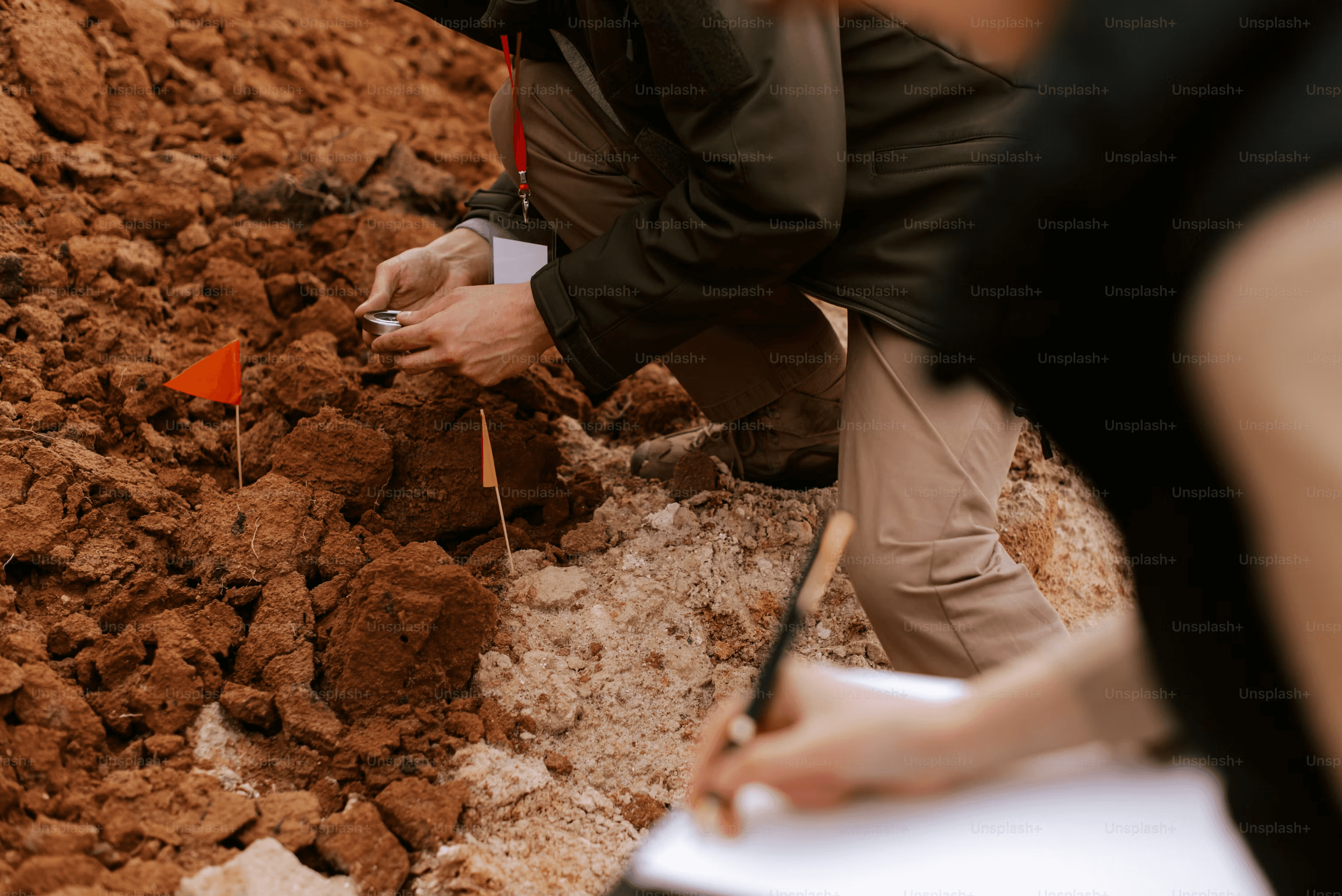
Research mentorship for archaeology students | RISE Research
Research mentorship for archaeology students | RISE Research
RISE Research
RISE Research
TL;DR: Research mentorship for archaeology students connects high school scholars with PhD mentors who guide them through original, publishable fieldwork and archival analysis. RISE Research scholars achieve a 3x higher acceptance rate to Top 10 universities compared to the national average. If you are a high-achieving student passionate about human history, material culture, or ancient civilizations, the Summer 2026 Cohort priority deadline is approaching soon. Schedule your Research Assessment today.
Most High School Students Think Archaeology Requires a Dig Site. They Are Wrong.
What if the most compelling archaeology research you could do does not require a trowel or a field permit? Most students assume that meaningful archaeological work is reserved for university professors with institutional funding and access to excavation sites. That assumption has kept thousands of talented students from pursuing one of the most intellectually rich research fields available to them.
Research mentorship for archaeology students changes that entirely. Under the guidance of a PhD mentor, high school scholars can produce original, peer-reviewed research using archival records, museum databases, remote sensing data, and computational analysis. The field of archaeology today is as much about data science and cultural theory as it is about physical excavation.
RISE Research is a selective 1-on-1 mentorship program where high school students publish original research, win awards, and earn global recognition under PhD mentors from Ivy League and Oxbridge institutions. RISE Scholars who pursue archaeology research do not just learn about the past. They contribute new knowledge to it. And top universities notice the difference.
What Does High School Archaeology Research Actually Look Like?
High school archaeology research spans qualitative analysis, quantitative methods, and interdisciplinary approaches that combine history, anthropology, environmental science, and digital humanities. A RISE Scholar does not simply summarize existing scholarship. They frame an original research question and produce findings that advance the field.
Specific research topics that RISE archaeology mentors have supervised or are equipped to guide include:
A Spatial Analysis of Settlement Patterns in Bronze Age Anatolia Using GIS Mapping: This quantitative project uses publicly available geographic data to identify correlations between topography and ancient habitation sites.
Ceramic Typology as a Proxy for Trade Networks in the Ancient Mediterranean: A qualitative and comparative study drawing on museum collection records to trace the movement of goods across pre-Roman civilizations.
The Role of Mortuary Practices in Constructing Social Identity in Iron Age Britain: An archival and theoretical analysis examining burial assemblages and what they reveal about gender and status hierarchies.
Applying Machine Learning to Aerial Photography for Archaeological Site Detection in Sub-Saharan Africa: A computational project that trains a classification algorithm on satellite imagery to identify previously unrecorded sites.
Reassessing Colonial-Era Archaeological Reports: A Critical Discourse Analysis of 19th-Century Excavation Records from Egypt: A humanities-focused study that interrogates how colonial bias shaped early interpretations of Egyptian material culture.
Each of these projects is rigorous, original, and achievable within a structured mentorship program. They also represent the breadth of what archaeology research can encompass for a motivated high school student.
The Mentors Behind the Research
The quality of any research project depends on the quality of the mentor. RISE Research maintains a network of 500+ PhD mentors with expertise spanning classical archaeology, digital humanities, bioarchaeology, landscape archaeology, and cultural heritage studies. Many hold positions at or have trained at institutions including Oxford, Cambridge, Harvard, and the University of Chicago, which houses one of the world's leading archaeology departments.
The matching process is not random. When a student applies to RISE Research, the team conducts a Research Assessment to understand the student's academic interests, prior coursework, geographic focus, and research goals. A student fascinated by Mesoamerican civilizations will be matched with a mentor whose specialization aligns directly. A student drawn to digital methods will be paired with a mentor who has published in computational archaeology.
This specificity matters. A mentor who has personally navigated the peer review process in archaeology journals knows exactly what reviewers look for. They understand which arguments are considered settled and which remain genuinely contested. That insider knowledge transforms a student's paper from a competent summary into an original contribution.
RISE mentors also provide guidance beyond the research itself. They help students frame their work for university applications, prepare for academic interviews, and articulate the significance of their findings to admissions committees who may not have an archaeology background. The mentorship is comprehensive, not just technical.
Where Does High School Archaeology Research Get Published?
High school archaeology research can be published in peer-reviewed journals and academic conference proceedings that accept undergraduate and pre-university submissions. Publication venues include the Journal of World Prehistory, the Cambridge Archaeological Journal, Advances in Archaeological Practice, and student-focused outlets such as the Journal of Emerging Investigators and Concord Review for humanities-oriented papers. RISE Scholars have achieved a 90% publication success rate across 40+ academic journals.
Peer review matters for several reasons. First, it signals to university admissions committees that a student's work has been evaluated by independent experts and found to meet scholarly standards. Second, the process of responding to reviewer feedback builds intellectual resilience and critical thinking skills that are directly relevant to university-level study. Third, a published paper creates a permanent, verifiable record of a student's academic achievement that no standardized test score can replicate.
Admissions data supports this. RISE Scholars achieve an 18% acceptance rate to Stanford compared to the 8.7% standard rate, and a 32% acceptance rate to UPenn compared to the 3.8% standard rate. These outcomes reflect what happens when students arrive at the application stage with genuine intellectual contributions to their name.
How RISE Research Works: From Assessment to Publication
The RISE Research program moves through four structured stages. Each stage builds on the last, and the entire process is designed to produce a submission-ready paper within a single cohort cycle.
The first stage is the Research Assessment. Before any work begins, the RISE team evaluates a student's academic background, research interests, and goals. For an archaeology student, this means identifying whether their interests lean toward material culture analysis, environmental reconstruction, digital methods, or theoretical frameworks. This assessment determines the mentor match and the initial direction of the project.
The second stage is Topic Development. Working with their assigned PhD mentor, the student refines a broad interest into a specific, answerable research question. This is often the hardest part of the process for new researchers. A mentor with years of experience in the field can identify questions that are original without being unanswerable, and methodologically feasible without requiring institutional resources the student does not have access to.
The third stage is Active Research. This is where the intellectual work happens. The student conducts their analysis, whether that involves coding satellite imagery, analyzing museum catalog data, or synthesizing archival sources. The mentor provides weekly guidance, reviews drafts, and pushes the student to deepen their argumentation. The process mirrors what a first-year graduate student experiences, but with structured support at every step.
The fourth stage is Submission. The mentor guides the student through the process of formatting the paper for a specific journal, writing a cover letter, and responding to reviewer feedback. RISE's 90% publication success rate reflects how thoroughly this stage is supported.
If you are a high school student with a serious interest in archaeology, the Summer 2026 Cohort is now accepting applications. The priority deadline is approaching soon. Schedule your Research Assessment to discuss your research interests with the RISE team and find out which projects are available in your area of focus.
Frequently Asked Questions About Archaeology Research Mentorship
Can a high school student really do original archaeology research without access to a dig site?
Yes. The majority of high school archaeology research does not require physical excavation. Students can produce original, publishable work using museum databases, digitized archival collections, remote sensing data, GIS software, and computational tools. Many of the most impactful recent studies in archaeology have been conducted entirely through desktop and digital methods. A PhD mentor helps identify the right approach for each student's specific question and resources.
What grade should I be in to start research mentorship for archaeology students?
RISE Research accepts students in Grades 9 through 12. Starting in Grade 9 or 10 allows more time to publish, enter awards, and build a research profile before university applications. Students in Grade 11 can still complete a full research cycle before their application deadlines. The program is designed to be rigorous but accessible regardless of prior research experience, as long as the student demonstrates genuine intellectual curiosity and commitment.
How long does it take to complete an archaeology research project with RISE?
A complete research cycle, from topic development through submission, typically takes 12 to 16 weeks. Some projects with more extensive data collection or revision cycles may take longer. The structured timeline ensures that students make consistent progress rather than stalling on any single stage. Weekly mentor sessions keep the project moving and prevent the delays that are common in self-directed research attempts.
Will archaeology research actually help my university application?
Published research in any academic field strengthens a university application significantly. For archaeology specifically, it demonstrates interdisciplinary thinking, comfort with primary sources, and the ability to contribute to scholarly conversations. RISE Scholars are accepted to Top 10 universities at 3x the standard rate. Admissions officers at selective institutions consistently report that original research is one of the most differentiating factors in a competitive application pool.
Do I need prior knowledge of archaeology to join the program?
Prior coursework in history, social studies, or related humanities subjects is helpful but not required. What matters most is intellectual curiosity, strong reading and writing skills, and a genuine interest in the research question. Your PhD mentor will provide the disciplinary knowledge and methodological training you need. Many successful RISE archaeology scholars had no formal archaeology coursework before beginning their projects. The program is designed to meet students where they are and build their expertise through the research process itself.
The Archaeology Research Advantage Starts Here
Archaeology is one of the most intellectually expansive fields a high school student can enter. It combines history, science, technology, and cultural theory into a discipline that asks fundamental questions about human experience. Students who pursue original archaeology research at the high school level do not just build stronger applications. They develop a scholarly identity that carries them through university and beyond.
RISE Research provides the structure, the mentorship, and the publication pathway that transforms genuine curiosity into recognized academic achievement. The program's track record speaks clearly: higher acceptance rates, published papers, and scholars who arrive at top universities already knowing how to think and write like researchers. Explore the full range of RISE Scholar projects and student awards to see what is possible.
The Summer 2026 Cohort priority deadline is approaching soon. If you are ready to pursue original archaeology research under a PhD mentor and build the kind of academic profile that top universities recognize, schedule your Research Assessment now. Seats are limited and allocated on a rolling basis.
TL;DR: Research mentorship for archaeology students connects high school scholars with PhD mentors who guide them through original, publishable fieldwork and archival analysis. RISE Research scholars achieve a 3x higher acceptance rate to Top 10 universities compared to the national average. If you are a high-achieving student passionate about human history, material culture, or ancient civilizations, the Summer 2026 Cohort priority deadline is approaching soon. Schedule your Research Assessment today.
Most High School Students Think Archaeology Requires a Dig Site. They Are Wrong.
What if the most compelling archaeology research you could do does not require a trowel or a field permit? Most students assume that meaningful archaeological work is reserved for university professors with institutional funding and access to excavation sites. That assumption has kept thousands of talented students from pursuing one of the most intellectually rich research fields available to them.
Research mentorship for archaeology students changes that entirely. Under the guidance of a PhD mentor, high school scholars can produce original, peer-reviewed research using archival records, museum databases, remote sensing data, and computational analysis. The field of archaeology today is as much about data science and cultural theory as it is about physical excavation.
RISE Research is a selective 1-on-1 mentorship program where high school students publish original research, win awards, and earn global recognition under PhD mentors from Ivy League and Oxbridge institutions. RISE Scholars who pursue archaeology research do not just learn about the past. They contribute new knowledge to it. And top universities notice the difference.
What Does High School Archaeology Research Actually Look Like?
High school archaeology research spans qualitative analysis, quantitative methods, and interdisciplinary approaches that combine history, anthropology, environmental science, and digital humanities. A RISE Scholar does not simply summarize existing scholarship. They frame an original research question and produce findings that advance the field.
Specific research topics that RISE archaeology mentors have supervised or are equipped to guide include:
A Spatial Analysis of Settlement Patterns in Bronze Age Anatolia Using GIS Mapping: This quantitative project uses publicly available geographic data to identify correlations between topography and ancient habitation sites.
Ceramic Typology as a Proxy for Trade Networks in the Ancient Mediterranean: A qualitative and comparative study drawing on museum collection records to trace the movement of goods across pre-Roman civilizations.
The Role of Mortuary Practices in Constructing Social Identity in Iron Age Britain: An archival and theoretical analysis examining burial assemblages and what they reveal about gender and status hierarchies.
Applying Machine Learning to Aerial Photography for Archaeological Site Detection in Sub-Saharan Africa: A computational project that trains a classification algorithm on satellite imagery to identify previously unrecorded sites.
Reassessing Colonial-Era Archaeological Reports: A Critical Discourse Analysis of 19th-Century Excavation Records from Egypt: A humanities-focused study that interrogates how colonial bias shaped early interpretations of Egyptian material culture.
Each of these projects is rigorous, original, and achievable within a structured mentorship program. They also represent the breadth of what archaeology research can encompass for a motivated high school student.
The Mentors Behind the Research
The quality of any research project depends on the quality of the mentor. RISE Research maintains a network of 500+ PhD mentors with expertise spanning classical archaeology, digital humanities, bioarchaeology, landscape archaeology, and cultural heritage studies. Many hold positions at or have trained at institutions including Oxford, Cambridge, Harvard, and the University of Chicago, which houses one of the world's leading archaeology departments.
The matching process is not random. When a student applies to RISE Research, the team conducts a Research Assessment to understand the student's academic interests, prior coursework, geographic focus, and research goals. A student fascinated by Mesoamerican civilizations will be matched with a mentor whose specialization aligns directly. A student drawn to digital methods will be paired with a mentor who has published in computational archaeology.
This specificity matters. A mentor who has personally navigated the peer review process in archaeology journals knows exactly what reviewers look for. They understand which arguments are considered settled and which remain genuinely contested. That insider knowledge transforms a student's paper from a competent summary into an original contribution.
RISE mentors also provide guidance beyond the research itself. They help students frame their work for university applications, prepare for academic interviews, and articulate the significance of their findings to admissions committees who may not have an archaeology background. The mentorship is comprehensive, not just technical.
Where Does High School Archaeology Research Get Published?
High school archaeology research can be published in peer-reviewed journals and academic conference proceedings that accept undergraduate and pre-university submissions. Publication venues include the Journal of World Prehistory, the Cambridge Archaeological Journal, Advances in Archaeological Practice, and student-focused outlets such as the Journal of Emerging Investigators and Concord Review for humanities-oriented papers. RISE Scholars have achieved a 90% publication success rate across 40+ academic journals.
Peer review matters for several reasons. First, it signals to university admissions committees that a student's work has been evaluated by independent experts and found to meet scholarly standards. Second, the process of responding to reviewer feedback builds intellectual resilience and critical thinking skills that are directly relevant to university-level study. Third, a published paper creates a permanent, verifiable record of a student's academic achievement that no standardized test score can replicate.
Admissions data supports this. RISE Scholars achieve an 18% acceptance rate to Stanford compared to the 8.7% standard rate, and a 32% acceptance rate to UPenn compared to the 3.8% standard rate. These outcomes reflect what happens when students arrive at the application stage with genuine intellectual contributions to their name.
How RISE Research Works: From Assessment to Publication
The RISE Research program moves through four structured stages. Each stage builds on the last, and the entire process is designed to produce a submission-ready paper within a single cohort cycle.
The first stage is the Research Assessment. Before any work begins, the RISE team evaluates a student's academic background, research interests, and goals. For an archaeology student, this means identifying whether their interests lean toward material culture analysis, environmental reconstruction, digital methods, or theoretical frameworks. This assessment determines the mentor match and the initial direction of the project.
The second stage is Topic Development. Working with their assigned PhD mentor, the student refines a broad interest into a specific, answerable research question. This is often the hardest part of the process for new researchers. A mentor with years of experience in the field can identify questions that are original without being unanswerable, and methodologically feasible without requiring institutional resources the student does not have access to.
The third stage is Active Research. This is where the intellectual work happens. The student conducts their analysis, whether that involves coding satellite imagery, analyzing museum catalog data, or synthesizing archival sources. The mentor provides weekly guidance, reviews drafts, and pushes the student to deepen their argumentation. The process mirrors what a first-year graduate student experiences, but with structured support at every step.
The fourth stage is Submission. The mentor guides the student through the process of formatting the paper for a specific journal, writing a cover letter, and responding to reviewer feedback. RISE's 90% publication success rate reflects how thoroughly this stage is supported.
If you are a high school student with a serious interest in archaeology, the Summer 2026 Cohort is now accepting applications. The priority deadline is approaching soon. Schedule your Research Assessment to discuss your research interests with the RISE team and find out which projects are available in your area of focus.
Frequently Asked Questions About Archaeology Research Mentorship
Can a high school student really do original archaeology research without access to a dig site?
Yes. The majority of high school archaeology research does not require physical excavation. Students can produce original, publishable work using museum databases, digitized archival collections, remote sensing data, GIS software, and computational tools. Many of the most impactful recent studies in archaeology have been conducted entirely through desktop and digital methods. A PhD mentor helps identify the right approach for each student's specific question and resources.
What grade should I be in to start research mentorship for archaeology students?
RISE Research accepts students in Grades 9 through 12. Starting in Grade 9 or 10 allows more time to publish, enter awards, and build a research profile before university applications. Students in Grade 11 can still complete a full research cycle before their application deadlines. The program is designed to be rigorous but accessible regardless of prior research experience, as long as the student demonstrates genuine intellectual curiosity and commitment.
How long does it take to complete an archaeology research project with RISE?
A complete research cycle, from topic development through submission, typically takes 12 to 16 weeks. Some projects with more extensive data collection or revision cycles may take longer. The structured timeline ensures that students make consistent progress rather than stalling on any single stage. Weekly mentor sessions keep the project moving and prevent the delays that are common in self-directed research attempts.
Will archaeology research actually help my university application?
Published research in any academic field strengthens a university application significantly. For archaeology specifically, it demonstrates interdisciplinary thinking, comfort with primary sources, and the ability to contribute to scholarly conversations. RISE Scholars are accepted to Top 10 universities at 3x the standard rate. Admissions officers at selective institutions consistently report that original research is one of the most differentiating factors in a competitive application pool.
Do I need prior knowledge of archaeology to join the program?
Prior coursework in history, social studies, or related humanities subjects is helpful but not required. What matters most is intellectual curiosity, strong reading and writing skills, and a genuine interest in the research question. Your PhD mentor will provide the disciplinary knowledge and methodological training you need. Many successful RISE archaeology scholars had no formal archaeology coursework before beginning their projects. The program is designed to meet students where they are and build their expertise through the research process itself.
The Archaeology Research Advantage Starts Here
Archaeology is one of the most intellectually expansive fields a high school student can enter. It combines history, science, technology, and cultural theory into a discipline that asks fundamental questions about human experience. Students who pursue original archaeology research at the high school level do not just build stronger applications. They develop a scholarly identity that carries them through university and beyond.
RISE Research provides the structure, the mentorship, and the publication pathway that transforms genuine curiosity into recognized academic achievement. The program's track record speaks clearly: higher acceptance rates, published papers, and scholars who arrive at top universities already knowing how to think and write like researchers. Explore the full range of RISE Scholar projects and student awards to see what is possible.
The Summer 2026 Cohort priority deadline is approaching soon. If you are ready to pursue original archaeology research under a PhD mentor and build the kind of academic profile that top universities recognize, schedule your Research Assessment now. Seats are limited and allocated on a rolling basis.
Fall 2026 Cohort Deadline Closing on 15th September
Book a free 20-min strategy call
Book a free 20-min strategy call
Read More