>
>
>
Is high school research mentorship worth it? What the data shows
Is high school research mentorship worth it? What the data shows
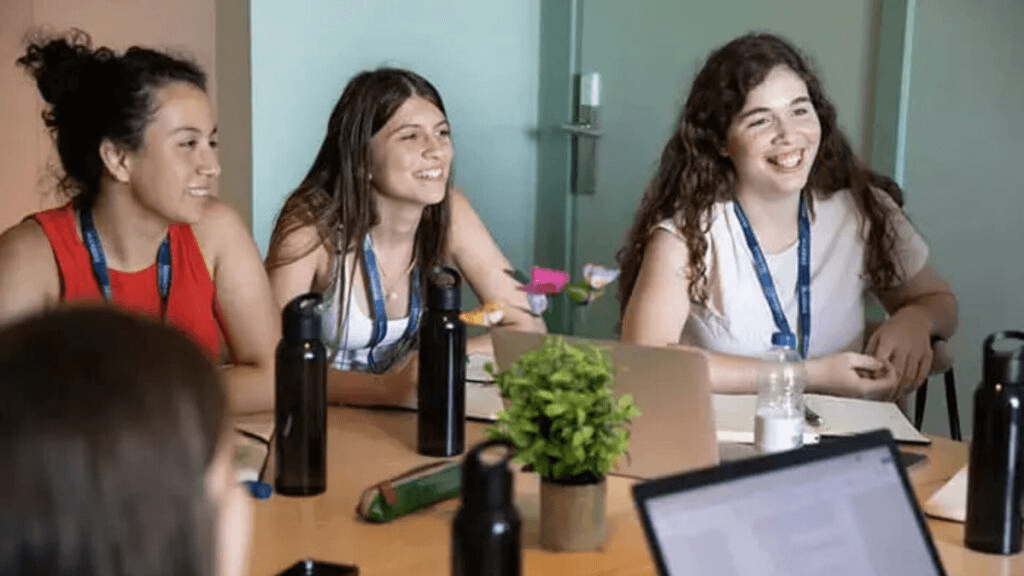
Is high school research mentorship worth it? What the data shows | RISE Research
Is high school research mentorship worth it? What the data shows | RISE Research
RISE Research
RISE Research
TL;DR: Is high school research mentorship worth it? The data says yes, with conditions. Students who complete a structured research mentorship program and publish original work gain a measurable admissions advantage at top universities. RISE scholars are accepted to Stanford at 18% versus the 8.7% national average. The 90% publication success rate at RISE means most students who complete the program do publish. But no program can guarantee admission. This post gives you the evidence you need to decide. If RISE sounds like the right fit, book a free Research Assessment before the Summer 2026 Priority Deadline.
The question most parents are afraid to ask out loud
You have done the maths. The program costs between $2,000 and $2,500. Your child's university applications are 12 to 18 months away. And you have no way to verify whether a published research paper will actually change the outcome, or whether it will sit quietly in a journal no admissions officer ever reads.
You are not asking whether research is a good idea in the abstract. You are asking whether spending real money on a structured mentorship program, right now, for your specific child, will produce something that matters when it counts.
That is the question this post answers. Not with reassurance. With data.
Is high school research mentorship worth it? The answer depends on what the program produces, who delivers it, and whether the outcomes are documented. This post walks through each of those dimensions using sourced evidence so you can make a confident decision.
Is high school research mentorship worth it for university admissions?
Yes, when the program results in a peer-reviewed publication under a qualified mentor. RISE scholars are accepted to Stanford at 18%, compared to the 8.7% national average reported in Stanford's 2023-24 Common Data Set. At UPenn, RISE scholars are accepted at 32%, against the 3.8% national average. These are not self-reported estimates. They are outcomes documented across the RISE scholar cohort.
The mechanism is straightforward. A published research paper appears in three places on a university application: the Activities section, the Additional Information section, and the supplemental essays. It gives an admissions reader something concrete and verifiable. A grade in AP Chemistry tells a reader a student performed well. A published paper in an indexed journal tells a reader the student contributed something original to a field. Those are different signals.
A CollegeXpress analysis of Ivy League admissions factors identifies independent research as one of the strongest differentiators in highly selective applicant pools, precisely because it is rare and verifiable.
The honest caveat: research mentorship is not an admissions guarantee. Admissions decisions at top universities involve financial aid, geographic diversity, athletic recruitment, and factors outside any student's control. RISE does not claim otherwise. What RISE claims is that scholars who publish enter the process with a stronger, more differentiated application. The data supports that claim. The decision remains the university's.
You can review RISE's full admissions outcomes on the RISE results page.
What research mentorship actually costs, and what parents compare it against
The RISE program costs between $2,000 and $2,500 for a full research mentorship engagement leading to publication. To evaluate that number, it helps to compare it against what families typically spend on other academic investments.
Private tutoring in the United States costs an average of $25 to $80 per hour, according to Tutors.com national pricing data. A family spending $50 per hour across one academic year, at two sessions per week, spends approximately $5,200. The output is a grade improvement in one subject.
SAT preparation courses range from $1,000 to $2,000 for a structured programme, according to The Princeton Review's published pricing. The output is a test score. A strong SAT score matters, but it is one data point among many in a selective application, and most applicants to top universities already have strong scores.
Private college admissions consulting costs between $3,000 and $10,000 for a full-service package, according to NerdWallet's admissions consulting cost guide. The output is a polished application. The content of that application still depends on what the student has actually done.
RISE produces a different output entirely. A published, peer-reviewed paper is a permanent academic credential. It does not expire after the application cycle. It can be cited, built upon, and referenced in scholarship applications, graduate school applications, and professional profiles. Tutoring and test prep produce inputs to the application. Research produces the content of the application itself.
The decision is not which investment is better in the abstract. It is which output serves your child's specific goals. If the goal is a differentiated application to a selective university, a published paper does something a test score and a grade cannot.
What do students who complete research mentorship actually achieve?
RISE scholars publish in 40 or more peer-reviewed academic journals, with a 90% publication success rate across the programme. RISE scholars are accepted to Stanford at 18% and to UPenn at 32%. The national averages for those universities are 8.7% and 3.8% respectively. These outcomes are documented across the full RISE cohort, not selected from top performers.
The 90% publication rate deserves precise definition. It means that 9 out of 10 students who complete the RISE programme publish their original research in a peer-reviewed or indexed academic journal. The 10% who do not publish typically face one of two situations: a paper under extended peer review at the time of reporting, or a student who withdrew from the programme before completion. Students who complete the programme publish at a very high rate.
RISE works with over 500 PhD mentors from Ivy League and Oxbridge institutions. Each mentor is matched to a student based on research interest and academic background. The mentor's role is to guide the research process, not to conduct it. The published paper must represent the student's original thinking. That distinction matters for academic integrity and for the credibility of the publication in an admissions context.
You can review the full list of active research projects and published work on the RISE Research publications page and the RISE Research projects page.
For context on what research looks like across different academic disciplines, the complete guide to high school research mentorship covers the process from topic selection to submission in detail.
What to ask before paying for any research mentorship program
Before committing to any programme, ask these five questions. They apply to RISE and to every alternative you are evaluating.
1. What is your verified publication success rate and how is it calculated? Ask whether the rate covers all enrolled students or only those who completed the programme. Ask whether it includes papers still under review. A programme that cannot answer this precisely does not have a reliable rate.
2. Who are the mentors and what have they published? Ask for the mentor's academic profile, institutional affiliation, and publication record. A PhD candidate at a mid-tier institution is not equivalent to a published researcher at an Ivy League university. The mentor's credibility affects the credibility of the paper.
3. What journals do students publish in and are those journals indexed? Publication in a predatory or non-indexed journal carries no academic weight. Ask for the journal names and verify their indexing in databases such as Scopus or Web of Science. A programme that cannot name its journals should not be trusted with your child's application.
4. What are your verified admissions outcomes and how are they documented? Testimonials are not data. Ask for cohort-level acceptance rates to specific universities, verified against Common Data Set averages. If a programme claims strong outcomes but cannot provide cohort data, the claim is not verifiable.
5. What happens if the paper is rejected? Peer review is a process, not a guarantee. A strong programme supports revision and resubmission. Ask whether that support is included in the programme cost and how many revision cycles are standard.
These are questions RISE welcomes. The answers to all five are publicly documented across the RISE website and available in full during the Research Assessment.
If you want to ask these questions directly before committing to anything, book a free 20-minute Research Assessment and RISE will walk you through every answer.
What parents ask most before enrolling
What if my child's paper gets rejected by the journal?
Rejection is part of academic publishing. Most papers submitted to peer-reviewed journals receive revision requests or initial rejections before acceptance. RISE supports students through revision and resubmission as part of the programme. A rejection is not a failure. It is a step in the process, and RISE mentors guide students through it.
Will the PhD mentor write the research for my child?
No. The mentor guides the process: helping the student identify a research question, evaluate sources, structure an argument, and meet journal standards. The original thinking and written work must come from the student. This is a requirement for academic integrity and for the paper to carry weight in an admissions context. Admissions readers at selective universities are experienced at identifying work that is not authentically the student's own.
Is my child in Grade 9 ready for university-level research?
RISE works with students in Grades 9 through 12. Grade 9 students can and do publish original research through the programme. The research question is scoped to match the student's current knowledge base. A Grade 9 student is not expected to produce a doctoral dissertation. They are expected to produce an original, well-structured contribution to a defined question in their area of interest. The parents guide to high school research mentorship covers readiness indicators in detail.
How much time does this take each week?
The RISE programme typically requires 4 to 6 hours per week across the research and writing phases. This includes the 1-on-1 mentor session and independent work between sessions. The timeline to publication varies by subject and journal, but most students complete the process within 6 to 9 months. The programme is designed to fit alongside a full academic schedule. Students managing AP coursework and extracurriculars complete RISE regularly. The RISE FAQ page includes a detailed breakdown of the weekly time commitment by programme phase.
Is RISE Research a legitimate programme?
RISE is a documented, outcomes-verified research mentorship programme with 500 or more PhD mentors, publications in 40 or more indexed academic journals, and cohort-level admissions data available for review. The RISE mentors page lists mentor profiles and institutional affiliations. The independent review of RISE Research covers the programme structure, outcomes, and how it compares to alternatives. Families evaluating RISE can verify mentor credentials, journal indexing, and admissions outcomes independently before enrolling.
What the data shows, and what it does not
Is high school research mentorship worth it? The data shows that students who publish original research under qualified PhD mentors gain a measurable, documented admissions advantage at selective universities. RISE's 90% publication rate and cohort-level admissions outcomes are the strongest evidence available that the programme delivers what it promises.
Research mentorship cannot guarantee admission. No programme can. Universities make decisions based on factors that extend well beyond any single credential. What RISE can do, and what the data shows it does, is give your child a stronger, more differentiated application than the one they would submit without it.
The Summer 2026 Priority Deadline is approaching. If you have read this far and the data makes sense for your child's goals, schedule a free Research Assessment and RISE will give you an honest answer about whether the programme is the right fit.
Further reading: Top 5 benefits of 1-on-1 PhD mentorship for high school researchers | High school research mentorship for international students
TL;DR: Is high school research mentorship worth it? The data says yes, with conditions. Students who complete a structured research mentorship program and publish original work gain a measurable admissions advantage at top universities. RISE scholars are accepted to Stanford at 18% versus the 8.7% national average. The 90% publication success rate at RISE means most students who complete the program do publish. But no program can guarantee admission. This post gives you the evidence you need to decide. If RISE sounds like the right fit, book a free Research Assessment before the Summer 2026 Priority Deadline.
The question most parents are afraid to ask out loud
You have done the maths. The program costs between $2,000 and $2,500. Your child's university applications are 12 to 18 months away. And you have no way to verify whether a published research paper will actually change the outcome, or whether it will sit quietly in a journal no admissions officer ever reads.
You are not asking whether research is a good idea in the abstract. You are asking whether spending real money on a structured mentorship program, right now, for your specific child, will produce something that matters when it counts.
That is the question this post answers. Not with reassurance. With data.
Is high school research mentorship worth it? The answer depends on what the program produces, who delivers it, and whether the outcomes are documented. This post walks through each of those dimensions using sourced evidence so you can make a confident decision.
Is high school research mentorship worth it for university admissions?
Yes, when the program results in a peer-reviewed publication under a qualified mentor. RISE scholars are accepted to Stanford at 18%, compared to the 8.7% national average reported in Stanford's 2023-24 Common Data Set. At UPenn, RISE scholars are accepted at 32%, against the 3.8% national average. These are not self-reported estimates. They are outcomes documented across the RISE scholar cohort.
The mechanism is straightforward. A published research paper appears in three places on a university application: the Activities section, the Additional Information section, and the supplemental essays. It gives an admissions reader something concrete and verifiable. A grade in AP Chemistry tells a reader a student performed well. A published paper in an indexed journal tells a reader the student contributed something original to a field. Those are different signals.
A CollegeXpress analysis of Ivy League admissions factors identifies independent research as one of the strongest differentiators in highly selective applicant pools, precisely because it is rare and verifiable.
The honest caveat: research mentorship is not an admissions guarantee. Admissions decisions at top universities involve financial aid, geographic diversity, athletic recruitment, and factors outside any student's control. RISE does not claim otherwise. What RISE claims is that scholars who publish enter the process with a stronger, more differentiated application. The data supports that claim. The decision remains the university's.
You can review RISE's full admissions outcomes on the RISE results page.
What research mentorship actually costs, and what parents compare it against
The RISE program costs between $2,000 and $2,500 for a full research mentorship engagement leading to publication. To evaluate that number, it helps to compare it against what families typically spend on other academic investments.
Private tutoring in the United States costs an average of $25 to $80 per hour, according to Tutors.com national pricing data. A family spending $50 per hour across one academic year, at two sessions per week, spends approximately $5,200. The output is a grade improvement in one subject.
SAT preparation courses range from $1,000 to $2,000 for a structured programme, according to The Princeton Review's published pricing. The output is a test score. A strong SAT score matters, but it is one data point among many in a selective application, and most applicants to top universities already have strong scores.
Private college admissions consulting costs between $3,000 and $10,000 for a full-service package, according to NerdWallet's admissions consulting cost guide. The output is a polished application. The content of that application still depends on what the student has actually done.
RISE produces a different output entirely. A published, peer-reviewed paper is a permanent academic credential. It does not expire after the application cycle. It can be cited, built upon, and referenced in scholarship applications, graduate school applications, and professional profiles. Tutoring and test prep produce inputs to the application. Research produces the content of the application itself.
The decision is not which investment is better in the abstract. It is which output serves your child's specific goals. If the goal is a differentiated application to a selective university, a published paper does something a test score and a grade cannot.
What do students who complete research mentorship actually achieve?
RISE scholars publish in 40 or more peer-reviewed academic journals, with a 90% publication success rate across the programme. RISE scholars are accepted to Stanford at 18% and to UPenn at 32%. The national averages for those universities are 8.7% and 3.8% respectively. These outcomes are documented across the full RISE cohort, not selected from top performers.
The 90% publication rate deserves precise definition. It means that 9 out of 10 students who complete the RISE programme publish their original research in a peer-reviewed or indexed academic journal. The 10% who do not publish typically face one of two situations: a paper under extended peer review at the time of reporting, or a student who withdrew from the programme before completion. Students who complete the programme publish at a very high rate.
RISE works with over 500 PhD mentors from Ivy League and Oxbridge institutions. Each mentor is matched to a student based on research interest and academic background. The mentor's role is to guide the research process, not to conduct it. The published paper must represent the student's original thinking. That distinction matters for academic integrity and for the credibility of the publication in an admissions context.
You can review the full list of active research projects and published work on the RISE Research publications page and the RISE Research projects page.
For context on what research looks like across different academic disciplines, the complete guide to high school research mentorship covers the process from topic selection to submission in detail.
What to ask before paying for any research mentorship program
Before committing to any programme, ask these five questions. They apply to RISE and to every alternative you are evaluating.
1. What is your verified publication success rate and how is it calculated? Ask whether the rate covers all enrolled students or only those who completed the programme. Ask whether it includes papers still under review. A programme that cannot answer this precisely does not have a reliable rate.
2. Who are the mentors and what have they published? Ask for the mentor's academic profile, institutional affiliation, and publication record. A PhD candidate at a mid-tier institution is not equivalent to a published researcher at an Ivy League university. The mentor's credibility affects the credibility of the paper.
3. What journals do students publish in and are those journals indexed? Publication in a predatory or non-indexed journal carries no academic weight. Ask for the journal names and verify their indexing in databases such as Scopus or Web of Science. A programme that cannot name its journals should not be trusted with your child's application.
4. What are your verified admissions outcomes and how are they documented? Testimonials are not data. Ask for cohort-level acceptance rates to specific universities, verified against Common Data Set averages. If a programme claims strong outcomes but cannot provide cohort data, the claim is not verifiable.
5. What happens if the paper is rejected? Peer review is a process, not a guarantee. A strong programme supports revision and resubmission. Ask whether that support is included in the programme cost and how many revision cycles are standard.
These are questions RISE welcomes. The answers to all five are publicly documented across the RISE website and available in full during the Research Assessment.
If you want to ask these questions directly before committing to anything, book a free 20-minute Research Assessment and RISE will walk you through every answer.
What parents ask most before enrolling
What if my child's paper gets rejected by the journal?
Rejection is part of academic publishing. Most papers submitted to peer-reviewed journals receive revision requests or initial rejections before acceptance. RISE supports students through revision and resubmission as part of the programme. A rejection is not a failure. It is a step in the process, and RISE mentors guide students through it.
Will the PhD mentor write the research for my child?
No. The mentor guides the process: helping the student identify a research question, evaluate sources, structure an argument, and meet journal standards. The original thinking and written work must come from the student. This is a requirement for academic integrity and for the paper to carry weight in an admissions context. Admissions readers at selective universities are experienced at identifying work that is not authentically the student's own.
Is my child in Grade 9 ready for university-level research?
RISE works with students in Grades 9 through 12. Grade 9 students can and do publish original research through the programme. The research question is scoped to match the student's current knowledge base. A Grade 9 student is not expected to produce a doctoral dissertation. They are expected to produce an original, well-structured contribution to a defined question in their area of interest. The parents guide to high school research mentorship covers readiness indicators in detail.
How much time does this take each week?
The RISE programme typically requires 4 to 6 hours per week across the research and writing phases. This includes the 1-on-1 mentor session and independent work between sessions. The timeline to publication varies by subject and journal, but most students complete the process within 6 to 9 months. The programme is designed to fit alongside a full academic schedule. Students managing AP coursework and extracurriculars complete RISE regularly. The RISE FAQ page includes a detailed breakdown of the weekly time commitment by programme phase.
Is RISE Research a legitimate programme?
RISE is a documented, outcomes-verified research mentorship programme with 500 or more PhD mentors, publications in 40 or more indexed academic journals, and cohort-level admissions data available for review. The RISE mentors page lists mentor profiles and institutional affiliations. The independent review of RISE Research covers the programme structure, outcomes, and how it compares to alternatives. Families evaluating RISE can verify mentor credentials, journal indexing, and admissions outcomes independently before enrolling.
What the data shows, and what it does not
Is high school research mentorship worth it? The data shows that students who publish original research under qualified PhD mentors gain a measurable, documented admissions advantage at selective universities. RISE's 90% publication rate and cohort-level admissions outcomes are the strongest evidence available that the programme delivers what it promises.
Research mentorship cannot guarantee admission. No programme can. Universities make decisions based on factors that extend well beyond any single credential. What RISE can do, and what the data shows it does, is give your child a stronger, more differentiated application than the one they would submit without it.
The Summer 2026 Priority Deadline is approaching. If you have read this far and the data makes sense for your child's goals, schedule a free Research Assessment and RISE will give you an honest answer about whether the programme is the right fit.
Further reading: Top 5 benefits of 1-on-1 PhD mentorship for high school researchers | High school research mentorship for international students
Fall 2026 Cohort Deadline Closing on 28th September
Book a free 20-min strategy call
Book a free 20-min strategy call
Read More