>
>
>
How to get into University of Toronto with research
How to get into University of Toronto with research
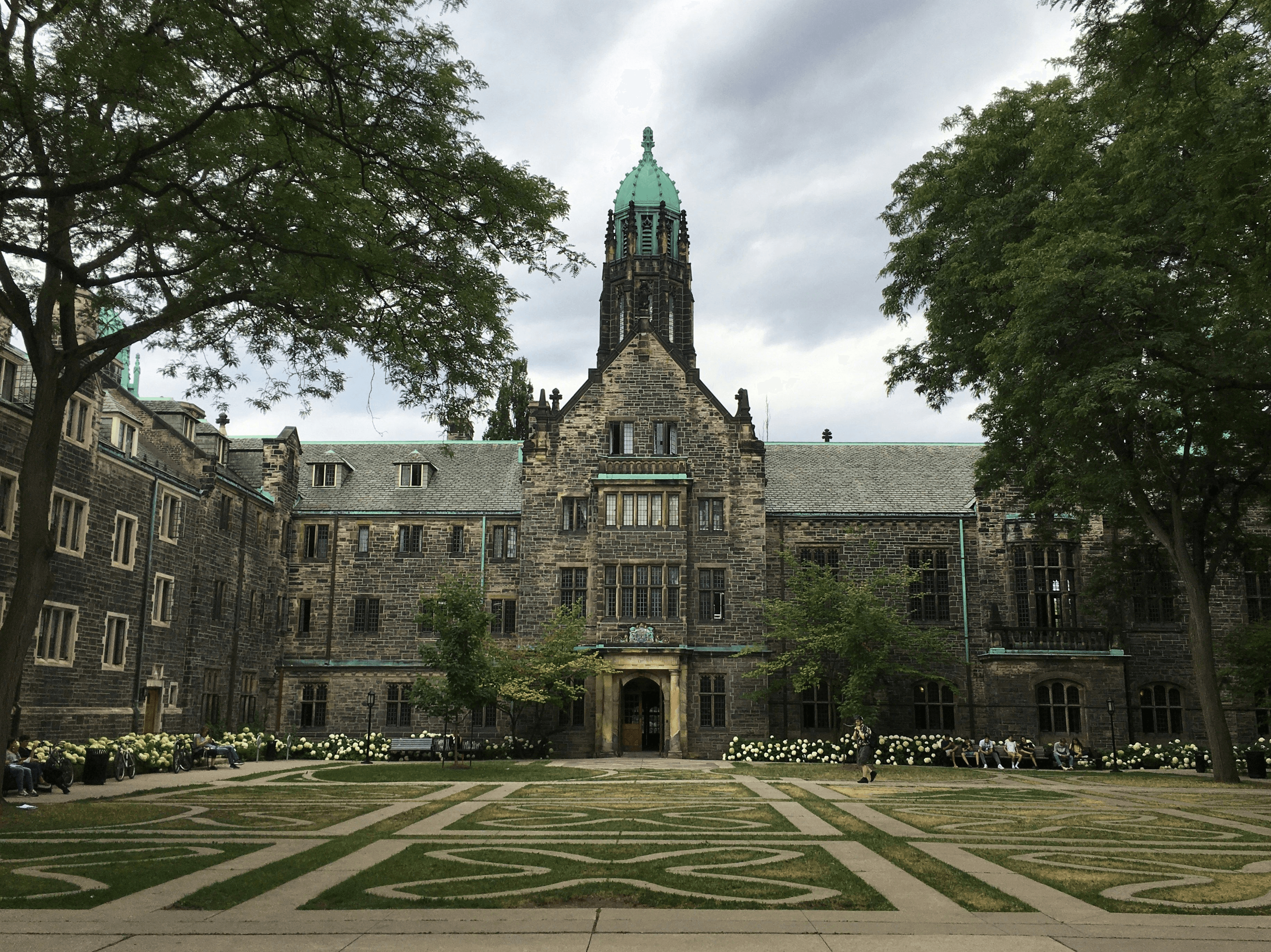
How to get into University of Toronto with research | RISE Research
How to get into University of Toronto with research | RISE Research
RISE Research
RISE Research
TL;DR: The University of Toronto admits roughly 43% of applicants overall, but competition for programs like Engineering, Computer Science, and Life Sciences is significantly sharper. This post examines whether high school research strengthens a University of Toronto application, what UofT admissions materials say about intellectual initiative, and how to translate a published research paper into a compelling application narrative. If you want research to be a real part of your UofT application, the time to start is now.
Why a Strong Academic Record Is No Longer Enough for University of Toronto
Learning how to get into University of Toronto with high school research starts with understanding what the admissions process actually weighs. The University of Toronto received over 97,000 undergraduate applications for the 2023 entry cycle, making it one of the most applied-to universities in North America. For competitive programs such as Engineering Science, Computer Science, and Rotman Commerce, average admitted averages regularly sit above 93% to 95%. Your child may have a 95% average and a strong extracurricular record. So does nearly every other student applying to those programs this year.
The question is not whether grades matter at UofT. They do. The question is what separates two students with identical academic profiles. This post covers exactly that: how original research functions as a differentiator in the University of Toronto admissions process, what UofT has said publicly about intellectual initiative, and how to build a research-to-application strategy that actually works.
Does Research Experience Help You Get Into University of Toronto?
Yes, research experience strengthens a University of Toronto application, particularly for competitive STEM and social science programs. UofT explicitly values intellectual curiosity and independent inquiry in its admissions criteria. A published paper provides verifiable, third-party evidence of that curiosity in a way that coursework grades alone cannot.
The University of Toronto's holistic review process looks beyond grades and test scores for evidence of genuine academic engagement. For many high-demand programs, UofT uses supplemental applications and personal profiles that ask students to demonstrate intellectual initiative directly. Research sits at the top of that hierarchy because it is self-directed, rigorous, and independently verifiable.
The difference between research that helps and research that does not comes down to depth and outcome. Attending a two-week university summer camp and receiving a participation certificate does not carry the same weight as completing a structured research project that results in a peer-reviewed publication. The former signals interest. The latter signals capability. UofT admissions readers evaluate whether a student has already begun to think and work at a university level. A published paper answers that question directly.
Science fair participation is valuable but common. A paper published in a recognised academic journal is rare among high school applicants and immediately distinguishes a file. When an admissions reader sees a publication credit in the Activities section or the Personal Profile, it shifts the entire frame of the application from "promising student" to "student already doing the work." That distinction matters at a university where thousands of promising students apply every year. You can explore how RISE Research scholars achieve this outcome across a range of disciplines.
What University of Toronto Admissions Officers Say About Intellectual Curiosity and Independent Work
The University of Toronto's admissions materials consistently foreground intellectual engagement as a core selection criterion. UofT's Future Students admissions portal describes the evaluation process as holistic, with the Personal Profile playing a central role for many programs. The Personal Profile asks students to describe their academic interests, achievements, and extracurricular involvement in their own words, with specific prompts that vary by faculty.
For the Faculty of Arts and Science, one of the most competitive entry points at UofT, the supplemental application asks students to reflect on an academic topic they explored beyond the classroom and to describe what that exploration revealed about their intellectual interests. This prompt is a direct invitation to discuss independent research. A student who can write about a specific research question they investigated, a methodology they applied, and a finding they contributed to a published paper has a fundamentally stronger answer than a student who describes reading a book or watching a documentary.
UofT's institutional mission statement centres on the creation and dissemination of knowledge. The university explicitly identifies itself as a research-intensive institution and selects students who reflect that identity. Admissions staff at UofT have noted in public forums that the Personal Profile is where students can demonstrate qualities that grades cannot capture, including initiative, intellectual depth, and the ability to pursue a question independently. Original research, particularly research that reaches publication, speaks directly to all three.
What Kind of Research Actually Impresses University of Toronto Admissions?
University of Toronto admissions responds most strongly to research that is self-directed, methodologically sound, and completed to a publishable standard. Research in fields aligned with UofT's academic strengths, including life sciences, computer science, economics, and political science, carries particular weight when it demonstrates original inquiry rather than summarising existing literature.
A summer programme certificate tells an admissions reader that a student attended something. A peer-reviewed publication tells them that a student produced something. That distinction is not subtle at UofT, where the university's own research output is a point of institutional pride and where faculty mentors are selected partly for their ability to bring undergraduate students into active research environments from Year 1.
The subjects that align most naturally with UofT's academic priorities and that high school students can realistically pursue at a publishable level include: life sciences and public health, where UofT's research infrastructure is globally ranked; computer science and artificial intelligence, reflecting UofT's position as a leading AI research hub; economics and public policy, supported by the Munk School and Rotman; and environmental science, an area of growing institutional focus. Research in any of these areas, conducted with a PhD mentor and submitted to a peer-reviewed journal, positions a student directly within UofT's academic culture before they have even enrolled.
For the Personal Profile supplemental, the strongest research essays are specific. They name the research question, describe the methodology in plain language, and explain what the student learned about their own thinking process. Word counts for UofT supplemental responses vary by program but typically range from 200 to 900 words depending on the faculty. Check the UofT supplemental application page for program-specific prompts and current word limits, as these are updated annually. You can also explore sample RISE Research projects to understand what a completed, publishable high school research project looks like in practice.
How to Turn Research Into a Stronger University of Toronto Application
The Activities section of the Ontario Universities' Application Centre (OUAC) form and UofT's own supplemental materials give students multiple entry points to present research. Using them strategically is what separates a research experience that impresses from one that gets skimmed.
In the Activities section, describe the research project with precision. Lead with the outcome: "Published paper in [journal name], investigating [topic], under PhD mentor from [institution]." Every word counts. "Published" is the most important word in that entry. It signals completion, external validation, and academic seriousness. Do not bury it. Put it first.
The UofT Personal Profile supplemental is where the research narrative becomes a full argument. For Arts and Science applicants, the prompt asking about academic exploration beyond the classroom is the natural home for this discussion. Write about the specific question you investigated and why it mattered to you. Connect it to the program you are applying to. A student applying to the life sciences stream who describes a published study on antibiotic resistance is not just demonstrating curiosity. They are demonstrating readiness for university-level scientific work at an institution where undergraduate research participation is a genuine expectation.
The Additional Information section of the OUAC application is underused by most applicants. Use it to provide context that does not fit elsewhere: the name of the journal, the publication date, the DOI, and a one-sentence description of the paper's contribution. Keep it factual and brief, three to five sentences. Admissions readers appreciate precision over elaboration in this space.
A letter of recommendation from a PhD research mentor adds a dimension that a classroom teacher cannot provide. A teacher can speak to academic performance within a structured curriculum. A research mentor can speak to how a student behaves when there is no curriculum, no answer key, and no clear path forward. That is exactly the kind of intellectual character UofT is selecting for. If you have worked with a PhD mentor through RISE Research, that mentor can write a letter that directly addresses your capacity for independent inquiry at a university level.
Turning research into a coherent application narrative takes as much skill as the research itself. That is exactly what the RISE mentorship process is built around.
When Should You Start Research If University of Toronto Is Your Goal?
The timing of your research relative to your application matters as much as the research itself. Here is how the optimal timeline works for UofT applicants.
In Grades 9 and 10, the priority is subject exploration. Read widely in fields that interest you. Identify the intersection of your academic strengths and genuine curiosity. This is not the time to force a research question. It is the time to develop the intellectual foundation that makes a research question possible.
Grades 10 and 11 represent the optimal window to begin a structured research program. Starting with RISE Research during this period gives you time to develop a research question, design a methodology, conduct the research, and submit to a journal before your applications open. For UofT applicants, this timing is critical because the Personal Profile supplemental is submitted alongside the main application, and a paper that is already published or under review at the time of writing carries significantly more weight than a project described as "in progress."
By the summer before Grade 12, your paper should be submitted to a peer-reviewed journal. A paper under review is still a strong credential. A published paper is stronger. Either one gives you a concrete, specific achievement to anchor your supplemental essays and your Activities section. You can read more about how to publish high school research without a university affiliation to understand what that process involves.
In Grade 12, from September through January, your task is to translate the research into application language. Write the supplemental essays with the research as the narrative centrepiece. Reference the specific UofT prompts for your target faculty. Submit your OUAC application with a complete research record across every relevant section.
If you are starting in Grade 12, the timeline compresses but the path forward still exists. RISE Research supports Grade 12 students with an accelerated research and essay strategy. The supplemental essay approach changes slightly: the focus shifts to the research question and methodology rather than a completed publication. The key is to be honest about where the project stands and to demonstrate the depth of thinking behind it. Starting later is not disqualifying. Starting with a clear strategy makes the difference.
The Summer 2026 cohort is filling up. If University of Toronto is on your list and you want research to be a real part of your application, book a free 20-minute Research Assessment here to find out what is achievable in your timeline.
Frequently Asked Questions About Research and University of Toronto Admissions
Does University of Toronto require research experience to apply?
No, University of Toronto does not require research experience for undergraduate admission. However, for competitive programs in Engineering Science, Computer Science, and Life Sciences, the Personal Profile supplemental gives research experience significant weight. Students who demonstrate independent intellectual work stand out in a pool where academic averages are closely clustered.
UofT's holistic review process means that research is not a checkbox requirement. It is an opportunity to demonstrate qualities that grades cannot show. Students without research experience can still gain admission, but in high-demand programs, every distinguishing factor counts.
Does a published paper make a bigger difference than just doing research at University of Toronto?
Yes. A published paper provides external validation that a research project alone does not. Any student can describe a project they worked on. A publication proves that independent experts reviewed the work and found it credible. At UofT, where the institution's identity is built around research output, that distinction registers clearly with admissions readers.
Publication also gives you a specific, verifiable credential to place in your Activities section and Additional Information box. "Published in [journal], 2025" is a concrete fact. "Conducted independent research" is a description. The difference in how an admissions reader processes each is significant. Explore the RISE Research publications record to see the range of journals where RISE scholars have published.
What subjects are strongest for University of Toronto applications?
Research in life sciences, computer science and AI, economics and public policy, and environmental science aligns most directly with UofT's stated academic priorities and research strengths. These fields also offer the most accessible pathways for high school students to produce original, publishable work with PhD mentorship.
UofT is consistently ranked among the top global institutions in each of these areas. A research paper in one of these fields signals not just intellectual curiosity but specific readiness for the academic environment the student is applying to enter. The alignment between the research topic and the target program strengthens the entire application narrative.
How do I write about research in University of Toronto's supplemental essays?
Use the Personal Profile prompt about academic exploration beyond the classroom to describe your research question, methodology, and findings in specific terms. Name the topic, explain what you investigated and why, and connect it directly to the UofT program you are applying to. Avoid summarising the paper. Show what the process revealed about how you think.
The strongest supplemental essays about research are not summaries of findings. They are accounts of intellectual experience. What did you discover about the limits of your own knowledge? What did you change when your initial approach did not work? Those answers demonstrate the kind of thinking UofT faculty want in a first-year student. Check the RISE Research mentorship program review for more on how the mentorship process prepares students for exactly this kind of writing.
Is it too late to start research in Grade 12 for University of Toronto?
No, it is not too late, but the strategy changes. A Grade 12 student who begins research in September and submits to a journal by December can still reference a paper under review in their application. The supplemental essay focus shifts to the depth of the research question and methodology rather than a completed publication record.
RISE Research supports Grade 12 students with an accelerated program designed for this exact scenario. The research question development and essay strategy run in parallel, so the application benefits from the intellectual work even if the publication timeline extends beyond the submission date. Starting now is always better than not starting. Learn more about how high school students can build research experience regardless of their current resources or timeline.
The Research Advantage in a University of Toronto Application
The University of Toronto is one of the most competitive undergraduate destinations in North America, and the gap between admitted and rejected students at the program level is often not a matter of grades. It is a matter of demonstrated intellectual character. Original research, conducted with a qualified mentor and completed to a publishable standard, is one of the clearest ways to demonstrate that character in a UofT application.
The Personal Profile supplemental, the Activities section, the Additional Information box, and the recommendation letter from a research mentor each offer a specific opportunity to present that work. Used together, they build an application narrative that is coherent, specific, and difficult to replicate. That is what separates a strong UofT application from a competitive one.
The Summer 2026 Priority Deadline is approaching. If University of Toronto is your target and you want research to be a real part of your application, schedule a free Research Assessment and we will tell you exactly what is achievable in your timeline.
TL;DR: The University of Toronto admits roughly 43% of applicants overall, but competition for programs like Engineering, Computer Science, and Life Sciences is significantly sharper. This post examines whether high school research strengthens a University of Toronto application, what UofT admissions materials say about intellectual initiative, and how to translate a published research paper into a compelling application narrative. If you want research to be a real part of your UofT application, the time to start is now.
Why a Strong Academic Record Is No Longer Enough for University of Toronto
Learning how to get into University of Toronto with high school research starts with understanding what the admissions process actually weighs. The University of Toronto received over 97,000 undergraduate applications for the 2023 entry cycle, making it one of the most applied-to universities in North America. For competitive programs such as Engineering Science, Computer Science, and Rotman Commerce, average admitted averages regularly sit above 93% to 95%. Your child may have a 95% average and a strong extracurricular record. So does nearly every other student applying to those programs this year.
The question is not whether grades matter at UofT. They do. The question is what separates two students with identical academic profiles. This post covers exactly that: how original research functions as a differentiator in the University of Toronto admissions process, what UofT has said publicly about intellectual initiative, and how to build a research-to-application strategy that actually works.
Does Research Experience Help You Get Into University of Toronto?
Yes, research experience strengthens a University of Toronto application, particularly for competitive STEM and social science programs. UofT explicitly values intellectual curiosity and independent inquiry in its admissions criteria. A published paper provides verifiable, third-party evidence of that curiosity in a way that coursework grades alone cannot.
The University of Toronto's holistic review process looks beyond grades and test scores for evidence of genuine academic engagement. For many high-demand programs, UofT uses supplemental applications and personal profiles that ask students to demonstrate intellectual initiative directly. Research sits at the top of that hierarchy because it is self-directed, rigorous, and independently verifiable.
The difference between research that helps and research that does not comes down to depth and outcome. Attending a two-week university summer camp and receiving a participation certificate does not carry the same weight as completing a structured research project that results in a peer-reviewed publication. The former signals interest. The latter signals capability. UofT admissions readers evaluate whether a student has already begun to think and work at a university level. A published paper answers that question directly.
Science fair participation is valuable but common. A paper published in a recognised academic journal is rare among high school applicants and immediately distinguishes a file. When an admissions reader sees a publication credit in the Activities section or the Personal Profile, it shifts the entire frame of the application from "promising student" to "student already doing the work." That distinction matters at a university where thousands of promising students apply every year. You can explore how RISE Research scholars achieve this outcome across a range of disciplines.
What University of Toronto Admissions Officers Say About Intellectual Curiosity and Independent Work
The University of Toronto's admissions materials consistently foreground intellectual engagement as a core selection criterion. UofT's Future Students admissions portal describes the evaluation process as holistic, with the Personal Profile playing a central role for many programs. The Personal Profile asks students to describe their academic interests, achievements, and extracurricular involvement in their own words, with specific prompts that vary by faculty.
For the Faculty of Arts and Science, one of the most competitive entry points at UofT, the supplemental application asks students to reflect on an academic topic they explored beyond the classroom and to describe what that exploration revealed about their intellectual interests. This prompt is a direct invitation to discuss independent research. A student who can write about a specific research question they investigated, a methodology they applied, and a finding they contributed to a published paper has a fundamentally stronger answer than a student who describes reading a book or watching a documentary.
UofT's institutional mission statement centres on the creation and dissemination of knowledge. The university explicitly identifies itself as a research-intensive institution and selects students who reflect that identity. Admissions staff at UofT have noted in public forums that the Personal Profile is where students can demonstrate qualities that grades cannot capture, including initiative, intellectual depth, and the ability to pursue a question independently. Original research, particularly research that reaches publication, speaks directly to all three.
What Kind of Research Actually Impresses University of Toronto Admissions?
University of Toronto admissions responds most strongly to research that is self-directed, methodologically sound, and completed to a publishable standard. Research in fields aligned with UofT's academic strengths, including life sciences, computer science, economics, and political science, carries particular weight when it demonstrates original inquiry rather than summarising existing literature.
A summer programme certificate tells an admissions reader that a student attended something. A peer-reviewed publication tells them that a student produced something. That distinction is not subtle at UofT, where the university's own research output is a point of institutional pride and where faculty mentors are selected partly for their ability to bring undergraduate students into active research environments from Year 1.
The subjects that align most naturally with UofT's academic priorities and that high school students can realistically pursue at a publishable level include: life sciences and public health, where UofT's research infrastructure is globally ranked; computer science and artificial intelligence, reflecting UofT's position as a leading AI research hub; economics and public policy, supported by the Munk School and Rotman; and environmental science, an area of growing institutional focus. Research in any of these areas, conducted with a PhD mentor and submitted to a peer-reviewed journal, positions a student directly within UofT's academic culture before they have even enrolled.
For the Personal Profile supplemental, the strongest research essays are specific. They name the research question, describe the methodology in plain language, and explain what the student learned about their own thinking process. Word counts for UofT supplemental responses vary by program but typically range from 200 to 900 words depending on the faculty. Check the UofT supplemental application page for program-specific prompts and current word limits, as these are updated annually. You can also explore sample RISE Research projects to understand what a completed, publishable high school research project looks like in practice.
How to Turn Research Into a Stronger University of Toronto Application
The Activities section of the Ontario Universities' Application Centre (OUAC) form and UofT's own supplemental materials give students multiple entry points to present research. Using them strategically is what separates a research experience that impresses from one that gets skimmed.
In the Activities section, describe the research project with precision. Lead with the outcome: "Published paper in [journal name], investigating [topic], under PhD mentor from [institution]." Every word counts. "Published" is the most important word in that entry. It signals completion, external validation, and academic seriousness. Do not bury it. Put it first.
The UofT Personal Profile supplemental is where the research narrative becomes a full argument. For Arts and Science applicants, the prompt asking about academic exploration beyond the classroom is the natural home for this discussion. Write about the specific question you investigated and why it mattered to you. Connect it to the program you are applying to. A student applying to the life sciences stream who describes a published study on antibiotic resistance is not just demonstrating curiosity. They are demonstrating readiness for university-level scientific work at an institution where undergraduate research participation is a genuine expectation.
The Additional Information section of the OUAC application is underused by most applicants. Use it to provide context that does not fit elsewhere: the name of the journal, the publication date, the DOI, and a one-sentence description of the paper's contribution. Keep it factual and brief, three to five sentences. Admissions readers appreciate precision over elaboration in this space.
A letter of recommendation from a PhD research mentor adds a dimension that a classroom teacher cannot provide. A teacher can speak to academic performance within a structured curriculum. A research mentor can speak to how a student behaves when there is no curriculum, no answer key, and no clear path forward. That is exactly the kind of intellectual character UofT is selecting for. If you have worked with a PhD mentor through RISE Research, that mentor can write a letter that directly addresses your capacity for independent inquiry at a university level.
Turning research into a coherent application narrative takes as much skill as the research itself. That is exactly what the RISE mentorship process is built around.
When Should You Start Research If University of Toronto Is Your Goal?
The timing of your research relative to your application matters as much as the research itself. Here is how the optimal timeline works for UofT applicants.
In Grades 9 and 10, the priority is subject exploration. Read widely in fields that interest you. Identify the intersection of your academic strengths and genuine curiosity. This is not the time to force a research question. It is the time to develop the intellectual foundation that makes a research question possible.
Grades 10 and 11 represent the optimal window to begin a structured research program. Starting with RISE Research during this period gives you time to develop a research question, design a methodology, conduct the research, and submit to a journal before your applications open. For UofT applicants, this timing is critical because the Personal Profile supplemental is submitted alongside the main application, and a paper that is already published or under review at the time of writing carries significantly more weight than a project described as "in progress."
By the summer before Grade 12, your paper should be submitted to a peer-reviewed journal. A paper under review is still a strong credential. A published paper is stronger. Either one gives you a concrete, specific achievement to anchor your supplemental essays and your Activities section. You can read more about how to publish high school research without a university affiliation to understand what that process involves.
In Grade 12, from September through January, your task is to translate the research into application language. Write the supplemental essays with the research as the narrative centrepiece. Reference the specific UofT prompts for your target faculty. Submit your OUAC application with a complete research record across every relevant section.
If you are starting in Grade 12, the timeline compresses but the path forward still exists. RISE Research supports Grade 12 students with an accelerated research and essay strategy. The supplemental essay approach changes slightly: the focus shifts to the research question and methodology rather than a completed publication. The key is to be honest about where the project stands and to demonstrate the depth of thinking behind it. Starting later is not disqualifying. Starting with a clear strategy makes the difference.
The Summer 2026 cohort is filling up. If University of Toronto is on your list and you want research to be a real part of your application, book a free 20-minute Research Assessment here to find out what is achievable in your timeline.
Frequently Asked Questions About Research and University of Toronto Admissions
Does University of Toronto require research experience to apply?
No, University of Toronto does not require research experience for undergraduate admission. However, for competitive programs in Engineering Science, Computer Science, and Life Sciences, the Personal Profile supplemental gives research experience significant weight. Students who demonstrate independent intellectual work stand out in a pool where academic averages are closely clustered.
UofT's holistic review process means that research is not a checkbox requirement. It is an opportunity to demonstrate qualities that grades cannot show. Students without research experience can still gain admission, but in high-demand programs, every distinguishing factor counts.
Does a published paper make a bigger difference than just doing research at University of Toronto?
Yes. A published paper provides external validation that a research project alone does not. Any student can describe a project they worked on. A publication proves that independent experts reviewed the work and found it credible. At UofT, where the institution's identity is built around research output, that distinction registers clearly with admissions readers.
Publication also gives you a specific, verifiable credential to place in your Activities section and Additional Information box. "Published in [journal], 2025" is a concrete fact. "Conducted independent research" is a description. The difference in how an admissions reader processes each is significant. Explore the RISE Research publications record to see the range of journals where RISE scholars have published.
What subjects are strongest for University of Toronto applications?
Research in life sciences, computer science and AI, economics and public policy, and environmental science aligns most directly with UofT's stated academic priorities and research strengths. These fields also offer the most accessible pathways for high school students to produce original, publishable work with PhD mentorship.
UofT is consistently ranked among the top global institutions in each of these areas. A research paper in one of these fields signals not just intellectual curiosity but specific readiness for the academic environment the student is applying to enter. The alignment between the research topic and the target program strengthens the entire application narrative.
How do I write about research in University of Toronto's supplemental essays?
Use the Personal Profile prompt about academic exploration beyond the classroom to describe your research question, methodology, and findings in specific terms. Name the topic, explain what you investigated and why, and connect it directly to the UofT program you are applying to. Avoid summarising the paper. Show what the process revealed about how you think.
The strongest supplemental essays about research are not summaries of findings. They are accounts of intellectual experience. What did you discover about the limits of your own knowledge? What did you change when your initial approach did not work? Those answers demonstrate the kind of thinking UofT faculty want in a first-year student. Check the RISE Research mentorship program review for more on how the mentorship process prepares students for exactly this kind of writing.
Is it too late to start research in Grade 12 for University of Toronto?
No, it is not too late, but the strategy changes. A Grade 12 student who begins research in September and submits to a journal by December can still reference a paper under review in their application. The supplemental essay focus shifts to the depth of the research question and methodology rather than a completed publication record.
RISE Research supports Grade 12 students with an accelerated program designed for this exact scenario. The research question development and essay strategy run in parallel, so the application benefits from the intellectual work even if the publication timeline extends beyond the submission date. Starting now is always better than not starting. Learn more about how high school students can build research experience regardless of their current resources or timeline.
The Research Advantage in a University of Toronto Application
The University of Toronto is one of the most competitive undergraduate destinations in North America, and the gap between admitted and rejected students at the program level is often not a matter of grades. It is a matter of demonstrated intellectual character. Original research, conducted with a qualified mentor and completed to a publishable standard, is one of the clearest ways to demonstrate that character in a UofT application.
The Personal Profile supplemental, the Activities section, the Additional Information box, and the recommendation letter from a research mentor each offer a specific opportunity to present that work. Used together, they build an application narrative that is coherent, specific, and difficult to replicate. That is what separates a strong UofT application from a competitive one.
The Summer 2026 Priority Deadline is approaching. If University of Toronto is your target and you want research to be a real part of your application, schedule a free Research Assessment and we will tell you exactly what is achievable in your timeline.
Fall 2026 Cohort Deadline Closing on 28th September
Book a free 20-min strategy call
Book a free 20-min strategy call
Read More