>
>
>
How to get into NUS Singapore with research
How to get into NUS Singapore with research
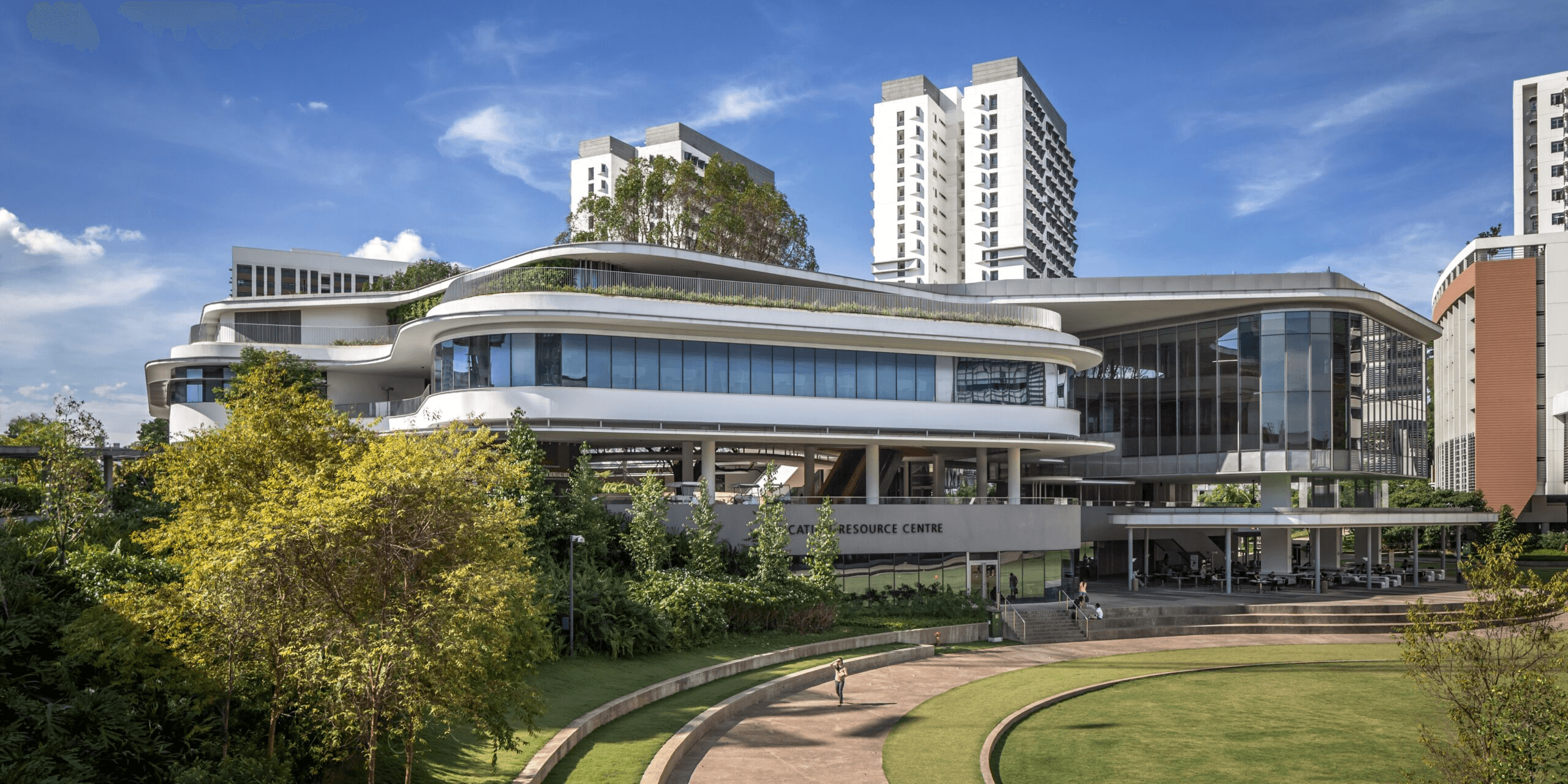
How to get into NUS Singapore with research | RISE Research
How to get into NUS Singapore with research | RISE Research
RISE Research
RISE Research
TL;DR: This post examines whether high school research strengthens your application to the National University of Singapore (NUS), one of Asia's most selective universities with an acceptance rate estimated between 5 and 10 percent for competitive programmes. The core finding is clear: NUS explicitly values intellectual initiative and independent academic work in its holistic admissions review. Students who arrive with published, peer-reviewed research signal precisely the academic depth NUS selects for. If NUS is your target, this post tells you exactly how to build and present that research record before your application opens.
Introduction
Your child has straight As and a near-perfect SAT or A-Level score. So does nearly every other student applying to NUS Singapore this year. For competitive programmes like Computer Science, Medicine, Law, and Business at NUS, academic excellence is the baseline, not the differentiator. Understanding how to get into NUS Singapore with high school research is increasingly the question that separates admitted students from rejected ones with identical transcripts.
NUS consistently ranks among the top 15 universities in the world, and its admissions process has evolved well beyond grades and scores. The university evaluates applicants across multiple dimensions, including intellectual curiosity, evidence of independent thinking, and the ability to contribute to a research-active academic community. This post covers what NUS admissions materials actually say about independent academic work, what kind of research registers with admissions readers, and how to translate a completed research project into every relevant section of your NUS application.
Does Research Experience Help You Get Into NUS Singapore?
Yes. NUS explicitly includes intellectual curiosity and independent academic initiative as criteria in its holistic admissions framework. The university's own admissions guidance states that beyond academic results, it assesses applicants on qualities including passion for learning and evidence of pursuing knowledge beyond the classroom. Students who present published research demonstrate exactly these qualities in a form that is verifiable and discipline-specific.
NUS admissions is not a purely grades-based process. The university uses a holistic review model across most of its undergraduate programmes, particularly for the NUS College (formerly University Scholars Programme), the Faculty of Science, the School of Computing, and the Yong Siew Toh Conservatory. In these programmes, the admissions committee looks beyond the predicted or achieved A-Level, IB, or SAT scores to assess what a student has done with their intellectual interests outside of class.
Research that helps is original, discipline-grounded, and ideally published or submitted for peer review. A student who has designed a methodology, collected and analysed data, and produced a written paper demonstrates skills that a summer programme certificate or a science fair participation ribbon simply cannot replicate. Science fairs reward experimental performance on a single day. Published research demonstrates sustained intellectual effort over months, under expert guidance, with a written output that external reviewers have evaluated. That distinction matters to NUS readers because it maps directly onto what students will be expected to do from their first year on campus.
Research that does not help is superficial: a two-week camp labelled a research programme, a group project with no individual intellectual contribution, or a paper submitted to a predatory journal with no genuine peer review. NUS admissions readers are academics. They recognise the difference.
What NUS Admissions Officers Say About Intellectual Curiosity and Independent Work
NUS has published guidance through its admissions office and programme-specific pages that consistently emphasises qualities beyond academic achievement. The NUS Office of Admissions states that the university seeks students who demonstrate a passion for learning and the potential to contribute to the NUS community, not merely those who meet grade thresholds.
The NUS College (NUSC), the university's most selective liberal arts and interdisciplinary programme, is particularly explicit. Its admissions materials describe the ideal candidate as someone who pursues intellectual interests with depth and initiative, and who can engage in research-level thinking from an early stage.
The Faculty of Science at NUS runs the Science Research Programme for undergraduates from their first year, signalling that research readiness is a valued trait at point of entry. Students who arrive already having conducted independent research are positioned to enter these programmes immediately rather than spending their first year building foundational research skills.
What this means practically: a published peer-reviewed paper does not sit in the extracurriculars category the way a sports captaincy or a music grade does. It sits in a separate register, one that speaks directly to academic potential. A teacher's A grade tells NUS you can execute within a defined curriculum. A published paper tells NUS you can generate original knowledge within a discipline. These are different signals, and NUS reads them differently.
What Kind of Research Actually Impresses NUS Admissions?
NUS responds to research that is original, methodologically sound, and submitted to a legitimate peer-reviewed publication. A paper published in a recognised academic journal carries significantly more weight than a project report, a school competition entry, or a certificate from a university outreach programme. The research must reflect genuine intellectual ownership: the student formulated the question, designed the approach, and produced the written output.
The subjects that align most strongly with NUS's academic priorities include Computer Science and Artificial Intelligence, Biomedical Sciences and Life Sciences, Economics and Quantitative Social Science, and Environmental Science and Sustainability. These fields reflect both NUS's research strengths and the disciplines where high school students can realistically conduct original, publishable work with the right mentorship.
For students applying to NUS's Computing or Engineering programmes, a research project in machine learning, data analysis, or computational modelling is directly relevant and demonstrates the technical fluency NUS expects. For Life Sciences or Medicine applicants, a project in molecular biology, public health data analysis, or environmental science maps onto NUS's research agenda and signals preparedness for lab-based undergraduate study.
NUS applications are submitted through the university's own portal and, for international students, sometimes through UCAS-equivalent national systems. The application includes a personal statement and, for some programmes, supplemental questions. The personal statement is the primary vehicle for presenting research. A strong research personal statement for NUS names the specific question the student investigated, explains why it mattered intellectually, describes what the student found, and connects that experience to what the student wants to study at NUS. A weak version simply lists the research project as an activity without demonstrating what the student learned or how it changed their thinking.
Students applying to NUS College should also address how their research experience connects to interdisciplinary inquiry, since NUSC explicitly values the ability to work across disciplinary boundaries. A student whose research sits at the intersection of, for example, data science and public health policy is demonstrating exactly the kind of thinking NUSC is designed for.
You can explore the range of research projects RISE scholars have completed across these disciplines on the RISE Research projects page.
How to Turn Research into a Stronger NUS Application
The personal statement is the most important document in an NUS application, and research gives you the most intellectually substantial material to work with. The key is not simply to describe the research but to use it to demonstrate how you think. NUS readers want to see a student who identified a genuine problem, pursued it with rigour, and drew conclusions that opened further questions. That arc, from curiosity to investigation to insight, is what a strong NUS personal statement built around research looks like.
In terms of length and format, NUS personal statements for most programmes are 500 to 1,000 words depending on the programme and intake cycle. The research should occupy a substantial portion of this space, not as a list item but as a narrative. The student should explain what question they asked, what they found, and why it matters to the field they want to enter at NUS.
For the activities or achievements section of the NUS application, describe the research project with precision. Name the research question, the methodology, the output, and the publication venue. A line that reads "Published original research on urban heat island effects in the International Journal of High School Research" tells an admissions reader far more than "Conducted independent research project." Specificity signals credibility.
A letter of recommendation from a PhD research mentor adds a dimension that a school teacher's letter cannot provide. A teacher can speak to your performance within a curriculum. A research mentor can speak to your ability to operate at the frontier of a discipline, to handle ambiguity, to revise your thinking when the data contradicts your hypothesis. NUS admissions readers, who are themselves researchers, understand the difference between these two reference types immediately.
If the application allows supplemental documentation, use it to include the abstract or a brief summary of the research paper. Keep this section factual and concise. The goal is to give the admissions reader enough information to verify the research is genuine and to understand its academic scope.
Turning research into a coherent application narrative takes as much skill as the research itself. That is exactly what the RISE Research mentorship process is built around.
When Should You Start Research if NUS Singapore Is Your Goal?
The optimal window for NUS applicants is Grades 10 to 11. At this stage, students have enough subject knowledge to engage with a genuine research question but still have time to complete the research, submit to a journal, and receive a publication decision before their NUS application opens.
In Grades 9 and 10, the priority is subject exploration. Read widely in the field you are most drawn to. Identify the questions that existing research has not fully answered. This is not wasted time; it is the foundation of a credible research question.
In Grade 10 or 11, begin the RISE programme. Work with a PhD mentor to develop your research question, design your methodology, conduct your analysis, and write your paper. The RISE mentor network includes PhD researchers from leading institutions across the exact disciplines NUS values most. This is the stage where the intellectual work happens, and it typically takes four to six months from question to submission.
In the summer before Grade 12, submit your paper for peer review. A paper under review at the time your NUS application opens is a legitimate and credible credential. A published paper is stronger still. Either status demonstrates that your research has been subjected to external academic evaluation.
In Grade 12, write your personal statement with the research as the narrative centrepiece. Reference the specific programme you are applying to at NUS and connect your research directly to the academic work you want to pursue there. Submit your application with a complete research record across every relevant section.
If you are starting in Grade 12, the timeline compresses significantly but a path forward still exists. RISE supports Grade 12 starters with an accelerated track focused on completing research and submission within the application cycle. The essay strategy changes: the emphasis shifts to demonstrating intellectual depth and research readiness even if the paper is still under review at submission. The RISE FAQ covers this in more detail.
The Summer 2026 cohort is filling up. If NUS is on your list and you want research to be a real part of your application, book a free 20-minute Research Assessment here to find out what is achievable in your timeline.
Frequently Asked Questions About Research and NUS Singapore Admissions
Does NUS require research experience to apply?
No. NUS does not require research experience as a formal admission criterion. However, for competitive programmes including NUS College, Computing, and Life Sciences, applicants who present published or in-progress research consistently stand out in a holistic review process that explicitly values intellectual initiative beyond academic grades.
The distinction matters because most applicants to competitive NUS programmes meet the grade threshold. Research is not a requirement; it is the differentiator that separates academically equivalent candidates. Students who present original research give NUS admissions readers a concrete, discipline-specific reason to select them over a candidate with identical scores.
Does a published paper make a bigger difference than just doing research?
Yes. A published paper carries substantially more weight than an unpublished project. Publication means external peer reviewers, who are subject-matter experts, evaluated your work and found it meets academic standards. That external validation is what transforms a personal project into a credible academic credential that NUS readers can assess independently.
An unpublished research project is self-reported and unverifiable. A paper in a recognised journal is a permanent, citable record. Even a paper that is under review at the time of application signals that the work has been submitted for external scrutiny, which is meaningfully different from a project that exists only in a school portfolio. You can review the RISE publication venues to understand where RISE scholars publish their work.
What subjects are strongest for NUS applications?
The subjects that align most directly with NUS's research strengths and programme priorities are Computer Science and AI, Biomedical and Life Sciences, Economics and Quantitative Social Science, and Environmental Science. Research in these fields speaks directly to what NUS faculty work on and what NUS undergraduates are expected to engage with from their first year.
That said, NUS College and the Faculty of Arts and Social Sciences value interdisciplinary research that crosses traditional subject boundaries. A student applying to these programmes with research that connects, for example, computational methods and humanities questions is demonstrating exactly the kind of thinking these programmes are designed to develop. The RISE projects page shows the range of disciplines where high school students produce publishable work.
How do I write about research in my NUS personal statement?
Write about the intellectual journey, not the administrative facts. NUS readers want to know what question you asked, why it mattered, what you found, and how it changed your thinking. The personal statement should connect your research directly to the programme you are applying to at NUS and explain what you want to investigate further as an NUS undergraduate.
Avoid listing the research as a bullet point or describing it in generic terms. Specificity is what makes a research personal statement credible. Name the methodology, name the finding, name the journal. Then explain why that experience makes you the kind of student NUS College or the Faculty of Science is looking for. For guidance on structuring a research-led personal statement, the RISE blog covers this in depth.
Is it too late to start research in Grade 12 for NUS?
It is not too late, but the strategy changes. A Grade 12 student who begins research in September and submits a paper by December can include it as under review in their NUS application. The personal statement must do more work to demonstrate research readiness, focusing on intellectual depth and the rigour of the process rather than a completed publication record.
RISE supports Grade 12 starters with a focused timeline designed around the NUS application cycle. The priority is completing a high-quality paper and submitting it before or alongside the application. Starting earlier produces a stronger outcome, but starting in Grade 12 with the right support produces a meaningfully stronger application than not starting at all. If you are in Grade 12 now, contact RISE to discuss what is achievable before your deadline.
Conclusion
NUS Singapore is one of the most competitive universities in the world, and its admissions process is designed to identify students who go beyond academic performance to demonstrate genuine intellectual initiative. Research, particularly published research conducted under expert mentorship, is the most credible signal of that initiative available to a high school student. It transforms a strong academic record into a complete picture of a student who is ready to contribute to a research-active university from day one.
The strategic window for NUS applicants is Grades 10 and 11, but every grade level has a viable path. The key is starting with a clear research question, working under a qualified mentor, and producing a written output that can be submitted for peer review before your application opens. The RISE Research results reflect what is achievable when students commit to this process with the right support. The Summer 2026 Priority Deadline is approaching. If NUS is your target and you want research to be a real part of your application, schedule a free Research Assessment and we will tell you exactly what is achievable in your timeline.
TL;DR: This post examines whether high school research strengthens your application to the National University of Singapore (NUS), one of Asia's most selective universities with an acceptance rate estimated between 5 and 10 percent for competitive programmes. The core finding is clear: NUS explicitly values intellectual initiative and independent academic work in its holistic admissions review. Students who arrive with published, peer-reviewed research signal precisely the academic depth NUS selects for. If NUS is your target, this post tells you exactly how to build and present that research record before your application opens.
Introduction
Your child has straight As and a near-perfect SAT or A-Level score. So does nearly every other student applying to NUS Singapore this year. For competitive programmes like Computer Science, Medicine, Law, and Business at NUS, academic excellence is the baseline, not the differentiator. Understanding how to get into NUS Singapore with high school research is increasingly the question that separates admitted students from rejected ones with identical transcripts.
NUS consistently ranks among the top 15 universities in the world, and its admissions process has evolved well beyond grades and scores. The university evaluates applicants across multiple dimensions, including intellectual curiosity, evidence of independent thinking, and the ability to contribute to a research-active academic community. This post covers what NUS admissions materials actually say about independent academic work, what kind of research registers with admissions readers, and how to translate a completed research project into every relevant section of your NUS application.
Does Research Experience Help You Get Into NUS Singapore?
Yes. NUS explicitly includes intellectual curiosity and independent academic initiative as criteria in its holistic admissions framework. The university's own admissions guidance states that beyond academic results, it assesses applicants on qualities including passion for learning and evidence of pursuing knowledge beyond the classroom. Students who present published research demonstrate exactly these qualities in a form that is verifiable and discipline-specific.
NUS admissions is not a purely grades-based process. The university uses a holistic review model across most of its undergraduate programmes, particularly for the NUS College (formerly University Scholars Programme), the Faculty of Science, the School of Computing, and the Yong Siew Toh Conservatory. In these programmes, the admissions committee looks beyond the predicted or achieved A-Level, IB, or SAT scores to assess what a student has done with their intellectual interests outside of class.
Research that helps is original, discipline-grounded, and ideally published or submitted for peer review. A student who has designed a methodology, collected and analysed data, and produced a written paper demonstrates skills that a summer programme certificate or a science fair participation ribbon simply cannot replicate. Science fairs reward experimental performance on a single day. Published research demonstrates sustained intellectual effort over months, under expert guidance, with a written output that external reviewers have evaluated. That distinction matters to NUS readers because it maps directly onto what students will be expected to do from their first year on campus.
Research that does not help is superficial: a two-week camp labelled a research programme, a group project with no individual intellectual contribution, or a paper submitted to a predatory journal with no genuine peer review. NUS admissions readers are academics. They recognise the difference.
What NUS Admissions Officers Say About Intellectual Curiosity and Independent Work
NUS has published guidance through its admissions office and programme-specific pages that consistently emphasises qualities beyond academic achievement. The NUS Office of Admissions states that the university seeks students who demonstrate a passion for learning and the potential to contribute to the NUS community, not merely those who meet grade thresholds.
The NUS College (NUSC), the university's most selective liberal arts and interdisciplinary programme, is particularly explicit. Its admissions materials describe the ideal candidate as someone who pursues intellectual interests with depth and initiative, and who can engage in research-level thinking from an early stage.
The Faculty of Science at NUS runs the Science Research Programme for undergraduates from their first year, signalling that research readiness is a valued trait at point of entry. Students who arrive already having conducted independent research are positioned to enter these programmes immediately rather than spending their first year building foundational research skills.
What this means practically: a published peer-reviewed paper does not sit in the extracurriculars category the way a sports captaincy or a music grade does. It sits in a separate register, one that speaks directly to academic potential. A teacher's A grade tells NUS you can execute within a defined curriculum. A published paper tells NUS you can generate original knowledge within a discipline. These are different signals, and NUS reads them differently.
What Kind of Research Actually Impresses NUS Admissions?
NUS responds to research that is original, methodologically sound, and submitted to a legitimate peer-reviewed publication. A paper published in a recognised academic journal carries significantly more weight than a project report, a school competition entry, or a certificate from a university outreach programme. The research must reflect genuine intellectual ownership: the student formulated the question, designed the approach, and produced the written output.
The subjects that align most strongly with NUS's academic priorities include Computer Science and Artificial Intelligence, Biomedical Sciences and Life Sciences, Economics and Quantitative Social Science, and Environmental Science and Sustainability. These fields reflect both NUS's research strengths and the disciplines where high school students can realistically conduct original, publishable work with the right mentorship.
For students applying to NUS's Computing or Engineering programmes, a research project in machine learning, data analysis, or computational modelling is directly relevant and demonstrates the technical fluency NUS expects. For Life Sciences or Medicine applicants, a project in molecular biology, public health data analysis, or environmental science maps onto NUS's research agenda and signals preparedness for lab-based undergraduate study.
NUS applications are submitted through the university's own portal and, for international students, sometimes through UCAS-equivalent national systems. The application includes a personal statement and, for some programmes, supplemental questions. The personal statement is the primary vehicle for presenting research. A strong research personal statement for NUS names the specific question the student investigated, explains why it mattered intellectually, describes what the student found, and connects that experience to what the student wants to study at NUS. A weak version simply lists the research project as an activity without demonstrating what the student learned or how it changed their thinking.
Students applying to NUS College should also address how their research experience connects to interdisciplinary inquiry, since NUSC explicitly values the ability to work across disciplinary boundaries. A student whose research sits at the intersection of, for example, data science and public health policy is demonstrating exactly the kind of thinking NUSC is designed for.
You can explore the range of research projects RISE scholars have completed across these disciplines on the RISE Research projects page.
How to Turn Research into a Stronger NUS Application
The personal statement is the most important document in an NUS application, and research gives you the most intellectually substantial material to work with. The key is not simply to describe the research but to use it to demonstrate how you think. NUS readers want to see a student who identified a genuine problem, pursued it with rigour, and drew conclusions that opened further questions. That arc, from curiosity to investigation to insight, is what a strong NUS personal statement built around research looks like.
In terms of length and format, NUS personal statements for most programmes are 500 to 1,000 words depending on the programme and intake cycle. The research should occupy a substantial portion of this space, not as a list item but as a narrative. The student should explain what question they asked, what they found, and why it matters to the field they want to enter at NUS.
For the activities or achievements section of the NUS application, describe the research project with precision. Name the research question, the methodology, the output, and the publication venue. A line that reads "Published original research on urban heat island effects in the International Journal of High School Research" tells an admissions reader far more than "Conducted independent research project." Specificity signals credibility.
A letter of recommendation from a PhD research mentor adds a dimension that a school teacher's letter cannot provide. A teacher can speak to your performance within a curriculum. A research mentor can speak to your ability to operate at the frontier of a discipline, to handle ambiguity, to revise your thinking when the data contradicts your hypothesis. NUS admissions readers, who are themselves researchers, understand the difference between these two reference types immediately.
If the application allows supplemental documentation, use it to include the abstract or a brief summary of the research paper. Keep this section factual and concise. The goal is to give the admissions reader enough information to verify the research is genuine and to understand its academic scope.
Turning research into a coherent application narrative takes as much skill as the research itself. That is exactly what the RISE Research mentorship process is built around.
When Should You Start Research if NUS Singapore Is Your Goal?
The optimal window for NUS applicants is Grades 10 to 11. At this stage, students have enough subject knowledge to engage with a genuine research question but still have time to complete the research, submit to a journal, and receive a publication decision before their NUS application opens.
In Grades 9 and 10, the priority is subject exploration. Read widely in the field you are most drawn to. Identify the questions that existing research has not fully answered. This is not wasted time; it is the foundation of a credible research question.
In Grade 10 or 11, begin the RISE programme. Work with a PhD mentor to develop your research question, design your methodology, conduct your analysis, and write your paper. The RISE mentor network includes PhD researchers from leading institutions across the exact disciplines NUS values most. This is the stage where the intellectual work happens, and it typically takes four to six months from question to submission.
In the summer before Grade 12, submit your paper for peer review. A paper under review at the time your NUS application opens is a legitimate and credible credential. A published paper is stronger still. Either status demonstrates that your research has been subjected to external academic evaluation.
In Grade 12, write your personal statement with the research as the narrative centrepiece. Reference the specific programme you are applying to at NUS and connect your research directly to the academic work you want to pursue there. Submit your application with a complete research record across every relevant section.
If you are starting in Grade 12, the timeline compresses significantly but a path forward still exists. RISE supports Grade 12 starters with an accelerated track focused on completing research and submission within the application cycle. The essay strategy changes: the emphasis shifts to demonstrating intellectual depth and research readiness even if the paper is still under review at submission. The RISE FAQ covers this in more detail.
The Summer 2026 cohort is filling up. If NUS is on your list and you want research to be a real part of your application, book a free 20-minute Research Assessment here to find out what is achievable in your timeline.
Frequently Asked Questions About Research and NUS Singapore Admissions
Does NUS require research experience to apply?
No. NUS does not require research experience as a formal admission criterion. However, for competitive programmes including NUS College, Computing, and Life Sciences, applicants who present published or in-progress research consistently stand out in a holistic review process that explicitly values intellectual initiative beyond academic grades.
The distinction matters because most applicants to competitive NUS programmes meet the grade threshold. Research is not a requirement; it is the differentiator that separates academically equivalent candidates. Students who present original research give NUS admissions readers a concrete, discipline-specific reason to select them over a candidate with identical scores.
Does a published paper make a bigger difference than just doing research?
Yes. A published paper carries substantially more weight than an unpublished project. Publication means external peer reviewers, who are subject-matter experts, evaluated your work and found it meets academic standards. That external validation is what transforms a personal project into a credible academic credential that NUS readers can assess independently.
An unpublished research project is self-reported and unverifiable. A paper in a recognised journal is a permanent, citable record. Even a paper that is under review at the time of application signals that the work has been submitted for external scrutiny, which is meaningfully different from a project that exists only in a school portfolio. You can review the RISE publication venues to understand where RISE scholars publish their work.
What subjects are strongest for NUS applications?
The subjects that align most directly with NUS's research strengths and programme priorities are Computer Science and AI, Biomedical and Life Sciences, Economics and Quantitative Social Science, and Environmental Science. Research in these fields speaks directly to what NUS faculty work on and what NUS undergraduates are expected to engage with from their first year.
That said, NUS College and the Faculty of Arts and Social Sciences value interdisciplinary research that crosses traditional subject boundaries. A student applying to these programmes with research that connects, for example, computational methods and humanities questions is demonstrating exactly the kind of thinking these programmes are designed to develop. The RISE projects page shows the range of disciplines where high school students produce publishable work.
How do I write about research in my NUS personal statement?
Write about the intellectual journey, not the administrative facts. NUS readers want to know what question you asked, why it mattered, what you found, and how it changed your thinking. The personal statement should connect your research directly to the programme you are applying to at NUS and explain what you want to investigate further as an NUS undergraduate.
Avoid listing the research as a bullet point or describing it in generic terms. Specificity is what makes a research personal statement credible. Name the methodology, name the finding, name the journal. Then explain why that experience makes you the kind of student NUS College or the Faculty of Science is looking for. For guidance on structuring a research-led personal statement, the RISE blog covers this in depth.
Is it too late to start research in Grade 12 for NUS?
It is not too late, but the strategy changes. A Grade 12 student who begins research in September and submits a paper by December can include it as under review in their NUS application. The personal statement must do more work to demonstrate research readiness, focusing on intellectual depth and the rigour of the process rather than a completed publication record.
RISE supports Grade 12 starters with a focused timeline designed around the NUS application cycle. The priority is completing a high-quality paper and submitting it before or alongside the application. Starting earlier produces a stronger outcome, but starting in Grade 12 with the right support produces a meaningfully stronger application than not starting at all. If you are in Grade 12 now, contact RISE to discuss what is achievable before your deadline.
Conclusion
NUS Singapore is one of the most competitive universities in the world, and its admissions process is designed to identify students who go beyond academic performance to demonstrate genuine intellectual initiative. Research, particularly published research conducted under expert mentorship, is the most credible signal of that initiative available to a high school student. It transforms a strong academic record into a complete picture of a student who is ready to contribute to a research-active university from day one.
The strategic window for NUS applicants is Grades 10 and 11, but every grade level has a viable path. The key is starting with a clear research question, working under a qualified mentor, and producing a written output that can be submitted for peer review before your application opens. The RISE Research results reflect what is achievable when students commit to this process with the right support. The Summer 2026 Priority Deadline is approaching. If NUS is your target and you want research to be a real part of your application, schedule a free Research Assessment and we will tell you exactly what is achievable in your timeline.
Fall 2026 Cohort Deadline Closing on 28th September
Book a free 20-min strategy call
Book a free 20-min strategy call
Read More