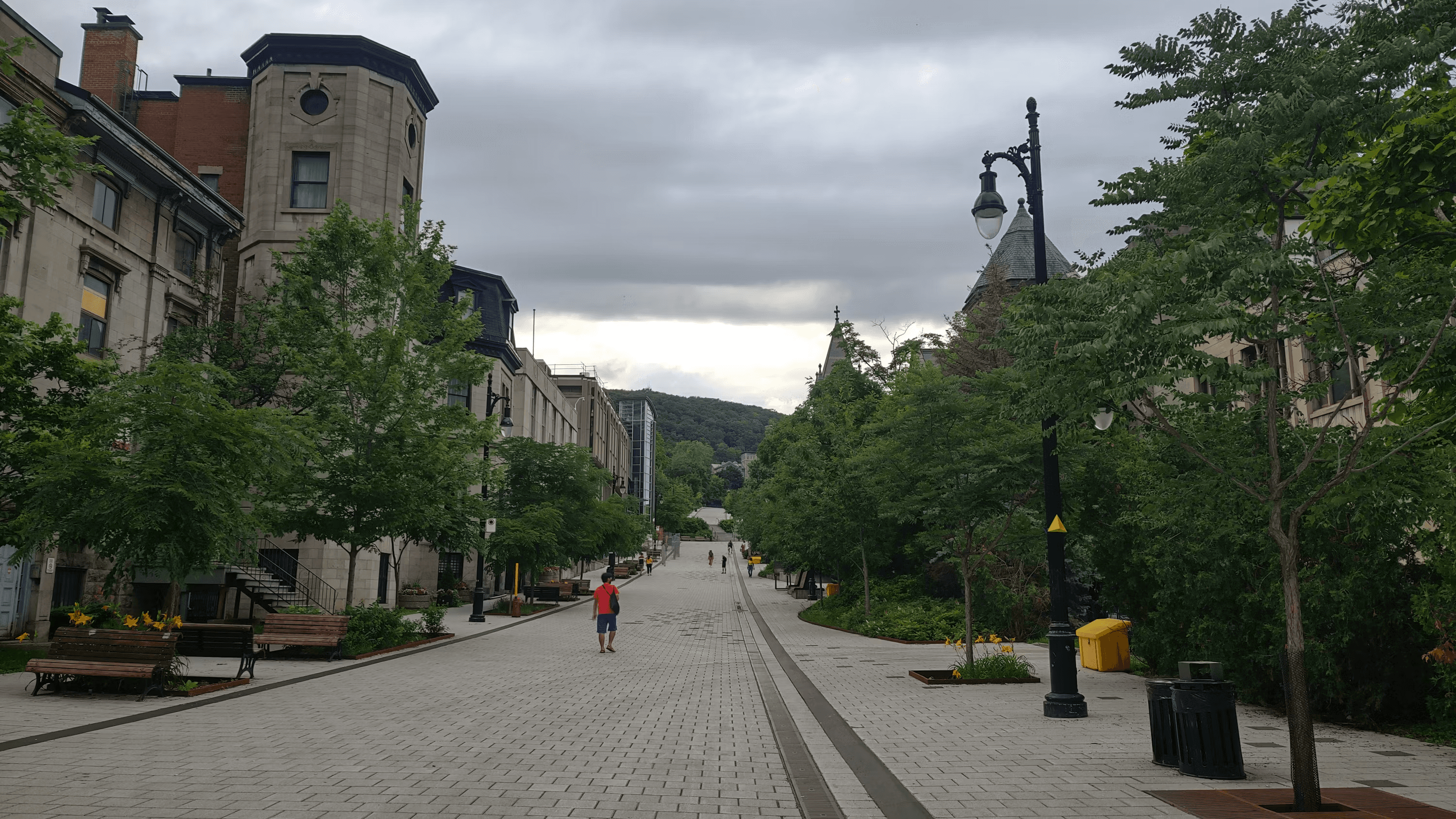
How to get into McGill with research | RISE Research
How to get into McGill with research | RISE Research
RISE Research
RISE Research
TL;DR: McGill University admits roughly 46% of applicants overall, but competition for top programs like Medicine, Engineering, and Science is far sharper. This post examines whether high school research strengthens a McGill application, what McGill's admissions materials say about intellectual initiative, and how to translate a published paper into a compelling application narrative. If McGill is your target, the clearest strategic move you can make before Grade 12 is to produce original, published research under expert guidance.
Introduction
Your child has a 4.0 and a 1550 SAT. So does every other student applying to McGill University this year. McGill's overall acceptance rate sits at approximately 46%, but that number is misleading. Acceptance rates for competitive programs, including Life Sciences, Computer Science, and Engineering, are considerably lower, and the pool of international applicants competing for those seats is growing every year. Grades and scores get you to the table. They do not win you a seat.
Understanding how to get into McGill with high school research means understanding what separates candidates who look identical on paper. This post covers what McGill's admissions process actually values beyond transcripts, what their materials say about intellectual initiative, and how a published research paper registers differently from every other extracurricular on a student's list.
Does Research Experience Help You Get Into McGill?
Answer: Yes, and the effect is most pronounced in competitive faculties. McGill evaluates applicants holistically across academic achievement, intellectual curiosity, and personal qualities. Research experience, particularly published work, provides direct, verifiable evidence of intellectual initiative that coursework alone cannot replicate. It signals readiness for university-level inquiry in a way that no grade or test score can.
McGill's admissions process is holistic, which means evaluators look beyond the transcript. For high-demand programs, the difference between an offer and a rejection often comes down to what a student has done with their intellectual interests outside the classroom.
Research experience addresses this gap directly. A student who has identified a genuine question in their field, designed a methodology, collected data, and produced a written paper has demonstrated university-level thinking before arriving on campus. That is not a claim a science fair ribbon or a summer enrichment certificate can make with the same credibility.
The distinction matters because not all research is equal in an admissions context. Attending a research-themed summer programme and shadowing a graduate student is categorically different from conducting original research and submitting it to a peer-reviewed journal. The first shows interest. The second shows capacity. McGill's competitive faculties are looking for capacity.
Published research also creates a paper trail that admissions readers can verify. A journal publication is not self-reported in the same way a leadership role or a volunteer hour count is. It exists independently, which gives it a different weight in the evaluation process.
What McGill Admissions Officers Say About Intellectual Curiosity and Independent Work
McGill's admissions materials consistently emphasise intellectual engagement as a core criterion. The university's undergraduate admissions selection page states that McGill evaluates students on academic achievement alongside personal qualities, including demonstrated intellectual curiosity and initiative. The university is explicit that it looks for students who pursue learning beyond required coursework.
McGill's Faculty of Science, one of the university's most competitive entry points, notes in its admissions guidance that students who have engaged with scientific questions independently are well-prepared for the research-intensive environment they will encounter from first year onward. This framing is significant: McGill is not treating research experience as a bonus. It is treating it as preparation for what students will actually do at McGill.
McGill does not use the Common App. Students apply through the McGill online application portal, and certain programs require a personal statement or supplemental writing. The Faculty of Arts and the Faculty of Science both request a personal statement for some applicants, where students are asked to describe their academic interests and how those interests have developed. This is the primary space where research experience belongs in a McGill application, and it is where a published paper creates a narrative that grades alone cannot build.
The practical implication: if a student has conducted original research, the personal statement is not the place to mention it briefly. It is the place to build the entire intellectual arc of the application around it.
What Kind of Research Actually Impresses McGill Admissions?
Answer: Original, question-driven research that results in a written paper, ideally published in a peer-reviewed or academic journal, is what registers as genuine intellectual initiative at McGill. The research must connect directly to the student's intended area of study. Depth in one area outperforms breadth across many.
McGill is a research-intensive university ranked consistently among the top universities in Canada and in the global top 100. Its faculty culture prizes original inquiry. Students who arrive having already practised that inquiry, at a level that produced a publishable paper, fit the institutional identity in a way that summer programme alumni do not.
The subjects that align most naturally with McGill's academic priorities include life sciences and biomedical research, environmental science and sustainability, computer science and artificial intelligence, and economics and public policy. These are fields where McGill has established research strength and where high school students can realistically produce original work with the right mentorship. You can explore the range of RISE student research projects across these disciplines to understand what is achievable at the high school level.
In McGill's personal statement, the goal is not to summarise a research project. The goal is to show how the process of conducting research changed how the student thinks. Admissions readers want to see intellectual development, not a methods section. A strong research essay for McGill describes the question that drove the work, the moment the student encountered a problem they did not expect, and what that experience revealed about how they want to engage with their field at university.
For programs that do not require a personal statement, the Activities section of the McGill application (or the equivalent space in the portal) is where research should appear. Describing a published paper in that space, including the journal name and the core finding, changes how the entire application reads.
How to Turn Research Into a Stronger McGill Application
The Activities section of the McGill application gives students limited space to describe each extracurricular. When research appears in that section, the description should lead with the outcome: the publication, the journal, and the field. A reader who sees "published paper on antibiotic resistance mechanisms in the Journal of Student Research" immediately understands the level of work involved. A reader who sees "conducted independent biology research" does not. The specificity of a publication changes the entry entirely.
McGill's personal statement is the most important space for research in a competitive application. For programs that request it, the prompt typically asks students to describe their academic interests and how they developed. This is not an invitation to list achievements. It is an invitation to demonstrate intellectual identity. A student who has published research has a concrete, specific answer to that prompt. The research becomes the spine of the essay, and every other academic interest connects back to it. A weak research essay for McGill describes the project. A strong one describes the thinking.
McGill does not use the Common App Additional Information section, but the application portal does provide space for students to include supplementary context. This space is appropriate for explaining the scope of a research project that cannot be fully described elsewhere, including the methodology, the mentor's institutional affiliation, and the publication status. Keep this section factual and concise. Admissions readers use it to verify and contextualise, not to evaluate writing quality.
A letter of recommendation from a research mentor adds a dimension that a classroom teacher cannot provide. A teacher can speak to academic performance. A research mentor can speak to how a student thinks when the answer is not in a textbook. For McGill's competitive programs, that distinction matters. The mentor's letter should address the student's intellectual independence, their response to failure or unexpected results, and their capacity to contribute to a research environment at university level. McGill readers look for evidence of genuine scholarly potential, and a mentor who supervised original work is the most credible source of that evidence.
Turning research into a coherent application narrative takes as much skill as the research itself. That is exactly what the RISE mentorship process is built around.
When Should You Start Research if McGill Is Your Goal?
The optimal window for McGill applicants is Grades 10 and 11. In Grade 9 and early Grade 10, students should focus on identifying their genuine academic interest and reading widely in that field. The goal at this stage is not to produce research. It is to develop enough familiarity with a subject to ask a question worth investigating.
Grade 10 to 11 is the right time to begin a structured research program. Working with a PhD mentor through RISE's network of research mentors, students develop a research question, design a methodology, conduct the work, and produce a written paper. This window is ideal for McGill applicants because it allows time to submit to a journal before Grade 12 applications open.
By the end of Grade 11 or the beginning of Grade 12 summer, the paper should be submitted and ideally under review or published. McGill applications open in the autumn of Grade 12, and a paper that is already published carries more weight than one described as "in progress." A paper under review at a named journal is still meaningful and should be listed accurately in the application.
Grade 12 is the time to write the personal statement with research as the central narrative, complete the application, and secure the research mentor's letter of recommendation. The research record, the essay, and the letter should all reinforce the same intellectual identity.
Students starting in Grade 12 still have a path. The timeline compresses, but a research project begun in September with a strong mentor can produce a paper by spring. The essay strategy shifts slightly: the focus moves to the intellectual process and the question being pursued, rather than a completed publication. RISE supports Grade 12 starters with a timeline built around the application calendar. The earlier you start, the stronger the record. But starting now is always better than not starting.
The Summer 2026 cohort is filling up. If McGill is on your list and you want research to be a real part of your application, book a free 20-minute Research Assessment here to find out what is achievable in your timeline.
Frequently Asked Questions About Research and McGill Admissions
Does McGill require research experience to apply?
No. McGill does not require research experience for undergraduate admission. However, in competitive programs such as Life Sciences, Computer Science, and Engineering, research experience provides evidence of intellectual initiative that distinguishes applicants with similar academic profiles. It is not a requirement; it is a differentiator.
For programs with high academic thresholds, the holistic review process means that non-academic factors carry real weight. Research experience, particularly published work, is one of the strongest signals available to a high school student in that context.
Does a published paper make a bigger difference than just doing research?
Yes. A published paper is independently verifiable and demonstrates that the work met an external standard of quality. Research that did not result in a publication is still valuable, but it is self-reported. A journal publication changes how the Activities section reads and gives the personal statement a concrete, credible foundation.
Publication also signals completion. Many students begin research projects and do not finish them. A published paper shows that the student carried the work through to its conclusion, which is itself a signal of academic maturity. You can review RISE publication venues and outcomes to understand the range of journals accessible to high school researchers.
What subjects are strongest for McGill applications?
Research in life sciences, environmental science, computer science, and economics aligns most directly with McGill's academic strengths and the programs that attract the most competitive applicants. These fields also offer realistic research questions for high school students working with a PhD mentor.
The subject matters less than the depth of the work. A well-executed research project in philosophy or linguistics is more impressive than a superficial project in biology. The goal is to produce work that demonstrates genuine intellectual engagement with a question, regardless of the field. Explore examples of RISE research projects across disciplines to identify where your interests align.
How do I write about research in McGill's personal statement?
The McGill personal statement asks about academic interests and their development. The strongest approach is to build the essay around the intellectual journey of the research: the question that drove the work, what the student discovered, and how the experience shaped their understanding of the field they want to study at McGill.
Avoid summarising the paper. The admissions reader is not evaluating the research itself. They are evaluating how the student thinks. Focus on the moment of genuine intellectual engagement, the problem that surprised you, the finding that changed your question, and what that process revealed about how you want to learn at university level.
Is it too late to start research in Grade 12 for McGill?
No. Starting in Grade 12 is possible, and RISE supports students on that timeline. The strategy shifts: rather than leading with a completed publication, the application emphasises the research process, the question being pursued, and the mentor relationship. A paper submitted to a journal by application time, even if not yet published, can still be listed and described accurately.
The honest reality is that Grade 10 or 11 starters have more flexibility and a stronger record by application time. But a Grade 12 student who begins research immediately and works with a structured mentor program can still produce meaningful work before McGill's deadlines. The path exists. The timeline is just tighter. Learn more about how high school students can begin research without a lab to understand what is possible regardless of your starting point.
What the Data Shows and What to Do Next
McGill's holistic admissions process rewards students who have done more than excel academically. Original research, conducted under expert mentorship and resulting in a published paper, provides the kind of evidence that grades and test scores cannot. It demonstrates intellectual readiness for a research-intensive university. It gives the personal statement a concrete, credible narrative. And it adds a dimension to the application that a classroom teacher's recommendation cannot replicate.
The students who use research most effectively in their McGill applications are not those who did the most activities. They are those who pursued one question seriously enough to produce something real. That is what RISE Research is designed to make possible, with PhD mentors, a structured program, and a 90% publication success rate across 40+ academic journals.
The Summer 2026 Priority Deadline is approaching. If McGill is your target and you want research to be a real part of your application, schedule a free Research Assessment and we will tell you exactly what is achievable in your timeline.
TL;DR: McGill University admits roughly 46% of applicants overall, but competition for top programs like Medicine, Engineering, and Science is far sharper. This post examines whether high school research strengthens a McGill application, what McGill's admissions materials say about intellectual initiative, and how to translate a published paper into a compelling application narrative. If McGill is your target, the clearest strategic move you can make before Grade 12 is to produce original, published research under expert guidance.
Introduction
Your child has a 4.0 and a 1550 SAT. So does every other student applying to McGill University this year. McGill's overall acceptance rate sits at approximately 46%, but that number is misleading. Acceptance rates for competitive programs, including Life Sciences, Computer Science, and Engineering, are considerably lower, and the pool of international applicants competing for those seats is growing every year. Grades and scores get you to the table. They do not win you a seat.
Understanding how to get into McGill with high school research means understanding what separates candidates who look identical on paper. This post covers what McGill's admissions process actually values beyond transcripts, what their materials say about intellectual initiative, and how a published research paper registers differently from every other extracurricular on a student's list.
Does Research Experience Help You Get Into McGill?
Answer: Yes, and the effect is most pronounced in competitive faculties. McGill evaluates applicants holistically across academic achievement, intellectual curiosity, and personal qualities. Research experience, particularly published work, provides direct, verifiable evidence of intellectual initiative that coursework alone cannot replicate. It signals readiness for university-level inquiry in a way that no grade or test score can.
McGill's admissions process is holistic, which means evaluators look beyond the transcript. For high-demand programs, the difference between an offer and a rejection often comes down to what a student has done with their intellectual interests outside the classroom.
Research experience addresses this gap directly. A student who has identified a genuine question in their field, designed a methodology, collected data, and produced a written paper has demonstrated university-level thinking before arriving on campus. That is not a claim a science fair ribbon or a summer enrichment certificate can make with the same credibility.
The distinction matters because not all research is equal in an admissions context. Attending a research-themed summer programme and shadowing a graduate student is categorically different from conducting original research and submitting it to a peer-reviewed journal. The first shows interest. The second shows capacity. McGill's competitive faculties are looking for capacity.
Published research also creates a paper trail that admissions readers can verify. A journal publication is not self-reported in the same way a leadership role or a volunteer hour count is. It exists independently, which gives it a different weight in the evaluation process.
What McGill Admissions Officers Say About Intellectual Curiosity and Independent Work
McGill's admissions materials consistently emphasise intellectual engagement as a core criterion. The university's undergraduate admissions selection page states that McGill evaluates students on academic achievement alongside personal qualities, including demonstrated intellectual curiosity and initiative. The university is explicit that it looks for students who pursue learning beyond required coursework.
McGill's Faculty of Science, one of the university's most competitive entry points, notes in its admissions guidance that students who have engaged with scientific questions independently are well-prepared for the research-intensive environment they will encounter from first year onward. This framing is significant: McGill is not treating research experience as a bonus. It is treating it as preparation for what students will actually do at McGill.
McGill does not use the Common App. Students apply through the McGill online application portal, and certain programs require a personal statement or supplemental writing. The Faculty of Arts and the Faculty of Science both request a personal statement for some applicants, where students are asked to describe their academic interests and how those interests have developed. This is the primary space where research experience belongs in a McGill application, and it is where a published paper creates a narrative that grades alone cannot build.
The practical implication: if a student has conducted original research, the personal statement is not the place to mention it briefly. It is the place to build the entire intellectual arc of the application around it.
What Kind of Research Actually Impresses McGill Admissions?
Answer: Original, question-driven research that results in a written paper, ideally published in a peer-reviewed or academic journal, is what registers as genuine intellectual initiative at McGill. The research must connect directly to the student's intended area of study. Depth in one area outperforms breadth across many.
McGill is a research-intensive university ranked consistently among the top universities in Canada and in the global top 100. Its faculty culture prizes original inquiry. Students who arrive having already practised that inquiry, at a level that produced a publishable paper, fit the institutional identity in a way that summer programme alumni do not.
The subjects that align most naturally with McGill's academic priorities include life sciences and biomedical research, environmental science and sustainability, computer science and artificial intelligence, and economics and public policy. These are fields where McGill has established research strength and where high school students can realistically produce original work with the right mentorship. You can explore the range of RISE student research projects across these disciplines to understand what is achievable at the high school level.
In McGill's personal statement, the goal is not to summarise a research project. The goal is to show how the process of conducting research changed how the student thinks. Admissions readers want to see intellectual development, not a methods section. A strong research essay for McGill describes the question that drove the work, the moment the student encountered a problem they did not expect, and what that experience revealed about how they want to engage with their field at university.
For programs that do not require a personal statement, the Activities section of the McGill application (or the equivalent space in the portal) is where research should appear. Describing a published paper in that space, including the journal name and the core finding, changes how the entire application reads.
How to Turn Research Into a Stronger McGill Application
The Activities section of the McGill application gives students limited space to describe each extracurricular. When research appears in that section, the description should lead with the outcome: the publication, the journal, and the field. A reader who sees "published paper on antibiotic resistance mechanisms in the Journal of Student Research" immediately understands the level of work involved. A reader who sees "conducted independent biology research" does not. The specificity of a publication changes the entry entirely.
McGill's personal statement is the most important space for research in a competitive application. For programs that request it, the prompt typically asks students to describe their academic interests and how they developed. This is not an invitation to list achievements. It is an invitation to demonstrate intellectual identity. A student who has published research has a concrete, specific answer to that prompt. The research becomes the spine of the essay, and every other academic interest connects back to it. A weak research essay for McGill describes the project. A strong one describes the thinking.
McGill does not use the Common App Additional Information section, but the application portal does provide space for students to include supplementary context. This space is appropriate for explaining the scope of a research project that cannot be fully described elsewhere, including the methodology, the mentor's institutional affiliation, and the publication status. Keep this section factual and concise. Admissions readers use it to verify and contextualise, not to evaluate writing quality.
A letter of recommendation from a research mentor adds a dimension that a classroom teacher cannot provide. A teacher can speak to academic performance. A research mentor can speak to how a student thinks when the answer is not in a textbook. For McGill's competitive programs, that distinction matters. The mentor's letter should address the student's intellectual independence, their response to failure or unexpected results, and their capacity to contribute to a research environment at university level. McGill readers look for evidence of genuine scholarly potential, and a mentor who supervised original work is the most credible source of that evidence.
Turning research into a coherent application narrative takes as much skill as the research itself. That is exactly what the RISE mentorship process is built around.
When Should You Start Research if McGill Is Your Goal?
The optimal window for McGill applicants is Grades 10 and 11. In Grade 9 and early Grade 10, students should focus on identifying their genuine academic interest and reading widely in that field. The goal at this stage is not to produce research. It is to develop enough familiarity with a subject to ask a question worth investigating.
Grade 10 to 11 is the right time to begin a structured research program. Working with a PhD mentor through RISE's network of research mentors, students develop a research question, design a methodology, conduct the work, and produce a written paper. This window is ideal for McGill applicants because it allows time to submit to a journal before Grade 12 applications open.
By the end of Grade 11 or the beginning of Grade 12 summer, the paper should be submitted and ideally under review or published. McGill applications open in the autumn of Grade 12, and a paper that is already published carries more weight than one described as "in progress." A paper under review at a named journal is still meaningful and should be listed accurately in the application.
Grade 12 is the time to write the personal statement with research as the central narrative, complete the application, and secure the research mentor's letter of recommendation. The research record, the essay, and the letter should all reinforce the same intellectual identity.
Students starting in Grade 12 still have a path. The timeline compresses, but a research project begun in September with a strong mentor can produce a paper by spring. The essay strategy shifts slightly: the focus moves to the intellectual process and the question being pursued, rather than a completed publication. RISE supports Grade 12 starters with a timeline built around the application calendar. The earlier you start, the stronger the record. But starting now is always better than not starting.
The Summer 2026 cohort is filling up. If McGill is on your list and you want research to be a real part of your application, book a free 20-minute Research Assessment here to find out what is achievable in your timeline.
Frequently Asked Questions About Research and McGill Admissions
Does McGill require research experience to apply?
No. McGill does not require research experience for undergraduate admission. However, in competitive programs such as Life Sciences, Computer Science, and Engineering, research experience provides evidence of intellectual initiative that distinguishes applicants with similar academic profiles. It is not a requirement; it is a differentiator.
For programs with high academic thresholds, the holistic review process means that non-academic factors carry real weight. Research experience, particularly published work, is one of the strongest signals available to a high school student in that context.
Does a published paper make a bigger difference than just doing research?
Yes. A published paper is independently verifiable and demonstrates that the work met an external standard of quality. Research that did not result in a publication is still valuable, but it is self-reported. A journal publication changes how the Activities section reads and gives the personal statement a concrete, credible foundation.
Publication also signals completion. Many students begin research projects and do not finish them. A published paper shows that the student carried the work through to its conclusion, which is itself a signal of academic maturity. You can review RISE publication venues and outcomes to understand the range of journals accessible to high school researchers.
What subjects are strongest for McGill applications?
Research in life sciences, environmental science, computer science, and economics aligns most directly with McGill's academic strengths and the programs that attract the most competitive applicants. These fields also offer realistic research questions for high school students working with a PhD mentor.
The subject matters less than the depth of the work. A well-executed research project in philosophy or linguistics is more impressive than a superficial project in biology. The goal is to produce work that demonstrates genuine intellectual engagement with a question, regardless of the field. Explore examples of RISE research projects across disciplines to identify where your interests align.
How do I write about research in McGill's personal statement?
The McGill personal statement asks about academic interests and their development. The strongest approach is to build the essay around the intellectual journey of the research: the question that drove the work, what the student discovered, and how the experience shaped their understanding of the field they want to study at McGill.
Avoid summarising the paper. The admissions reader is not evaluating the research itself. They are evaluating how the student thinks. Focus on the moment of genuine intellectual engagement, the problem that surprised you, the finding that changed your question, and what that process revealed about how you want to learn at university level.
Is it too late to start research in Grade 12 for McGill?
No. Starting in Grade 12 is possible, and RISE supports students on that timeline. The strategy shifts: rather than leading with a completed publication, the application emphasises the research process, the question being pursued, and the mentor relationship. A paper submitted to a journal by application time, even if not yet published, can still be listed and described accurately.
The honest reality is that Grade 10 or 11 starters have more flexibility and a stronger record by application time. But a Grade 12 student who begins research immediately and works with a structured mentor program can still produce meaningful work before McGill's deadlines. The path exists. The timeline is just tighter. Learn more about how high school students can begin research without a lab to understand what is possible regardless of your starting point.
What the Data Shows and What to Do Next
McGill's holistic admissions process rewards students who have done more than excel academically. Original research, conducted under expert mentorship and resulting in a published paper, provides the kind of evidence that grades and test scores cannot. It demonstrates intellectual readiness for a research-intensive university. It gives the personal statement a concrete, credible narrative. And it adds a dimension to the application that a classroom teacher's recommendation cannot replicate.
The students who use research most effectively in their McGill applications are not those who did the most activities. They are those who pursued one question seriously enough to produce something real. That is what RISE Research is designed to make possible, with PhD mentors, a structured program, and a 90% publication success rate across 40+ academic journals.
The Summer 2026 Priority Deadline is approaching. If McGill is your target and you want research to be a real part of your application, schedule a free Research Assessment and we will tell you exactly what is achievable in your timeline.
Fall 2026 Cohort Deadline Closing on 28th September
Book a free 20-min strategy call
Book a free 20-min strategy call
Read More