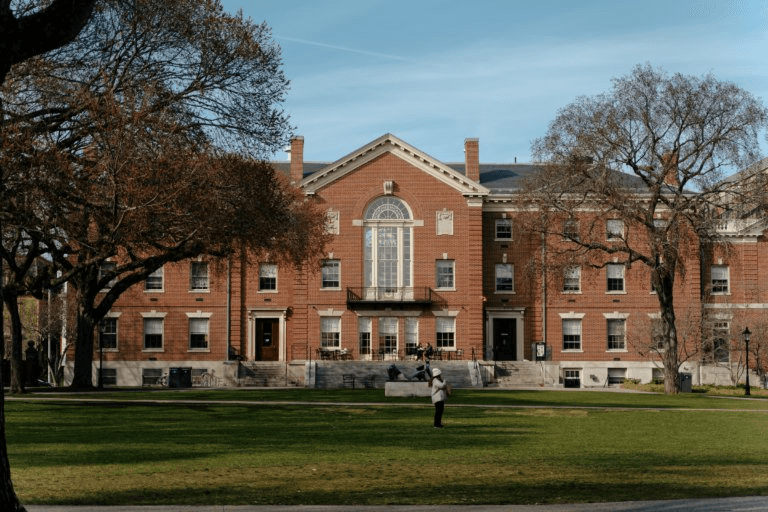
How to get into Brown with research | RISE Research
How to get into Brown with research | RISE Research
RISE Research
RISE Research
TL;DR: Brown University's acceptance rate sits at 5.4% for the Class of 2028, making it one of the most selective universities in the United States. This post examines whether high school research strengthens a Brown application, what Brown's own admissions materials say about intellectual initiative, and how to translate a published research paper into a compelling application narrative. If Brown is your target, the evidence is clear: original research, presented strategically, is one of the strongest signals you can send.
Your Child Has a 4.0 and a 1550. So Does Every Other Student Applying to Brown This Year.
Brown University received over 51,000 applications for the Class of 2028 and admitted just 5.4%, according to Brown's official admissions announcement. The students who did not get in were not unqualified. They were extraordinary by almost every conventional measure. The students who did get in had something beyond extraordinary grades and scores. They had demonstrated a capacity for original thought.
Understanding how to get into Brown with high school research means understanding what Brown's Open Curriculum actually signals about the university's values. Brown does not require core courses. It asks students to design their own education. That philosophy starts in admissions. Brown is looking for students who already think like independent scholars, not students who are waiting for a professor to tell them what to study.
This post covers exactly what Brown's admissions process values, what kind of research registers as a genuine signal, and how to build that research into every relevant part of your application.
Does Research Experience Help You Get Into Brown?
Yes. Research experience strengthens a Brown application in a specific and measurable way. Brown's Open Curriculum is built on the premise that students direct their own intellectual development. Admissions officers are trained to identify students who already demonstrate that capacity before arriving on campus. A peer-reviewed published paper is the most concrete evidence of that capacity available to a high school student.
Brown's holistic review process evaluates academic achievement, intellectual curiosity, and personal character alongside extracurricular depth. Of these, intellectual curiosity is the hardest to demonstrate through grades alone. Research closes that gap directly.
Brown's admissions process does not publish a breakdown of how many admitted students engaged in independent research. However, Brown's own admissions blog and officer communications consistently emphasise what they call "intellectual vitality," a term that appears across Brown's supplemental essay prompts and admissions guidance materials. A published research paper is the highest-fidelity signal of intellectual vitality available to a high school student.
The critical distinction is between research that demonstrates genuine inquiry and research that functions as a programme certificate. Attending a university summer programme and completing a group lab rotation is not the same as formulating an original research question, designing a methodology, conducting independent analysis, and submitting findings to peer review. Brown's admissions readers have seen thousands of summer programme certificates. They have seen far fewer published papers authored by high school students. That asymmetry matters.
What Brown Admissions Officers Say About Intellectual Curiosity and Independent Work
Brown's admissions materials are unusually explicit about what the university is looking for beyond grades and test scores. The Brown University first-year applicant guidance describes the admissions process as holistic and specifically names "intellectual curiosity" and "love of learning" as central evaluation criteria.
Logan Powell, Brown's Dean of Admission, has stated publicly that Brown seeks students who pursue learning for its own sake, not simply to accumulate credentials. In remarks reported by Brown's admissions office, Powell emphasised that the Open Curriculum attracts students who are "self-directed" and who have already demonstrated the ability to pursue knowledge independently. Independent research is the clearest pre-college expression of that quality.
Brown's Common Data Set for 2023-2024 lists "character/personal qualities" and "extracurricular activities" as "very important" factors in admissions decisions, while "class rank" is listed as "considered." This weighting reflects Brown's genuine prioritisation of who a student is as a thinker over where they rank in a class. A published research paper speaks directly to character as an intellectual, not just performance as a student.
Brown also participates in the Coalition Application and the Common Application. Its supplemental essays are specifically designed to surface intellectual identity, not just achievement. The essay prompts ask applicants to name academic and non-academic experiences that have shaped them, which creates a direct opening for research narratives that other universities' prompts do not always provide as cleanly.
What Kind of Research Actually Impresses Brown Admissions?
Brown responds to research that is original, independently driven, and connected to a genuine intellectual question, not to research completed as part of a structured group programme with a predetermined outcome. The research does not need to be in STEM. Brown values humanities, social science, and interdisciplinary inquiry equally, which reflects the Open Curriculum's rejection of hierarchies between fields.
The subjects that align most strongly with Brown's academic culture include cognitive science and neuroscience, public health and health policy, literary and cultural studies, computer science intersecting with ethics or social systems, and environmental science with policy implications. These fields reflect areas where Brown has particular research strength and where high school students can formulate genuine questions that connect to real scholarly conversations.
Brown's 2024-2025 supplemental essays include a prompt asking applicants to describe an experience that "demonstrates your love of learning, curiosity, or intellectual engagement" (250 words), and a prompt asking why Brown specifically, including its Open Curriculum (250 words). A third prompt invites applicants to describe a community they belong to and their role within it (250 words). The intellectual engagement prompt is the primary vehicle for presenting research. The Open Curriculum prompt is the secondary vehicle, because it allows applicants to connect their research to specific Brown faculty, labs, or concentrations they plan to pursue.
A published paper in a peer-reviewed journal changes the register of these essays entirely. Instead of describing curiosity in the abstract, the applicant can describe the specific moment a research question formed, the methodological choices they made, and what the findings meant. That level of specificity is what separates a strong Brown essay from a generic one. You can explore RISE Research publication venues to understand what peer-reviewed publication looks like at the high school level.
How to Turn Research Into a Stronger Brown Application
The Activities section of the Common App allows 150 characters per entry. For a research project, those 150 characters should prioritise the outcome, not the process. "Published author, Journal of Student Research; study on adolescent social media use and anxiety indicators" communicates more than "Conducted independent research on psychology topics." The word "published" signals completion, external validation, and scholarly contribution. It changes how the entry reads immediately.
Brown's supplemental essay on intellectual engagement is where the research narrative lives in full. A strong response names the research question directly, explains why that question mattered to the applicant personally, and describes what the process of answering it revealed, about the subject and about the applicant as a thinker. A weak response describes the research as impressive without showing the thinking behind it. Brown's readers are trained to spot the difference. The 250-word limit requires precision. Every sentence must carry weight. You can review examples of how RISE Scholars frame their research projects to understand the level of depth that distinguishes strong entries.
The Additional Information box on the Common App is underused by most applicants. For Brown specifically, this space is valuable for providing context that does not fit elsewhere: the journal name and publication status, the methodology in brief, the faculty or mentor who supervised the work, and any awards or conference presentations that followed. Keep this section factual and concise, under 200 words. It is not an essay. It is a record.
A letter of recommendation from a research mentor adds a dimension that a classroom teacher or coach cannot provide. A teacher can speak to how a student performs within a structured curriculum. A research mentor can speak to how a student performs without a curriculum, when the question is open, the answer is unknown, and the path forward requires independent judgment. Brown's admissions readers value that distinction. The mentor letter should describe the specific research question, the student's intellectual contributions, and the quality of their thinking under uncertainty. It should not simply praise the student's work ethic.
Turning research into a coherent application narrative takes as much skill as the research itself. That is exactly what the RISE Research mentorship process is built around.
When Should You Start Research If Brown Is Your Goal?
The optimal window for Brown applicants is Grades 10 to 11. Students in Grade 9 or early Grade 10 should focus on subject exploration, reading widely in fields that genuinely interest them, and identifying the questions they most want to answer. This is not wasted time. A research question that emerges from genuine curiosity produces a stronger paper and a more convincing essay than one chosen for strategic reasons.
Grade 10 to 11 is when the research itself should begin. This means working with a PhD mentor to develop a specific, answerable research question, designing a methodology, conducting the analysis, and drafting the paper. RISE Research pairs students with PhD mentors from leading institutions for exactly this process. The RISE mentor network includes researchers across the fields Brown values most, from cognitive science to public health to computational social science.
The Grade 11 summer is the ideal submission window. A paper submitted to a peer-reviewed journal by August of Grade 11 can be published, or at minimum under review, by the time the Common App opens in August of Grade 12. "Under review" still counts. It demonstrates that the work met the threshold for scholarly consideration.
Grade 12 September through October is when the supplemental essays are written with the research as the narrative core. The Brown intellectual engagement prompt and the Open Curriculum prompt both accommodate research narratives directly. Applications submitted in November (Early Decision) or January (Regular Decision) should include a complete research record across the Activities section, the Additional Information box, and at least one supplemental essay.
Students starting in Grade 12 can still pursue research through RISE. The timeline compresses, which means the journal submission may still be in progress when the application is submitted. That is manageable. A paper under review, described accurately, still signals intellectual initiative. The essay strategy shifts slightly: the focus moves from the published outcome to the research process itself and what it revealed. The RISE FAQ addresses timeline questions in detail for students at every grade level.
The earlier you start, the more options you have. But starting later does not close the door. It changes the strategy.
The Summer 2026 cohort is filling up. If Brown is on your list and you want research to be a real part of your application, book a free 20-minute Research Assessment here to find out what is achievable in your timeline.
Frequently Asked Questions About Research and Brown Admissions
Does Brown require research experience to apply?
Brown does not require research experience for admission. No university in the United States does. However, Brown's Open Curriculum explicitly attracts and selects students who demonstrate self-directed intellectual engagement, and research is the strongest available evidence of that quality at the high school level. Not having research experience is not disqualifying. Having it is differentiating.
The distinction matters because Brown's admissions pool is full of students with strong grades and test scores. Research gives the admissions reader a concrete reason to see a student as intellectually distinctive, not just academically strong. That difference is what the Open Curriculum is designed to reward.
Does a published paper make a bigger difference than just doing research?
Yes. A published paper carries external validation that a completed research project does not. Peer review means scholars outside the student's immediate environment assessed the work and found it credible. That signal is qualitatively different from a science fair win or a summer programme completion certificate. For Brown specifically, where intellectual vitality is a named admissions criterion, publication demonstrates that vitality at a level admissions readers can verify independently.
A paper under review at a reputable journal also registers differently from research that was never submitted. Submission itself indicates the student believed the work met scholarly standards and acted on that belief. That confidence and follow-through are part of what Brown is evaluating. You can explore how to publish high school research without a university affiliation for a detailed breakdown of the submission process.
What subjects are strongest for Brown applications?
Brown does not weight subjects hierarchically, which reflects the Open Curriculum's core philosophy. That said, research in fields where Brown has particular academic strength tends to connect most naturally to specific concentrations, faculty, and labs the applicant can name in the Open Curriculum essay. Cognitive science, public health, computer science with social or ethical dimensions, environmental studies, and literary or cultural studies are all fields where Brown's research culture is strong and where high school students can formulate genuinely original questions.
The subject matters less than the depth of engagement. A humanities research paper that advances a specific interpretive argument is more impressive to Brown's admissions readers than a STEM project that replicates a known result. Originality of inquiry is the standard, not field prestige. Students interested in less conventional research directions can find relevant examples in the RISE guide to turning unexpected passions into research projects.
How do I write about research in Brown's essays?
Use Brown's 250-word intellectual engagement prompt as the primary vehicle. Name the research question in the first two sentences. Explain why that question mattered to you specifically. Describe one methodological decision that required genuine judgment. Close with what the findings revealed, about the subject and about how you think. Do not summarise the paper. Show the thinking behind it.
The Open Curriculum prompt is the secondary vehicle. Connect your research to a specific Brown concentration, faculty member, or research lab you want to continue working with. This demonstrates that your intellectual interest is not generic but is specifically served by what Brown offers. Vague enthusiasm for Brown's flexibility does not distinguish you. Specific intellectual continuity does.
Is it too late to start research in Grade 12 for Brown?
It is not too late, but the strategy changes. A student beginning research in Grade 12 should aim to submit to a journal before the Regular Decision deadline in January, which is achievable with focused effort and strong mentorship. The paper may still be under review when the application is submitted. That is an honest and acceptable position to present.
The essay strategy for Grade 12 starters emphasises the research process and intellectual development rather than the published outcome. Brown's admissions readers evaluate the quality of thinking, not just the credential. A student who can articulate why they pursued a specific research question, what they discovered, and how it changed their understanding of a field is presenting exactly what Brown wants to see, regardless of publication status at the time of application. RISE Research mentorship is structured to support Grade 12 students with compressed timelines.
Research Is the Clearest Signal Brown Can Receive
Brown's 5.4% acceptance rate reflects a pool where nearly every applicant is academically qualified. What separates admitted students is not higher grades or better test scores. It is evidence of a mind already operating with independence and intellectual purpose. Research provides that evidence in a form that admissions readers can evaluate concretely, not just infer from a transcript.
The Open Curriculum is not just a selling point. It is a selection filter. Brown is looking for students who do not need to be told what to study because they are already studying it. A published research paper, presented strategically across the Activities section, the supplemental essays, and the Additional Information box, tells that story more directly than any other element of a high school application.
The Summer 2026 Priority Deadline is approaching. If Brown is your target and you want research to be a real part of your application, schedule a free Research Assessment and we will tell you exactly what is achievable in your timeline.
TL;DR: Brown University's acceptance rate sits at 5.4% for the Class of 2028, making it one of the most selective universities in the United States. This post examines whether high school research strengthens a Brown application, what Brown's own admissions materials say about intellectual initiative, and how to translate a published research paper into a compelling application narrative. If Brown is your target, the evidence is clear: original research, presented strategically, is one of the strongest signals you can send.
Your Child Has a 4.0 and a 1550. So Does Every Other Student Applying to Brown This Year.
Brown University received over 51,000 applications for the Class of 2028 and admitted just 5.4%, according to Brown's official admissions announcement. The students who did not get in were not unqualified. They were extraordinary by almost every conventional measure. The students who did get in had something beyond extraordinary grades and scores. They had demonstrated a capacity for original thought.
Understanding how to get into Brown with high school research means understanding what Brown's Open Curriculum actually signals about the university's values. Brown does not require core courses. It asks students to design their own education. That philosophy starts in admissions. Brown is looking for students who already think like independent scholars, not students who are waiting for a professor to tell them what to study.
This post covers exactly what Brown's admissions process values, what kind of research registers as a genuine signal, and how to build that research into every relevant part of your application.
Does Research Experience Help You Get Into Brown?
Yes. Research experience strengthens a Brown application in a specific and measurable way. Brown's Open Curriculum is built on the premise that students direct their own intellectual development. Admissions officers are trained to identify students who already demonstrate that capacity before arriving on campus. A peer-reviewed published paper is the most concrete evidence of that capacity available to a high school student.
Brown's holistic review process evaluates academic achievement, intellectual curiosity, and personal character alongside extracurricular depth. Of these, intellectual curiosity is the hardest to demonstrate through grades alone. Research closes that gap directly.
Brown's admissions process does not publish a breakdown of how many admitted students engaged in independent research. However, Brown's own admissions blog and officer communications consistently emphasise what they call "intellectual vitality," a term that appears across Brown's supplemental essay prompts and admissions guidance materials. A published research paper is the highest-fidelity signal of intellectual vitality available to a high school student.
The critical distinction is between research that demonstrates genuine inquiry and research that functions as a programme certificate. Attending a university summer programme and completing a group lab rotation is not the same as formulating an original research question, designing a methodology, conducting independent analysis, and submitting findings to peer review. Brown's admissions readers have seen thousands of summer programme certificates. They have seen far fewer published papers authored by high school students. That asymmetry matters.
What Brown Admissions Officers Say About Intellectual Curiosity and Independent Work
Brown's admissions materials are unusually explicit about what the university is looking for beyond grades and test scores. The Brown University first-year applicant guidance describes the admissions process as holistic and specifically names "intellectual curiosity" and "love of learning" as central evaluation criteria.
Logan Powell, Brown's Dean of Admission, has stated publicly that Brown seeks students who pursue learning for its own sake, not simply to accumulate credentials. In remarks reported by Brown's admissions office, Powell emphasised that the Open Curriculum attracts students who are "self-directed" and who have already demonstrated the ability to pursue knowledge independently. Independent research is the clearest pre-college expression of that quality.
Brown's Common Data Set for 2023-2024 lists "character/personal qualities" and "extracurricular activities" as "very important" factors in admissions decisions, while "class rank" is listed as "considered." This weighting reflects Brown's genuine prioritisation of who a student is as a thinker over where they rank in a class. A published research paper speaks directly to character as an intellectual, not just performance as a student.
Brown also participates in the Coalition Application and the Common Application. Its supplemental essays are specifically designed to surface intellectual identity, not just achievement. The essay prompts ask applicants to name academic and non-academic experiences that have shaped them, which creates a direct opening for research narratives that other universities' prompts do not always provide as cleanly.
What Kind of Research Actually Impresses Brown Admissions?
Brown responds to research that is original, independently driven, and connected to a genuine intellectual question, not to research completed as part of a structured group programme with a predetermined outcome. The research does not need to be in STEM. Brown values humanities, social science, and interdisciplinary inquiry equally, which reflects the Open Curriculum's rejection of hierarchies between fields.
The subjects that align most strongly with Brown's academic culture include cognitive science and neuroscience, public health and health policy, literary and cultural studies, computer science intersecting with ethics or social systems, and environmental science with policy implications. These fields reflect areas where Brown has particular research strength and where high school students can formulate genuine questions that connect to real scholarly conversations.
Brown's 2024-2025 supplemental essays include a prompt asking applicants to describe an experience that "demonstrates your love of learning, curiosity, or intellectual engagement" (250 words), and a prompt asking why Brown specifically, including its Open Curriculum (250 words). A third prompt invites applicants to describe a community they belong to and their role within it (250 words). The intellectual engagement prompt is the primary vehicle for presenting research. The Open Curriculum prompt is the secondary vehicle, because it allows applicants to connect their research to specific Brown faculty, labs, or concentrations they plan to pursue.
A published paper in a peer-reviewed journal changes the register of these essays entirely. Instead of describing curiosity in the abstract, the applicant can describe the specific moment a research question formed, the methodological choices they made, and what the findings meant. That level of specificity is what separates a strong Brown essay from a generic one. You can explore RISE Research publication venues to understand what peer-reviewed publication looks like at the high school level.
How to Turn Research Into a Stronger Brown Application
The Activities section of the Common App allows 150 characters per entry. For a research project, those 150 characters should prioritise the outcome, not the process. "Published author, Journal of Student Research; study on adolescent social media use and anxiety indicators" communicates more than "Conducted independent research on psychology topics." The word "published" signals completion, external validation, and scholarly contribution. It changes how the entry reads immediately.
Brown's supplemental essay on intellectual engagement is where the research narrative lives in full. A strong response names the research question directly, explains why that question mattered to the applicant personally, and describes what the process of answering it revealed, about the subject and about the applicant as a thinker. A weak response describes the research as impressive without showing the thinking behind it. Brown's readers are trained to spot the difference. The 250-word limit requires precision. Every sentence must carry weight. You can review examples of how RISE Scholars frame their research projects to understand the level of depth that distinguishes strong entries.
The Additional Information box on the Common App is underused by most applicants. For Brown specifically, this space is valuable for providing context that does not fit elsewhere: the journal name and publication status, the methodology in brief, the faculty or mentor who supervised the work, and any awards or conference presentations that followed. Keep this section factual and concise, under 200 words. It is not an essay. It is a record.
A letter of recommendation from a research mentor adds a dimension that a classroom teacher or coach cannot provide. A teacher can speak to how a student performs within a structured curriculum. A research mentor can speak to how a student performs without a curriculum, when the question is open, the answer is unknown, and the path forward requires independent judgment. Brown's admissions readers value that distinction. The mentor letter should describe the specific research question, the student's intellectual contributions, and the quality of their thinking under uncertainty. It should not simply praise the student's work ethic.
Turning research into a coherent application narrative takes as much skill as the research itself. That is exactly what the RISE Research mentorship process is built around.
When Should You Start Research If Brown Is Your Goal?
The optimal window for Brown applicants is Grades 10 to 11. Students in Grade 9 or early Grade 10 should focus on subject exploration, reading widely in fields that genuinely interest them, and identifying the questions they most want to answer. This is not wasted time. A research question that emerges from genuine curiosity produces a stronger paper and a more convincing essay than one chosen for strategic reasons.
Grade 10 to 11 is when the research itself should begin. This means working with a PhD mentor to develop a specific, answerable research question, designing a methodology, conducting the analysis, and drafting the paper. RISE Research pairs students with PhD mentors from leading institutions for exactly this process. The RISE mentor network includes researchers across the fields Brown values most, from cognitive science to public health to computational social science.
The Grade 11 summer is the ideal submission window. A paper submitted to a peer-reviewed journal by August of Grade 11 can be published, or at minimum under review, by the time the Common App opens in August of Grade 12. "Under review" still counts. It demonstrates that the work met the threshold for scholarly consideration.
Grade 12 September through October is when the supplemental essays are written with the research as the narrative core. The Brown intellectual engagement prompt and the Open Curriculum prompt both accommodate research narratives directly. Applications submitted in November (Early Decision) or January (Regular Decision) should include a complete research record across the Activities section, the Additional Information box, and at least one supplemental essay.
Students starting in Grade 12 can still pursue research through RISE. The timeline compresses, which means the journal submission may still be in progress when the application is submitted. That is manageable. A paper under review, described accurately, still signals intellectual initiative. The essay strategy shifts slightly: the focus moves from the published outcome to the research process itself and what it revealed. The RISE FAQ addresses timeline questions in detail for students at every grade level.
The earlier you start, the more options you have. But starting later does not close the door. It changes the strategy.
The Summer 2026 cohort is filling up. If Brown is on your list and you want research to be a real part of your application, book a free 20-minute Research Assessment here to find out what is achievable in your timeline.
Frequently Asked Questions About Research and Brown Admissions
Does Brown require research experience to apply?
Brown does not require research experience for admission. No university in the United States does. However, Brown's Open Curriculum explicitly attracts and selects students who demonstrate self-directed intellectual engagement, and research is the strongest available evidence of that quality at the high school level. Not having research experience is not disqualifying. Having it is differentiating.
The distinction matters because Brown's admissions pool is full of students with strong grades and test scores. Research gives the admissions reader a concrete reason to see a student as intellectually distinctive, not just academically strong. That difference is what the Open Curriculum is designed to reward.
Does a published paper make a bigger difference than just doing research?
Yes. A published paper carries external validation that a completed research project does not. Peer review means scholars outside the student's immediate environment assessed the work and found it credible. That signal is qualitatively different from a science fair win or a summer programme completion certificate. For Brown specifically, where intellectual vitality is a named admissions criterion, publication demonstrates that vitality at a level admissions readers can verify independently.
A paper under review at a reputable journal also registers differently from research that was never submitted. Submission itself indicates the student believed the work met scholarly standards and acted on that belief. That confidence and follow-through are part of what Brown is evaluating. You can explore how to publish high school research without a university affiliation for a detailed breakdown of the submission process.
What subjects are strongest for Brown applications?
Brown does not weight subjects hierarchically, which reflects the Open Curriculum's core philosophy. That said, research in fields where Brown has particular academic strength tends to connect most naturally to specific concentrations, faculty, and labs the applicant can name in the Open Curriculum essay. Cognitive science, public health, computer science with social or ethical dimensions, environmental studies, and literary or cultural studies are all fields where Brown's research culture is strong and where high school students can formulate genuinely original questions.
The subject matters less than the depth of engagement. A humanities research paper that advances a specific interpretive argument is more impressive to Brown's admissions readers than a STEM project that replicates a known result. Originality of inquiry is the standard, not field prestige. Students interested in less conventional research directions can find relevant examples in the RISE guide to turning unexpected passions into research projects.
How do I write about research in Brown's essays?
Use Brown's 250-word intellectual engagement prompt as the primary vehicle. Name the research question in the first two sentences. Explain why that question mattered to you specifically. Describe one methodological decision that required genuine judgment. Close with what the findings revealed, about the subject and about how you think. Do not summarise the paper. Show the thinking behind it.
The Open Curriculum prompt is the secondary vehicle. Connect your research to a specific Brown concentration, faculty member, or research lab you want to continue working with. This demonstrates that your intellectual interest is not generic but is specifically served by what Brown offers. Vague enthusiasm for Brown's flexibility does not distinguish you. Specific intellectual continuity does.
Is it too late to start research in Grade 12 for Brown?
It is not too late, but the strategy changes. A student beginning research in Grade 12 should aim to submit to a journal before the Regular Decision deadline in January, which is achievable with focused effort and strong mentorship. The paper may still be under review when the application is submitted. That is an honest and acceptable position to present.
The essay strategy for Grade 12 starters emphasises the research process and intellectual development rather than the published outcome. Brown's admissions readers evaluate the quality of thinking, not just the credential. A student who can articulate why they pursued a specific research question, what they discovered, and how it changed their understanding of a field is presenting exactly what Brown wants to see, regardless of publication status at the time of application. RISE Research mentorship is structured to support Grade 12 students with compressed timelines.
Research Is the Clearest Signal Brown Can Receive
Brown's 5.4% acceptance rate reflects a pool where nearly every applicant is academically qualified. What separates admitted students is not higher grades or better test scores. It is evidence of a mind already operating with independence and intellectual purpose. Research provides that evidence in a form that admissions readers can evaluate concretely, not just infer from a transcript.
The Open Curriculum is not just a selling point. It is a selection filter. Brown is looking for students who do not need to be told what to study because they are already studying it. A published research paper, presented strategically across the Activities section, the supplemental essays, and the Additional Information box, tells that story more directly than any other element of a high school application.
The Summer 2026 Priority Deadline is approaching. If Brown is your target and you want research to be a real part of your application, schedule a free Research Assessment and we will tell you exactly what is achievable in your timeline.
Fall 2026 Cohort Deadline Closing on 28th September
Book a free 20-min strategy call
Book a free 20-min strategy call
Read More