>
>
>
How High School Research Gives You a Real Edge in Ivy League Admissions
How High School Research Gives You a Real Edge in Ivy League Admissions
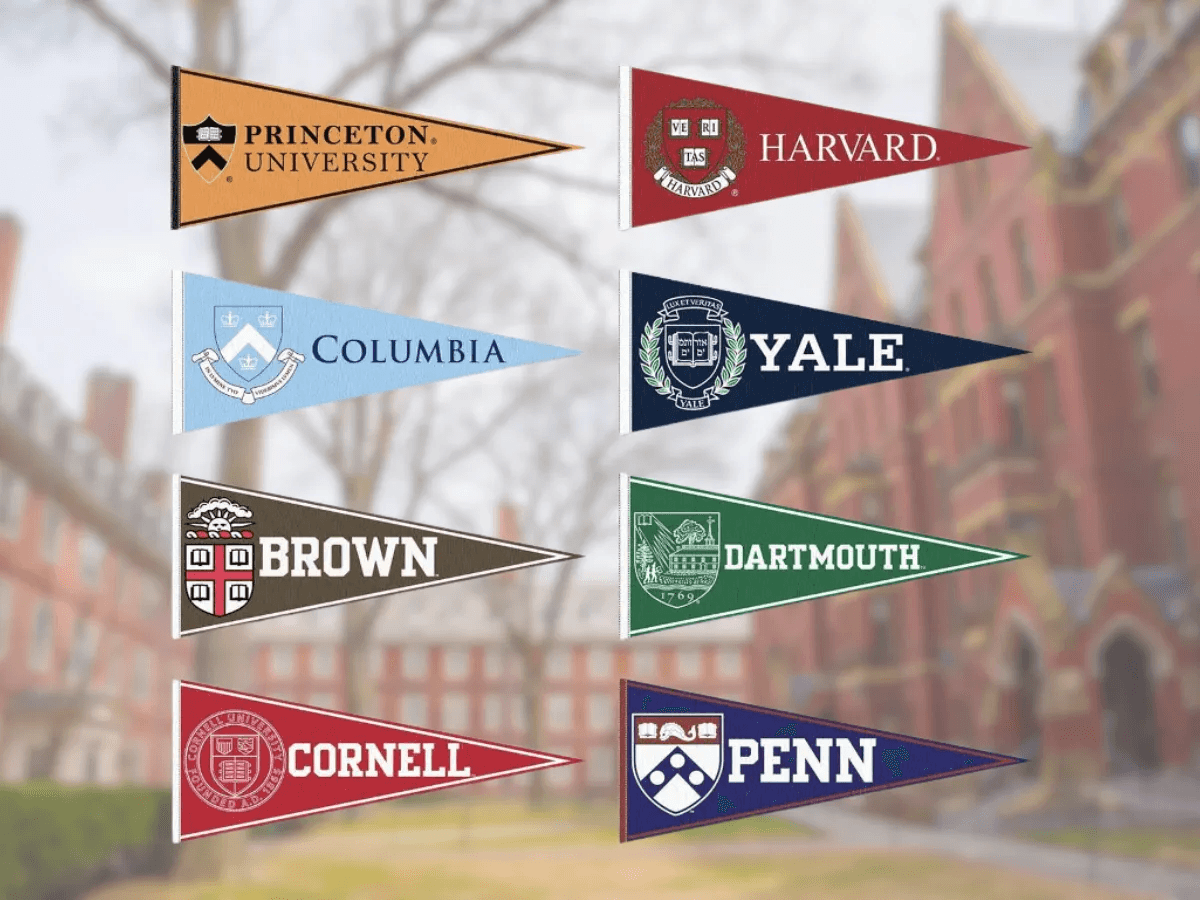
How High School Research Gives You a Real Edge in Ivy League Admissions | RISE Research
How High School Research Gives You a Real Edge in Ivy League Admissions | RISE Research
Empowerly
Empowerly
Let me be honest with you for a second.
Most high school students applying to Ivy League schools have great grades. They have solid test scores. Many have leadership roles in clubs, sports, or student government. And yet — the vast majority of them don't get in.
Not because they aren't smart. Not because they haven't worked hard. But because they look exactly like thousands of other applicants who are also smart and have also worked hard.
This is the central paradox of elite college admissions in 2026: doing everything right is no longer enough to stand out. What separates the students who get into Harvard, MIT, and Stanford from those who don't usually isn't another AP class or a higher SAT score. It's something far more specific — evidence that you've already begun to think like a scholar.
And the most powerful way to demonstrate that? Original research.
Why Research Has Become the New Differentiator
Admissions offices at elite universities are explicit about this, even if they don't always say it loudly. Harvard's admissions page talks about students who have "the capacity for sustained scholarly engagement." MIT speaks of students who demonstrate "a genuine interest in pushing boundaries." Stanford looks for evidence of "intellectual vitality" — not just performance in structured environments, but curiosity that drives students to explore questions beyond the curriculum.
Research is the only high school activity that genuinely fulfills all of these criteria simultaneously. It's not a checkbox; it's a demonstration of what kind of thinker you are.
When you conduct original research as a high school student — when you identify a real question, review existing literature, design a methodology, collect data, analyze it, and produce findings — you're doing exactly what the faculty at these universities do every day. You're speaking their language before you've even enrolled.
Admissions officers reading your application aren't just evaluating your grades. They're asking: "Can I imagine this person thriving in our research environment?" A published paper, a conference presentation, or even a well-documented independent research project gives them a direct, concrete answer.
The Compounding Effect on Your Application
Research doesn't just add one impressive line to your application. It transforms the entire document.
Think about how a college application actually works. You have your transcript, test scores, extracurricular list, recommendation letters, and essays. Most students treat these as separate components to optimize individually. But the most successful applicants — the ones who get into schools at rates far above the averages — build a coherent narrative across all of these elements.
Research is uniquely powerful because it creates that narrative backbone.
Your essays suddenly have a genuine intellectual story to tell. Instead of writing about a challenge you overcame or a club you led, you can write about a question that consumed you — what drove you to investigate it, what you discovered, and how it changed the way you think. These essays are almost always more compelling because they're rooted in real intellectual experience, not constructed to seem impressive.
Your recommendation letters transform too. A teacher or mentor who supervised your research can speak about your intellectual rigor, your persistence, and your ability to work independently at a graduate-level pace. That's a fundamentally different kind of recommendation than "she's a great student who participates in class."
Your extracurricular section gains depth and coherence. Research demonstrates that your interests are genuine and sustained, not a collection of activities assembled to check boxes. When your research connects to your intended major — say, a machine learning project from a student applying to study computer science — it signals a level of pre-professional seriousness that admissions offices find genuinely compelling.
And your supplemental essays, which ask "why this major?" or "what do you plan to study?", become dramatically easier to write with authenticity when you've already spent months engaged in that subject at a serious level.
What Kind of Research Actually Helps
This is where a lot of students and parents get confused. "Research" can mean a lot of different things, and not all of it carries the same weight in a college application.
A science fair project you completed in two weeks is not the same as a study you conducted over six months under the supervision of a PhD mentor. A book report on a historical event is not the same as an original historical analysis examining primary sources and contributing a new perspective to existing scholarship.
What admissions offices respond to is research that demonstrates sustained engagement, original thinking, and ideally some form of external validation — a publication, a conference presentation, an award, or recognition from a credible academic institution.
This matters because it's verifiable. A committee reviewing hundreds of applications in a few weeks can't evaluate the depth of every extracurricular activity. But a published research paper, a presentation at an academic symposium, or a citation in a journal gives them an objective, third-party signal of quality that cuts through the noise.
The subject area matters less than most students think. There are compelling research projects in every conceivable field — from astrophysics to economics to medieval literature to psychology. What matters is that the question is genuinely original, the methodology is sound, and the execution demonstrates real intellectual effort. Students exploring structured research experiences early in high school — whether through mentorship programs, university labs, or independent work — give themselves a meaningful head start on building this kind of profile.
The students who benefit most are those who start early and choose a topic they actually care about. Forced research on a subject you find boring tends to produce mediocre work. Genuine curiosity produces the kind of engagement that leads to strong outputs — and strong application essays.
The Harvard Example: What Real Scholarly Engagement Looks Like
When people think about Harvard admissions, they often focus on the numbers — the 3.2% acceptance rate, the near-perfect SAT averages, the list of extracurricular achievements. But Harvard's own admissions materials make clear that the university is looking for something harder to quantify: intellectual character.
The legendary Harvard alumni who went on to reshape science, medicine, public policy, law, and the arts weren't simply exceptional at completing assigned work. They were people who identified their own questions and pursued them with unusual depth. That's the tradition Harvard is trying to perpetuate with each incoming class.
This doesn't mean every admitted student has to arrive with a publication to their name. But it does mean that students who have demonstrated genuine scholarly curiosity — through research, through independent projects, through intellectual engagement that goes beyond the classroom — are speaking directly to what Harvard most values.
The practical implication is this: if you're aiming for Harvard, your application will be strongest when it tells a story of a student who thinks independently, pursues questions beyond the curriculum, and engages with ideas seriously enough to produce something original. Research is the clearest path to telling that story convincingly.
Research Across Different Fields: It's Not Just for STEM Students
One persistent myth worth dispelling: research is only for students interested in science, technology, engineering, or mathematics.
This isn't true, and it's a myth that holds back a lot of talented students in the humanities, social sciences, arts, and business.
Some of the most distinctive research profiles in recent years have come from students working in areas far from the laboratory. A student who produces an original economic analysis of minimum wage policy at the state level. A student who conducts a comparative study of immigration narratives in 20th-century literature. A student who designs and executes a psychological study on social media's effect on adolescent self-perception. A student who researches the history of urban planning decisions in their home city using primary archival sources.
Each of these represents genuine original scholarship. Each can lead to publication, conference presentation, or academic recognition. And each tells an admissions officer something distinctive about the student behind it.
For students aiming at top engineering programmes, research that involves applied problem-solving — robotics, materials science, computational modeling — carries particular resonance, because it demonstrates not just interest in engineering but the capacity to work at the frontier of it. But the underlying principle is the same across every field: original thinking, rigorously executed and externally validated, transforms an application from impressive to genuinely memorable.
How to Get Started If You Haven't Done Research Yet
If you're reading this as a 9th or 10th grader, the good news is that you have time to build a meaningful research profile before your applications go in. If you're a junior, the window is tighter but not closed — a focused six-month engagement can still produce something substantial.
The first step is identifying a question you actually find interesting. Not a question that looks good, not a question you think admissions officers want to see, but a question that genuinely occupies you. What problem do you wish someone had already solved? What phenomenon have you noticed that doesn't have a good explanation? What intersection of two fields that nobody seems to have explored together would you find fascinating?
From there, the path forward involves finding a mentor — ideally someone with academic credentials in your area of interest — who can help you frame that question as a researchable problem, navigate the existing literature, design a sound methodology, and produce work of publishable quality.
This last piece is where most students struggle without support. The jump from "I'm interested in this topic" to "I have produced original research of sufficient quality to be externally validated" is significant. It requires guidance from someone who knows what good research looks like and can help you produce it.
The students who tend to navigate this most successfully are those who find structured mentorship early, commit to the process seriously, and give themselves enough runway to produce work they're genuinely proud of — not work that was assembled quickly to fill a gap in an application.
The Honest Assessment
Research is not a guaranteed ticket to any particular university. Elite college admissions involve judgment calls, institutional priorities, and factors that no student can fully control.
But research does something that almost nothing else in a high school application can do: it provides direct, verifiable, externally validated evidence of who you are as a thinker. It makes your intellectual character legible to an admissions committee in a way that grades, test scores, and activity lists simply cannot.
In a pool where most applicants are academically qualified, the students who get in are the ones who convince admissions officers that they will contribute something distinctive to the intellectual life of the university. Original research is the most direct path to making that case — not because it's a magic credential, but because it's genuine evidence of exactly the quality these universities most want to cultivate.
Start early. Find a question that matters to you. Find a mentor who can help you pursue it rigorously. And give yourself the time to produce something you'd be proud to submit to a journal, not just to a college application.
That's the standard worth aiming for — and it's more achievable than most students realize.
Let me be honest with you for a second.
Most high school students applying to Ivy League schools have great grades. They have solid test scores. Many have leadership roles in clubs, sports, or student government. And yet — the vast majority of them don't get in.
Not because they aren't smart. Not because they haven't worked hard. But because they look exactly like thousands of other applicants who are also smart and have also worked hard.
This is the central paradox of elite college admissions in 2026: doing everything right is no longer enough to stand out. What separates the students who get into Harvard, MIT, and Stanford from those who don't usually isn't another AP class or a higher SAT score. It's something far more specific — evidence that you've already begun to think like a scholar.
And the most powerful way to demonstrate that? Original research.
Why Research Has Become the New Differentiator
Admissions offices at elite universities are explicit about this, even if they don't always say it loudly. Harvard's admissions page talks about students who have "the capacity for sustained scholarly engagement." MIT speaks of students who demonstrate "a genuine interest in pushing boundaries." Stanford looks for evidence of "intellectual vitality" — not just performance in structured environments, but curiosity that drives students to explore questions beyond the curriculum.
Research is the only high school activity that genuinely fulfills all of these criteria simultaneously. It's not a checkbox; it's a demonstration of what kind of thinker you are.
When you conduct original research as a high school student — when you identify a real question, review existing literature, design a methodology, collect data, analyze it, and produce findings — you're doing exactly what the faculty at these universities do every day. You're speaking their language before you've even enrolled.
Admissions officers reading your application aren't just evaluating your grades. They're asking: "Can I imagine this person thriving in our research environment?" A published paper, a conference presentation, or even a well-documented independent research project gives them a direct, concrete answer.
The Compounding Effect on Your Application
Research doesn't just add one impressive line to your application. It transforms the entire document.
Think about how a college application actually works. You have your transcript, test scores, extracurricular list, recommendation letters, and essays. Most students treat these as separate components to optimize individually. But the most successful applicants — the ones who get into schools at rates far above the averages — build a coherent narrative across all of these elements.
Research is uniquely powerful because it creates that narrative backbone.
Your essays suddenly have a genuine intellectual story to tell. Instead of writing about a challenge you overcame or a club you led, you can write about a question that consumed you — what drove you to investigate it, what you discovered, and how it changed the way you think. These essays are almost always more compelling because they're rooted in real intellectual experience, not constructed to seem impressive.
Your recommendation letters transform too. A teacher or mentor who supervised your research can speak about your intellectual rigor, your persistence, and your ability to work independently at a graduate-level pace. That's a fundamentally different kind of recommendation than "she's a great student who participates in class."
Your extracurricular section gains depth and coherence. Research demonstrates that your interests are genuine and sustained, not a collection of activities assembled to check boxes. When your research connects to your intended major — say, a machine learning project from a student applying to study computer science — it signals a level of pre-professional seriousness that admissions offices find genuinely compelling.
And your supplemental essays, which ask "why this major?" or "what do you plan to study?", become dramatically easier to write with authenticity when you've already spent months engaged in that subject at a serious level.
What Kind of Research Actually Helps
This is where a lot of students and parents get confused. "Research" can mean a lot of different things, and not all of it carries the same weight in a college application.
A science fair project you completed in two weeks is not the same as a study you conducted over six months under the supervision of a PhD mentor. A book report on a historical event is not the same as an original historical analysis examining primary sources and contributing a new perspective to existing scholarship.
What admissions offices respond to is research that demonstrates sustained engagement, original thinking, and ideally some form of external validation — a publication, a conference presentation, an award, or recognition from a credible academic institution.
This matters because it's verifiable. A committee reviewing hundreds of applications in a few weeks can't evaluate the depth of every extracurricular activity. But a published research paper, a presentation at an academic symposium, or a citation in a journal gives them an objective, third-party signal of quality that cuts through the noise.
The subject area matters less than most students think. There are compelling research projects in every conceivable field — from astrophysics to economics to medieval literature to psychology. What matters is that the question is genuinely original, the methodology is sound, and the execution demonstrates real intellectual effort. Students exploring structured research experiences early in high school — whether through mentorship programs, university labs, or independent work — give themselves a meaningful head start on building this kind of profile.
The students who benefit most are those who start early and choose a topic they actually care about. Forced research on a subject you find boring tends to produce mediocre work. Genuine curiosity produces the kind of engagement that leads to strong outputs — and strong application essays.
The Harvard Example: What Real Scholarly Engagement Looks Like
When people think about Harvard admissions, they often focus on the numbers — the 3.2% acceptance rate, the near-perfect SAT averages, the list of extracurricular achievements. But Harvard's own admissions materials make clear that the university is looking for something harder to quantify: intellectual character.
The legendary Harvard alumni who went on to reshape science, medicine, public policy, law, and the arts weren't simply exceptional at completing assigned work. They were people who identified their own questions and pursued them with unusual depth. That's the tradition Harvard is trying to perpetuate with each incoming class.
This doesn't mean every admitted student has to arrive with a publication to their name. But it does mean that students who have demonstrated genuine scholarly curiosity — through research, through independent projects, through intellectual engagement that goes beyond the classroom — are speaking directly to what Harvard most values.
The practical implication is this: if you're aiming for Harvard, your application will be strongest when it tells a story of a student who thinks independently, pursues questions beyond the curriculum, and engages with ideas seriously enough to produce something original. Research is the clearest path to telling that story convincingly.
Research Across Different Fields: It's Not Just for STEM Students
One persistent myth worth dispelling: research is only for students interested in science, technology, engineering, or mathematics.
This isn't true, and it's a myth that holds back a lot of talented students in the humanities, social sciences, arts, and business.
Some of the most distinctive research profiles in recent years have come from students working in areas far from the laboratory. A student who produces an original economic analysis of minimum wage policy at the state level. A student who conducts a comparative study of immigration narratives in 20th-century literature. A student who designs and executes a psychological study on social media's effect on adolescent self-perception. A student who researches the history of urban planning decisions in their home city using primary archival sources.
Each of these represents genuine original scholarship. Each can lead to publication, conference presentation, or academic recognition. And each tells an admissions officer something distinctive about the student behind it.
For students aiming at top engineering programmes, research that involves applied problem-solving — robotics, materials science, computational modeling — carries particular resonance, because it demonstrates not just interest in engineering but the capacity to work at the frontier of it. But the underlying principle is the same across every field: original thinking, rigorously executed and externally validated, transforms an application from impressive to genuinely memorable.
How to Get Started If You Haven't Done Research Yet
If you're reading this as a 9th or 10th grader, the good news is that you have time to build a meaningful research profile before your applications go in. If you're a junior, the window is tighter but not closed — a focused six-month engagement can still produce something substantial.
The first step is identifying a question you actually find interesting. Not a question that looks good, not a question you think admissions officers want to see, but a question that genuinely occupies you. What problem do you wish someone had already solved? What phenomenon have you noticed that doesn't have a good explanation? What intersection of two fields that nobody seems to have explored together would you find fascinating?
From there, the path forward involves finding a mentor — ideally someone with academic credentials in your area of interest — who can help you frame that question as a researchable problem, navigate the existing literature, design a sound methodology, and produce work of publishable quality.
This last piece is where most students struggle without support. The jump from "I'm interested in this topic" to "I have produced original research of sufficient quality to be externally validated" is significant. It requires guidance from someone who knows what good research looks like and can help you produce it.
The students who tend to navigate this most successfully are those who find structured mentorship early, commit to the process seriously, and give themselves enough runway to produce work they're genuinely proud of — not work that was assembled quickly to fill a gap in an application.
The Honest Assessment
Research is not a guaranteed ticket to any particular university. Elite college admissions involve judgment calls, institutional priorities, and factors that no student can fully control.
But research does something that almost nothing else in a high school application can do: it provides direct, verifiable, externally validated evidence of who you are as a thinker. It makes your intellectual character legible to an admissions committee in a way that grades, test scores, and activity lists simply cannot.
In a pool where most applicants are academically qualified, the students who get in are the ones who convince admissions officers that they will contribute something distinctive to the intellectual life of the university. Original research is the most direct path to making that case — not because it's a magic credential, but because it's genuine evidence of exactly the quality these universities most want to cultivate.
Start early. Find a question that matters to you. Find a mentor who can help you pursue it rigorously. And give yourself the time to produce something you'd be proud to submit to a journal, not just to a college application.
That's the standard worth aiming for — and it's more achievable than most students realize.
Winter 2026 Admission Deadline Closing on 1st November
Book a free 20-min strategy call
Book a free 20-min strategy call
Read More