>
>
>
Every Major High School Research Competition and Science Award in 2026 — and How to Prepare for Each
Every Major High School Research Competition and Science Award in 2026 — and How to Prepare for Each
Every Major High School Research Competition and Science Award in 2026 — and How to Prepare for Each | RISE Research
Every Major High School Research Competition and Science Award in 2026 — and How to Prepare for Each | RISE Research
Shana Saiesh
Shana Saiesh
Why Research Competitions Matter
Research competitions in high school require students to think like scientists, engineers, and scholars even before they set their first foot in college or university. The process of coming up with research questions, conducting research, and defending research in front of judges is a critical thinking activity like no other.
Research competitions aren't for everyone, and there are many routes to a strong college application. Competitions provide a sense of accountability: a deadline, a review process, and critical feedback from experts in a field. For students who are interested in learning about a subject, research competitions are some of the most rewarding experiences of high school there.
An Overview of the Landscape
The competition landscape in 2026 is broad. Some programs focus on STEM research with lab components. Others welcome social science, policy analysis, or computational work. A few are national; some operate internationally. Knowing which competitions fit your project type, timeline, and grade level is the first step toward a realistic plan.
Major Competitions Worth Knowing
Regeneron International Science and Engineering Fair (ISEF)
ISEF is the largest pre-college science research competition in the world, with students qualifying through affiliated regional fairs before competing at the international level. Projects span over 20 categories, from behavioral science to robotics. Finalists present their work to judges over several days and compete for prizes in the tens of thousands of dollars.
Regeneron Science Talent Search (STS)
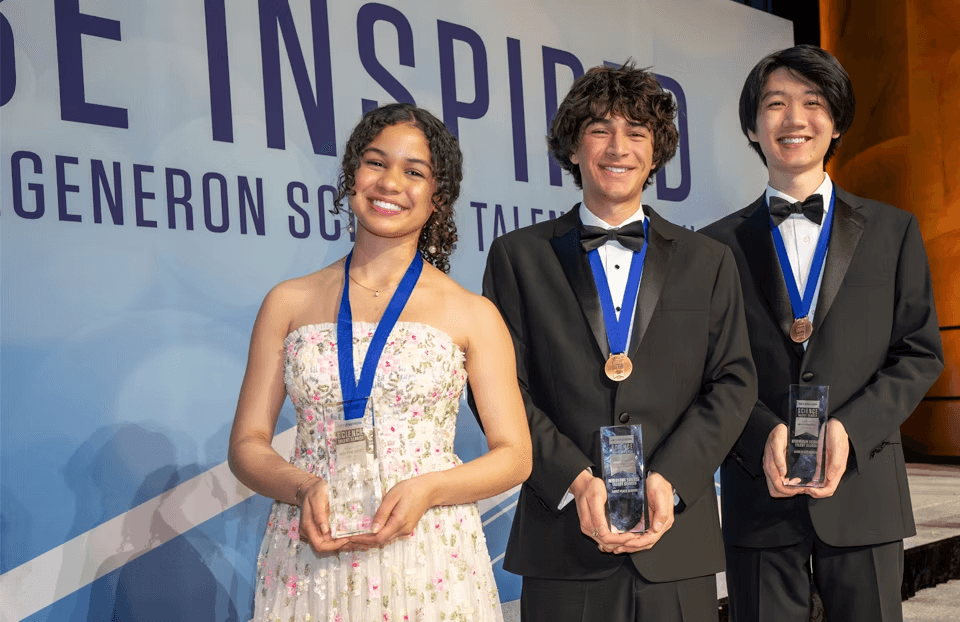
Run by Society for Science, STS is one of the oldest and most selective science competitions in the United States, open to high school seniors. It emphasizes original research, and the top 40 finalists are invited to Washington, D.C., for final judging. The program values depth of scientific thinking over flashy applications.
MIT PRIMES and PRIMES-USA
MIT PRIMES is a research program for high school students in the Boston area; PRIMES-USA extends this to students across the country through mentored, remote research in mathematics and computer science. Acceptance is competitive, and students work on real open problems alongside MIT faculty. This is not a competition in the traditional sense but a research experience that often leads to published papers and strong competition results elsewhere.
Davidson Fellows Scholarship
The Davidson Fellows program awards scholarships of $10,000, $25,000, or $50,000 to students under 18 who have completed a significant piece of work in science, technology, engineering, mathematics, literature, music, or philosophy. Projects are evaluated on the depth of contribution and potential impact. There is no entry fee, and submissions are accepted once per year.
Siemens Competition (Now Part of Discovery Education)
The original Siemens competition was discontinued, but regional and national competitions in its spirit continue through Discovery Education and affiliated state programs. Students should verify which competitions their state or school district currently supports, as the landscape has shifted since 2023.
Junior Science and Humanities Symposia (JSHS)
JSHS is a Department of Defense-sponsored program that holds regional symposia across the country, where students present original research in science, technology, engineering, and mathematics. Winners at the regional level advance to a national symposium. It is less widely known than ISEF but offers genuine scholarship money and strong STEM mentorship.
How These Competitions Differ
Understanding the distinctions helps students target the right opportunities.
Eligibility: STS is seniors only. ISEF accepts grades 9-12. PRIMES has an application process based on math background, not just grade.
Project type: ISEF accepts most STEM fields. Davidson Fellows accepts humanities and arts. JSHS focuses on STEM with a presentation format similar to a professional conference.
Timelines: STS applications typically close in November. ISEF regional fairs vary by location but generally run from November through March. Davidson Fellows has a spring deadline.
Prestige and recognition: STS and ISEF carry significant name recognition in academic and college admissions circles. Davidson Fellows is highly regarded but less familiar to the general public.
There is no single competition that is a good fit for all students. The student in computational biology may be a great fit for the ISEF program. The student working on a philosophy thesis is a great candidate for the Davidson Fellows program.
How to Prepare
Preparation is not so much about competition strategy as it is about the quality of one’s research. The judges will be able to tell whether you understand your project or if you've been coached through how to present it.
Start Early: A project that has been in development for 12 to 18 months is in a different state than one that has been developed over the course of a summer.
Keep Records: A lab notebook or research journal in which you've been recording daily observations, failed experiments, and methodological improvements is not just required for competition, it is evidence that you've actually done real science.
Get a Mentor: A professor from a university, a scientist in your community, or someone in an industry can be invaluable in giving you feedback on methodology and preventing you from making fundamental mistakes in your approach.
Practice explaining your project to non-experts: If you can't explain your project to someone in another specialty, then you can't expect to be able to explain it to a judge from another specialty.
If you are a high school student curious about academic research, summer research programs for high school students offer students a structured way of exploring research with the support of expert mentors. Over the course of this 8 -10 week program, students work one-on-one under the guidance of PhD researchers to create an independent project, which by the end of the program is developed into a final paper with opportunities for publication. The process is designed to help students acquire hands-on experience in research, critical analysis, writing, and presenting their ideas in a clear manner.
Common Mistakes
Several patterns consistently hurt student submissions:
Choosing a topic based on impressiveness rather than genuine interest. Research that sounds ambitious but is poorly understood by the student stands out immediately to experienced judges.
Skipping the literature review. Not knowing what prior research exists in a field undermines the claim that a project is original. Research can be redundant in that case.
Overpromising in the abstract or summary. Judges are scientists. Hedged, accurate language seems more credible than sweeping claims.
Leaving the write-up to the last few weeks. Documentation should be ongoing, not last minute.
Treating the competition as the goal. Students who focus on winning rather than understanding often present work that is impressive on the surface and shallow under scrutiny.
Final Thoughts
Being the winner of the research competition is important, but it is not the only goal. The students who benefit most from these programs are those who leave with a better understanding of the problem they were trying to solve, those who have learned to deal with failure in their data, and those who have learned what it really means to be rigorous.
A competition has a deadline and a standard. How students use that is up to them. A national award or simply a regional honorable mention, it is the thinking that goes into their projects that stays with them long after the awards ceremony is over.
FAQs/ PAA
Q: Do I need a lab or special equipment to enter competitions like ISEF or STS?
A: Not necessarily. Many winning projects have been done in computational research, social science, or mathematics, which require little more than a computer and a solid methodology. What judges care about most is the quality of your thinking, not your lab setup.
Q: How early should I start working on a competition project?
A: Ideally 12 to 18 months before the submission deadline. That timeline gives you room to refine your question, deal with unexpected results, and document your process properly. Students who start two months out tend to show it in their work.
Q: Does placing in a competition actually help with college admissions?
A: It can, but context matters. A regional win with deep understanding of your project often reads better than a national placement you can't fully explain in an interview. Admissions readers are looking for evidence of genuine engagement, not just a trophy.
Author: Written by Shana Saiesh
Shana Saiesh is a sophomore at Ashoka University pursuing a BA (Hons.) in English with minors in International Relations and Psychology. She works with education-focused initiatives and mentorship-driven programs, contributing to operations, research and editorial work. Alongside her academics, she is involved in student-facing reports that combine research, strategy, and communication.
Why Research Competitions Matter
Research competitions in high school require students to think like scientists, engineers, and scholars even before they set their first foot in college or university. The process of coming up with research questions, conducting research, and defending research in front of judges is a critical thinking activity like no other.
Research competitions aren't for everyone, and there are many routes to a strong college application. Competitions provide a sense of accountability: a deadline, a review process, and critical feedback from experts in a field. For students who are interested in learning about a subject, research competitions are some of the most rewarding experiences of high school there.
An Overview of the Landscape
The competition landscape in 2026 is broad. Some programs focus on STEM research with lab components. Others welcome social science, policy analysis, or computational work. A few are national; some operate internationally. Knowing which competitions fit your project type, timeline, and grade level is the first step toward a realistic plan.
Major Competitions Worth Knowing
Regeneron International Science and Engineering Fair (ISEF)
ISEF is the largest pre-college science research competition in the world, with students qualifying through affiliated regional fairs before competing at the international level. Projects span over 20 categories, from behavioral science to robotics. Finalists present their work to judges over several days and compete for prizes in the tens of thousands of dollars.
Regeneron Science Talent Search (STS)
Run by Society for Science, STS is one of the oldest and most selective science competitions in the United States, open to high school seniors. It emphasizes original research, and the top 40 finalists are invited to Washington, D.C., for final judging. The program values depth of scientific thinking over flashy applications.
MIT PRIMES and PRIMES-USA
MIT PRIMES is a research program for high school students in the Boston area; PRIMES-USA extends this to students across the country through mentored, remote research in mathematics and computer science. Acceptance is competitive, and students work on real open problems alongside MIT faculty. This is not a competition in the traditional sense but a research experience that often leads to published papers and strong competition results elsewhere.
Davidson Fellows Scholarship
The Davidson Fellows program awards scholarships of $10,000, $25,000, or $50,000 to students under 18 who have completed a significant piece of work in science, technology, engineering, mathematics, literature, music, or philosophy. Projects are evaluated on the depth of contribution and potential impact. There is no entry fee, and submissions are accepted once per year.
Siemens Competition (Now Part of Discovery Education)
The original Siemens competition was discontinued, but regional and national competitions in its spirit continue through Discovery Education and affiliated state programs. Students should verify which competitions their state or school district currently supports, as the landscape has shifted since 2023.
Junior Science and Humanities Symposia (JSHS)
JSHS is a Department of Defense-sponsored program that holds regional symposia across the country, where students present original research in science, technology, engineering, and mathematics. Winners at the regional level advance to a national symposium. It is less widely known than ISEF but offers genuine scholarship money and strong STEM mentorship.
How These Competitions Differ
Understanding the distinctions helps students target the right opportunities.
Eligibility: STS is seniors only. ISEF accepts grades 9-12. PRIMES has an application process based on math background, not just grade.
Project type: ISEF accepts most STEM fields. Davidson Fellows accepts humanities and arts. JSHS focuses on STEM with a presentation format similar to a professional conference.
Timelines: STS applications typically close in November. ISEF regional fairs vary by location but generally run from November through March. Davidson Fellows has a spring deadline.
Prestige and recognition: STS and ISEF carry significant name recognition in academic and college admissions circles. Davidson Fellows is highly regarded but less familiar to the general public.
There is no single competition that is a good fit for all students. The student in computational biology may be a great fit for the ISEF program. The student working on a philosophy thesis is a great candidate for the Davidson Fellows program.
How to Prepare
Preparation is not so much about competition strategy as it is about the quality of one’s research. The judges will be able to tell whether you understand your project or if you've been coached through how to present it.
Start Early: A project that has been in development for 12 to 18 months is in a different state than one that has been developed over the course of a summer.
Keep Records: A lab notebook or research journal in which you've been recording daily observations, failed experiments, and methodological improvements is not just required for competition, it is evidence that you've actually done real science.
Get a Mentor: A professor from a university, a scientist in your community, or someone in an industry can be invaluable in giving you feedback on methodology and preventing you from making fundamental mistakes in your approach.
Practice explaining your project to non-experts: If you can't explain your project to someone in another specialty, then you can't expect to be able to explain it to a judge from another specialty.
If you are a high school student curious about academic research, summer research programs for high school students offer students a structured way of exploring research with the support of expert mentors. Over the course of this 8 -10 week program, students work one-on-one under the guidance of PhD researchers to create an independent project, which by the end of the program is developed into a final paper with opportunities for publication. The process is designed to help students acquire hands-on experience in research, critical analysis, writing, and presenting their ideas in a clear manner.
Common Mistakes
Several patterns consistently hurt student submissions:
Choosing a topic based on impressiveness rather than genuine interest. Research that sounds ambitious but is poorly understood by the student stands out immediately to experienced judges.
Skipping the literature review. Not knowing what prior research exists in a field undermines the claim that a project is original. Research can be redundant in that case.
Overpromising in the abstract or summary. Judges are scientists. Hedged, accurate language seems more credible than sweeping claims.
Leaving the write-up to the last few weeks. Documentation should be ongoing, not last minute.
Treating the competition as the goal. Students who focus on winning rather than understanding often present work that is impressive on the surface and shallow under scrutiny.
Final Thoughts
Being the winner of the research competition is important, but it is not the only goal. The students who benefit most from these programs are those who leave with a better understanding of the problem they were trying to solve, those who have learned to deal with failure in their data, and those who have learned what it really means to be rigorous.
A competition has a deadline and a standard. How students use that is up to them. A national award or simply a regional honorable mention, it is the thinking that goes into their projects that stays with them long after the awards ceremony is over.
FAQs/ PAA
Q: Do I need a lab or special equipment to enter competitions like ISEF or STS?
A: Not necessarily. Many winning projects have been done in computational research, social science, or mathematics, which require little more than a computer and a solid methodology. What judges care about most is the quality of your thinking, not your lab setup.
Q: How early should I start working on a competition project?
A: Ideally 12 to 18 months before the submission deadline. That timeline gives you room to refine your question, deal with unexpected results, and document your process properly. Students who start two months out tend to show it in their work.
Q: Does placing in a competition actually help with college admissions?
A: It can, but context matters. A regional win with deep understanding of your project often reads better than a national placement you can't fully explain in an interview. Admissions readers are looking for evidence of genuine engagement, not just a trophy.
Author: Written by Shana Saiesh
Shana Saiesh is a sophomore at Ashoka University pursuing a BA (Hons.) in English with minors in International Relations and Psychology. She works with education-focused initiatives and mentorship-driven programs, contributing to operations, research and editorial work. Alongside her academics, she is involved in student-facing reports that combine research, strategy, and communication.
Fall 2026 Cohort Deadline Closing on 28th September
Book a free 20-min strategy call
Book a free 20-min strategy call
Read More