>
>
>
How to get into University of Chicago with research
How to get into University of Chicago with research
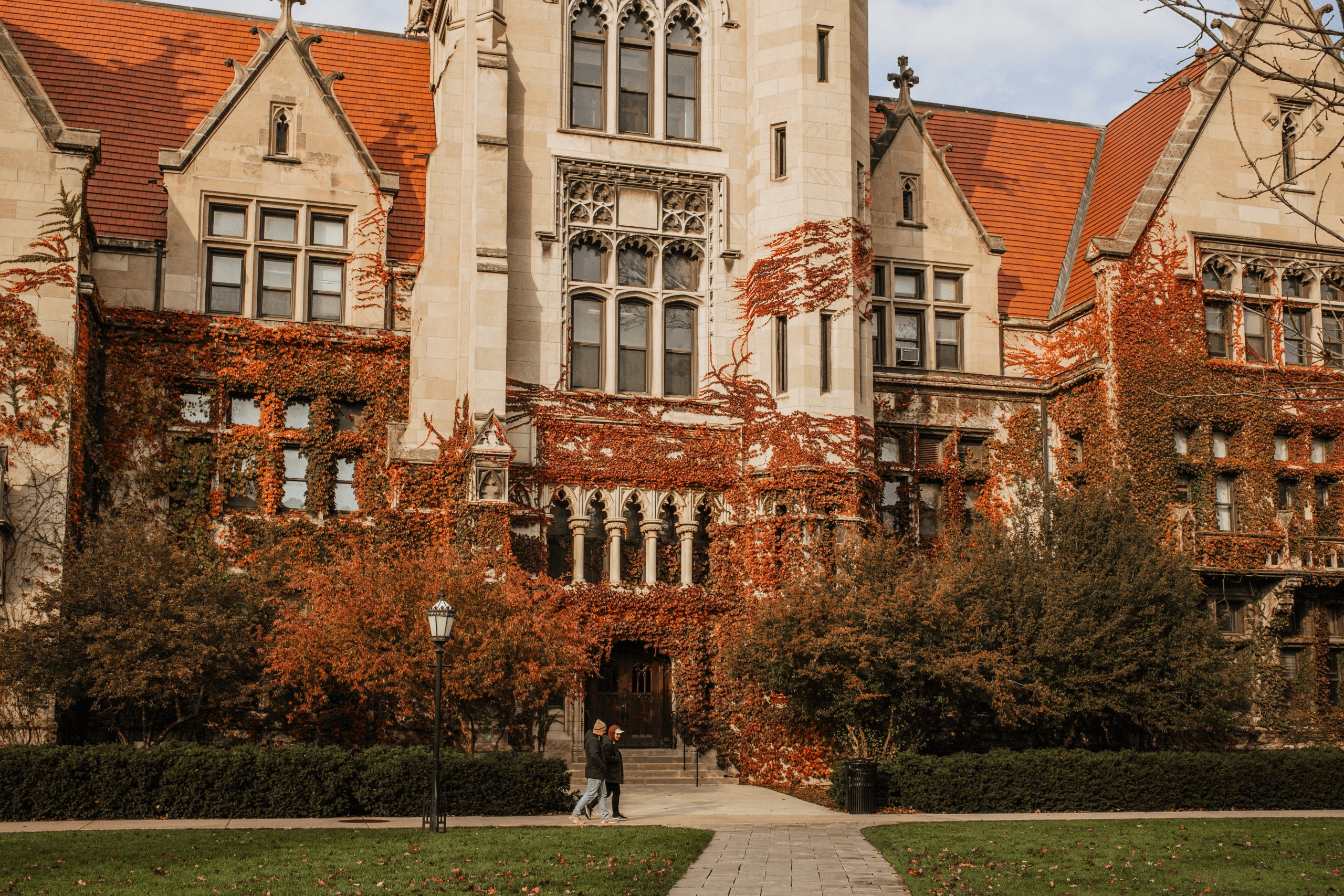
How to get into University of Chicago with research | RISE Research
How to get into University of Chicago with research | RISE Research
RISE Research
RISE Research
TL;DR: The University of Chicago accepts fewer than 5% of applicants, and grades alone do not separate admitted students from the rest of the pool. This post examines whether and how high school research strengthens a UChicago application, drawing directly from UChicago's own admissions materials. The core finding: original, published research signals the kind of intellectual independence UChicago explicitly selects for. If you want research to be a real part of your application, the section below on timeline and essay strategy tells you exactly how to build that.
Introduction
Your child has a 4.0 and a 1550. So does every other student applying to the University of Chicago this year. UChicago's overall acceptance rate for the Class of 2028 sits at approximately 3.9%, making it one of the most selective research universities in the world. At that level of competition, academic performance is the floor, not the ceiling. What separates admitted students is evidence of genuine intellectual initiative: the kind that goes beyond coursework, beyond clubs, and beyond standardised tests. This post covers exactly how high school research fits into UChicago admissions, what the university's own materials say about independent intellectual work, and how to turn a research project into a competitive application narrative. Knowing how to get into University of Chicago with high school research is not a secret. It is a strategy, and this post lays it out in full.
Does Research Experience Help You Get Into University of Chicago?
Yes. UChicago's holistic review process explicitly rewards demonstrated intellectual curiosity and independent inquiry. The university's own admissions guidance describes the ideal applicant as someone who pursues ideas beyond the classroom, and published research is one of the clearest ways to show that on paper.
UChicago does not publish a breakdown of how many admitted students conducted formal research. But its admissions framework makes the signal clear. The university evaluates applicants on what it calls the holistic review of academic and personal qualities, which includes intellectual engagement, the ability to think independently, and evidence of pursuing ideas with depth and rigour.
The distinction that matters here is between passive and active intellectual engagement. Attending a summer programme at a university earns a certificate. Completing a science fair project earns a ribbon. Publishing a peer-reviewed paper in an academic journal earns a citation. That citation is permanent, verifiable, and searchable. An admissions reader at UChicago can look it up in thirty seconds. That is a fundamentally different kind of proof than a programme completion letter, and UChicago's readers know exactly what it means to produce one.
Research that does not help is research that was done for the sake of doing it: a summer lab internship with no output, a project that never moved past a hypothesis, or a paper submitted to a predatory journal with no peer review. UChicago's readers are sophisticated. They know the difference between a student who conducted research and a student who completed research.
What University of Chicago Admissions Officers Say About Intellectual Curiosity and Independent Work
UChicago has been unusually direct about what it looks for. The university's admissions team has described the ideal applicant not as the most accomplished student, but as the most intellectually alive one. In published guidance, UChicago states that it seeks students who "take their education beyond the classroom" and who demonstrate a genuine passion for ideas in their chosen field.
UChicago's supplemental essay prompts, known widely as the "Extended Essay" questions, are designed specifically to surface this quality. The university publishes a new set of prompts each cycle. For the Class of 2029 application, one prompt asks students to reflect on an intellectual question they find genuinely compelling, with a word limit of approximately 650 words. Another asks students to describe an aspect of their identity or background that shapes how they engage with the world. These are not prompts designed for students who followed a standard extracurricular path. They are designed for students who have thought deeply about something specific.
The university also uses the Common Data Set to report that academic achievement is the primary factor in admissions, but places "character and personal qualities" and "extracurricular activities" as important secondary factors. A published research paper speaks to all three: it demonstrates academic achievement in a field, reveals character through sustained effort, and represents an extracurricular commitment with a concrete, verifiable outcome.
What this means practically: a published paper gives the admissions reader something to anchor the entire application to. It is not one more item in a list of activities. It is a lens through which everything else, the essays, the recommendations, the coursework, reads as coherent and intentional.
What Kind of Research Actually Impresses University of Chicago Admissions?
UChicago values research that is original, methodologically sound, and connected to a genuine intellectual question. A paper that replicates existing findings without adding new analysis does not signal the kind of independent thinking UChicago selects for. A paper that poses a novel question, applies a clear methodology, and draws defensible conclusions does.
UChicago is unusual among elite universities in the breadth of disciplines it values equally. Its Core Curriculum means that students engage seriously with philosophy, history, literature, economics, and the natural sciences regardless of their major. This matters for research subject choice. A student who publishes in economics, political theory, computational biology, or the history of science is not at a disadvantage compared to a student who publishes in physics or chemistry. UChicago's admissions culture respects depth in any field, provided the work is rigorous.
The subjects that align most naturally with UChicago's academic identity include economics and social science (UChicago has produced more Nobel laureates in economics than any other institution), philosophy and the history of ideas, mathematics and theoretical computer science, and public policy with empirical grounding. Research in any of these areas, conducted at a university level and published in a peer-reviewed venue, carries genuine weight in a UChicago application.
For presenting research in the supplemental essays: the Extended Essay prompt is the primary vehicle. A strong response does not summarise the paper. It uses the research as a starting point to demonstrate how the student thinks, what questions the work opened up, and where the intellectual curiosity goes next. UChicago readers want to see the mind behind the paper, not the abstract. The Additional Information section of the Common App is the right place to list the full citation, the journal name, and the publication date. Keep it factual and concise. The essay does the interpretive work; the Additional Information section provides the verifiable record.
How to Turn Research into a Stronger University of Chicago Application
The Activities section of the Common App gives 150 characters per entry. For a published research project, those characters should prioritise the outcome: the journal name, the publication status, and the field. "Published paper on urban inequality in Journal of Student Research; co-authored with PhD mentor" communicates more than "conducted independent research project on urban policy." The word "published" changes how the entry reads entirely.
For the supplemental essays, UChicago's Extended Essay prompt is the strongest vehicle for research. The prompt asks for genuine intellectual engagement with an idea. A student who has published a paper has already done the hard work of identifying a question worth pursuing. The essay should trace that intellectual journey: what prompted the question, what the research revealed, and what the student still does not know. UChicago readers respond to intellectual honesty, including the acknowledgment of limitations, far more than to polished summaries of findings.
The Additional Information box is not an overflow essay. It is a factual supplement. Use it to list the full citation of the published paper, the journal's peer review process if it is not widely known, and any awards or conference presentations connected to the research. Keep it under 200 words. Readers appreciate clarity over volume.
A letter of recommendation from a research mentor adds a dimension that a classroom teacher cannot provide. A teacher can speak to how a student performs within a structured curriculum. A research mentor can speak to how a student behaves when there is no structure: how they handle ambiguity, how they respond to failed hypotheses, how they push a project forward without being told to. That is precisely the kind of student UChicago wants, and a mentor's letter is one of the few places in the application where that quality can be described by someone other than the student. You can explore what this looks like in practice through the RISE PhD mentor network, which connects students with researchers from Ivy League and Oxbridge institutions.
Turning research into a coherent application narrative takes as much skill as the research itself. That is exactly what the RISE mentorship process is built around.
When Should You Start Research if University of Chicago Is Your Goal?
In Grades 9 and 10, the priority is subject exploration. Read widely in one or two fields that genuinely interest you. Follow academic blogs, read accessible journal articles, and identify the questions that keep coming back to you. This is not wasted time. It is the foundation that makes the research question credible when you eventually write about it.
Grades 10 and 11 are the optimal window to begin a structured research program. Starting at this stage leaves enough time to develop a strong research question, work through the methodology, and submit to a peer-reviewed journal before the Common App opens in August of Grade 12. RISE Research scholars who begin in this window consistently produce work that is under review or published by the time their applications go live. You can see the range of fields and outcomes through the RISE research projects and RISE publications pages.
The summer between Grades 11 and 12 is the target submission window. A paper submitted in June or July of that summer has a realistic chance of receiving a decision before November deadlines. Even a paper listed as "under review" in the Activities section carries weight, provided the journal is legitimate and peer-reviewed. If you want to understand how to navigate the publication process as a high school student, the guide on publishing high school research without a university affiliation is a practical starting point.
In Grade 12, the focus shifts to application strategy. The research is the narrative anchor. Every essay, every activity description, and every recommendation letter should reinforce the same intellectual identity. UChicago's Extended Essay prompt is written for this exact moment.
If you are starting in Grade 12, the timeline compresses significantly, but it does not close. A research project begun in September can still produce a strong draft by January, and a paper under review by the Regular Decision deadline is still a meaningful signal. The essay strategy shifts: instead of leading with a published outcome, you lead with the intellectual question and the process. UChicago values the thinking as much as the result. RISE Research results show that students at all grade levels have built competitive research profiles with the right structure and mentorship.
The Summer 2026 cohort is filling up. If the University of Chicago is on your list and you want research to be a real part of your application, book a free 20-minute Research Assessment here to find out what is achievable in your timeline.
Frequently Asked Questions About Research and University of Chicago Admissions
Does University of Chicago require research experience to apply?
No. UChicago does not require research experience for admission. However, the university's holistic review explicitly values intellectual initiative and independent inquiry, and published research is one of the strongest ways to demonstrate both. Students without research experience are not disqualified, but those with strong published work carry a distinct advantage in a pool where academic credentials are otherwise near-identical.
Does a published paper make a bigger difference than just doing research?
Yes, meaningfully so. A published paper is verifiable, permanent, and peer-reviewed. It demonstrates that the work met an external standard of quality, not just the student's own assessment of it. Unpublished research is harder to evaluate and easier to dismiss. For UChicago specifically, where readers are trained to assess intellectual rigour, the peer-review process itself is a signal of seriousness. Explore how students publish through the high school research publication guide.
What subjects are strongest for University of Chicago applications?
Economics, philosophy, mathematics, political theory, and empirical social science align most naturally with UChicago's academic identity and Core Curriculum. UChicago does not penalise any field, but research in disciplines the university is known for, particularly economics and the history of ideas, resonates with readers who teach and evaluate work in those areas daily. Depth and rigour in any subject matter more than the subject itself.
How do I write about research in University of Chicago's essays?
Use UChicago's Extended Essay prompt as the primary vehicle. Do not summarise your paper. Use the research as a starting point to show how you think: what question drew you in, what you found, what it opened up, and what you still do not know. UChicago readers want intellectual honesty and genuine curiosity, not polished abstracts. The Additional Information section is the right place for the full citation and publication details. Keep it factual and under 200 words.
Is it too late to start research in Grade 12 for University of Chicago?
No. Starting in Grade 12 is possible and RISE Research supports it. The timeline compresses, but a paper under review by January is still a meaningful signal to UChicago readers. The essay strategy shifts from leading with a published outcome to leading with the intellectual question and the research process itself. UChicago's admissions culture values the depth of engagement with an idea, and that can be demonstrated even when a paper is still in progress. Check the RISE FAQ for more on what is achievable by grade level.
What Research Tells You About Getting Into UChicago
The University of Chicago selects students who pursue ideas with independence and rigour. Its acceptance rate of approximately 3.9% means that the applicant pool is full of students with perfect grades and high test scores. What distinguishes admitted students is evidence of a mind that does not stop at the edge of the curriculum. Original, published research is one of the clearest signals of that quality available to a high school student. It is verifiable, it is specific, and it gives every part of the application, the essays, the recommendations, the activity list, a coherent intellectual identity to anchor to. The Summer 2026 Priority Deadline is approaching. If the University of Chicago is your target and you want research to be a real part of your application, schedule a free Research Assessment and we will tell you exactly what is achievable in your timeline.
TL;DR: The University of Chicago accepts fewer than 5% of applicants, and grades alone do not separate admitted students from the rest of the pool. This post examines whether and how high school research strengthens a UChicago application, drawing directly from UChicago's own admissions materials. The core finding: original, published research signals the kind of intellectual independence UChicago explicitly selects for. If you want research to be a real part of your application, the section below on timeline and essay strategy tells you exactly how to build that.
Introduction
Your child has a 4.0 and a 1550. So does every other student applying to the University of Chicago this year. UChicago's overall acceptance rate for the Class of 2028 sits at approximately 3.9%, making it one of the most selective research universities in the world. At that level of competition, academic performance is the floor, not the ceiling. What separates admitted students is evidence of genuine intellectual initiative: the kind that goes beyond coursework, beyond clubs, and beyond standardised tests. This post covers exactly how high school research fits into UChicago admissions, what the university's own materials say about independent intellectual work, and how to turn a research project into a competitive application narrative. Knowing how to get into University of Chicago with high school research is not a secret. It is a strategy, and this post lays it out in full.
Does Research Experience Help You Get Into University of Chicago?
Yes. UChicago's holistic review process explicitly rewards demonstrated intellectual curiosity and independent inquiry. The university's own admissions guidance describes the ideal applicant as someone who pursues ideas beyond the classroom, and published research is one of the clearest ways to show that on paper.
UChicago does not publish a breakdown of how many admitted students conducted formal research. But its admissions framework makes the signal clear. The university evaluates applicants on what it calls the holistic review of academic and personal qualities, which includes intellectual engagement, the ability to think independently, and evidence of pursuing ideas with depth and rigour.
The distinction that matters here is between passive and active intellectual engagement. Attending a summer programme at a university earns a certificate. Completing a science fair project earns a ribbon. Publishing a peer-reviewed paper in an academic journal earns a citation. That citation is permanent, verifiable, and searchable. An admissions reader at UChicago can look it up in thirty seconds. That is a fundamentally different kind of proof than a programme completion letter, and UChicago's readers know exactly what it means to produce one.
Research that does not help is research that was done for the sake of doing it: a summer lab internship with no output, a project that never moved past a hypothesis, or a paper submitted to a predatory journal with no peer review. UChicago's readers are sophisticated. They know the difference between a student who conducted research and a student who completed research.
What University of Chicago Admissions Officers Say About Intellectual Curiosity and Independent Work
UChicago has been unusually direct about what it looks for. The university's admissions team has described the ideal applicant not as the most accomplished student, but as the most intellectually alive one. In published guidance, UChicago states that it seeks students who "take their education beyond the classroom" and who demonstrate a genuine passion for ideas in their chosen field.
UChicago's supplemental essay prompts, known widely as the "Extended Essay" questions, are designed specifically to surface this quality. The university publishes a new set of prompts each cycle. For the Class of 2029 application, one prompt asks students to reflect on an intellectual question they find genuinely compelling, with a word limit of approximately 650 words. Another asks students to describe an aspect of their identity or background that shapes how they engage with the world. These are not prompts designed for students who followed a standard extracurricular path. They are designed for students who have thought deeply about something specific.
The university also uses the Common Data Set to report that academic achievement is the primary factor in admissions, but places "character and personal qualities" and "extracurricular activities" as important secondary factors. A published research paper speaks to all three: it demonstrates academic achievement in a field, reveals character through sustained effort, and represents an extracurricular commitment with a concrete, verifiable outcome.
What this means practically: a published paper gives the admissions reader something to anchor the entire application to. It is not one more item in a list of activities. It is a lens through which everything else, the essays, the recommendations, the coursework, reads as coherent and intentional.
What Kind of Research Actually Impresses University of Chicago Admissions?
UChicago values research that is original, methodologically sound, and connected to a genuine intellectual question. A paper that replicates existing findings without adding new analysis does not signal the kind of independent thinking UChicago selects for. A paper that poses a novel question, applies a clear methodology, and draws defensible conclusions does.
UChicago is unusual among elite universities in the breadth of disciplines it values equally. Its Core Curriculum means that students engage seriously with philosophy, history, literature, economics, and the natural sciences regardless of their major. This matters for research subject choice. A student who publishes in economics, political theory, computational biology, or the history of science is not at a disadvantage compared to a student who publishes in physics or chemistry. UChicago's admissions culture respects depth in any field, provided the work is rigorous.
The subjects that align most naturally with UChicago's academic identity include economics and social science (UChicago has produced more Nobel laureates in economics than any other institution), philosophy and the history of ideas, mathematics and theoretical computer science, and public policy with empirical grounding. Research in any of these areas, conducted at a university level and published in a peer-reviewed venue, carries genuine weight in a UChicago application.
For presenting research in the supplemental essays: the Extended Essay prompt is the primary vehicle. A strong response does not summarise the paper. It uses the research as a starting point to demonstrate how the student thinks, what questions the work opened up, and where the intellectual curiosity goes next. UChicago readers want to see the mind behind the paper, not the abstract. The Additional Information section of the Common App is the right place to list the full citation, the journal name, and the publication date. Keep it factual and concise. The essay does the interpretive work; the Additional Information section provides the verifiable record.
How to Turn Research into a Stronger University of Chicago Application
The Activities section of the Common App gives 150 characters per entry. For a published research project, those characters should prioritise the outcome: the journal name, the publication status, and the field. "Published paper on urban inequality in Journal of Student Research; co-authored with PhD mentor" communicates more than "conducted independent research project on urban policy." The word "published" changes how the entry reads entirely.
For the supplemental essays, UChicago's Extended Essay prompt is the strongest vehicle for research. The prompt asks for genuine intellectual engagement with an idea. A student who has published a paper has already done the hard work of identifying a question worth pursuing. The essay should trace that intellectual journey: what prompted the question, what the research revealed, and what the student still does not know. UChicago readers respond to intellectual honesty, including the acknowledgment of limitations, far more than to polished summaries of findings.
The Additional Information box is not an overflow essay. It is a factual supplement. Use it to list the full citation of the published paper, the journal's peer review process if it is not widely known, and any awards or conference presentations connected to the research. Keep it under 200 words. Readers appreciate clarity over volume.
A letter of recommendation from a research mentor adds a dimension that a classroom teacher cannot provide. A teacher can speak to how a student performs within a structured curriculum. A research mentor can speak to how a student behaves when there is no structure: how they handle ambiguity, how they respond to failed hypotheses, how they push a project forward without being told to. That is precisely the kind of student UChicago wants, and a mentor's letter is one of the few places in the application where that quality can be described by someone other than the student. You can explore what this looks like in practice through the RISE PhD mentor network, which connects students with researchers from Ivy League and Oxbridge institutions.
Turning research into a coherent application narrative takes as much skill as the research itself. That is exactly what the RISE mentorship process is built around.
When Should You Start Research if University of Chicago Is Your Goal?
In Grades 9 and 10, the priority is subject exploration. Read widely in one or two fields that genuinely interest you. Follow academic blogs, read accessible journal articles, and identify the questions that keep coming back to you. This is not wasted time. It is the foundation that makes the research question credible when you eventually write about it.
Grades 10 and 11 are the optimal window to begin a structured research program. Starting at this stage leaves enough time to develop a strong research question, work through the methodology, and submit to a peer-reviewed journal before the Common App opens in August of Grade 12. RISE Research scholars who begin in this window consistently produce work that is under review or published by the time their applications go live. You can see the range of fields and outcomes through the RISE research projects and RISE publications pages.
The summer between Grades 11 and 12 is the target submission window. A paper submitted in June or July of that summer has a realistic chance of receiving a decision before November deadlines. Even a paper listed as "under review" in the Activities section carries weight, provided the journal is legitimate and peer-reviewed. If you want to understand how to navigate the publication process as a high school student, the guide on publishing high school research without a university affiliation is a practical starting point.
In Grade 12, the focus shifts to application strategy. The research is the narrative anchor. Every essay, every activity description, and every recommendation letter should reinforce the same intellectual identity. UChicago's Extended Essay prompt is written for this exact moment.
If you are starting in Grade 12, the timeline compresses significantly, but it does not close. A research project begun in September can still produce a strong draft by January, and a paper under review by the Regular Decision deadline is still a meaningful signal. The essay strategy shifts: instead of leading with a published outcome, you lead with the intellectual question and the process. UChicago values the thinking as much as the result. RISE Research results show that students at all grade levels have built competitive research profiles with the right structure and mentorship.
The Summer 2026 cohort is filling up. If the University of Chicago is on your list and you want research to be a real part of your application, book a free 20-minute Research Assessment here to find out what is achievable in your timeline.
Frequently Asked Questions About Research and University of Chicago Admissions
Does University of Chicago require research experience to apply?
No. UChicago does not require research experience for admission. However, the university's holistic review explicitly values intellectual initiative and independent inquiry, and published research is one of the strongest ways to demonstrate both. Students without research experience are not disqualified, but those with strong published work carry a distinct advantage in a pool where academic credentials are otherwise near-identical.
Does a published paper make a bigger difference than just doing research?
Yes, meaningfully so. A published paper is verifiable, permanent, and peer-reviewed. It demonstrates that the work met an external standard of quality, not just the student's own assessment of it. Unpublished research is harder to evaluate and easier to dismiss. For UChicago specifically, where readers are trained to assess intellectual rigour, the peer-review process itself is a signal of seriousness. Explore how students publish through the high school research publication guide.
What subjects are strongest for University of Chicago applications?
Economics, philosophy, mathematics, political theory, and empirical social science align most naturally with UChicago's academic identity and Core Curriculum. UChicago does not penalise any field, but research in disciplines the university is known for, particularly economics and the history of ideas, resonates with readers who teach and evaluate work in those areas daily. Depth and rigour in any subject matter more than the subject itself.
How do I write about research in University of Chicago's essays?
Use UChicago's Extended Essay prompt as the primary vehicle. Do not summarise your paper. Use the research as a starting point to show how you think: what question drew you in, what you found, what it opened up, and what you still do not know. UChicago readers want intellectual honesty and genuine curiosity, not polished abstracts. The Additional Information section is the right place for the full citation and publication details. Keep it factual and under 200 words.
Is it too late to start research in Grade 12 for University of Chicago?
No. Starting in Grade 12 is possible and RISE Research supports it. The timeline compresses, but a paper under review by January is still a meaningful signal to UChicago readers. The essay strategy shifts from leading with a published outcome to leading with the intellectual question and the research process itself. UChicago's admissions culture values the depth of engagement with an idea, and that can be demonstrated even when a paper is still in progress. Check the RISE FAQ for more on what is achievable by grade level.
What Research Tells You About Getting Into UChicago
The University of Chicago selects students who pursue ideas with independence and rigour. Its acceptance rate of approximately 3.9% means that the applicant pool is full of students with perfect grades and high test scores. What distinguishes admitted students is evidence of a mind that does not stop at the edge of the curriculum. Original, published research is one of the clearest signals of that quality available to a high school student. It is verifiable, it is specific, and it gives every part of the application, the essays, the recommendations, the activity list, a coherent intellectual identity to anchor to. The Summer 2026 Priority Deadline is approaching. If the University of Chicago is your target and you want research to be a real part of your application, schedule a free Research Assessment and we will tell you exactly what is achievable in your timeline.
Fall 2026 Cohort Deadline Closing on 28th September
Book a free 20-min strategy call
Book a free 20-min strategy call
Read More