>
>
>
Forensic Science Opportunities for High School Students: How to Choose in 2027
Forensic Science Opportunities for High School Students: How to Choose in 2027
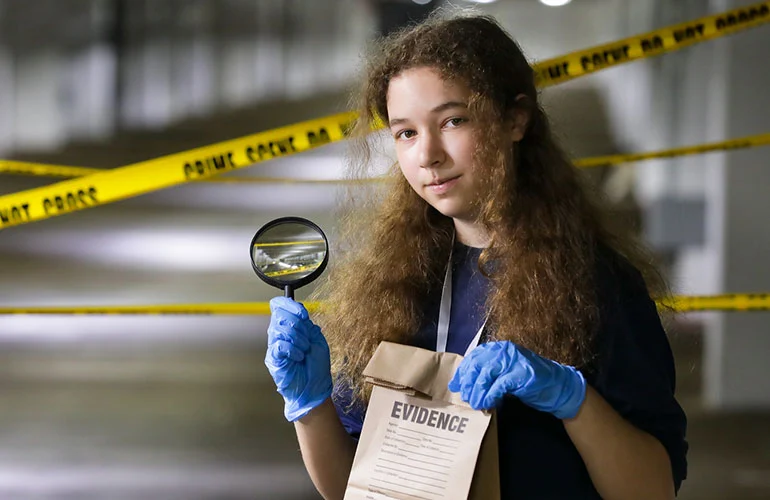
Forensic Science Opportunities for High School Students: How to Choose in 2027 | RISE Research
Forensic Science Opportunities for High School Students: How to Choose in 2027 | RISE Research
Shreyans Lodha
Shreyans Lodha
Updated: 25th November, 2026
TL;DR: Forensic science applies biology, chemistry, physics and data analysis to legal questions, and teens can explore it through camps, courses, mentored projects, school clubs and home-safe activities, though programs, eligibility, costs and safety rules vary and change every year. This guide explains the field's branches, how to evaluate programs, how to build skills at home with safe experiments, ethics around real cases and victims, a comparison table, a project plan and how to describe your learning honestly. Verify each program on its official site, and ask a parent or guardian before registering, traveling or buying supplies. Rise Research is an online research program that pairs high school students 1-on-1 with PhD mentors from Ivy League and Oxbridge universities to write and publish an original research paper. It’s a strong option for students who want to stand out beyond grades and test scores.
Forensic science is the use of science to answer questions in the legal system. Real work is slower and more careful than television suggests. It depends on documentation, validated methods and clear reporting of uncertainty.
Program names, dates and eligibility change often, and some laboratory settings restrict access for minors, so this guide does not list specific programs. It shows you how to find and judge them, and how to start with safe projects.
Branches of Forensic Science
| Branch | What it studies | Related school subjects |
|---|---|---|
| Forensic chemistry | Substances and materials | Chemistry |
| Forensic biology | Biological evidence and DNA | Biology |
| Digital forensics | Data and devices | Computer science |
| Forensic anthropology | Skeletal remains | Biology, anthropology |
| Trace evidence | Fibers, glass and paint | Chemistry, physics |
| Questioned documents | Handwriting and printing | Writing, statistics |
| Forensic psychology | Behavior and law | Psychology |
| Crime scene documentation | Photography and measurement | Mathematics |
Types of Opportunities
| Type | What it involves | Good for | Consider |
|---|---|---|---|
| University summer programs | Lectures and lab demonstrations | Students exploring majors | Cost and application |
| Law enforcement or agency youth programs | Tours, talks and sometimes shadowing | Students interested in public service | Age limits and background checks |
| Internships and shadowing | Observing staff | Students who can commit time | Often competitive and limited |
| School science clubs | Mock investigations and talks | Beginners | Quality depends on advisor |
| Online courses | Concepts and case studies | Students without local options | Limited hands-on work |
| Mentored research projects | A question studied with an expert | Students ready for depth | Choose ethical, safe topics |
How to Evaluate a Program
| Factor | What to check |
|---|---|
| Eligibility | Grade, age, country and prerequisites |
| Cost | Fees, housing, travel, aid and refund policy |
| Format | Online, on campus or hybrid; hours per week |
| Mentoring | Who teaches or supervises, and how often you meet |
| Outcome | A project, paper, certificate or portfolio piece |
| Selection | Application, essay, interview or open enrollment |
| Timeline | Application dates, start date and length |
| Safety | Supervision of minors and clear conduct rules |
- Is the content scientific, or mostly entertainment?
- Will you do real procedures, or only watch demonstrations?
- How are minors supervised, and what are the safety and conduct rules?
- Does the program discuss ethics, error and bias in forensic science?
- Are there fees for materials, housing or background checks?
- What will you be able to show afterward?
See alternatives to expensive pre-college programs and affordable research programs for high school students.
Safe Ways to Learn at Home
| Activity | What you learn | Safety note |
|---|---|---|
| Fingerprint pattern study with household materials | Pattern types and comparison | Use only your own prints, and wash hands |
| Handwriting comparison | Variation within one person | Use consenting volunteers |
| Chromatography with washable markers | Separating mixtures | Use non-toxic materials and ventilation |
| Fiber and material observation | Magnified features | Use school equipment with supervision |
| Data analysis of public crime statistics | Rates, trends and limits | Avoid identifying individuals |
| Mock scene documentation | Notes, sketches and measurements | Use a staged scene in a safe space |
See easy science experiments to try at home, science fair project ideas and top high school science competitions you should know.
Science, Not Television
- Real evidence takes time to analyze, and results come with uncertainty.
- Methods need validation and review.
- Cognitive bias can affect conclusions.
- Some forensic methods have been criticized by scientists and courts.
- Evidence is presented by experts, not decided by them.
Ethics and Sensitivity
- Do not investigate real crimes or real people.
- Treat victims and families with respect, and avoid sensationalizing cases.
- Do not publish identifying information about real cases.
- Be careful with graphic material, and talk with a trusted adult if something is upsetting.
- Follow all lab safety rules, and never handle hazardous materials without supervision.
Skills to Build
- Careful observation and documentation.
- Scientific method and statistics.
- Chemistry and biology basics.
- Writing clear reports.
- Ethical reasoning.
See how to design a research survey, qualitative vs quantitative research in high school and master the art of evidence: how to find credible sources for research.
Careers and Majors
Related fields include chemistry, biology, computer science, statistics, psychology, law and public policy. Many roles require a bachelor's or advanced degree, and some require background checks and licensing. Check official sources and ask counselors. See careers you did not know you could explore in high school and top research-based career pathways for high schoolers.
A Project Plan Template
- Question in one sentence, such as How consistent is one person's handwriting?
- Method and materials.
- Safety and consent checks.
- Data table to fill in.
- How you will analyze it.
- Limits and what you would test next.
Describe Your Learning Honestly
Say what you did, observed or analyzed. Do not describe yourself as investigating cases, and do not claim access you did not have.
Where Rise Research Fits for Science and Law Research
Rise Research is an online program that pairs high school students 1-on-1 with PhD mentors from Ivy League and Oxbridge universities to write and publish an original research paper. It is open to ambitious students from many countries, and it is fully online. For current costs, eligibility, start dates and scholarship details, check the official Rise Research website or brochure instead of relying on any list, and compare it against other options using the checklist in this guide. No program guarantees publication or admission.
Turn Your Interest in Forensic Science Into Original Research
Original work often leaves the strongest impression. Start with a narrow question, read existing studies on Google Scholar and plan a method you can finish. See how to choose a research topic in high school, how to use Google Scholar in high school and how to write a research paper in high school. A mentor can help you avoid common design mistakes; see how to find a research mentor in high school and the power of academic mentorship in shaping young thinkers. Rise Research pairs high school students 1-on-1 with PhD mentors from Ivy League and Oxbridge universities to write and publish an original research paper, fully online. Compare options in Rise vs Lumiere vs Polygence and learn where students share work in where high school students can get their research published. No program guarantees publication or admission.
How to Use This in Your College Applications
Admissions readers want evidence of curiosity and follow-through, not a list of names. If you pursue forensic science, describe what you did, what you learned and what you would do next, and be honest about your own role. See how to stand out on Ivy League applications beyond grades and scores, what is a spike and why top colleges love it and how to write a great brag sheet. Applications on the Common App and UCAS have limited space, so lead with your most specific example. No activity guarantees admission.
Build a Plan Around Your Time and Energy
Most students cannot do everything. Choose one or two commitments that match your goals and protect time for school, rest and family. See how to balance academics and extracurriculars without burning out and why time blocking works better than to-do lists for students. If cost matters, compare choices using a realistic take on whether paid research programs are worth it and affordable research programs for high school students.
Common Mistakes
- Expecting a television version of the field.
- Skipping safety rules.
- Ignoring bias and uncertainty.
- Choosing a program only for its name.
- Overstating your role.
- Using real people or cases in a project.
A Five-Minute Self-Audit
- Write your goal for forensic science exploration in one sentence.
- List what you have already done and what evidence you could show.
- Name one gap you can close in the next month.
- Pick one next step small enough to finish this week.
- Ask one trusted adult to review your plan and challenge it.
Repeat the audit each month. Small, honest check-ins keep you moving and help you avoid chasing every opportunity at once.
Case Study: A Handwriting Variation Study
A student wonders whether handwriting is as consistent as people think. With her teacher's approval, she asks eight volunteers to write the same sentence five times on different days. She measures a few features, such as slant, and compares variation within each person to variation between people. She finds that some features vary more than she expected and concludes that her sample is too small to generalize. She presents her notes to a science club and describes the limits, which a teacher says is the most important part.
Start a Mini-Study This Week
Choose one safe question, write the method and ask a teacher to review it.
Frequently Asked Questions
Do I need to be good at chemistry?
Chemistry helps in many branches, but others rely on biology, computing or statistics.
Can I shadow a forensic lab?
Access for minors is often limited. Ask programs directly and follow their rules.
Is real forensic work like television?
No. It is slower, more detailed and more cautious.
Will a forensic science program help my college application?
It can show interest and effort, but no program guarantees admission.
Final Thoughts: Be Curious, Careful and Ethical
Forensic science rewards careful observation, honest uncertainty and respect for people affected by real cases.
This week, pick one safe question and write a method for it.
Whichever path you choose, students stand out by showing original thinking, not only strong grades. Rise Research pairs high school students 1-on-1 with PhD mentors from Ivy League and Oxbridge universities to write and publish an original research paper, fully online. Book a free Research Assessment to find the right topic and mentor.
Shreyans Lodha is a co-founder of Rise Research, an online mentorship platform that matches high school students 1-on-1 with PhD mentors from top universities to publish original research. Before starting Rise Research, Shreyans earned an MBA from Columbia Business School and worked in quant research at D. E. Shaw. At Rise Research, Shreyans has worked with more than 3,000 students from over 50 countries, including several Regeneron ISEF winners, and he has spent several years mentoring students through the admissions process pro bono. Connect with him on LinkedIn and read more of his work on Forbes Business Council.
Sources
Source 1: Common App
Source 2: UCAS
Source 3: Google Scholar
Winter 2026 Admission Deadline Closing on November 30th
Book a free 20-min strategy call
Book a free 20-min strategy call
Read More


