>
>
>
Princeton supplemental essays 2026-27: complete guide
Princeton supplemental essays 2026-27: complete guide
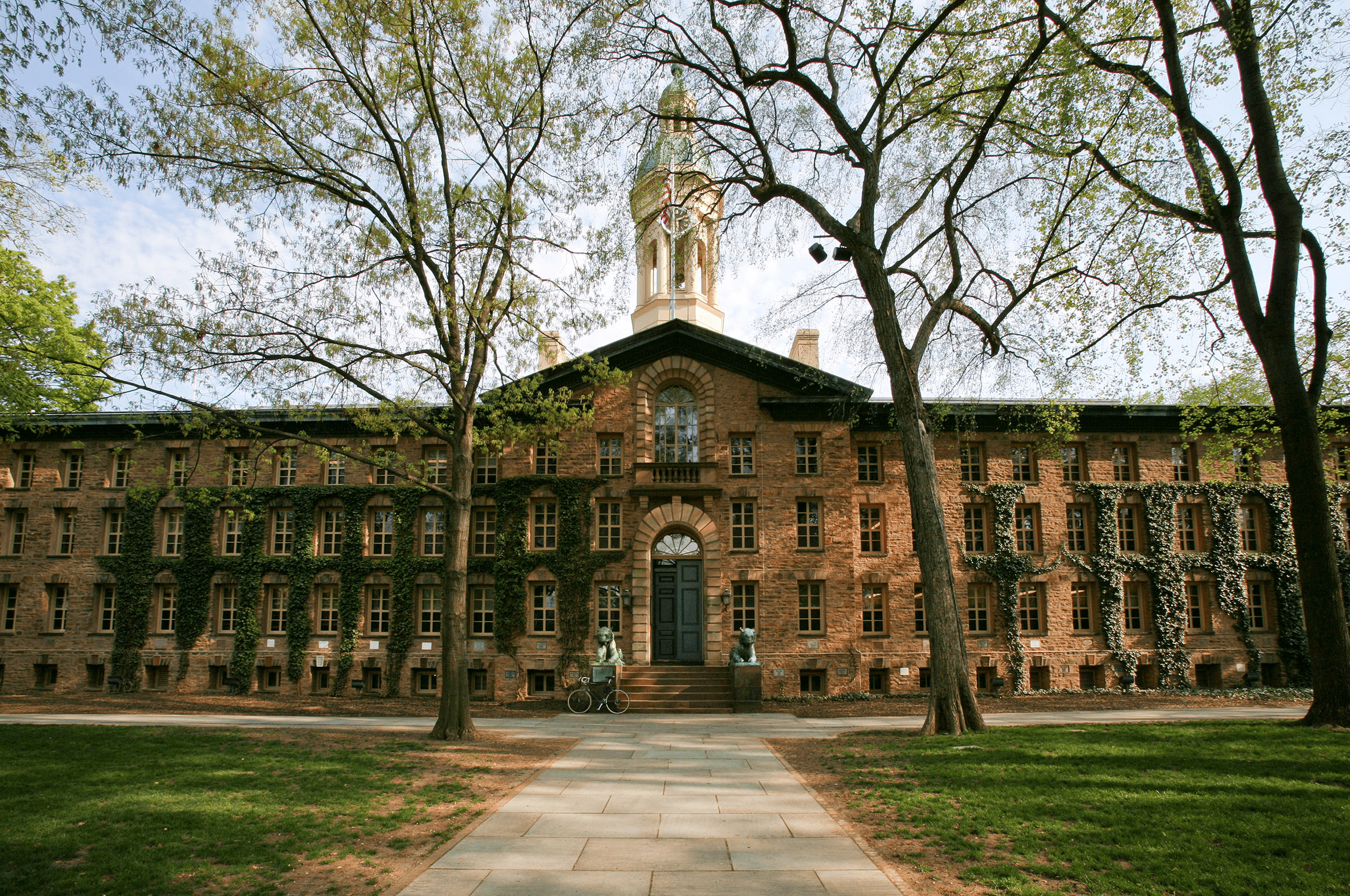
Princeton supplemental essays 2026-27: complete guide | RISE Research
Princeton supplemental essays 2026-27: complete guide | RISE Research
RISE Research
RISE Research
TL;DR: Princeton requires several short supplemental essays and one longer essay for the 2026-27 cycle, all designed to surface intellectual depth and genuine curiosity rather than polish. The single most important strategic insight: Princeton reads for a specific kind of mind, one that pursues ideas beyond the classroom. Students with original research experience have concrete, specific material that generic applicants simply cannot replicate. Our deadline is closing soon, so if you are building that research foundation now, act immediately.
Introduction: Why Princeton Supplemental Essays 2026-27 Demand a Different Approach
Princeton receives over 37,000 applications each cycle and admits fewer than 4% of them. Its supplemental essays are not a formality. They are the primary instrument Princeton uses to distinguish students who think rigorously from students who merely perform well. The Princeton supplemental essays 2026-27 complete guide you need is one that treats the prompts as diagnostic tools, not creative writing exercises.
Most applicants write interchangeable answers. They describe a passion, name a professor they admire, and express excitement about campus life. Princeton's readers have seen thousands of versions of that essay. What they are actually looking for is evidence of a mind that engages with ideas independently, pursues questions past the obvious answer, and has done something real with that curiosity. That is a different brief entirely.
What Are the Princeton Supplemental Essay Prompts for 2026-27?
Princeton requires one longer essay and several shorter responses. The prompts below are drawn from Princeton's official 2025-26 admissions cycle, the most recently published cycle. Princeton typically releases updated prompts when the Common App opens in August. Verify the current prompts at Princeton's official admissions site before submitting.
Longer Essay (650 words): Princeton has a longstanding commitment to service and civic engagement. Tell us how your story intersects with this commitment.
Short Essays (each 250 words):
Why are you drawn to the areas of study you indicated earlier in this application? (If you are undecided, share more about one or two academic areas that genuinely interest you.)
Tell us about a person who has influenced you in a significant way.
Princeton values diverse perspectives and the ability of students to work with others who are different from themselves. Tell us about a time you engaged with a community or group different from your own.
Using a favorite quotation from an essay or book you have read in the last three years as a starting point, tell us about an event or experience that helped you define one of your values or changed how you approach the world. (250 words)
Short Answer (50 words each): Princeton asks students to list books, publications, music, films, and other media that have influenced them, and to respond to the prompt: "What is a new skill you would like to learn in college?"
What Each Princeton Prompt Is Really Asking
The Service Essay (650 words): Civic Commitment
Princeton is not asking you to list volunteer hours. It is asking whether service is a genuine value that has shaped your identity, not an activity you added to your profile. A generic answer describes a soup kitchen visit and draws a lesson about gratitude. A memorable answer shows how a student's intellectual or personal history intersects with a specific community need, and how that intersection has evolved over time.
A student with original research experience has a powerful angle here. If your research addressed a real-world problem, such as environmental data in an underserved region, health disparities, or educational access, the service essay becomes the place to connect intellectual work to civic purpose. That connection is exactly what Princeton is selecting for: thinkers who act, not volunteers who think about thinking.
The Academic Interest Essay (250 words): Intellectual Specificity
Princeton is selecting for students who have already gone deeper than the syllabus. A generic answer names a subject and cites a class. A memorable answer describes a specific question within a field that the student has genuinely pursued, including where that question led and what remains unresolved.
This is the essay where research experience pays the clearest dividend. A student who has conducted original research in computational biology, political theory, or materials science can name the precise question they investigated, describe the methodology, and articulate what surprised them. That level of specificity is impossible to fake and immediately distinguishes the application from the thousands that cite AP coursework as evidence of passion.
The Influential Person Essay (250 words): Relationship and Growth
Princeton is not asking for a tribute. It is asking how an external relationship shaped the student's thinking or values. The trap is writing a flattering portrait of a parent or teacher without demonstrating what the student did with that influence.
A student mentored by a PhD researcher has a genuinely distinctive answer here. The relationship is intellectually substantive, not just emotionally formative. The student can describe how their mentor's approach to a specific problem changed how they think, not just how they feel. That is a materially stronger essay than most applicants can write.
The Community Engagement Essay (250 words): Difference and Dialogue
Princeton values intellectual and human diversity. This prompt is asking for evidence that the student can engage across difference without flattening it. Generic answers describe a mission trip or a multicultural club. Memorable answers describe a genuine moment of friction or discomfort, and how the student navigated it with curiosity rather than retreat.
Research contexts often produce exactly this experience. Working with a mentor from a different academic tradition, engaging with communities affected by a research question, or collaborating with peers from different countries on a project all provide specific, credible material for this essay.
The Quotation Essay (250 words): Values and Intellectual Life
Princeton wants to see how a student reads. The quotation is a lens, not a topic. The mistake is spending too many words explaining the quotation and too few words on the event or experience it illuminates. The quotation should open the essay; the student's specific experience should drive it.
Students who read widely in their research field often encounter quotations from primary sources, methodological debates, or foundational papers that have genuinely shaped how they think. That material is far more distinctive than a line from a popular novel.
How Research Experience Strengthens Princeton Essays
Intellectual vitality is the quality Princeton's essays are designed to surface. Every prompt, from service to quotation selection, is probing whether the student pursues ideas with genuine independence. Original research is the most direct evidence of that quality because it is not assigned, not graded, and not finished when the bell rings.
A student who has completed a peer-reviewed research project under expert mentorship enters the Princeton application with concrete, specific, externally verifiable material for at least three of the five essays. The academic interest essay writes itself. The influential person essay has a substantive subject. The service essay has an intellectual anchor. That is a structural advantage that no amount of essay coaching alone can replicate.
RISE Research is a selective 1-on-1 mentorship programme where high school students conduct original research under PhD mentors from Ivy League and Oxbridge institutions, with a 90% publication success rate. RISE scholars arrive at their Princeton application with a published paper, a mentor relationship of real intellectual depth, and specific material for every essay that asks about curiosity, influence, or civic purpose. Explore RISE admissions outcomes and RISE scholar publications to see what that looks like in practice.
Our deadline is closing soon.
RISE students walk into Princeton essays with a published research paper to write about. Our deadline is closing soon: book a free Research Assessment to find out what is achievable in your timeline.
Mistakes That Sink Princeton Supplemental Essays
The most common mistake is treating the service essay as a list of activities. Princeton is not asking what you did. It is asking how service is woven into your identity. An essay that reads like an activity resume, even a impressive one, signals that the student misread the prompt entirely.
The second mistake is writing the academic interest essay about a subject rather than a question. Saying you love neuroscience is not interesting. Describing the specific unresolved question in neuroscience that you cannot stop thinking about is. Princeton's readers are academics. They respond to intellectual precision, not enthusiasm.
The third mistake is choosing the most impressive person rather than the most formative one for the influential person essay. A student who writes about a Nobel laureate they met once, rather than a teacher or mentor who genuinely changed how they think, produces an essay that reads as credential-seeking rather than reflective.
The fourth mistake is writing the community engagement essay as a feel-good resolution. Princeton is not looking for proof that you solved a problem. It is looking for evidence that you engaged with complexity honestly. Essays that end too neatly, with the student having learned a tidy lesson, read as performed rather than genuine.
The fifth mistake is treating the 50-word short answers as throwaways. Princeton reads everything. A list of books that is padded with titles the student clearly has not read, or a skill answer that is generic, wastes an opportunity to signal intellectual character in a compressed format where every word counts.
Frequently Asked Questions About Princeton Supplemental Essays
When are Princeton supplemental essays due for 2026-27?
Princeton's Restrictive Early Action deadline is typically November 1, and the Regular Decision deadline is January 1. These dates are consistent across recent cycles. Verify the exact deadlines for the 2026-27 cycle at Princeton's official admissions site when the cycle opens in August 2026.
How important are supplemental essays at Princeton?
Princeton's supplemental essays carry significant weight. With a sub-4% acceptance rate and a large portion of applicants holding near-perfect academic records, essays are one of the primary tools for differentiation. Princeton's admissions office has stated publicly that it reads for intellectual curiosity and genuine engagement, not polish.
Can I reuse essays from other applications for Princeton?
Reusing prose is risky because Princeton's prompts are specific to its values and culture. The service essay in particular is unique to Princeton's mission. Borrowing language from a Why School essay written for another university will read as generic and is likely to underperform. Each essay should be written for Princeton specifically.
What should I avoid writing about in Princeton essays?
Avoid writing about service as a list of hours or impact metrics. Avoid academic interest essays that name a field without naming a question. Avoid the influential person essay as a tribute without demonstrating personal growth. Princeton's readers are experienced at identifying essays that perform the right answer rather than give it.
Does research experience help with Princeton admissions?
Yes, and the mechanism is specific. Research experience gives students concrete, verifiable material for the academic interest essay, the influential person essay, and the service essay simultaneously. RISE Research students complete a peer-reviewed publication under PhD mentorship, giving them externally verified intellectual depth that reads clearly in every Princeton prompt. Review RISE scholar projects to see the range of research topics students have pursued. RISE scholars also benefit from mentor guidance on presenting their work across every section of the application. See RISE mentors for the depth of expertise behind that guidance.
Conclusion: Build the Essays Princeton Is Actually Looking For
Princeton's supplemental essays are not obstacles. They are invitations to demonstrate the quality of mind Princeton is built around. Every prompt is asking the same underlying question: does this student pursue ideas with genuine independence? The students who answer that question most convincingly are the ones who have actually done it, not the ones who have practised describing it.
RISE Research gives students the original research experience, the mentor relationship, and the published paper that make Princeton's most demanding prompts answerable with specificity and honesty. Explore RISE admissions outcomes to see where RISE scholars have been accepted. Our deadline is closing soon: book a free Research Assessment today.
TL;DR: Princeton requires several short supplemental essays and one longer essay for the 2026-27 cycle, all designed to surface intellectual depth and genuine curiosity rather than polish. The single most important strategic insight: Princeton reads for a specific kind of mind, one that pursues ideas beyond the classroom. Students with original research experience have concrete, specific material that generic applicants simply cannot replicate. Our deadline is closing soon, so if you are building that research foundation now, act immediately.
Introduction: Why Princeton Supplemental Essays 2026-27 Demand a Different Approach
Princeton receives over 37,000 applications each cycle and admits fewer than 4% of them. Its supplemental essays are not a formality. They are the primary instrument Princeton uses to distinguish students who think rigorously from students who merely perform well. The Princeton supplemental essays 2026-27 complete guide you need is one that treats the prompts as diagnostic tools, not creative writing exercises.
Most applicants write interchangeable answers. They describe a passion, name a professor they admire, and express excitement about campus life. Princeton's readers have seen thousands of versions of that essay. What they are actually looking for is evidence of a mind that engages with ideas independently, pursues questions past the obvious answer, and has done something real with that curiosity. That is a different brief entirely.
What Are the Princeton Supplemental Essay Prompts for 2026-27?
Princeton requires one longer essay and several shorter responses. The prompts below are drawn from Princeton's official 2025-26 admissions cycle, the most recently published cycle. Princeton typically releases updated prompts when the Common App opens in August. Verify the current prompts at Princeton's official admissions site before submitting.
Longer Essay (650 words): Princeton has a longstanding commitment to service and civic engagement. Tell us how your story intersects with this commitment.
Short Essays (each 250 words):
Why are you drawn to the areas of study you indicated earlier in this application? (If you are undecided, share more about one or two academic areas that genuinely interest you.)
Tell us about a person who has influenced you in a significant way.
Princeton values diverse perspectives and the ability of students to work with others who are different from themselves. Tell us about a time you engaged with a community or group different from your own.
Using a favorite quotation from an essay or book you have read in the last three years as a starting point, tell us about an event or experience that helped you define one of your values or changed how you approach the world. (250 words)
Short Answer (50 words each): Princeton asks students to list books, publications, music, films, and other media that have influenced them, and to respond to the prompt: "What is a new skill you would like to learn in college?"
What Each Princeton Prompt Is Really Asking
The Service Essay (650 words): Civic Commitment
Princeton is not asking you to list volunteer hours. It is asking whether service is a genuine value that has shaped your identity, not an activity you added to your profile. A generic answer describes a soup kitchen visit and draws a lesson about gratitude. A memorable answer shows how a student's intellectual or personal history intersects with a specific community need, and how that intersection has evolved over time.
A student with original research experience has a powerful angle here. If your research addressed a real-world problem, such as environmental data in an underserved region, health disparities, or educational access, the service essay becomes the place to connect intellectual work to civic purpose. That connection is exactly what Princeton is selecting for: thinkers who act, not volunteers who think about thinking.
The Academic Interest Essay (250 words): Intellectual Specificity
Princeton is selecting for students who have already gone deeper than the syllabus. A generic answer names a subject and cites a class. A memorable answer describes a specific question within a field that the student has genuinely pursued, including where that question led and what remains unresolved.
This is the essay where research experience pays the clearest dividend. A student who has conducted original research in computational biology, political theory, or materials science can name the precise question they investigated, describe the methodology, and articulate what surprised them. That level of specificity is impossible to fake and immediately distinguishes the application from the thousands that cite AP coursework as evidence of passion.
The Influential Person Essay (250 words): Relationship and Growth
Princeton is not asking for a tribute. It is asking how an external relationship shaped the student's thinking or values. The trap is writing a flattering portrait of a parent or teacher without demonstrating what the student did with that influence.
A student mentored by a PhD researcher has a genuinely distinctive answer here. The relationship is intellectually substantive, not just emotionally formative. The student can describe how their mentor's approach to a specific problem changed how they think, not just how they feel. That is a materially stronger essay than most applicants can write.
The Community Engagement Essay (250 words): Difference and Dialogue
Princeton values intellectual and human diversity. This prompt is asking for evidence that the student can engage across difference without flattening it. Generic answers describe a mission trip or a multicultural club. Memorable answers describe a genuine moment of friction or discomfort, and how the student navigated it with curiosity rather than retreat.
Research contexts often produce exactly this experience. Working with a mentor from a different academic tradition, engaging with communities affected by a research question, or collaborating with peers from different countries on a project all provide specific, credible material for this essay.
The Quotation Essay (250 words): Values and Intellectual Life
Princeton wants to see how a student reads. The quotation is a lens, not a topic. The mistake is spending too many words explaining the quotation and too few words on the event or experience it illuminates. The quotation should open the essay; the student's specific experience should drive it.
Students who read widely in their research field often encounter quotations from primary sources, methodological debates, or foundational papers that have genuinely shaped how they think. That material is far more distinctive than a line from a popular novel.
How Research Experience Strengthens Princeton Essays
Intellectual vitality is the quality Princeton's essays are designed to surface. Every prompt, from service to quotation selection, is probing whether the student pursues ideas with genuine independence. Original research is the most direct evidence of that quality because it is not assigned, not graded, and not finished when the bell rings.
A student who has completed a peer-reviewed research project under expert mentorship enters the Princeton application with concrete, specific, externally verifiable material for at least three of the five essays. The academic interest essay writes itself. The influential person essay has a substantive subject. The service essay has an intellectual anchor. That is a structural advantage that no amount of essay coaching alone can replicate.
RISE Research is a selective 1-on-1 mentorship programme where high school students conduct original research under PhD mentors from Ivy League and Oxbridge institutions, with a 90% publication success rate. RISE scholars arrive at their Princeton application with a published paper, a mentor relationship of real intellectual depth, and specific material for every essay that asks about curiosity, influence, or civic purpose. Explore RISE admissions outcomes and RISE scholar publications to see what that looks like in practice.
Our deadline is closing soon.
RISE students walk into Princeton essays with a published research paper to write about. Our deadline is closing soon: book a free Research Assessment to find out what is achievable in your timeline.
Mistakes That Sink Princeton Supplemental Essays
The most common mistake is treating the service essay as a list of activities. Princeton is not asking what you did. It is asking how service is woven into your identity. An essay that reads like an activity resume, even a impressive one, signals that the student misread the prompt entirely.
The second mistake is writing the academic interest essay about a subject rather than a question. Saying you love neuroscience is not interesting. Describing the specific unresolved question in neuroscience that you cannot stop thinking about is. Princeton's readers are academics. They respond to intellectual precision, not enthusiasm.
The third mistake is choosing the most impressive person rather than the most formative one for the influential person essay. A student who writes about a Nobel laureate they met once, rather than a teacher or mentor who genuinely changed how they think, produces an essay that reads as credential-seeking rather than reflective.
The fourth mistake is writing the community engagement essay as a feel-good resolution. Princeton is not looking for proof that you solved a problem. It is looking for evidence that you engaged with complexity honestly. Essays that end too neatly, with the student having learned a tidy lesson, read as performed rather than genuine.
The fifth mistake is treating the 50-word short answers as throwaways. Princeton reads everything. A list of books that is padded with titles the student clearly has not read, or a skill answer that is generic, wastes an opportunity to signal intellectual character in a compressed format where every word counts.
Frequently Asked Questions About Princeton Supplemental Essays
When are Princeton supplemental essays due for 2026-27?
Princeton's Restrictive Early Action deadline is typically November 1, and the Regular Decision deadline is January 1. These dates are consistent across recent cycles. Verify the exact deadlines for the 2026-27 cycle at Princeton's official admissions site when the cycle opens in August 2026.
How important are supplemental essays at Princeton?
Princeton's supplemental essays carry significant weight. With a sub-4% acceptance rate and a large portion of applicants holding near-perfect academic records, essays are one of the primary tools for differentiation. Princeton's admissions office has stated publicly that it reads for intellectual curiosity and genuine engagement, not polish.
Can I reuse essays from other applications for Princeton?
Reusing prose is risky because Princeton's prompts are specific to its values and culture. The service essay in particular is unique to Princeton's mission. Borrowing language from a Why School essay written for another university will read as generic and is likely to underperform. Each essay should be written for Princeton specifically.
What should I avoid writing about in Princeton essays?
Avoid writing about service as a list of hours or impact metrics. Avoid academic interest essays that name a field without naming a question. Avoid the influential person essay as a tribute without demonstrating personal growth. Princeton's readers are experienced at identifying essays that perform the right answer rather than give it.
Does research experience help with Princeton admissions?
Yes, and the mechanism is specific. Research experience gives students concrete, verifiable material for the academic interest essay, the influential person essay, and the service essay simultaneously. RISE Research students complete a peer-reviewed publication under PhD mentorship, giving them externally verified intellectual depth that reads clearly in every Princeton prompt. Review RISE scholar projects to see the range of research topics students have pursued. RISE scholars also benefit from mentor guidance on presenting their work across every section of the application. See RISE mentors for the depth of expertise behind that guidance.
Conclusion: Build the Essays Princeton Is Actually Looking For
Princeton's supplemental essays are not obstacles. They are invitations to demonstrate the quality of mind Princeton is built around. Every prompt is asking the same underlying question: does this student pursue ideas with genuine independence? The students who answer that question most convincingly are the ones who have actually done it, not the ones who have practised describing it.
RISE Research gives students the original research experience, the mentor relationship, and the published paper that make Princeton's most demanding prompts answerable with specificity and honesty. Explore RISE admissions outcomes to see where RISE scholars have been accepted. Our deadline is closing soon: book a free Research Assessment today.
Winter 2026 Early Admission Deadline Closing on 18th October
Book a free 20-min strategy call
Book a free 20-min strategy call
Read More