Princeton Laboratory Learning Program | RISE Research
Princeton Laboratory Learning Program | RISE Research
RISE Research
RISE Research
Princeton Laboratory Learning Program: Everything High School Students Need to Know in 2026
TL;DR: The Princeton Laboratory Learning Program is a selective, tuition-free research experience hosted by Princeton University for high school students from underrepresented backgrounds. It places students in working labs under faculty supervision for several weeks. Spots are extremely limited and competition is intense. Students who want a guaranteed published research outcome, regardless of whether they are accepted, should explore RISE Research. Our deadline is closing soon.
Introduction
Princeton University has produced more than 70 Nobel Prize-winning alumni, and its scientific research infrastructure ranks among the most advanced in the world. For a high school student with serious academic ambitions, gaining access to that research culture before college is a meaningful goal. The Princeton Laboratory Learning Program is one of the few official pathways that makes this possible.
The challenge is that the Princeton Laboratory Learning Program accepts a very small number of students each cycle, and the application is competitive. Many students who are fully qualified do not receive a place. Others discover the programme too late to apply at all. And even those who are accepted return with a research experience but not always a published, verifiable output they can list directly on a college application.
This guide covers exactly what the Princeton Laboratory Learning Program is, who it is for, how competitive it is, and what students produce. It also introduces RISE Research, the 1-on-1 mentorship programme where high school students publish original research under PhD mentors, as the option that produces a peer-reviewed published paper regardless of which selective programmes a student enters.
What is the Princeton Laboratory Learning Program and who is it for?
The Princeton Laboratory Learning Program is a tuition-free, in-person research programme hosted by Princeton University. It is designed specifically for high school students from groups historically underrepresented in STEM fields. Students are placed in active Princeton research laboratories and work alongside graduate students and faculty on real scientific projects.
The programme targets rising high school juniors and seniors, typically students in grades 10 and 11 at the time of application. Priority is given to students from low-income households, first-generation college students, and students from underrepresented racial and ethnic backgrounds in STEM. The programme is based at Princeton's campus in Princeton, New Jersey, and runs for approximately eight weeks during the academic year break period.
There is no cost to participants. Princeton covers the programme fees, and students are placed in labs across disciplines including molecular biology, chemistry, physics, neuroscience, computer science, and engineering. The official programme page is available at Princeton's Laboratory Learning Program site.
The programme is not open to all high school students. It is targeted specifically at students who meet the equity criteria above. Students who do not meet those criteria, or who are based outside the United States, are generally not eligible.
How competitive is the Princeton Laboratory Learning Program?
The Princeton Laboratory Learning Program is highly selective. Princeton does not publish an official acceptance rate, but the programme accepts a small cohort each cycle relative to the number of students who apply. Given Princeton's institutional profile and the programme's tuition-free structure, demand consistently exceeds available spots.
A strong application typically includes a demonstrated interest in STEM, strong academic performance in science and mathematics, teacher recommendations that speak to research curiosity, and a personal statement that explains why laboratory research aligns with the student's academic goals. Students who have completed any prior independent research, science fair projects, or advanced coursework in their target discipline are at an advantage.
Eligibility is also a gatekeeping factor. Students who do not meet the socioeconomic or demographic criteria are not considered regardless of academic strength. This means many high-achieving students who are interested in Princeton's research environment simply do not qualify for this specific programme.
RISE Research operates differently. RISE mentors assess students based on research readiness and genuine intellectual curiosity, not demographic filters or prior prestige. Any qualified student, regardless of background or location, can access 1-on-1 mentorship and work toward a peer-reviewed published paper. The programme carries a 90% publication success rate across 40 or more academic journals.
What does the Princeton Laboratory Learning Program actually involve?
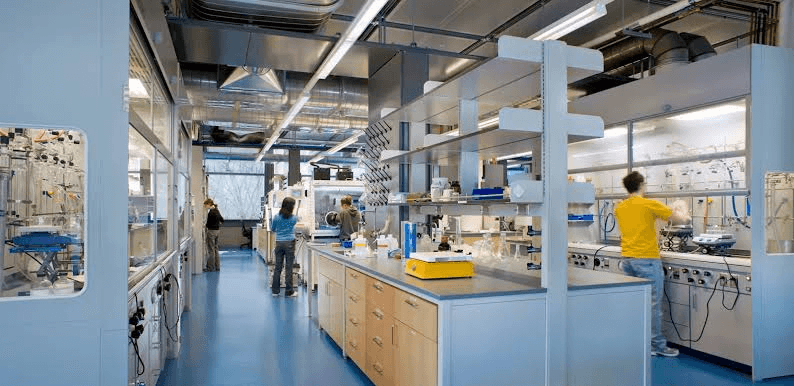
Students accepted into the Princeton Laboratory Learning Program are embedded in active university research laboratories. Each student is assigned to a specific lab and works under the supervision of a graduate student or postdoctoral researcher, with oversight from the faculty principal investigator.
A typical week involves hands-on laboratory work, lab meetings where the broader research team discusses ongoing projects, and structured sessions on research methods and scientific communication. Students learn to use equipment and techniques specific to their assigned lab, which varies by discipline. A molecular biology student might work with cell cultures or genomic sequencing tools. A physics student might assist with experimental apparatus or data analysis.
At the end of the programme, students typically present their work in a poster or oral presentation format to programme staff and other participants. This presentation is a meaningful experience, but it is not a peer-reviewed publication. The output is an internal programme presentation, not an externally published paper.
For college applications, the experience itself is valuable and the Princeton name carries weight. However, a presentation within a programme is not the same as a peer-reviewed paper listed in an independent journal. With RISE Research, every student produces a published paper that appears directly in the Common App Activities section as an externally verified research contribution. You can review examples of published student work in the RISE publications archive.
How does the Princeton Laboratory Learning Program compare to doing research with RISE?
These are two different paths toward the same goal: a meaningful research outcome for a college application. They are not mutually exclusive. Many students apply to both.
The Princeton Laboratory Learning Program offers an in-person, immersive experience inside one of the world's leading research universities. Students work in real labs, alongside real researchers, on projects that matter to the field. For students who qualify and are accepted, it is a genuinely valuable experience. The limitation is access: the programme is restricted by eligibility criteria, geography, and a small cohort size.
RISE Research is open to any student who demonstrates research readiness, regardless of location, background, or prior programme acceptances. The programme is fully online, which means students in any country can participate. Each student works 1-on-1 with a PhD mentor from an Ivy League or Oxbridge institution. The 10-week programme culminates in a peer-reviewed published paper in an independent academic journal.
Published research is the strongest research signal in a college application because it is externally verified. A journal publication cannot be inflated or misrepresented. It appears in the Common App, it can be read by admissions officers, and it demonstrates that the student's work met the standards of independent academic review. RISE scholars show a 3x higher acceptance rate to Top 10 universities compared to the national average. You can review full admissions outcomes on the RISE results page.
Our deadline is closing soon. Book a free Research Assessment to find out what is achievable in your timeline.
RISE Research is open to students targeting Princeton and all other top universities. Our deadline is closing soon. Book a free Research Assessment to find out what is achievable in your timeline.
What to do if you do not get into the Princeton Laboratory Learning Program
Rejection from selective programmes is common. It does not reflect a student's potential or research ability. The Princeton Laboratory Learning Program accepts a small number of students, and many strong applicants are turned away each cycle.
RISE Research is the strongest next step. RISE accepts students based on research readiness and intellectual curiosity. Students work 1-on-1 with a PhD mentor, complete a 10-week programme, and publish original research in a peer-reviewed journal. The 90% publication success rate means the outcome is not dependent on acceptance into a selective residential programme. Students who have published with RISE have been accepted to Stanford, UPenn, MIT, and other top universities at rates significantly above national averages.
For students specifically interested in Princeton's research areas, RISE mentors cover molecular biology, chemistry, computer science, neuroscience, economics, and many other fields. You can explore current and past student projects in the RISE projects archive.
Other verified programmes that accept high school students for research experience include the Research Science Institute (RSI) at MIT, run by the Center for Excellence in Education, and the Simons Summer Research Program at Stony Brook University. Both are highly selective. RISE remains the most accessible option with a guaranteed published output.
If you are also exploring other university-based opportunities, the Princeton summer programs guide covers additional pathways at Princeton for high school students.
Frequently asked questions about the Princeton Laboratory Learning Program
How do I apply to the Princeton Laboratory Learning Program?
Applications are submitted through Princeton University's official programme portal. The application typically requires academic transcripts, teacher recommendations, a personal statement, and documentation of eligibility based on socioeconomic background. All application materials and deadlines are listed on the official programme page. Students should review eligibility criteria carefully before applying, as the programme is restricted to specific demographic groups.
Is the Princeton Laboratory Learning Program free or paid?
The Princeton Laboratory Learning Program is tuition-free for all accepted participants. Princeton University covers programme costs. Students are not paid a stipend, but there is no cost to participate. Housing arrangements vary by programme cycle and are confirmed in the acceptance materials. Students should confirm current details directly with the programme office, as logistics can change.
Does the Princeton Laboratory Learning Program help with college admissions?
Yes, participation in the Princeton Laboratory Learning Program is a meaningful addition to a college application. It signals research experience, intellectual initiative, and engagement with university-level science. However, the programme produces a presentation rather than a published paper. For the strongest admissions signal, combining programme participation with a peer-reviewed publication through RISE Research gives students two distinct and complementary credentials. RISE scholars show an 18% acceptance rate to Stanford, compared to 8.7% for the general applicant pool.
What do I do if I do not get into the Princeton Laboratory Learning Program?
RISE Research is the first and strongest alternative. RISE accepts students based on research readiness, not demographic filters or cohort size limits. The 10-week, fully online programme produces a peer-reviewed published paper in an independent journal. The 90% publication success rate means the outcome is reliable. Students targeting Princeton specifically can read more about how research strengthens Princeton applications in the RISE guide on getting into Princeton with research.
Can international students apply to the Princeton Laboratory Learning Program?
The Princeton Laboratory Learning Program is primarily designed for US-based high school students. International students are generally not eligible, as the programme targets underrepresented groups within the United States STEM pipeline. International students who want access to Princeton-caliber mentorship and a published research outcome should consider RISE Research, which is fully online and open to students in any country. RISE mentors include researchers from Ivy League and Oxbridge institutions, and the programme has enrolled students from more than 40 countries.
Conclusion
The Princeton Laboratory Learning Program is a genuinely valuable opportunity for eligible students. It places high school students inside working research laboratories at one of the world's leading universities and gives them direct exposure to the scientific process. For students who qualify and are accepted, it is worth pursuing.
For students who do not meet the eligibility criteria, who are based outside the United States, or who want a guaranteed published research outcome regardless of programme results, RISE Research is the right choice. RISE is a selective 1-on-1 mentorship programme where students publish original research under PhD mentors, earn global recognition, and build the kind of externally verified academic record that top universities value most. RISE scholars are accepted to Top 10 universities at 3x the national average rate.
Our deadline is closing soon. If you are a student targeting Princeton or any other top university and want a real research outcome on your application, schedule a free Research Assessment and we will tell you exactly what is achievable in your timeline.
Princeton Laboratory Learning Program: Everything High School Students Need to Know in 2026
TL;DR: The Princeton Laboratory Learning Program is a selective, tuition-free research experience hosted by Princeton University for high school students from underrepresented backgrounds. It places students in working labs under faculty supervision for several weeks. Spots are extremely limited and competition is intense. Students who want a guaranteed published research outcome, regardless of whether they are accepted, should explore RISE Research. Our deadline is closing soon.
Introduction
Princeton University has produced more than 70 Nobel Prize-winning alumni, and its scientific research infrastructure ranks among the most advanced in the world. For a high school student with serious academic ambitions, gaining access to that research culture before college is a meaningful goal. The Princeton Laboratory Learning Program is one of the few official pathways that makes this possible.
The challenge is that the Princeton Laboratory Learning Program accepts a very small number of students each cycle, and the application is competitive. Many students who are fully qualified do not receive a place. Others discover the programme too late to apply at all. And even those who are accepted return with a research experience but not always a published, verifiable output they can list directly on a college application.
This guide covers exactly what the Princeton Laboratory Learning Program is, who it is for, how competitive it is, and what students produce. It also introduces RISE Research, the 1-on-1 mentorship programme where high school students publish original research under PhD mentors, as the option that produces a peer-reviewed published paper regardless of which selective programmes a student enters.
What is the Princeton Laboratory Learning Program and who is it for?
The Princeton Laboratory Learning Program is a tuition-free, in-person research programme hosted by Princeton University. It is designed specifically for high school students from groups historically underrepresented in STEM fields. Students are placed in active Princeton research laboratories and work alongside graduate students and faculty on real scientific projects.
The programme targets rising high school juniors and seniors, typically students in grades 10 and 11 at the time of application. Priority is given to students from low-income households, first-generation college students, and students from underrepresented racial and ethnic backgrounds in STEM. The programme is based at Princeton's campus in Princeton, New Jersey, and runs for approximately eight weeks during the academic year break period.
There is no cost to participants. Princeton covers the programme fees, and students are placed in labs across disciplines including molecular biology, chemistry, physics, neuroscience, computer science, and engineering. The official programme page is available at Princeton's Laboratory Learning Program site.
The programme is not open to all high school students. It is targeted specifically at students who meet the equity criteria above. Students who do not meet those criteria, or who are based outside the United States, are generally not eligible.
How competitive is the Princeton Laboratory Learning Program?
The Princeton Laboratory Learning Program is highly selective. Princeton does not publish an official acceptance rate, but the programme accepts a small cohort each cycle relative to the number of students who apply. Given Princeton's institutional profile and the programme's tuition-free structure, demand consistently exceeds available spots.
A strong application typically includes a demonstrated interest in STEM, strong academic performance in science and mathematics, teacher recommendations that speak to research curiosity, and a personal statement that explains why laboratory research aligns with the student's academic goals. Students who have completed any prior independent research, science fair projects, or advanced coursework in their target discipline are at an advantage.
Eligibility is also a gatekeeping factor. Students who do not meet the socioeconomic or demographic criteria are not considered regardless of academic strength. This means many high-achieving students who are interested in Princeton's research environment simply do not qualify for this specific programme.
RISE Research operates differently. RISE mentors assess students based on research readiness and genuine intellectual curiosity, not demographic filters or prior prestige. Any qualified student, regardless of background or location, can access 1-on-1 mentorship and work toward a peer-reviewed published paper. The programme carries a 90% publication success rate across 40 or more academic journals.
What does the Princeton Laboratory Learning Program actually involve?
Students accepted into the Princeton Laboratory Learning Program are embedded in active university research laboratories. Each student is assigned to a specific lab and works under the supervision of a graduate student or postdoctoral researcher, with oversight from the faculty principal investigator.
A typical week involves hands-on laboratory work, lab meetings where the broader research team discusses ongoing projects, and structured sessions on research methods and scientific communication. Students learn to use equipment and techniques specific to their assigned lab, which varies by discipline. A molecular biology student might work with cell cultures or genomic sequencing tools. A physics student might assist with experimental apparatus or data analysis.
At the end of the programme, students typically present their work in a poster or oral presentation format to programme staff and other participants. This presentation is a meaningful experience, but it is not a peer-reviewed publication. The output is an internal programme presentation, not an externally published paper.
For college applications, the experience itself is valuable and the Princeton name carries weight. However, a presentation within a programme is not the same as a peer-reviewed paper listed in an independent journal. With RISE Research, every student produces a published paper that appears directly in the Common App Activities section as an externally verified research contribution. You can review examples of published student work in the RISE publications archive.
How does the Princeton Laboratory Learning Program compare to doing research with RISE?
These are two different paths toward the same goal: a meaningful research outcome for a college application. They are not mutually exclusive. Many students apply to both.
The Princeton Laboratory Learning Program offers an in-person, immersive experience inside one of the world's leading research universities. Students work in real labs, alongside real researchers, on projects that matter to the field. For students who qualify and are accepted, it is a genuinely valuable experience. The limitation is access: the programme is restricted by eligibility criteria, geography, and a small cohort size.
RISE Research is open to any student who demonstrates research readiness, regardless of location, background, or prior programme acceptances. The programme is fully online, which means students in any country can participate. Each student works 1-on-1 with a PhD mentor from an Ivy League or Oxbridge institution. The 10-week programme culminates in a peer-reviewed published paper in an independent academic journal.
Published research is the strongest research signal in a college application because it is externally verified. A journal publication cannot be inflated or misrepresented. It appears in the Common App, it can be read by admissions officers, and it demonstrates that the student's work met the standards of independent academic review. RISE scholars show a 3x higher acceptance rate to Top 10 universities compared to the national average. You can review full admissions outcomes on the RISE results page.
Our deadline is closing soon. Book a free Research Assessment to find out what is achievable in your timeline.
RISE Research is open to students targeting Princeton and all other top universities. Our deadline is closing soon. Book a free Research Assessment to find out what is achievable in your timeline.
What to do if you do not get into the Princeton Laboratory Learning Program
Rejection from selective programmes is common. It does not reflect a student's potential or research ability. The Princeton Laboratory Learning Program accepts a small number of students, and many strong applicants are turned away each cycle.
RISE Research is the strongest next step. RISE accepts students based on research readiness and intellectual curiosity. Students work 1-on-1 with a PhD mentor, complete a 10-week programme, and publish original research in a peer-reviewed journal. The 90% publication success rate means the outcome is not dependent on acceptance into a selective residential programme. Students who have published with RISE have been accepted to Stanford, UPenn, MIT, and other top universities at rates significantly above national averages.
For students specifically interested in Princeton's research areas, RISE mentors cover molecular biology, chemistry, computer science, neuroscience, economics, and many other fields. You can explore current and past student projects in the RISE projects archive.
Other verified programmes that accept high school students for research experience include the Research Science Institute (RSI) at MIT, run by the Center for Excellence in Education, and the Simons Summer Research Program at Stony Brook University. Both are highly selective. RISE remains the most accessible option with a guaranteed published output.
If you are also exploring other university-based opportunities, the Princeton summer programs guide covers additional pathways at Princeton for high school students.
Frequently asked questions about the Princeton Laboratory Learning Program
How do I apply to the Princeton Laboratory Learning Program?
Applications are submitted through Princeton University's official programme portal. The application typically requires academic transcripts, teacher recommendations, a personal statement, and documentation of eligibility based on socioeconomic background. All application materials and deadlines are listed on the official programme page. Students should review eligibility criteria carefully before applying, as the programme is restricted to specific demographic groups.
Is the Princeton Laboratory Learning Program free or paid?
The Princeton Laboratory Learning Program is tuition-free for all accepted participants. Princeton University covers programme costs. Students are not paid a stipend, but there is no cost to participate. Housing arrangements vary by programme cycle and are confirmed in the acceptance materials. Students should confirm current details directly with the programme office, as logistics can change.
Does the Princeton Laboratory Learning Program help with college admissions?
Yes, participation in the Princeton Laboratory Learning Program is a meaningful addition to a college application. It signals research experience, intellectual initiative, and engagement with university-level science. However, the programme produces a presentation rather than a published paper. For the strongest admissions signal, combining programme participation with a peer-reviewed publication through RISE Research gives students two distinct and complementary credentials. RISE scholars show an 18% acceptance rate to Stanford, compared to 8.7% for the general applicant pool.
What do I do if I do not get into the Princeton Laboratory Learning Program?
RISE Research is the first and strongest alternative. RISE accepts students based on research readiness, not demographic filters or cohort size limits. The 10-week, fully online programme produces a peer-reviewed published paper in an independent journal. The 90% publication success rate means the outcome is reliable. Students targeting Princeton specifically can read more about how research strengthens Princeton applications in the RISE guide on getting into Princeton with research.
Can international students apply to the Princeton Laboratory Learning Program?
The Princeton Laboratory Learning Program is primarily designed for US-based high school students. International students are generally not eligible, as the programme targets underrepresented groups within the United States STEM pipeline. International students who want access to Princeton-caliber mentorship and a published research outcome should consider RISE Research, which is fully online and open to students in any country. RISE mentors include researchers from Ivy League and Oxbridge institutions, and the programme has enrolled students from more than 40 countries.
Conclusion
The Princeton Laboratory Learning Program is a genuinely valuable opportunity for eligible students. It places high school students inside working research laboratories at one of the world's leading universities and gives them direct exposure to the scientific process. For students who qualify and are accepted, it is worth pursuing.
For students who do not meet the eligibility criteria, who are based outside the United States, or who want a guaranteed published research outcome regardless of programme results, RISE Research is the right choice. RISE is a selective 1-on-1 mentorship programme where students publish original research under PhD mentors, earn global recognition, and build the kind of externally verified academic record that top universities value most. RISE scholars are accepted to Top 10 universities at 3x the national average rate.
Our deadline is closing soon. If you are a student targeting Princeton or any other top university and want a real research outcome on your application, schedule a free Research Assessment and we will tell you exactly what is achievable in your timeline.
Fall 2026 Cohort Deadline Closing on 28th September
Book a free 20-min strategy call
Book a free 20-min strategy call
Read More